Soft tennis as a low-impact alternative for older athletes and injury recovery
Last updated: August 3, 2026
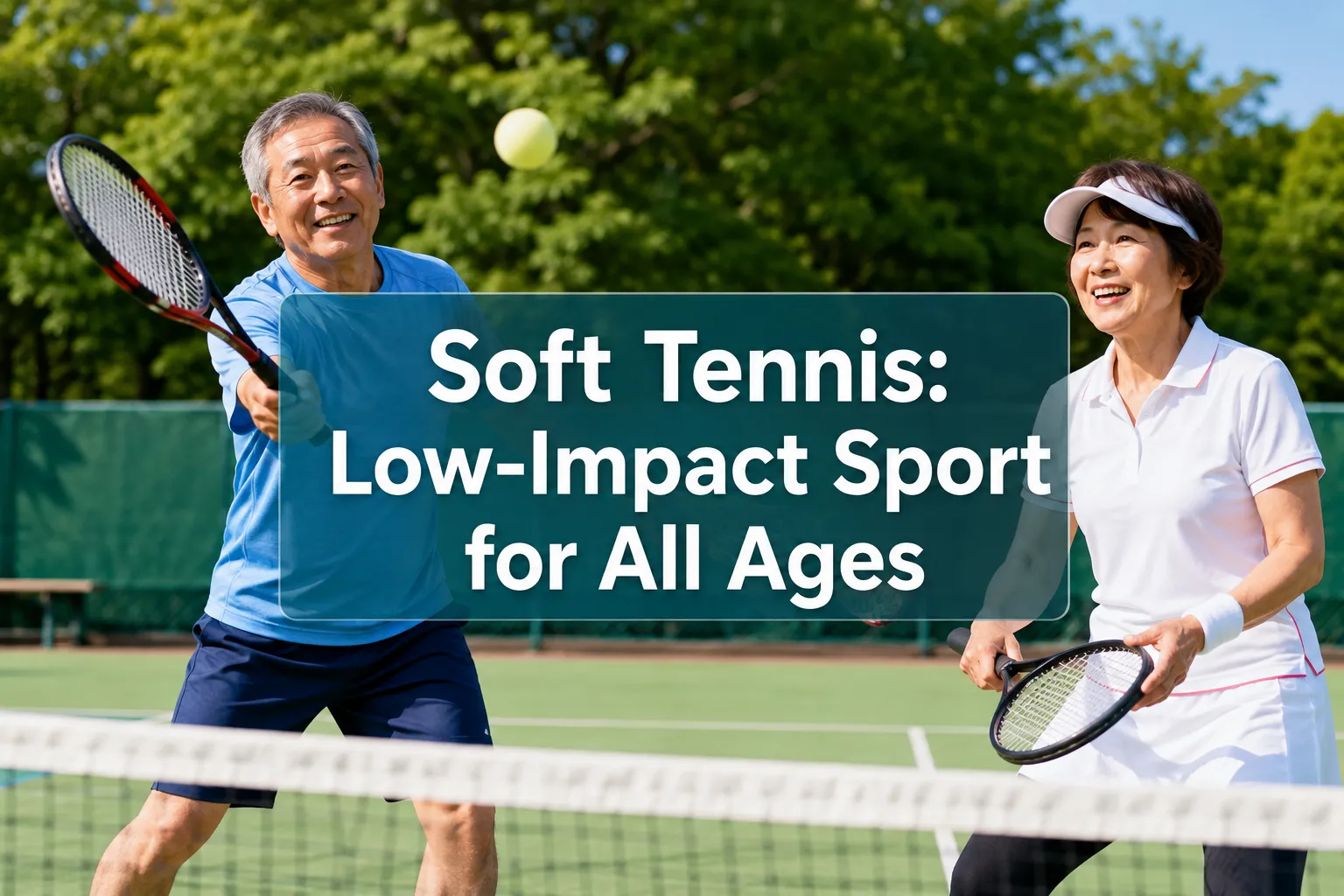
Quick Answer: Soft tennis is a racket sport played with a pressurized rubber ball instead of a hard felt ball, which significantly reduces the impact on joints, tendons, and muscles. It’s widely recommended as a low-impact alternative for older athletes and injury recovery because it allows full rallying and competitive play with far less stress on the knees, shoulders, elbows, and spine than standard tennis.
Key Takeaways
- 🎾 Soft tennis uses a hollow rubber ball that’s lighter and bouncier than a hard tennis ball, cutting shock transmission to joints by a meaningful margin
- 🦵 It’s genuinely suitable for people managing knee pain, arthritis, tennis elbow, or recovering from shoulder injuries
- 👴 Players of any age can enjoy it, but adults 50 and older benefit most from its gentler mechanics
- 💰 Entry-level soft tennis rackets cost less than standard tennis rackets, making it affordable to try
- 🏃 A 45-minute session provides solid cardiovascular and coordination benefits without the high-impact demands of regular tennis
- 🆚 Compared to pickleball, soft tennis offers a larger court and longer rallies, both are excellent options for older players
- 🔍 Finding courts is easier than most people expect, many community centers and parks already have them
- 🩺 Coaches and physical therapists are increasingly recommending soft tennis as part of active rehabilitation programs in 2026
What Is Soft Tennis and How Is It Different From Regular Tennis?
Soft tennis is a racket sport that originated in Japan in the late 19th century and is now widely played across Asia and increasingly popular in Europe and North America. The core difference from regular tennis is the ball: soft tennis uses a hollow, pressurized rubber ball that is softer, lighter, and bouncier than a standard hard felt tennis ball.
Here’s a quick side-by-side of the key differences:
| Feature | Soft Tennis | Regular Tennis |
|---|---|---|
| Ball material | Hollow rubber | Pressurized felt-covered rubber |
| Ball weight | ~30g | ~57g |
| Court size | Same as regular tennis | Same as regular tennis |
| Scoring | Similar format | Similar format |
| Racket | Lighter, flexible frame | Heavier, stiffer frame |
| Typical play style | Longer rallies, touch-based | Power and pace-focused |
Because the ball is softer and lighter, players don’t need to swing as hard to generate pace. That means less torque on the elbow and shoulder, less vibration traveling up the arm, and a more controlled, rhythm-based game overall.

Why Soft Tennis as a Low-Impact Alternative for Older Athletes and Injury Recovery Makes Sense
Soft tennis as a low-impact alternative for older athletes and injury recovery works because the physics are simply kinder to the body. The lighter ball requires less force to hit, which reduces strain on the rotator cuff, elbow tendons, and wrist. The longer rallies that naturally develop in soft tennis also encourage movement patterns that build balance and coordination without sudden explosive bursts.
Key physical benefits for older athletes:
- Reduced joint stress, the soft ball absorbs more impact on contact, meaning less vibration travels into the arm and shoulder
- Lower injury risk per session, lighter swings mean less chance of muscle tears or tendon overload
- Improved balance and footwork, the slower ball speed gives players more time to position correctly, reinforcing footwork fundamentals that transfer across racket sports
- Cardiovascular conditioning, longer rallies keep heart rate elevated in a sustainable aerobic zone
- Social engagement, group play supports mental health and community connection, which is just as important as physical fitness
Physical therapists and sports medicine coaches have taken notice. In 2026, more rehabilitation programs are incorporating soft tennis as a bridge activity, helping patients stay active and competitive while their bodies recover from injury.
Is Soft Tennis Good for People With Joint Pain or Arthritis?
Yes, soft tennis is one of the better racket sport options for people managing joint pain or arthritis. The reduced ball weight and softer contact mean the repetitive impact that aggravates arthritic joints is significantly lower than in standard tennis.
For players with arthritis in the hands, wrists, or elbows, the lighter grip pressure required in soft tennis is a real advantage. The game doesn’t demand the same white-knuckle grip tension that hard tennis often does during powerful groundstrokes.
A few practical tips for arthritic players:
- Choose a racket with a larger grip circumference to reduce finger strain
- Warm up for at least 10 minutes before hitting, gentle wrist circles, shoulder rolls, and light footwork
- Play doubles to reduce court coverage demands on the hips and knees
- Use cushioned court shoes with good lateral support
Always consult a doctor or physiotherapist before starting any new sport if you have a diagnosed joint condition. Soft tennis is supportive, but individual circumstances vary.
Can You Play Soft Tennis After a Knee or Shoulder Injury?
Soft tennis can be a good return-to-sport option after a knee or shoulder injury, but the timing and approach matter. Because the game doesn’t require the same explosive lateral cuts as regular tennis or the overhead smashing that strains the rotator cuff, many physiotherapists consider it appropriate during later-stage rehabilitation.
For knee injuries: The slower ball speed in soft tennis gives players more time to move into position, reducing the need for sudden stops and direction changes. Playing doubles reduces running distance further.
For shoulder injuries: The lighter ball means overhead shots require less force. Players recovering from rotator cuff repairs or shoulder impingement can often return to soft tennis before they’d be cleared for full tennis.
Common mistake: Returning too soon and trying to play at full intensity. Start with gentle rallying from the baseline, avoid overhead smashes initially, and build up over several weeks.
Always get clearance from your physiotherapist or sports doctor before returning to court. Soft tennis is gentler, but it’s still sport.
Does Soft Tennis Help With Recovery and Rehabilitation?
Soft tennis supports recovery and rehabilitation in several meaningful ways. It keeps the body moving through sport-specific patterns, footwork, hand-eye coordination, rotational movement, without the high-load demands that could re-aggravate an injury.
For players who’ve had to step away from racket sports due to injury, soft tennis offers a way to stay in the game mentally and physically. The racket sports community around soft tennis tends to be welcoming and low-pressure, which also helps with the psychological side of recovery.
If you’re exploring other low-impact racket options during recovery, the health benefits of pickleball for seniors is worth reading, pickleball and soft tennis are both excellent tools in a recovery toolkit.
Soft Tennis vs Pickleball: Which Is Better for Seniors?
Both are excellent low-impact options for seniors, and the best choice depends on personal preference and physical condition. Soft tennis uses a full-sized court and a racket, offering longer rallies and more movement. Pickleball uses a smaller court, a paddle, and a wiffle-style ball, with less court coverage required.
Choose soft tennis if you:
- Already know tennis and want to keep playing with less strain
- Enjoy longer rallies and a touch-based game
- Have good mobility but want reduced impact
Choose pickleball if you:
- Want a shorter learning curve
- Prefer a smaller court and less running
- Are looking for a strong social scene with lots of local players
Many seniors play both, they complement each other well. For more on what makes pickleball appealing across age groups, see why everyone loves the game.
How Much Does Soft Tennis Equipment Cost Compared to Regular Tennis?
Soft tennis equipment is generally less expensive than regular tennis gear. Entry-level soft tennis rackets typically run between $30 and $80, compared to $60,$150 for a beginner hard tennis racket. Soft tennis balls are also cheaper per pack.
Basic starter kit for soft tennis:
- Racket: $30,$80
- Balls (pack of 3): $8,$15
- Court shoes (existing tennis or running shoes work fine to start): $0 extra if you have them
- Grip tape and overgrip: $5,$10
No special shoes are required to start, standard tennis or court shoes with lateral support work perfectly. As you progress, dedicated court shoes with better cushioning are a worthwhile upgrade for joint protection.
What Age Is Soft Tennis Best For, and Is It Easier on the Back?
Soft tennis is genuinely accessible for players of all ages, but it’s particularly well-suited for adults 50 and older. The game rewards consistency and placement over raw power, which aligns naturally with how older athletes play.
On the question of the back and spine: yes, soft tennis is easier on the back than regular tennis for most players. The lighter ball means less rotational force is needed during groundstrokes, reducing compression on lumbar vertebrae. The slower pace also allows players to maintain better posture and body mechanics throughout a rally.
Players with lower back issues should still focus on core conditioning off the court. A strong core protects the spine during any rotational sport.
Soft Tennis as a Low-Impact Alternative: What Injuries Can It Help Prevent?
Using soft tennis as a low-impact alternative for older athletes and injury recovery also means it’s proactive, not just reactive. Regular soft tennis play can help prevent several common racket sport injuries before they happen.
Injuries soft tennis helps reduce risk of:
- Tennis elbow (lateral epicondylitis), lighter ball = less vibration and torque at the elbow
- Rotator cuff strain, reduced overhead smashing load
- Knee meniscus stress, more time to position means fewer awkward lateral lunges
- Wrist tendinitis, lighter grip requirements reduce repetitive wrist strain
- Lower back muscle fatigue, gentler swing mechanics reduce spinal loading
For broader injury prevention strategies applicable across racket sports, this injury prevention guide for pickleball players covers principles that translate directly to soft tennis.
Soft Tennis Rules for Beginners and Older Players
Soft tennis follows rules similar to regular tennis, which makes the transition easy for anyone with a tennis background. Scoring uses a game-set-match format, and the court dimensions are identical to standard tennis.
Key rule differences to know:
- Serves are typically hit with a softer, more controlled motion, no requirement for the explosive kick serves common in hard tennis
- Doubles is the most common format, especially in recreational and senior play
- Some recreational leagues use modified scoring (shorter sets, no-ad scoring) to keep games moving and reduce fatigue
Beginners don’t need to memorize every rule before stepping on court. The basics, keep the ball in, serve diagonally, rally until someone misses, are enough to start enjoying the game immediately.
Where Can You Find Soft Tennis Courts Near Me?
Soft tennis is played on standard tennis courts, so finding a court is straightforward, any public or private tennis facility works. The challenge is finding organized soft tennis groups or clubs, which are more concentrated in areas with Asian community centers, university campuses, and international sports clubs.
How to find soft tennis near you:
- Search “[your city] + soft tennis club” or “soft tennis association”
- Check with local community centers and parks departments
- Look for Asian cultural associations in your area, many run soft tennis programs
- Contact the national soft tennis federation for your country (most have club directories)
- Ask at your local tennis club, interest is growing and some clubs are adding soft tennis sessions
If you’re also exploring other racket sports communities nearby, tools like finding your local pickleball community offer useful approaches that apply to soft tennis searches too.
How Often Should Older Adults Play Soft Tennis to See Benefits?
Two to three sessions per week, each lasting 45-60 minutes, is a practical target for older adults looking to build fitness and maintain joint health through soft tennis. This frequency allows enough recovery time between sessions while providing consistent cardiovascular and coordination stimulus.
A simple weekly structure:
- Session 1: Baseline rallying and footwork drills (45 min)
- Session 2: Doubles match play (60 min)
- Session 3: Light hitting with focus on technique (30-45 min)
Starting with one session per week and building up over a month is the smarter approach for anyone returning from injury or starting fresh. Consistency over intensity is the principle that matters most here.
Can You Get a Good Workout From Soft Tennis, or Is It Too Easy?
Soft tennis provides a genuinely solid workout, it’s not a passive activity. A 45-minute doubles session involves continuous lateral movement, reaction timing, hand-eye coordination, and aerobic effort. The lower impact doesn’t mean lower intensity; it means the intensity is sustainable for longer.
Competitive soft tennis players develop excellent court coverage, precise ball control, and strong cardiovascular fitness. The game rewards smart positioning and tactical play, which keeps the brain engaged too.
For players who want to push harder, adding structured drills and working on partner drills to boost team play can elevate both the physical and strategic challenge significantly.
FAQ
Q: Is soft tennis the same as padel or platform tennis? No. Soft tennis is played on a standard tennis court with a rubber ball and a strung racket. Padel uses an enclosed court with walls and a solid paddle. They’re separate sports with different equipment and rules.
Q: Can I use my regular tennis racket for soft tennis? Yes, a standard tennis racket works fine for soft tennis, especially when starting out. Dedicated soft tennis rackets are lighter and more flexible, which enhances the feel of the game, but they’re not required to begin.
Q: Is soft tennis recognized internationally? Yes. The International Soft Tennis Federation (ISTF) governs the sport globally, and soft tennis is included in the Asian Games. It has a long competitive history, particularly in Japan, South Korea, and Taiwan.
Q: How does soft tennis compare to regular tennis for calorie burn? Calorie burn in soft tennis is comparable to moderate-intensity tennis. A 60-minute session of active doubles play burns roughly 300-450 calories depending on body weight and effort level, similar to a brisk cycling session.
Q: Do I need special shoes for soft tennis? Standard tennis or court shoes with lateral support work well. Avoid running shoes, which don’t provide enough lateral stability for court sports. As you play more regularly, court-specific shoes with extra cushioning are a worthwhile investment.
Q: Is soft tennis good for mental health? Yes. Like all racket sports, soft tennis combines physical activity, social interaction, and strategic thinking, all of which support mood, reduce stress, and improve cognitive function. The community aspect is particularly valuable for older adults.
Q: Can children and adults play together in soft tennis? Absolutely. The slower ball speed and touch-based play style make intergenerational games genuinely competitive and fun. It’s one of the sport’s real strengths as a family-friendly activity.
Q: Is soft tennis harder to learn than pickleball? Soft tennis has a slightly steeper learning curve than pickleball because the court is larger and the ball behaves differently. However, anyone with a tennis background will adapt quickly. Complete beginners can be rallying comfortably within a few sessions.
Q: What’s the biggest mistake beginners make in soft tennis? Hitting too hard. Because the rubber ball is bouncier than a hard tennis ball, players who swing with full power often send the ball long. The game rewards controlled, placement-focused hitting, a mindset shift that pays off quickly.
Q: Are there soft tennis leagues for older adults specifically? In countries where soft tennis is well-established (Japan, South Korea, Taiwan), senior leagues are common. In North America and Europe, senior-focused soft tennis groups are growing, often organized through community centers or recreational sports associations.
Conclusion: A Smart Move for Any Older Athlete or Recovering Player
Soft tennis as a low-impact alternative for older athletes and injury recovery isn’t a compromise, it’s a genuinely rewarding sport that happens to be kinder to the body. The lighter ball, controlled pace, and emphasis on touch and placement make it accessible without being boring.
Actionable next steps:
- Find a local court, any standard tennis court works; search for soft tennis clubs or community groups in your area
- Pick up a starter racket, budget $40,$70 for a decent entry-level soft tennis racket
- Start with doubles, less court coverage, more social, easier on the joints
- Play two sessions per week, consistency builds fitness and confidence faster than occasional intense sessions
- Connect with the racket sports community, whether it’s soft tennis, pickleball, or padel, the social side of these sports is half the benefit
If you’re also exploring how other racket sports support active aging, the physical health benefits of playing pickleball is a great companion read. The principles overlap more than you’d expect.
The racket sports community is growing, and soft tennis is earning its place in that conversation, especially for players who want to stay on court for decades to come. 🎾