World Outdoor Racquetball 2026 and the rise of one-wall play
Last updated: October 2, 2026
Quick Answer: World Outdoor Racquetball 2026 and the rise of one-wall play reached a milestone this year, with the 52nd annual Outdoor Nationals and World Championships held July 10-12 at Marina Park in Huntington Beach, California. One-wall racquetball is now a formal, growing division within the World Outdoor Racquetball (WOR) calendar, supported by dedicated standalone events, named champions, and explicit organizational backing from USA Racquetball. [1][6]
Key Takeaways 🎾
- The 52nd WOR Outdoor Nationals and World Championships took place July 10-12, 2026 at Marina Park, Huntington Beach, CA. [1]
- One-wall racquetball uses a single front wall on an open-air court, no ceiling, no side walls, and a much wider playing area than traditional four-wall.
- WOR’s official mission explicitly includes growing one-wall racquetball at the grassroots level. [6]
- A dedicated One Wall Palooza tournament ran August 1, 2026 in Stockton, CA, signaling that one-wall now has its own named events. [2]
- The player known as “Mar” claimed his fourth one-wall men’s pro title in three seasons at the 2026 Outdoor Nationals, establishing a new era of one-wall specialists.
- Entry costs for WOR events vary by division and event, but most regional tournaments are accessible for recreational players.
- One-wall play is generally considered more beginner-friendly than four-wall because court geometry is simpler and courts are easier to find outdoors.
- The 2026 WOR calendar spans events from Florida to California, showing strong geographic diversity. [7][9]
- 3WallBall in Las Vegas promotes one-wall and three-wall formats on equal footing, broadening competitive pathways. [8]
- One-wall racquetball can be played indoors against any solid wall, it is not strictly an outdoor-only format.
What Is One-Wall Racquetball and How Does It Differ from Four-Wall?
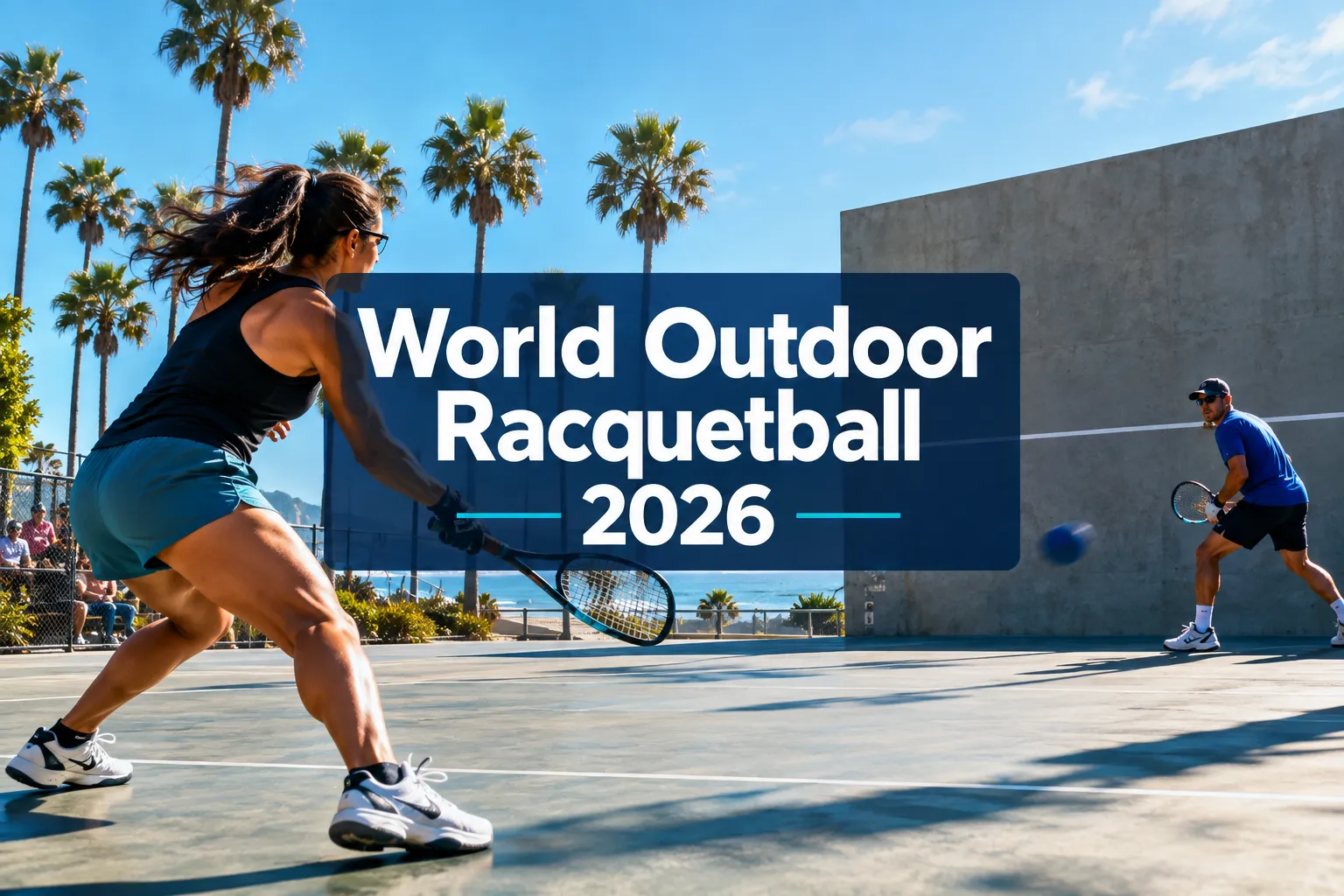
One-wall racquetball is played on an open court with a single vertical front wall. Players hit the ball against that wall and must keep it in bounds on the return, but there is no ceiling, no side walls, and no back wall to use as a rebound surface.

Here’s a quick breakdown of the core differences:
| Feature | Four-Wall | One-Wall |
|---|---|---|
| Court walls | 4 walls + ceiling | 1 front wall only |
| Court width | 20 ft | 20 ft (same) |
| Court length | 40 ft (enclosed) | 34 ft (open) |
| Ceiling shots | Yes | No |
| Primary setting | Indoor clubs | Outdoor parks, beaches |
| Rally style | Angles off all surfaces | Direct front-wall shots |
The key tactical difference: in four-wall, players use ceiling shots and corner angles constantly. In one-wall, placement, power, and lateral movement matter most because the ball can only come back off one surface.
When and Where Is the World Outdoor Racquetball 2026 Championship?
The centerpiece event for World Outdoor Racquetball 2026 and the rise of one-wall play was the 52nd Outdoor Nationals and World Championships, held July 10-12, 2026 at Marina Park, Huntington Beach, California. [1]
This is no small gathering. At 52 years old, the Huntington Beach event is one of the longest-running outdoor racquetball tournaments in the world, and it serves as the primary platform for one-wall divisions alongside three-wall competition.
Other major WOR events in 2026 include: [2][7][9]
- 🌴 Beach Bash, Hollywood, FL (March 19-22)
- 🏛️ Capital City WOR Championships, Herndon, VA (June 5-7)
- 🌊 SacTown Sizzler 3Wall Smash, Sacramento, CA (June 27)
- 🎉 One Wall Palooza, Fritz Grupe Park, Stockton, CA (August 1)
- 🏆 Memorial 3Wall Shootout, Tracy, CA (April 25)
The geographic spread, from Florida’s Atlantic coast to California’s Central Valley, shows that WOR’s 2026 calendar is genuinely national in scope.
Why Is One-Wall Racquetball Becoming More Popular?
One-wall racquetball is growing because courts are cheap to build, easy to find in public parks, and the format is accessible to players of all skill levels. USA Racquetball’s official WOR mission statement explicitly names one-wall as a priority for grassroots growth. [6]
Several factors are driving this momentum in 2026:
- Low infrastructure cost. A single concrete wall in a park is all you need. No expensive enclosed court construction required.
- Urban accessibility. Cities like New York have had thriving one-wall communities for decades. That culture is spreading.
- Institutional support. WOR now runs dedicated one-wall events like the One Wall Palooza, and 3WallBall in Las Vegas markets one-wall competition on equal footing with three-wall. [8]
- Specialist athletes. The emergence of dominant one-wall pros, like “Mar,” who claimed his fourth one-wall men’s pro title in three seasons at the 2026 Outdoor Nationals, gives the format star power.
- Crossover appeal. Players from handball, paddleball, and even pickleball find one-wall racquetball approachable. If you’re curious about how outdoor racket games fit into the broader sports landscape, the parallels are easy to see.
“WOR’s mission is to grow outdoor racquetball of all varieties at the grass roots level, including One Wall Racquetball.”, USA Racquetball, About WOR [6]
How Do the Rules Change for One-Wall vs. Traditional Racquetball?
One-wall racquetball follows most of the same fundamental rules as four-wall, serve, return, rally, scoring, but the court geometry creates several important rule differences.
Key rule differences in one-wall:
- No ceiling rule. Ceiling shots don’t exist. Any ball that hits the ceiling (if there is one overhead) is out.
- Short line and service zone. The service box and short line positions are adapted for the shorter, open court.
- Out-of-bounds lines. Since there are no side walls, the court has painted sidelines on the floor that define the in-bounds area. Balls landing outside those lines are out.
- Long line. There is a back boundary line on the floor. Balls that bounce past it before being returned are out.
- No back-wall shots. Players cannot use a back wall to set up shots, a fundamental shift in strategy.
Common mistake: Four-wall players often forget the sideline boundaries exist and instinctively chase balls wide, only to find they’ve moved outside the legal play area.
What Equipment Do You Need to Start Playing One-Wall Racquetball?
The equipment list for one-wall racquetball is nearly identical to four-wall. You need a racquet, a racquetball, and eye protection, that’s it for the basics.
Here’s what to look for:
- Racquet: Standard racquetball racquets work for one-wall. Look for a balanced or head-light frame if you plan to play outdoors, where wind can affect swing.
- Ball: Outdoor racquetballs are slightly different from indoor ones. Blue outdoor balls are firmer and designed to perform in cooler or windier conditions. Check the WOR event rules for the approved ball spec.
- Eye protection: Mandatory at all sanctioned WOR events. Non-negotiable for safety.
- Court shoes: Lateral movement is heavy in one-wall. Shoes with good side-to-side support matter. Court shoes or cross-trainers work well.
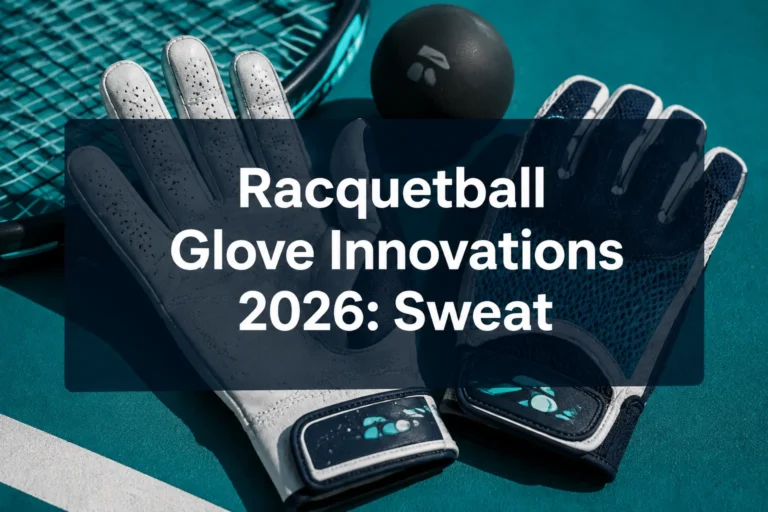
- Glove (optional): Many one-wall players use a racquetball glove for grip, especially in humid outdoor conditions.
If you’re new to racquet sports gear decisions, the guide on renting vs buying pickleball equipment covers the same rent-first logic that applies here, try borrowed gear before investing.
Is One-Wall Racquetball Easier Than Four-Wall for Beginners?
Yes, most coaches and experienced players consider one-wall racquetball more beginner-friendly than four-wall. The court geometry is simpler, there are fewer surfaces to track, and the open setting feels less intimidating than an enclosed box.
Why one-wall is easier to start:
- You only need to learn one rebound surface.
- No ceiling shots to master.
- Court is open, so there’s no claustrophobic enclosed-court adjustment.
- Public courts in parks lower the barrier to entry.
Where it gets harder: Lateral movement demands are intense. The wide, open court means players cover more side-to-side ground than in four-wall. Beginners who lack lateral agility may find rallies exhausting quickly. Building agility and coordination through cross-training helps here, even if those drills are designed for other racquet sports.
Choose one-wall if: You’re new to racquetball, you have access to a public park wall, or you come from handball or paddleball. Choose four-wall if: You have club access, you want to compete in the largest indoor tournament circuit, or you prefer a more enclosed, angle-heavy game.
Who Are the Top One-Wall Racquetball Players Competing in 2026?
The standout name in one-wall pro competition at the 2026 Outdoor Nationals is “Mar” (competing with partner Montoya in men’s pro doubles), who claimed his fourth one-wall men’s pro title in three seasons, a run that establishes him as the defining specialist of the current era.
The dominance of Mar and Montoya in men’s one-wall pro doubles at the 2026 Outdoor Nationals reflects a broader trend: one-wall is developing its own specialist player pool, separate from the four-wall circuit. Players who train specifically for open-court geometry, lateral coverage, and front-wall placement are outperforming four-wall crossovers.
What countries are expected to dominate one-wall at Worlds 2026? The United States has historically led one-wall competition given the format’s deep roots in American urban park culture, particularly in New York and California. WOR’s 2026 calendar is U.S.-centric, though international participation is growing as WOR works with 3WallBall and global partners to expand the format’s reach. [6][8]
How Much Does It Cost to Enter World Outdoor Racquetball 2026?
Entry fees for WOR-sanctioned events vary by tournament and division. Most regional WOR events charge between roughly $30 and $80 per player per division for amateur categories, based on general patterns across the 2026 calendar. Pro divisions and multi-event entries may cost more.
What affects your total cost:
- Number of divisions entered (singles, doubles, mixed)
- Pro vs. amateur bracket
- Early-bird vs. late registration
- Travel and accommodation (Huntington Beach in July is a popular destination)
For exact 2026 entry fees, check the specific event page on R2Sports, where all WOR-sanctioned tournaments are listed. [1][2] Fees are confirmed at registration and vary event to event.
Budget tip: Many WOR events offer discounts for entering multiple divisions. If you’re traveling to the Outdoor Nationals, entering both singles and doubles maximizes court time per dollar spent.
Can You Play One-Wall Racquetball Indoors, or Is It Outdoor Only?
One-wall racquetball is not outdoor-only. Any solid, flat wall with enough open floor space in front of it can serve as a one-wall court, indoors or out.
Gyms, recreation centers, and even school handball courts have hosted one-wall racquetball. The format originated in urban environments where full enclosed courts weren’t available, so adaptability is built into its DNA.
What’s the difference between one-wall and street racquetball? “Street racquetball” is an informal term for one-wall play in public spaces, parks, schoolyards, parking structures. The rules are the same as sanctioned one-wall; the difference is simply the setting and whether the game is organized under official WOR rules. WOR events like One Wall Palooza take street racquetball’s spirit and formalize it with brackets, referees, and rankings. [2][6]
Common Mistakes Beginners Make When Switching to One-Wall Play
Switching from four-wall to one-wall trips up even experienced players. Here are the most common errors:
- Forgetting the sidelines exist. Four-wall players chase every ball instinctively. In one-wall, balls going wide past the sideline are already out, don’t run for them.
- Hitting too hard. Power matters less in one-wall than placement. Blasting every shot often sends the ball long past the back boundary.
- Standing too close to the wall. One-wall requires more court depth awareness. Players who crowd the short line get caught off-guard by deep returns.
- Ignoring lateral footwork. The wide court punishes players who don’t move side-to-side efficiently. Poor lateral movement is the fastest way to lose rallies. Reviewing strategies for singles vs doubles play can help you think about court coverage more systematically.
- Using ceiling-shot muscle memory. Four-wall players instinctively look up. In one-wall, there’s nothing up there, that habit wastes time and breaks focus.
How Do I Train for One-Wall Racquetball If There’s No Court Nearby?
Training without a dedicated one-wall court is very doable. Any flat wall, a gym wall, a garage door, a handball wall, works for solo drilling.
Training options without a one-wall court:
- Solo wall drills: Hit against any flat wall to practice front-wall placement and ball control. Focus on hitting specific spots repeatedly.
- Lateral agility work: Ladder drills, side shuffles, and cone drills build the lateral movement one-wall demands. See agility training exercises for racquet sport players for adaptable drill ideas.
- Four-wall crossover: Playing four-wall builds racquet control and conditioning. Just consciously avoid using ceiling shots in practice to simulate one-wall constraints.
- Video study: Watch one-wall pro matches to understand court positioning, shot selection, and serve strategy before you step on a real court.
Is one-wall racquetball harder on your body than four-wall? One-wall places higher demands on lateral movement and knee stability because the wide open court requires more side-to-side sprinting. Four-wall’s enclosed space limits lateral range somewhat. Players with knee or hip concerns should build lateral strength before competing. For injury prevention principles that translate across racquet sports, common racquet sport injury prevention tips offer a useful starting point.
FAQ
Q: What does WOR stand for in racquetball? WOR stands for World Outdoor Racquetball. It is the governing body for outdoor racquetball in the United States, operating under the USA Racquetball umbrella, and its mission includes growing one-wall racquetball at the grassroots level. [6]
Q: Is the Huntington Beach Outdoor Nationals the same as the World Championships? Yes. The event is officially titled the “Outdoor Nationals and World Championships.” In 2026, it was the 52nd edition, held July 10-12 at Marina Park in Huntington Beach, California. [1]
Q: How long is a one-wall racquetball court? A standard one-wall racquetball court is 20 feet wide and 34 feet long (from the front wall to the back boundary line), with the wall standing 16 feet high.
Q: Can four-wall racquetball players compete in one-wall events? Yes, and many do. However, the tactical adjustments are significant, no ceiling shots, mandatory sideline awareness, and heavier lateral movement demands. Most four-wall players need several sessions to adapt comfortably.
Q: What is the One Wall Palooza? The One Wall Palooza is a dedicated one-wall racquetball tournament under the WOR banner. In 2026, it was held August 1 at Fritz Grupe Park in Stockton, California, one of the clearest signs that one-wall now has enough demand to justify its own named event. [2]
Q: Does 3WallBall include one-wall competition? Yes. 3WallBall, which runs major Las Vegas outdoor events, explicitly promotes both three-wall and one-wall racquetball competition, positioning the two formats as equals in its marketing. [8]
Q: Do I need special equipment for outdoor one-wall racquetball? The main difference is the ball. Outdoor events typically use a firmer ball (often blue) designed for outdoor conditions. Standard racquets and eye protection used in four-wall work fine.
Q: Who founded World Outdoor Racquetball? WOR was founded by Hank Marcus. His Hall of Fame profile notes that WOR expanded in 2004 to include an event at Hollywood Beach, Florida, billed as the first One Wall National Championships, giving one-wall two decades of formal competitive history. [10]
Q: How do I find WOR tournaments near me? All WOR-sanctioned events are listed on R2Sports. Search by sport and date to find upcoming tournaments in your region. [1][2]
Q: Is one-wall racquetball an Olympic sport? No. Racquetball (in any format) is not currently an Olympic sport, though it has been a Pan American Games sport. One-wall is a growing competitive format but has not reached Olympic consideration.
Conclusion: Get on the Wall
World Outdoor Racquetball 2026 and the rise of one-wall play represent something genuinely exciting: a format that lowers barriers, builds community in public spaces, and is now backed by 52 years of championship tradition. From the Huntington Beach Outdoor Nationals to the One Wall Palooza in Stockton, the 2026 calendar proves this isn’t a niche curiosity, it’s a growing competitive discipline with real stars, dedicated events, and institutional momentum. [1][2][6]
Actionable next steps:
- 🔍 Find a court. Search your local parks for handball or one-wall courts. Any solid wall works to start.
- 🎾 Grab the right gear. A standard racquet, outdoor ball, and eye protection are all you need.
- 📅 Check the 2026-2027 WOR calendar on R2Sports for events near you. [2]
- 🏋️ Build lateral fitness. Side-shuffle drills and agility work will pay off faster in one-wall than almost any other training.
- 📺 Watch the pros. Study how players like Mar control the front wall and manage court depth.
- 🤝 Join the community. WOR’s grassroots focus means local clubs and park groups are welcoming to new players at every level.
The wall is waiting. The only question is when you show up.
References
[1] R2sports Event Search – https://r2sports.com/r2sports-event-search.asp?sportID=1&startDate=7/7/2026&searchNow=YES
[2] R2sports Event Search – https://r2sports.com/r2sports-event-search.asp?sportID=1&startDate=6/27/2026&searchNow=YES
[3] R2sports Event Search – https://r2sports.com/r2sports-event-search.asp?sportID=1&startDate=1/14/2026&searchNow=YES
[4] R2sports Event Search – https://r2sports.com/r2sports-event-search.asp?sportID=1&startDate=6/3/2026&searchNow=YES
[5] Racquetball The Comeback That Never Left – https://racketbusiness.com/p/racquetball-the-comeback-that-never-left
[6] About WOR – https://www.usaracquetball.com/wor/about-wor
[7] R2sports Event Search – https://r2sports.com/r2sports-event-search.asp?sportID=1&startDate=3/14/2026&searchNow=YES
[8] 3WallBall – https://3wallball.com/
[9] R2sports Event Search – https://r2sports.com/r2sports-event-search.asp?sportID=1&startDate=3/15/2026&searchNow=YES
[10] Hank Marcus – https://www.usaracquetball.com/wor-hall-of-fame-inductees/hank-marcus