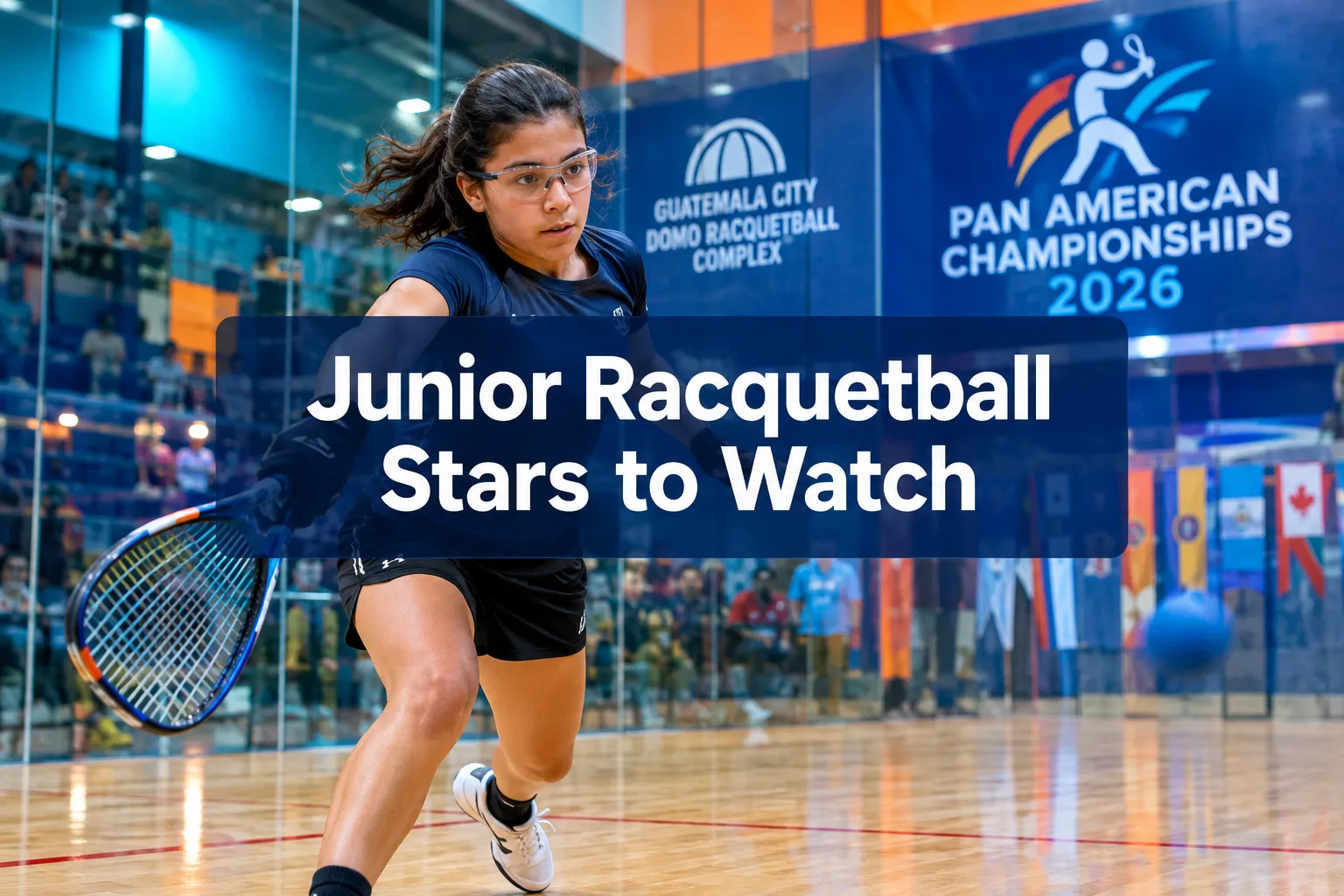
Junior Racquetball Stars to Watch: 21U and 16U Talents from Pan Am Championships 2026
Last updated: October 16, 2026
Quick Answer: The XXXVII Pan American Racquetball Championships, held March 27, April 4, 2026, in Guatemala City, featured a dedicated Junior Cup for athletes 21 and under and 16 and under across Boys’ and Girls’ Singles, Doubles, and Mixed Doubles. These junior divisions serve as official qualifying and seeding events for the Pan American Games and CAC Games, meaning standout performers become the region’s most closely tracked young players heading into the IRF World Junior Championships in Cochabamba, Bolivia (December 4-12, 2026). Identifying the Junior Racquetball Stars to Watch: 21U and 16U Talents from Pan Am Championships 2026 requires following live broadcast channels and national federation updates, since official athlete-level profiles remain limited on federation websites. [1][8]
Key Takeaways
- 🏆 The Junior Cup at the XXXVII Pan Am Championships is the primary stage for 21U and 16U racquetball talent in the Americas in 2026.
- 📅 Player eligibility is determined by age as of January 1, 2026, locking in who qualifies as “junior” for the full season.
- 🌎 Strong Junior Cup performances directly influence national team selection and continental rankings for the Pan American Games and CAC Games.
- 📺 Live coverage streams via the IRF YouTube channel, IRF Facebook page, and Panam Sports Channel, the best way to scout emerging talent right now.
- 🇧🇴 Junior Cup medalists and deep-round finishers are expected to form the core of national squads at the IRF World Junior Championships, December 4-12, 2026, in Cochabamba, Bolivia.
- 📋 Official draws and brackets for all junior categories were released starting March 27, 2026, but comprehensive athlete profiles remain sparse on federation sites.
- 🎾 Competition categories include Boys’ Singles, Girls’ Singles, Boys’ Doubles, Girls’ Doubles, and Mixed Doubles in both age bands.
- 🔍 Coaches and scouts should track broadcast replays and national federation social media for the most current junior player data.
What Is the Junior Cup at Pan Am Championships 2026?
The Junior Cup is the dedicated junior competition within the XXXVII Pan American Racquetball Championships, explicitly structured around two age groups: 21 and Under (21U) and 16 and Under (16U). It runs alongside the senior and open divisions at the Domo Racquetball Complex in Zona 13, Guatemala City. [1][8]
Both age bands compete in the same five event formats:
- Boys’ Singles
- Girls’ Singles
- Boys’ Doubles
- Girls’ Doubles
- Mixed Doubles
Key eligibility rule: A player’s age on January 1, 2026 determines which category they enter. A 16-year-old who turns 17 after January 1 still competes in the 16U bracket for the entire 2026 season. Coaches should verify birth dates carefully when evaluating prospects. [1][6]
“The Junior Cup is not just a development showcase, it’s a formal qualifier that shapes continental rankings and national team rosters heading into multi-sport games.” [8]
Who Are the Top Junior Racquetball Players to Watch in 2026?

The most honest answer: as of October 2026, no single published ranking or official athlete profile list consolidates the top 21U and 16U Pan Am performers by name. The Pan American Racquetball Federation (PARC) and International Racquetball Federation (IRF) communications have remained event-centric rather than athlete-centric throughout 2026, meaning complete draws and results exist but aren’t packaged into scouting-ready summaries. [8][1]
That said, the framework for identifying standouts is clear:
- Medalists and semifinalists in Boys’ and Girls’ Singles at both 21U and 16U are the players to prioritize. Singles results most directly reflect individual skill.
- Doubles finalists who also perform well in singles signal athletes with both technical polish and court communication, traits coaches value highly.
- Mixed Doubles participants who advance deep often show exceptional adaptability, a key marker for long-term development.
Where to find names right now:
- IRF YouTube channel (match replays with on-screen player names)
- PARC official news feed [6]
- National federation social media accounts (USA Racquetball, Racquetball Canada, Federación Mexicana, etc.)
- Independent racquetball blogs and community forums
Because the IRF World Junior Championships in Cochabamba follow in December 2026, athletes who medaled at the Pan Am Junior Cup are the logical “stars to watch” for that event as well. [8]
Pan Am Championships 2026 Racquetball: Event Structure and Results Access
The XXXVII Pan American Racquetball Championships ran March 27 through April 4, 2026, at the Domo Racquetball Complex, Zona 13, Guatemala City, Guatemala. The event was confirmed across multiple official announcements updated through October 2026. [1][8]
How results are published:
- Draws and brackets were made available starting March 27, 2026, through PARC’s official channels.
- Full consolidated junior result lists were not prominently featured on primary federation websites as of October 2026, which mirrors a broader challenge in timely junior data publication noted by independent racquetball coverage. [8]
Practical tip for coaches and scouts: Download or screenshot bracket PDFs as soon as they’re posted. Federation sites sometimes archive or remove older event pages after a few months, making it harder to reconstruct results later.
What Makes a Junior Racquetball Player Stand Out?
A standout junior racquetball player combines physical tools with tactical maturity well ahead of their age group. Scouts and coaches at the Pan Am level look for a specific combination of attributes.
Top markers of elite junior potential:
| Attribute | What to Look For |
|---|---|
| Court speed | First-step quickness, efficient movement patterns |
| Shot selection | Choosing high-percentage shots under pressure |
| Serve variety | Multiple serve types (drive, lob, Z-serve) used strategically |
| Mental composure | Consistent play in tiebreakers and close games |
| Doubles IQ | Communication, court coverage split, poaching instincts |
| Physical development | Age-appropriate strength without sacrificing mobility |
Common mistake young players make: Over-relying on power serves and kill shots while neglecting ceiling ball defense. At the 16U level especially, players who master the defensive game early tend to outperform peers as they move into 21U competition.
Coaches looking to sharpen technical fundamentals can explore resources on improving racquet sports skills to complement on-court scouting observations.
How the Pan Am Junior Cup Connects to Professional and Multi-Sport Pathways
Junior racquetball players who excel at the Pan Am Championships 2026 aren’t just winning trophies, they’re building credentials. The PARC and IRF formally designate the Pan American Championships as an official qualifying and seeding event for two major multi-sport competitions: the Central American and Caribbean (CAC) Games and the Pan American Games. [6][8]
The pathway in practice:
- Compete in Junior Cup (21U or 16U) at Pan Am Championships
- Strong finish → improved continental ranking → national team consideration
- Represent country at IRF World Junior Championships (Cochabamba, Bolivia, December 4-12, 2026)
- Senior transition: top 21U players often move into open/senior categories within 1-2 seasons
This pipeline means a 15-year-old Girls’ Singles finalist at Guatemala City could realistically be on a national senior squad within three years. That’s the trajectory coaches should be mapping when they evaluate 16U talent specifically.
How to Watch Junior Racquetball Championships Online
Live and archived junior racquetball matches from the Pan Am Championships 2026 are accessible through three primary platforms. [1][8]
- IRF YouTube Channel, Full match replays, often uploaded within 24-48 hours of play
- IRF Facebook Page, Live streams during competition days, plus highlight clips
- Panam Sports Channel, Broader Pan American multi-sport coverage that includes racquetball
Practical viewing tips:
- Search by event name (“Pan American Racquetball 2026 Junior”) rather than player names, since athlete-specific search results are sparse.
- Use YouTube’s chapter/timestamp feature on longer broadcast videos to jump to junior division matches.
- Follow PARC’s official news feed [6] for direct links to specific match streams as they’re posted.
For fans interested in how racquet sports communities build around live events, the social events in pickleball and racquet sports space offers a useful parallel for how grassroots viewing communities form around junior competitions.
Racquetball vs. Squash: Which Is Easier for Juniors to Learn?
Racquetball is generally easier for beginners to pick up than squash, making it an accessible entry point for junior athletes. The larger ball, bigger racquet head, and simpler scoring system reduce the initial technical barrier significantly.
Key differences relevant to junior development:
- Court size: Racquetball courts are fully enclosed with a back wall in play, giving beginners more margin for error on off-center shots.
- Ball speed: Racquetball’s hollow rubber ball is slower than a squash ball at room temperature, making rallies more manageable for new players.
- Technique ceiling: Squash rewards more nuanced wrist and swing mechanics at advanced levels; racquetball rewards athleticism and power earlier in development.
Choose racquetball if: the junior athlete is new to racquet sports, values fast skill acquisition, or has a background in handball or paddleball.
Choose squash if: the athlete is in a region with strong squash infrastructure, or is aiming for sports with broader international scholarship pathways.
For a broader look at how different racquet sports compare in terms of accessibility and community, see what sets pickleball apart from other racquet sports.
Junior Racquetball Training Programs and Academies
Serious 21U and 16U players competing at the Pan Am level typically train through national federation development programs rather than private academies, though both pathways exist across the Americas.
Training structures to know:
- National federation programs (USA Racquetball, Federación Mexicana de Raquetbol, Racquetball Canada) run junior development camps, regional qualifiers, and national championships that feed into Pan Am team selection.
- Club-based academies in major racquetball markets (notably Mexico City, Bogotá, and major U.S. cities) offer year-round court access and coaching.
- University programs in the U.S. provide a post-junior pathway, though racquetball’s NCAA status is limited compared to tennis or squash.
For coaches building junior programs: structured drills using ball machine training methods can accelerate shot consistency development for 16U players who need high repetition volume without requiring a hitting partner for every session.
Racquetball Scholarship Opportunities for Junior Players
Racquetball scholarships exist but are narrower in scope than scholarships for mainstream college sports. Junior players aiming for scholarship support should plan early.
Current landscape:
- USAR (USA Racquetball) and affiliated organizations offer junior grant programs and travel subsidies for national team competitors, check directly with national federation websites for current cycles.
- College club teams sometimes offer partial funding, though full athletic scholarships specifically for racquetball are rare at the NCAA Division I level.
- International routes: Some Latin American universities and sports institutes offer sports stipends to nationally ranked junior athletes, particularly in countries where racquetball has strong federation support (Mexico, Bolivia, Guatemala).
Practical advice for junior players: Build a documented competition record starting at 16U. National ranking points, Pan Am Junior Cup results, and IRF World Junior Championship appearances are the credentials that scholarship committees and national sports institutes look for.
Racquetball Equipment Guide for 16-Year-Old Beginners
A 16-year-old starting competitive racquetball doesn’t need professional-grade equipment, but a few quality basics make a real difference in development.
Starter equipment checklist:
- Racquet: 170-185g strung weight, head-heavy balance for power development; avoid ultra-light frames until swing mechanics are established
- Eyewear: Certified protective eyewear is mandatory in sanctioned junior competition, this is non-negotiable for safety
- Glove: Single glove for racquet hand; improves grip consistency during long matches
- Shoes: Court-specific shoes with non-marking soles and lateral support; running shoes are not adequate for the lateral movement demands of racquetball
- Ball: Standard blue ball for most junior competition; check specific tournament rules as some 16U events use different specifications
Budget estimate (rough): A functional starter setup (racquet, eyewear, glove, shoes) typically runs between $150,$300 USD depending on brand and region. This is an estimate based on general sporting goods market ranges, verify current pricing with local retailers.
How Old Do You Have to Be to Play Competitive Racquetball?
There is no minimum age floor for recreational racquetball, but sanctioned junior competition typically starts at age 8 or 10 depending on the national federation. For Pan American-level competition, the youngest formal age bracket is 16 and Under (16U), meaning athletes must be 16 or younger as of January 1 of the competition year to enter that division. [1][6]
Age bracket summary for junior competitive racquetball:
- 8U / 10U / 12U / 14U: Common at national federation level (varies by country)
- 16U: First Pan American-level junior bracket; age determined as of January 1, 2026
- 21U: Upper junior bracket; bridges junior and senior competition
- Open/Senior: No age cap; some 21U players compete in open divisions simultaneously
Athletes who are 17 or 18 but missed the 16U cutoff can still compete in 21U, which is why the 21U bracket often contains the most physically mature and technically advanced junior talent.
Common Mistakes Young Racquetball Players Make
Junior players at the 16U and 21U level share a predictable set of technical and tactical errors. Coaches who address these early see faster development curves.
Top mistakes and fixes:
- Over-hitting on kill shots, Young players go for kills on low-percentage balls. Fix: drill the pinch shot only from the front third of the court.
- Weak ceiling ball defense, Relying on passing shots when under pressure leads to easy setups for opponents. Fix: dedicate 20% of practice time to ceiling ball exchanges.
- Ignoring serve variation, Using only one serve type makes patterns predictable. Fix: develop at least three distinct serve types before 16U competition.
- Poor court positioning after shots, Hitting and watching instead of moving to center court. Fix: use shadow footwork drills after every shot in practice.
- Neglecting doubles-specific skills, Many juniors train only singles. Fix: enter doubles events regularly; the communication and positioning skills transfer back to singles.
For players looking to sharpen their technique through video review, the approach used in learning from experienced players through video analysis, while focused on a different racquet sport, offers a transferable framework for self-coaching through match footage.
FAQ: Junior Racquetball Stars to Watch at Pan Am Championships 2026
Q: Where were the Pan Am Racquetball Championships 2026 held? Guatemala City, Guatemala, at the Domo Racquetball Complex in Zona 13, running March 27, April 4, 2026. [1]
Q: What age groups compete in the Junior Cup? Two groups: 21 and Under (21U) and 16 and Under (16U), with eligibility based on age as of January 1, 2026. [1][6]
Q: What events are included in the Junior Cup? Boys’ Singles, Girls’ Singles, Boys’ Doubles, Girls’ Doubles, and Mixed Doubles in both age bands. [8]
Q: How do Pan Am Junior Cup results affect a player’s career? Strong finishes improve continental rankings and can lead to national team selection for the Pan American Games, CAC Games, and IRF World Junior Championships. [6][8]
Q: When is the IRF World Junior Championships 2026? December 4-12, 2026, in Cochabamba, Bolivia. Pan Am Junior Cup standouts are expected to represent their countries there. [8]
Q: Where can I watch junior racquetball matches online? IRF YouTube channel, IRF Facebook page, and the Panam Sports Channel carry live and archived coverage. [1][8]
Q: Are there published rankings for 21U and 16U racquetball players? As of October 2026, comprehensive athlete-level rankings for junior divisions are not prominently published on IRF or PARC websites. National federations are the best source for current junior rankings.
Q: What equipment does a junior racquetball player need? Certified protective eyewear (mandatory), a 170-185g racquet, a court glove, non-marking court shoes, and regulation balls. Budget roughly $150,$300 USD for a starter setup.
Q: Can a junior player compete in both 16U and 21U? Rules vary by tournament, but generally a player competes in their age-appropriate division. Some events allow 16U players to enter 21U as an older division, but not the reverse.
Q: Is racquetball easier to learn than squash for a teenager? Yes, generally. The larger ball, more forgiving court geometry, and simpler scoring make racquetball more accessible for beginners.
Q: How does the Junior Cup qualify players for multi-sport games? PARC and IRF designate the Pan American Championships as an official qualifying and seeding event for the CAC Games and Pan American Games, so junior results feed into continental ranking calculations. [6][8]
Q: What’s the best way for a coach to scout Pan Am junior talent? Watch IRF YouTube replays, follow PARC’s news feed, and track national federation social media. Download bracket PDFs promptly since older event pages may be archived.
Conclusion: Actionable Next Steps for Coaches, Fans, and Junior Players
The Junior Racquetball Stars to Watch: 21U and 16U Talents from Pan Am Championships 2026 story is still being written. The Guatemala City Junior Cup established the competitive baseline for an entire generation of Pan American players, and the December 2026 World Junior Championships in Cochabamba will be the next major chapter.
Here’s what to do right now:
- Coaches: Pull IRF YouTube replays from the Guatemala City event, document semifinalists and finalists in both age groups, and cross-reference with national federation junior ranking pages.
- Parents of junior players: Understand the January 1 age cutoff rule and plan competition calendars around it. Enter both singles and doubles events to maximize ranking point opportunities.
- Junior players: Focus on the five most common mistakes listed above. Fix ceiling ball defense and serve variety before the next major tournament cycle.
- Fans: Subscribe to the IRF YouTube channel and follow PARC’s news feed [6] for the most current coverage as the World Juniors approach.
- Aspiring competitors: Start building a documented competition record now. Pan Am Junior Cup and World Junior Championships results are the credentials that open doors to national team programs and scholarship opportunities.
The sport’s next generation is competing right now. The tools to find them, broadcast replays, federation feeds, and national ranking pages, are all publicly available. Use them.
References
[1] Parc2026 – https://www.panamericanracquetball.com/parc2026.html [6] Feed – https://www.panamericanracquetball.com/1/feed [8] Panamerican Championships – https://www.internationalracquetball.com/category/panamerican-championships/