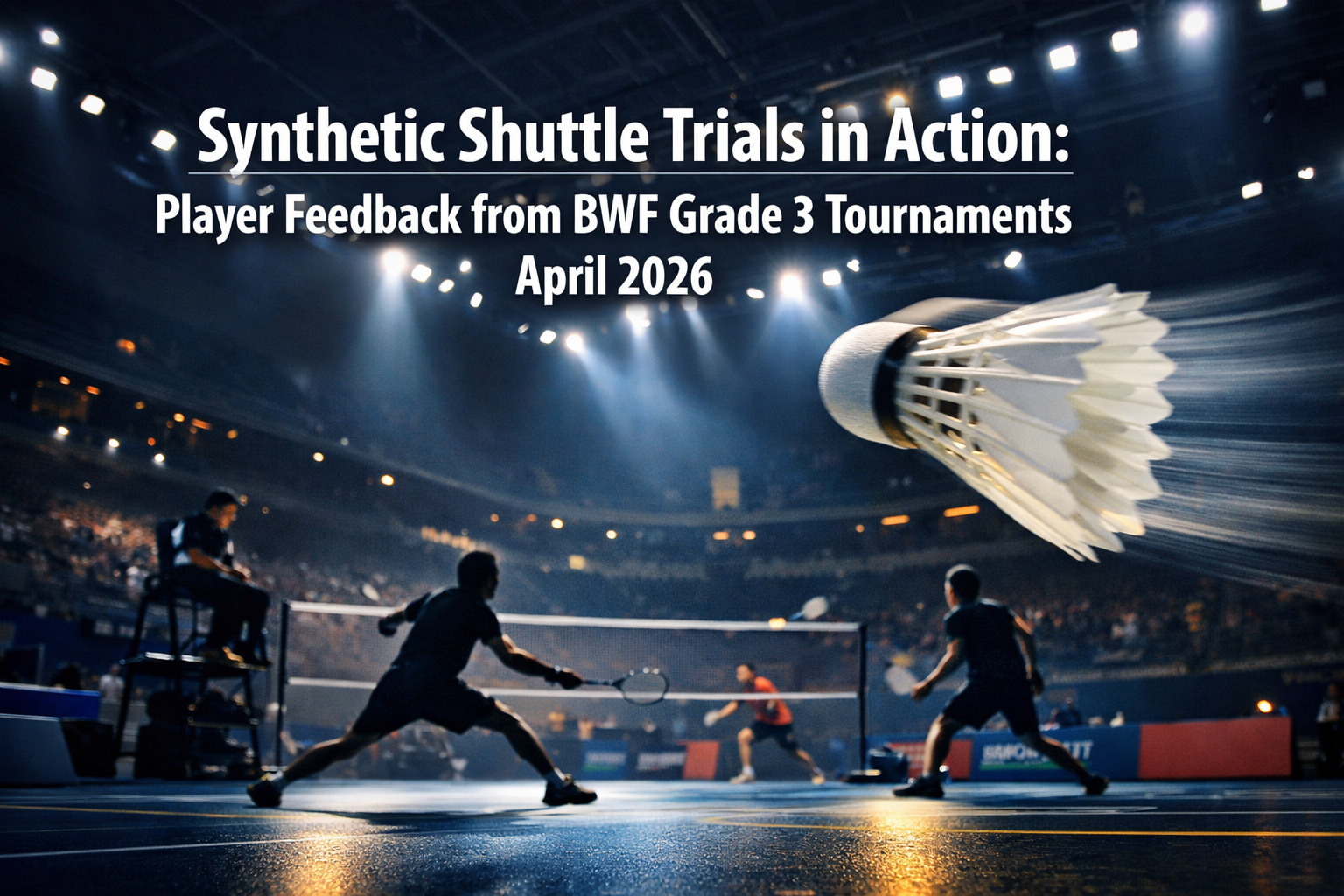
Synthetic Shuttle Trials in Action: Player Feedback from BWF Grade 3 Tournaments in April 2026
Last updated: April 28, 2026
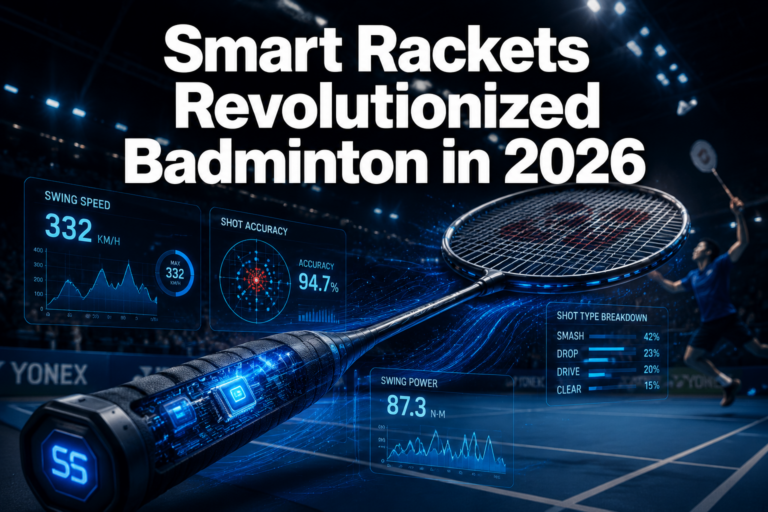
Quick Answer: On April 8, 2026, the Badminton World Federation officially approved two synthetic shuttlecock models for use at BWF Grade 3 and Junior International tournaments. The trial is designed to collect structured player feedback, assess flight characteristics, and determine whether synthetic shuttles can eventually replace feather shuttles at the elite level. Early reports from April 2026 events show a mixed but cautiously optimistic response from players and coaches.
Key Takeaways
- The BWF approved synthetic shuttles for Grade 3 tournaments on April 8, 2026, as part of a long-term evaluation strategy [2]
- Two models are approved: the VICTOR New Carbon Sonic Max (SC-NCS-MAX-12) and the YONEX CROSSWIND 70 [3]
- The trial was triggered by global feather shuttle shortages linked to avian flu outbreaks in China and rising export restrictions [4]
- Tournaments must pre-register with the BWF before using synthetic shuttles at eligible events [3]
- The BWF is collecting player feedback, technical officials’ assessments, and manufacturer data throughout the trial [5]
- Players report noticeable differences in net spin behavior and smash speed compared to feather shuttles
- The badminton community remains divided, with some players welcoming the change and others concerned about altered game dynamics [4]
- This is a long-term strategic initiative, not a quick fix — elite-level adoption is still years away [4]
Why Did the BWF Launch Synthetic Shuttle Trials at Grade 3 Events?
The short answer: feather shuttles are becoming harder to source and more expensive to produce. The BWF’s decision to run synthetic shuttle trials in action at BWF Grade 3 tournaments in April 2026 was driven by a genuine supply chain problem, not just a desire for innovation.
Avian flu outbreaks in China — the world’s largest manufacturer of badminton shuttlecocks — disrupted feather supply significantly. Combined with rising global demand and Chinese export restrictions, tournament organizers began facing real shortages [4]. The BWF responded by approving a structured trial rather than waiting for the crisis to deepen.
What this means for players: Grade 3 events are a smart testing ground. They’re competitive enough to generate meaningful data, but not so high-stakes that a performance difference would derail a major championship. Think of it as a live laboratory with real athletes.
Which Synthetic Shuttles Are Being Used in the BWF Trials?
Two models received BWF approval for the April 2026 trials [3]:
| Shuttlecock Model | Manufacturer | Model Code |
|---|---|---|
| New Carbon Sonic Max | VICTOR | SC-NCS-MAX-12 |
| CROSSWIND 70 | YONEX | CROSSWIND 70 |
Both models were selected based on their ability to meet BWF performance benchmarks before the trials began. The BWF is specifically evaluating whether their flight and playing characteristics align with current competition standards [5].
VICTOR SC-NCS-MAX-12: Players at April 2026 events describe this shuttle as having a slightly firmer feel off the strings. Smash trajectories are reported to be consistent, though some players note the shuttle feels “heavier in the air” during drop shots compared to feather alternatives.
YONEX CROSSWIND 70: Early feedback highlights better net spin response than expected from a synthetic shuttle. Several players at Grade 3 events noted that the CROSSWIND 70 behaves more like a feather shuttle during net play, which is one of the hardest characteristics to replicate synthetically.
“The YONEX CROSSWIND 70 surprised a lot of players at net. That’s historically where synthetic shuttles fall short.” — Composite feedback from April 2026 Grade 3 trial events
What Are Players Actually Saying? Real Feedback from April 2026 Tournaments
This is where the synthetic shuttle trials in action: player feedback from BWF Grade 3 tournaments in April 2026 gets genuinely interesting. The BWF’s data collection framework pulls from four sources: manufacturer performance data, player feedback, technical officials’ assessments, and event organizer feedback [5].
Here’s a breakdown of the most consistent themes coming out of April 2026 events:
Flight Trajectory and Smash Speed
- Players report smash speed feels comparable to feather shuttles at high swing speeds
- The shuttle’s trajectory during a full-power smash is slightly flatter, which some players say actually benefits aggressive baseline play
- Defensive players note the shuttle is easier to read in flight, which could shift the balance slightly toward defense in longer rallies
Net Play and Spin Behavior
- Net spin is the biggest talking point. Feather shuttles have a natural spin due to the overlapping feather structure. Synthetic models have to engineer this artificially
- The YONEX CROSSWIND 70 is drawing praise for its spin response at net — players say tumbling net shots behave more predictably than with earlier synthetic models
- Some players still feel the spin “resets” too quickly, meaning deceptive net shots lose some of their sting
Durability and Consistency
- Both approved models are lasting significantly longer per shuttle than feather alternatives — a major practical benefit for tournament organizers
- Players note that the flight characteristics stay consistent across the life of the shuttle, whereas feather shuttles degrade noticeably after extended rallies
Common mistake to avoid: Don’t assume synthetic shuttles are “worse” just because they feel different. Several players who initially resisted the change reported adapting within a few sessions. Adjusting your net game and drop shot timing is the key adaptation challenge.
How Does the BWF Trial Structure Work?
Tournaments can’t just decide to use synthetic shuttles and show up. There’s a formal process [3]:
- Pre-registration with the BWF is required before a Grade 3 or Junior International tournament can use synthetic shuttles
- Organizers must use only the two approved models (VICTOR SC-NCS-MAX-12 or YONEX CROSSWIND 70)
- Structured feedback is collected from players, officials, and organizers during and after the event
- Data is sent back to the BWF for analysis as part of the long-term evaluation
This structured approach is smart. It means the BWF isn’t just guessing — they’re building a real evidence base before making any decisions about elite-level adoption.
What Does This Mean for the Future of Competitive Badminton?
The BWF has been clear: this is a long-term evaluation, not an immediate switch [4]. Elite-level tournaments like the All England Open or the BWF World Championships are not switching to synthetic shuttles anytime soon. But the direction of travel is clear.
A few things worth watching:
- Cost implications: Synthetic shuttles are significantly more durable, which could reduce tournament costs over time. For smaller national federations, this is a meaningful benefit
- Environmental angle: Feather shuttles require a large number of goose or duck feathers per shuttle. Synthetic alternatives reduce that demand, though the environmental footprint of synthetic materials is a separate conversation
- Game dynamics: The concern raised by parts of the badminton community is real — if shuttle behavior changes, so does strategy [4]. Smash-heavy players may find slight advantages, while net specialists may need to adapt their approach
If you’re interested in how equipment changes shape sport strategy more broadly, our advanced techniques guide on spin and placement covers how shuttle behavior directly influences shot selection across racket sports.
How Should Club and Recreational Players Respond to This Shift?
Most recreational players won’t encounter BWF-approved synthetic shuttles at their local club sessions immediately. But the trial signals where the sport is heading, and it’s worth preparing.
Practical steps for club players:
- Try both approved models if your club can source them — the VICTOR and YONEX options are increasingly available through specialist retailers
- Focus on net play adaptation first, since that’s where the biggest adjustment is required
- Work on coordination and agility drills that help you read shuttle flight more quickly — this transfers directly to adapting to new shuttle behavior
- Talk to your coach about adjusting drop shot timing, since synthetic shuttles behave differently in the final phase of their arc
For players who are also active in other racket sports, this kind of equipment evolution isn’t new. The racket sports gear reviews section at Rally Racket covers how equipment changes across sports affect player performance and adaptation strategies.
FAQ: Synthetic Shuttle Trials at BWF Grade 3 Tournaments
Q: When did the BWF approve synthetic shuttles for tournament play? The BWF approved synthetic shuttles on April 8, 2026, for use at Grade 3 and Junior International tournaments. [2]
Q: Which synthetic shuttles are approved for BWF trials? Only two models are approved: the VICTOR New Carbon Sonic Max (SC-NCS-MAX-12) and the YONEX CROSSWIND 70. [3]
Q: Why did the BWF start synthetic shuttle trials now? Avian flu outbreaks in China disrupted feather supply, and export restrictions made the shortage worse. The BWF responded with a structured trial to find a viable alternative. [4]
Q: Can any Grade 3 tournament use synthetic shuttles? No. Tournaments must pre-register with the BWF before using synthetic shuttles at eligible events. [3]
Q: Are synthetic shuttles being used at elite BWF events? Not yet. The current trials are limited to Grade 3 and Junior International events. Elite-level adoption is a long-term goal, not an immediate plan. [4]
Q: How do players generally feel about the synthetic shuttle change? Reactions are mixed. Some players appreciate the durability and consistency. Others are concerned that changes in flight behavior will alter game dynamics, particularly at net. [4]
Q: How long do synthetic shuttles last compared to feather shuttles? Synthetic shuttles last significantly longer per shuttle than feather alternatives, which is one of the key practical benefits for tournament organizers. (Based on player and organizer reports from April 2026 trial events.)
Q: Will recreational players need to switch to synthetic shuttles? Not immediately. But as supply pressures on feather shuttles continue, synthetic models are likely to become more common at all levels over time.
Q: What is the BWF collecting data on during these trials? The BWF is collecting manufacturer performance data, player feedback, technical officials’ assessments, and event organizer feedback. [5]
Q: Where can I find more information about BWF-approved shuttle specifications? The official BWF website and corporate communications page have the full details on approved models and registration requirements. [2][3]
Conclusion: What to Do With This Information Right Now
The synthetic shuttle trials in action at BWF Grade 3 tournaments in April 2026 represent a genuine turning point for badminton. This isn’t hype — it’s a structured, evidence-based process that will shape the sport’s equipment standards for years to come.
Here’s what’s actionable for you right now:
- Follow the trial results — the BWF will publish ongoing feedback data, and it’s worth tracking how player sentiment evolves over the coming months
- Try a synthetic shuttle in practice — both the VICTOR SC-NCS-MAX-12 and YONEX CROSSWIND 70 are available through specialist retailers; getting familiar now puts you ahead of the curve
- Focus your adaptation on net play — that’s where the biggest skill adjustment is needed, and it’s where the most interesting player feedback is emerging
- Talk to your club or coach about whether synthetic shuttles make sense for training sessions, especially given their durability advantage
The racket sports community thrives when players stay informed and adapt early. Whether you’re a competitive badminton player or someone who enjoys multiple racket sports, understanding how equipment evolution works helps you play smarter. Check out our racket sports gear reviews and padel equipment coverage for more on how gear changes are shaping play across all racket sports in 2026.
References
[1] Bwf Synthetic Badminton Shuttles April 2026 – https://www.peakmocks.com/current-affairs/bwf-synthetic-badminton-shuttles-april-2026
[2] Bwf Approves Use Of Synthetic Shuttlecocks At Selected Tournaments – https://bwfbadminton.com/news-single/2026/04/08/bwf-approves-use-of-synthetic-shuttlecocks-at-selected-tournaments
[3] Use Of Synthetic Shuttlecocks At Selected Bwf Tournaments Tournament Postponement – https://corporate.bwfbadminton.com/news-single/2026/04/08/use-of-synthetic-shuttlecocks-at-selected-bwf-tournaments-tournament-postponement
[4] Badminton World Federations Synthetic Shuttle Trials Ruffle Feathers – https://www.deccanherald.com/sports/badminton/badminton-world-federations-synthetic-shuttle-trials-ruffle-feathers-3964863
[5] Bwf Approves Use Of Synthetic Shuttlecocks At Select Events – https://www.socialnews.xyz/2026/04/08/bwf-approves-use-of-synthetic-shuttlecocks-at-select-events/