2026 racquetball glove innovations and performance gear upgrades
Last updated: September 25, 2026
Quick Answer: The biggest 2026 racquetball glove innovations and performance gear upgrades center on perforated leather construction, advanced sweat-management systems, and multi-material builds that balance grip, feel, and airflow. Brands like HEAD and Ektelon lead the field with tiered product lines that serve both beginners and competitive players. Whether you spend $15 or $50+, the right glove meaningfully improves racquet control and reduces fatigue.
Key Takeaways 🎯
- Perforated and ventilated designs are the defining 2026 trend, keeping hands cooler during long matches
- HEAD’s expanded 2026 lineup offers price-tiered options, from entry-level to pro-grade gloves [2]
- Leather gloves deliver better feel and control; synthetic gloves offer more durability and moisture resistance
- High-end gloves typically run $30,$55; solid beginner options start around $12,$18 [3][6]
- A proper fit is snug but not tight, glove slippage is almost always a sizing or wear issue, not a brand problem
- Fingerless gloves suit players who prioritize touch; full gloves offer more protection and sweat control
- Most gloves last 3-6 months with regular play before grip degrades noticeably
- The biggest buying mistake is choosing size by hand length alone and ignoring palm width
- Racquet upgrades (high-modulus graphite frames) and ball technology work alongside glove improvements for a full gear upgrade [7]
What Are the Best New Racquetball Gloves Coming Out in 2026
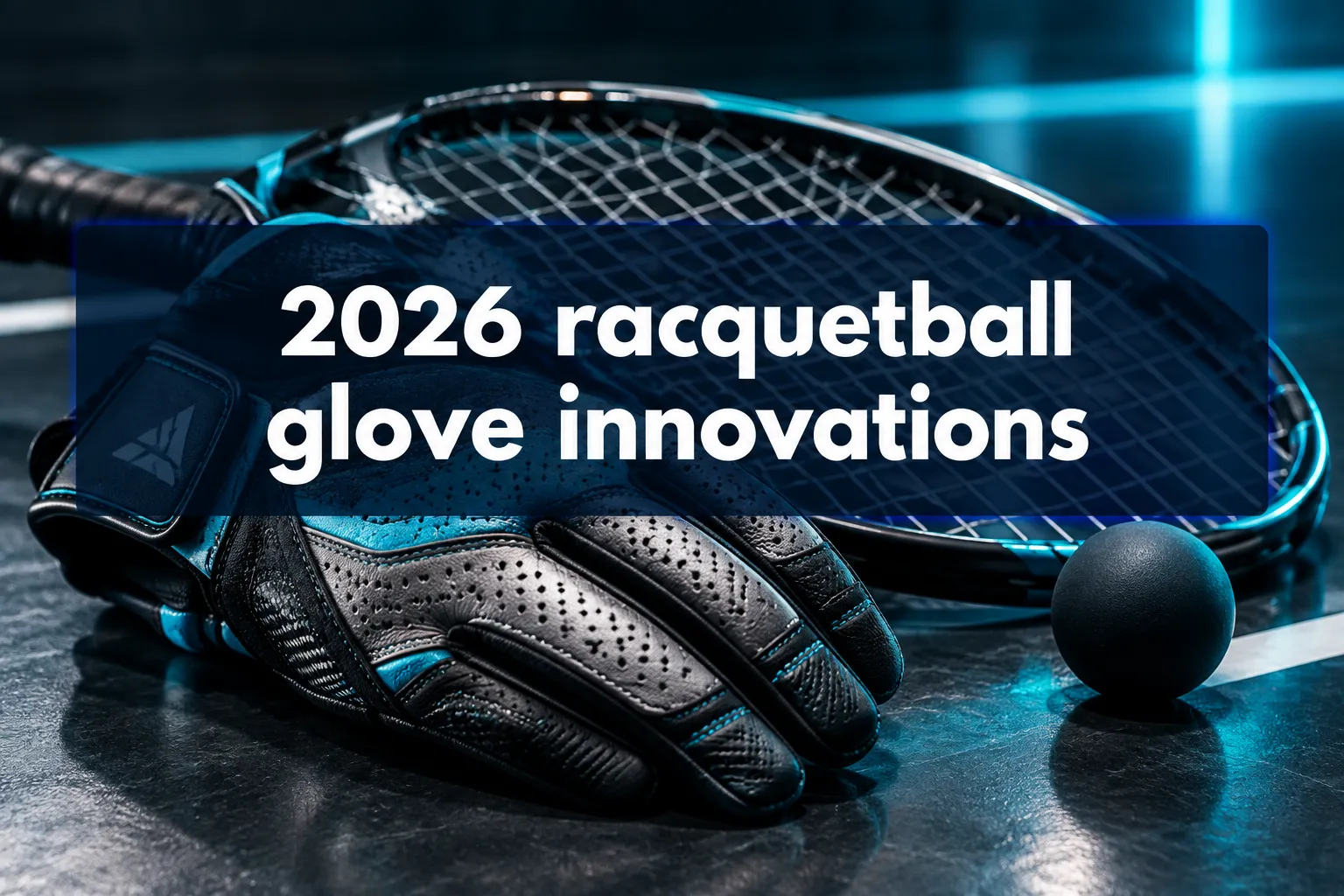
The standout 2026 models are the HEAD Conquest and the Ektelon Controller II, both of which combine impact protection with active airflow. HEAD has also expanded its glove lineup this year with multiple price points, making performance-grade features accessible at different budgets [2][8].
Key models worth knowing in 2026:
- HEAD Conquest, lightweight multi-material construction, perforated palm zones, wrist strap closure [9]
- Ektelon Controller II, impact-protection padding combined with ventilation panels for cooler play
- HEAD Pro Glove, ultra-thin treated leather for maximum racquet feel, ideal for competitive players [2]
- E-Force and Python gloves, widely available at major retailers like Dick’s Sporting Goods and Big 5 [1][6]
“The shift toward perforated leather and multi-material builds in 2026 reflects what serious players have been asking for: better airflow without sacrificing grip.”
How Have Racquetball Gloves Improved Compared to 2025

The 2026 generation of racquetball gloves is noticeably more breathable and better structured than 2025 models. Manufacturers have moved away from single-material palms toward hybrid constructions that place leather or grippy synthetic material only where it matters most, the palm and finger contact zones, while using mesh or perforated panels everywhere else.
Specific improvements include:
- More aggressive perforation patterns across the palm and finger backs for airflow
- Integrated terry wristbands built into the cuff, replacing the need for a separate sweat band
- Thinner leather treatment that preserves tactile feedback while improving durability
- Expanded sizing runs at major retailers, reducing the “it only comes in M/L” problem [4][6]
The HEAD lineup expansion in 2026 is also notable, more SKUs at different price points means players don’t have to choose between “budget” and “pro” with nothing in between [2][8].
What’s the Difference Between Leather and Synthetic Racquetball Gloves
Leather gloves offer better feel and racquet feedback; synthetic gloves last longer and handle moisture better. The choice depends on your priorities and how much you sweat.
| Feature | Leather | Synthetic |
|---|---|---|
| Grip feel | ⭐⭐⭐⭐⭐ Excellent | ⭐⭐⭐⭐ Very good |
| Durability | Moderate (dries out over time) | Higher (resists wear) |
| Moisture handling | Absorbs sweat (can get slippery) | Wicks or repels moisture better |
| Break-in period | Short, molds to hand quickly | Minimal, consistent from day one |
| Best for | Control-focused, advanced players | Beginners, humid conditions |
Choose leather if you play on a dry court and want maximum touch. Choose synthetic if you sweat heavily or play frequently and need a glove that holds up through multiple sessions without degrading.
How Much Do High-End Racquetball Gloves Cost
Most quality racquetball gloves fall between $15 and $55, with the sweet spot for intermediate players around $25,$35. Entry-level gloves at Target and Big 5 start as low as $12,$15 [1][4]. Pro-grade leather gloves from HEAD or Ektelon typically land in the $35,$55 range [2][3].
Price tiers at a glance:
- $10,$18: Basic synthetic gloves, fine for casual or beginner play
- $20,$35: Mid-range multi-material builds with better ventilation and fit
- $35,$55+: Pro-grade leather or hybrid construction, competition-ready [3][6]
The 2026 HEAD lineup specifically added mid-tier options that didn’t exist in 2025, so players no longer have to jump straight to the top price point to get ventilation and a quality palm grip [8].
Best Racquetball Glove for Sweaty Hands
For sweaty hands, the best choice is a synthetic or hybrid glove with perforated panels and an integrated wristband, not a plain leather glove. Leather absorbs sweat well initially but can become slick mid-match as it saturates.
Top features to look for:
- ✅ Perforated or mesh back-of-hand panels
- ✅ Moisture-wicking synthetic palm lining
- ✅ Terry cloth or integrated wristband to catch wrist drip before it reaches the palm
- ✅ Snug (not tight) fit so the glove doesn’t shift when wet
The Ektelon Controller II and HEAD’s ventilated synthetic models address this directly with airflow-first construction. Some players also keep a second glove in their bag and swap at breaks, a common competitive habit worth adopting.
Do You Really Need an Expensive Racquetball Glove, or Is a Cheap One Fine
A $15 glove is genuinely fine for casual play, 1-2 times per week. If you play 3+ times per week, compete, or sweat heavily, spending $25,$40 pays off in durability and consistent grip.
The honest breakdown:
- Casual player (1-2x/week): A basic $12,$18 glove from Target or Big 5 works well [1][4]
- Regular player (3-4x/week): Step up to $25,$35 for better construction and longer life
- Competitive player: Invest in $35,$55 leather or pro-hybrid for feel and reliability [3]
The biggest performance gap isn’t between cheap and expensive gloves, it’s between a well-fitting glove and a poorly fitting one, regardless of price. A $50 glove in the wrong size performs worse than a $20 glove that fits correctly.
Just as choosing the right equipment matters in other racquet sports (see our guide on essential pickleball gear for beginners), glove selection in racquetball follows the same principle: fit and function before brand prestige.
Racquetball Glove Sizing Guide: How Tight Should It Fit
A racquetball glove should fit snugly with no bunching at the fingertips and no gap at the palm. The fingertips should reach the end of the glove fingers without pressing against them.
Quick sizing steps:
- Measure your dominant hand’s palm circumference (just below the knuckles, excluding the thumb)
- Use the brand’s size chart, most brands use S/M/L/XL, but measurements vary
- Try the glove on and make a fist, there should be no excess material bunching at the fingers
- Check the wrist closure: it should hold the glove in place without cutting circulation
Common sizes by palm measurement (estimate):
- Small: under 7.5 inches
- Medium: 7.5-8 inches
- Large: 8-8.5 inches
- XL: 8.5+ inches
A glove that’s even slightly too large is the #1 cause of in-game slippage. When in doubt, size down.
Why Is My Racquetball Glove Slipping During Play
Glove slippage almost always comes down to wrong size, worn-out grip material, or sweat saturation, not a defective product.
Diagnose the cause:
- Too large: The glove rotates on your hand during swings. Size down.
- Worn grip: The palm leather or synthetic has smoothed out. Time for a new glove.
- Sweat saturation: The palm is wet and slick. Switch to a perforated or synthetic model, or carry a spare.
- Wrist strap too loose: Tighten the velcro closure, it anchors the whole glove.
If the glove is new and still slipping, it’s almost certainly a size issue. Check the brand’s sizing chart and compare it to your actual palm measurement before buying again.
Best Racquetball Gloves for Beginners vs. Advanced Players
Beginners should prioritize fit, basic grip quality, and value. Advanced players should prioritize feel, durability under heavy use, and sweat management.
For beginners:
- Any well-fitting synthetic glove in the $12,$25 range works well [4][6]
- Look for a simple velcro wrist closure and a padded palm
- Avoid overly stiff leather until you’ve developed consistent swing mechanics
For advanced/competitive players:
- Leather or treated leather palm for maximum feedback [2]
- Perforated or multi-material construction for long match endurance
- Consider having two identical gloves and rotating them to extend life
The same logic applies across racquet sports, gear should match your skill level and frequency of play, not just your aspirations. If you’re exploring other court sports alongside racquetball, our overview of padel equipment in 2026 covers similar gear-selection principles.
What Grip Technology Is New in 2026 Racquetball Gear
The 2026 racquetball glove innovations and performance gear upgrades go beyond just gloves. Grip technology in 2026 focuses on zone-specific materials, placing tackier compounds only on high-contact palm areas while using lighter, breathable materials elsewhere.
New in 2026:
- Zone-grip palms: Tacky polymer patches on the index-to-pinky base zone, smoother material on the thumb for natural rotation
- Micro-channel ventilation: Tiny channels cut through the palm layer to direct sweat away from the grip surface
- Racquet grip integration: High-modulus graphite racquets with textured grip tape designed to work with 2026 glove materials for a unified feel [7]
- Ball technology: Improved ball visibility and consistent bounce complement glove grip upgrades for competitive play [7]
For players interested in how sports technology is evolving more broadly, the sports technology tag on Rally Racket covers innovations across multiple court sports.
Racquetball Glove Durability: How Long Do They Last
Most racquetball gloves last 3-6 months with regular play (3-4 sessions per week) before the palm grip degrades enough to affect performance. Casual players (1-2x/week) can expect 6-12 months from a quality glove.
Factors that shorten glove life:
- Heavy sweating (accelerates leather breakdown)
- Not allowing the glove to dry fully between sessions
- Washing machine cleaning (hand-wash only, air dry)
- Gripping the racquet too tightly (increases palm wear)
Signs it’s time to replace:
- Palm feels smooth or slick even when dry
- Seams are separating at the fingers
- The wrist strap no longer holds a firm closure
Rotating between two gloves and air-drying after each session can meaningfully extend total lifespan.
Are Fingerless Racquetball Gloves Better Than Full Gloves
Fingerless gloves are better for touch and feel; full gloves are better for protection and sweat control. Neither is objectively superior, it’s a preference based on play style.
Choose fingerless if:
- You prioritize tactile feedback on shots
- You play in cooler, drier conditions
- You’re an advanced player who relies on fine touch for placement
Choose full gloves if:
- You sweat heavily
- You’re a beginner who benefits from more coverage and grip surface
- You play long matches where hand fatigue is a factor
Most recreational players default to full gloves. Fingerless options are more common among advanced competitive players who’ve dialed in their mechanics and want maximum feel.
Top Racquetball Glove Brands in 2026
The 2026 racquetball glove innovations and performance gear upgrades landscape is dominated by a handful of reliable brands, each with a distinct identity.
| Brand | Strength | Best For |
|---|---|---|
| HEAD | Widest product range, quality leather options | All levels [2][8] |
| Ektelon | Impact protection + ventilation combo | Intermediate, advanced |
| E-Force | Durable synthetic builds | Regular recreational players |
| Python | Value pricing, widely available | Beginners [1][6] |
| Gearbox | Performance apparel identity, emerging glove line | Brand-loyal players |
HEAD and Ektelon are the most consistently stocked at specialty and big-box retailers [1][3][6]. For the widest selection in one place, PaddlePro and Dick’s Sporting Goods carry the most SKUs [3][6].
Common Mistakes When Choosing a Racquetball Glove
Most glove-buying regrets come from a short list of avoidable errors.
The most common mistakes:
- Buying by brand alone without checking the size chart for that specific model
- Choosing leather when you sweat heavily, leather and moisture don’t mix well long-term
- Ignoring palm width and sizing only by hand length
- Buying the cheapest option when playing 4+ times a week, it costs more in replacements
- Not trying the glove on (or checking return policy when buying online) before committing
- Skipping the wristband feature, integrated wristbands make a real difference in sweaty conditions
- Assuming expensive = best for you, a $50 glove in the wrong cut is worse than a $20 glove that fits your hand shape
Mental preparation matters as much as gear, if you’re working on your competitive edge, our piece on dealing with pressure and mental strategies for high-stakes matches is worth reading alongside your gear upgrade.
FAQ
Q: Can I use a racquetball glove for squash or other racquet sports? Yes, racquetball gloves work reasonably well for squash and paddleball. The grip and palm construction are similar enough that crossover use is common, though sport-specific gloves will always fit the grip pattern better.
Q: Should I wear a glove on my non-dominant hand? No. Racquetball gloves are worn only on the dominant (racquet) hand. The non-dominant hand doesn’t contact the grip.
Q: How do I clean a racquetball glove? Hand-wash with mild soap and cool water. Never machine wash or tumble dry, heat and agitation break down leather and adhesives. Air dry flat, away from direct sunlight.
Q: Is one glove enough, or should I buy two? Two is ideal for regular players. Rotating gloves lets each one dry fully between sessions, which extends both gloves’ lifespan significantly.
Q: Do gloves actually improve performance, or is it just comfort? Both. A properly fitting glove reduces grip pressure needed to control the racquet, which reduces forearm fatigue and improves shot consistency, especially late in a match.
Q: What’s the best glove for someone with small hands? Look for brands that offer XS sizing or women’s-specific cuts. HEAD and E-Force both offer smaller size runs. A glove that’s even slightly too large will slip, so fit precision matters more for smaller hands.
Q: Can I return a glove if it doesn’t fit? Most major retailers (Dick’s, Target, Big 5) accept returns on unworn gear [1][4][6]. Online specialty stores like PaddlePro may have different policies, check before ordering [3].
Q: Are 2026 gloves significantly better than 2024 models? The ventilation and multi-material construction improvements are meaningful, especially for players who sweat heavily. If your current glove still fits well and grips cleanly, there’s no urgent reason to upgrade. If it’s worn or slipping, 2026 models are a clear step forward.
Conclusion: Your 2026 Racquetball Glove Action Plan
The 2026 racquetball glove innovations and performance gear upgrades make this a genuinely good year to reassess your equipment. Perforated leather, zone-grip technology, integrated wristbands, and smarter multi-material builds mean there’s a well-designed glove at nearly every price point.
Your next steps:
- Measure your palm before buying anything, circumference just below the knuckles
- Match material to your sweat level, synthetic or hybrid for heavy sweaters, leather for dry-court control players
- Set a realistic budget, $25,$35 covers most recreational players well; go higher only if you compete regularly
- Try before you commit when possible, or buy from a retailer with a clear return policy
- Replace when the palm feels smooth, don’t wait until you’re dropping shots to swap gloves
Good gear supports good play, but it doesn’t replace it. Pair your glove upgrade with smart court habits and you’ll notice the difference within a few sessions.
References
[1] N B9r – https://www.big5sportinggoods.com/store/browse/sports/racquetball/_/N-b9r [2] Gloves – https://www.head.com/en_US/shop-racquetball/gloves [3] Gloves – https://www.paddlepro.com/other-sports/racquetball/gloves/ [4] Racquetball+glove – https://www.target.com/s/racquetball+glove [6] Racquetball Equipment Gear – https://www.dickssportinggoods.com/f/racquetball-equipment-gear [7] Best Racquetball Racquets – https://beboivn.com/best-racquetball-racquets/ [8] Gloves – https://www.head.com/en/shop-racquetball/gloves [9] freshdogs.de – https://freshdogs.de/products/head-conquest-racquetball-glove/217872614/