Electric Mountain Bikes Meet Racquetball: Cross-Training Hacks for Off-Court Endurance in 2026
Last updated: July 31, 2026
Quick Answer: Electric mountain bikes (eMTBs) are one of the most effective off-court cross-training tools for racquetball players in 2026. When ridden on low-assist modes, eMTBs deliver moderate-to-vigorous cardio intensity, build the exact leg muscles used on court, and reduce recovery fatigue compared to traditional high-impact training. Combining eMTB hill intervals with racquetball-specific agility drills creates a well-rounded endurance program that translates directly to better court performance.
Key Takeaways 🎯
- eMTBs on low-assist settings produce training intensities comparable to conventional cycling, making them a legitimate cardio tool, not a shortcut.
- A 2026 longitudinal study (published in Retos) found that 16 weeks of eMTB riding (28 rides, 778 km) still produced health-relevant exercise intensities when assist was kept low.
- Racquetball demands explosive bursts, lateral agility, and sustained aerobic capacity, all of which eMTB training directly supports.
- Most racquetball players benefit from 2-3 cross-training sessions per week, leaving room for on-court practice and recovery.
- eMTBs are not ideal for athletes with certain knee injuries or those who need zero-impact recovery days.
- Good entry-level training eMTBs range from roughly $2,500,$4,500 in 2026; mid-range performance models run $4,500,$8,000.
- Rocky terrain and moderate hill climbs offer the best training stimulus for racquetball-specific endurance.
- Pairing eMTB rides with footwork drills, lateral band walks, and court agility work creates a complete off-court program.

What Is Cross-Training for Racquetball Players?
Cross-training for racquetball means doing physical work outside the court that directly improves on-court performance. For racquetball players, the goal is to build aerobic base, leg power, lateral quickness, and injury resilience without adding more court time that could cause overuse strain [2].
Racquetball is a high-intensity interval sport. Points last seconds, but a full match can run 45-90 minutes of near-constant movement. That demands both anaerobic power (for explosive rallies) and aerobic endurance (to sustain effort across sets). Cross-training fills the gap between those two energy systems.
Best cross-training options for racquetball players include:
- Cycling (conventional or electric)
- Swimming
- Jump rope intervals
- Lateral agility ladder drills
- Strength training focused on quads, glutes, and core [2][9]
Choose cross-training if: you play racquetball 3+ times per week and want to build fitness without adding more court wear on your joints.
How Do Electric Mountain Bikes Improve Racquetball Endurance?
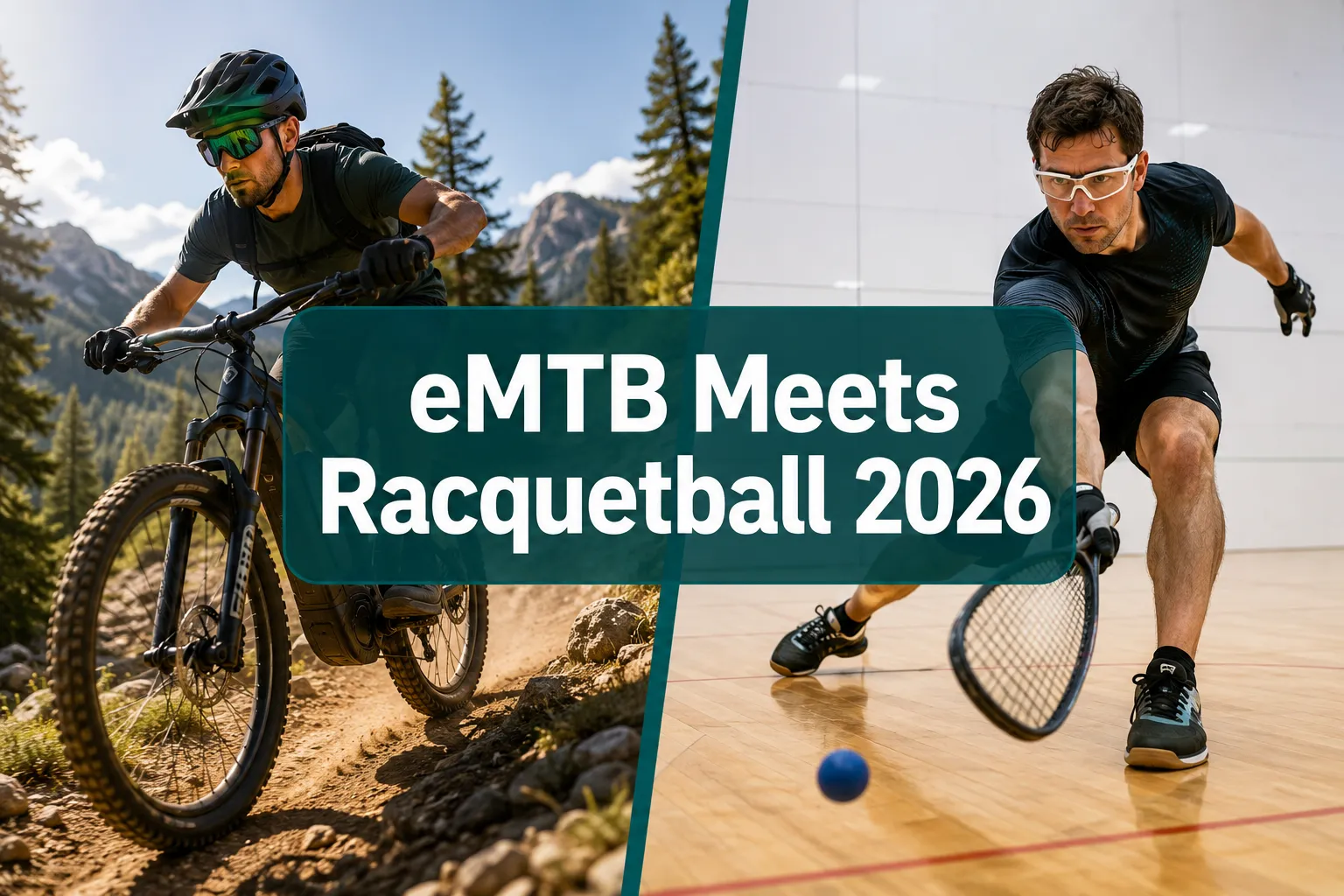
eMTBs improve racquetball endurance by delivering sustained cardiovascular work that mirrors the aerobic demands of a long match, without the joint impact of running or on-court drills. This is where Electric Mountain Bikes Meet Racquetball: Cross-Training Hacks for Off-Court Endurance in 2026 becomes genuinely practical.
A 2026 longitudinal study published in Retos followed athletes over 16 weeks of eMTB riding (28 outdoor rides, 778 km total). When assist was kept at low settings, riders maintained moderate-to-vigorous exercise intensity throughout. The key finding: eMTBs reduce momentary physiological load compared to conventional bikes, which means racquetball players can train longer with less fatigue, then recover faster for their next court session.
Why this matters for racquetball:
- Sustained moderate-intensity riding builds the aerobic base needed for long matches.
- Hill climbs on low assist force quad and glute engagement identical to the push-off mechanics in court lunges.
- Variable terrain keeps heart rate fluctuating in intervals, mimicking the stop-start pattern of racquetball rallies.
What Muscles Do eMTBs Work for Racquetball?
eMTBs primarily work the quadriceps, glutes, hamstrings, calves, and core, the same muscle groups that drive racquetball movement. This muscle overlap is what makes eMTB training so transferable to court performance.
| Muscle Group | eMTB Action | Racquetball Action |
|---|---|---|
| Quadriceps | Pedal drive on climbs | Lunge and push-off |
| Glutes | Hill climbing, seated power | Lateral shuffle, court coverage |
| Hamstrings | Pedal pull-through | Deceleration and change of direction |
| Core | Trail balance and stability | Swing rotation and body control |
| Calves | Pedal cadence | Quick footwork and pivots |
Edge case: eMTB riding does not train the upper body or racquet-arm muscles. Racquetball players should add shoulder and rotator cuff work separately to balance the program [2][9].
Is Electric Mountain Biking Good for Racquetball Footwork?
eMTB riding does not directly replicate the lateral footwork patterns used in racquetball, but it builds the muscular endurance and leg strength that make those patterns more sustainable. For direct footwork improvement, dedicated court drills are still essential.
The good news: combining eMTB rides with footwork-specific exercises creates a powerful pairing. After a 45-minute eMTB session, adding 10-15 minutes of lateral band walks, cone shuffles, or agility ladder work keeps the neuromuscular system engaged in court-relevant patterns. You can find solid footwork drill frameworks at improving footwork: drills to enhance your movement on the court, many of these translate directly from racquet sports to racquetball.
Electric Mountain Bike vs. Regular Bike for Racquetball Training
For most racquetball players, an eMTB on low-assist mode is equal to or slightly better than a conventional mountain bike for cross-training, because it allows longer rides with less fatigue accumulation, which means more total training volume over a week.
Key differences:
- Conventional bike: Higher momentary intensity per ride, more fatigue, better for athletes with no heavy court schedule.
- eMTB (low assist): Slightly lower peak intensity per session, but allows more sessions per week without overtraining, ideal for racquetball players already logging 3-4 court hours weekly.
- eMTB (high assist): Significantly reduced training stimulus; not recommended as a primary cardio tool unless recovering from injury.
Choose an eMTB if: you play racquetball 3+ times per week and need cross-training that won’t leave your legs too fatigued for court sessions. Choose a conventional bike if: you’re in an off-season block with fewer court commitments and want maximum training intensity per ride [10].
Can eMTBs Replace Traditional Cardio Training for Racquetball?
eMTBs can replace most traditional cardio methods for racquetball cross-training, but they shouldn’t replace all of it. Running and jump rope develop the fast-twitch, high-impact conditioning that eMTB riding doesn’t fully replicate.
A practical approach: use eMTB rides as the primary aerobic base builder (2-3 sessions per week), and keep one short high-intensity session, like jump rope intervals or court sprints, to maintain explosive conditioning [6][9].
Best Cardio Workouts for Racquetball Off Court
The best off-court cardio for racquetball players combines aerobic base work with short explosive intervals. eMTB rides, jump rope, and stair intervals are the top three options in 2026.
Top off-court cardio options ranked for racquetball:
- eMTB hill intervals, builds aerobic base + leg power simultaneously
- Jump rope (tabata style), develops fast-twitch endurance and footwork rhythm [2]
- Stair sprints, explosive quad and glute work, high carryover to court movement
- Swimming, low-impact aerobic recovery option, good for injury-prone players
- Rowing machine, full-body cardio with core engagement [9]
How Often Should Racquetball Players Do Cross-Training?
Most racquetball players benefit from 2-3 cross-training sessions per week, scheduled on non-court days or as light sessions following easy court play. Overdoing cross-training is a common mistake that leads to fatigue and declining court performance [8].
Sample weekly structure:
- Monday: Court play (moderate intensity)
- Tuesday: eMTB ride (45-60 min, low assist)
- Wednesday: Rest or light stretching
- Thursday: Court play (high intensity)
- Friday: eMTB ride + footwork drills (30 min bike + 15 min drills)
- Saturday: Court play or match
- Sunday: Active recovery (walk, swim, or yoga)
This structure aligns with advice from experienced racquetball coaches who emphasize balancing court time with complementary conditioning [5][8].
eMTB Training Plans for Court Sports Athletes
A basic 4-week eMTB training block for racquetball players should progress from aerobic base building in weeks 1-2 to interval-focused sessions in weeks 3-4.
4-Week eMTB Cross-Training Block:
- Weeks 1-2: 2 rides per week, 40-50 minutes each, low assist, moderate terrain. Focus on steady aerobic effort (conversational pace).
- Weeks 3-4: 2-3 rides per week, 50-60 minutes each, low assist, add 4-6 hill sprint intervals (30 seconds hard, 90 seconds easy) per session.
After the 4-week block, reassess court performance. Most players notice improved late-game endurance and faster recovery between points, which directly connects to positioning and movement tips for court awareness becoming more automatic when fatigue is lower.
What Terrain Is Best for Racquetball Endurance Training on eMTB?
Moderate rolling hills with mixed surfaces (gravel, packed dirt, light rock) provide the best training stimulus for racquetball players. Flat terrain is too easy; extreme technical trails shift focus to skill rather than conditioning.
Terrain guide:
- Rolling hills (best): Constant heart rate variation, mimics rally intervals
- Sustained climbs: Excellent for leg strength and VO2 max development
- Flat trails: Good for active recovery rides, low training stimulus
- Highly technical singletrack: Skill-focused; less cardio benefit per hour
How Much Does a Good eMTB Cost for Training?
In 2026, a reliable training-grade eMTB starts at roughly $2,500,$4,500 for entry-level models from brands like Trek, Specialized, and Giant. Mid-range performance models suited for regular trail riding and interval training run $4,500,$8,000.
Cost breakdown (2026 estimates):
- Entry-level ($2,500,$4,500): Adequate motor, 500-625Wh battery, suitable for moderate trails
- Mid-range ($4,500,$8,000): Better suspension, longer range, more durable for frequent use
- High-end ($8,000+): Premium components, full suspension, overkill for most cross-trainers
For racquetball players using eMTBs purely for cross-training, an entry-level or mid-range model is more than sufficient.
Who Should Not Use eMTBs for Cross-Training?
eMTB cross-training is not appropriate for everyone. Racquetball players with certain conditions should consult a sports medicine professional before starting.
Avoid eMTB cross-training if:
- You have an active knee injury (patellar tendinitis, meniscus tear) that worsens with pedaling
- You’re in an acute recovery phase from a lower-body strain
- You have balance or vestibular disorders that make trail riding unsafe
- You’re a complete beginner to cycling, start on flat paths before attempting trail riding
Players managing chronic conditions can often still use eMTBs with modifications (flat terrain, shorter duration, higher assist during recovery phases). The injury prevention principles that apply to court sports, like those covered in injury prevention strategies for racquet sport players, apply equally to off-court training.
Common Mistakes Racquetball Players Make With Cross-Training
The biggest mistake is treating cross-training as extra court practice, piling on volume without managing total fatigue. This leads to burnout and injury rather than improved performance [8].
Top mistakes to avoid:
- Too much too soon, Adding 3+ eMTB rides per week in the first month alongside a full court schedule
- Always using high assist, Reduces training stimulus to near zero; defeats the purpose
- Skipping recovery days, Cross-training should complement court play, not compete with it
- Ignoring upper body, eMTBs don’t train the shoulder and arm strength racquetball demands [2]
- No periodization, Doing the same ride every week without progression stalls fitness gains
Quick fix: Track your resting heart rate each morning. If it rises 5+ beats above your baseline for 2+ consecutive days, take a rest day regardless of your planned schedule.
How to Structure a Weekly Racquetball and eMTB Training Schedule
The most effective weekly schedule pairs eMTB rides on off-court days and keeps total weekly training load manageable. This is the practical core of Electric Mountain Bikes Meet Racquetball: Cross-Training Hacks for Off-Court Endurance in 2026.
For players serious about improving their game, combining eMTB endurance work with smart on-court strategy, including strategic court placement and positioning basics, creates compounding performance gains. Better endurance means better decision-making late in matches, not just more energy.
The physical benefits of cross-sport training also extend beyond racquetball. Many players who add eMTB riding find it easier to pick up other racquet sports, as the cardio base transfers well, similar to how the physical benefits of pickleball overlap with general court sport fitness.
FAQ
Q: Can a beginner racquetball player start eMTB cross-training right away? Yes, but start with flat or gentle terrain on medium assist and build up over 4-6 weeks before adding hill intervals.
Q: How long should an eMTB cross-training session be for racquetball? 40-60 minutes is the sweet spot. Under 30 minutes provides minimal aerobic benefit; over 75 minutes may create too much fatigue for court play the next day.
Q: Does eMTB riding improve VO2 max for racquetball? Yes. Sustained moderate-to-vigorous intensity cycling on low assist has been shown to produce health-relevant cardiovascular adaptations, including improvements in aerobic capacity.
Q: Should I eat differently on eMTB training days? Add 200-400 calories of carbohydrates before longer rides (50+ minutes). Hydration is critical, dehydration on the bike directly impairs next-day court performance.
Q: Is an eMTB better than a stationary bike for racquetball cross-training? For most players, yes. Trail riding adds balance, coordination, and mental engagement that stationary bikes don’t provide. However, stationary bikes are a valid alternative in bad weather or for injury recovery.
Q: How soon will I notice improved endurance on court from eMTB training? Most players report noticeable improvements in late-match stamina within 4-6 weeks of consistent eMTB cross-training (2-3 sessions per week).
Q: Can older racquetball players (50+) use eMTBs for cross-training? Absolutely. The adjustable assist feature makes eMTBs particularly well-suited for older athletes who need to manage joint load while maintaining cardiovascular fitness.
Q: Do I need special gear for eMTB cross-training? A properly fitted helmet is non-negotiable. Padded cycling shorts, gloves, and trail shoes improve comfort significantly on longer rides.
Conclusion
Electric Mountain Bikes Meet Racquetball: Cross-Training Hacks for Off-Court Endurance in 2026 is more than a catchy concept, it’s a practical, evidence-backed training strategy. The 2026 Retos longitudinal study confirms that eMTBs on low-assist settings deliver real cardiovascular and muscular training stimulus. For racquetball players, that means a cross-training tool that builds the aerobic base, leg power, and interval conditioning needed to outlast opponents in long matches.
Actionable next steps:
- This week: Audit your current training schedule and identify 2 off-court days for eMTB rides.
- Week 1-2: Start with 40-minute rides on moderate terrain, low assist, steady aerobic pace.
- Week 3-4: Add 4-6 hill sprint intervals per session (30 sec hard / 90 sec easy).
- Ongoing: Pair each eMTB day with 10-15 minutes of lateral footwork drills.
- Monthly: Track your court performance, specifically late-match energy levels and recovery speed between points.
The combination works. Get on the trail, keep the assist low, and watch your court endurance climb. 🚵🎾
References
[2] Best Workouts For Racquetball Players Improve Power And Endurance – https://fitnesslanes.com/best-workouts-for-racquetball-players-improve-power-and-endurance/
[5] Fran Davis Preseason Preparation – https://www.frandavisracquetball.com/2011/08/fran-davis-preseason-preparation/
[6] Conditioning – https://www.reddit.com/r/racquetball/comments/36x9iq/conditioning/
[8] Balancing Racquetball With Other Exercise – https://www.reddit.com/r/racquetball/comments/e575s6/balancing_racquetball_with_other_exercise/
[9] Racquetball Workout Plan – https://www.exercise.com/workout-plans/racquetball-workout-plan/
[10] Izn20130115 All Cycling Cross Training 0 – https://www.britishcycling.org.uk/knowledge/training/article/izn20130115-All-Cycling-Cross-Training-0