
Olympic Squash Is Coming: What the 2028 Debut Means for Players, Clubs, and the PSA Tour
Last updated: May 16, 2026
Quick Answer: Squash will make its Olympic debut at the 2028 Los Angeles Games after being excluded from the Olympics for decades. This milestone will reshape how players train, how clubs recruit juniors, how national federations fund the sport, and how the PSA World Tour attracts sponsors and media deals globally.
Key Takeaways
- 🏅 Squash was officially approved for the 2028 LA Olympics by the IOC in October 2023, ending one of sport’s longest Olympic exclusion stories.
- 🎾 The format will be singles play for both men and women, with national qualification pathways still being finalized by the World Squash Federation (WSF).
- 💰 National Olympic committees will now fund squash programs directly, opening new money streams for players and clubs.
- 📺 Broadcast deals and sponsorship interest in squash are already growing in anticipation of the 2028 debut.
- 🧒 Junior development programs are expected to expand significantly as squash gains Olympic status and visibility.
- 🌍 Countries with strong racket sports cultures — Egypt, England, Malaysia, the USA, and France — are accelerating national team infrastructure.
- 🏋️ Players on the PSA Tour are adjusting training priorities to align with Olympic qualification windows.
- 🏟️ Clubs that act now — building junior pipelines and coaching capacity — will have a head start on the coming wave of interest.
Why Olympic Squash Is Coming Changes Everything
Squash’s Olympic inclusion is not just a symbolic win. It directly changes how the sport is funded, coached, and watched.
For decades, squash was one of the most-played racket sports in the world with no Olympic home. That changed when the International Olympic Committee (IOC) confirmed squash for the 2028 Los Angeles Games in 2023. Since then, the sport’s ecosystem has been shifting fast.
National Olympic committees — which control major government and sponsor funding — now have a mandate to support squash. That means players who previously scraped together prize money and personal sponsorships can start accessing the kind of institutional support that Olympic sports enjoy. Think national training centers, paid coaching staff, sports science support, and travel grants.
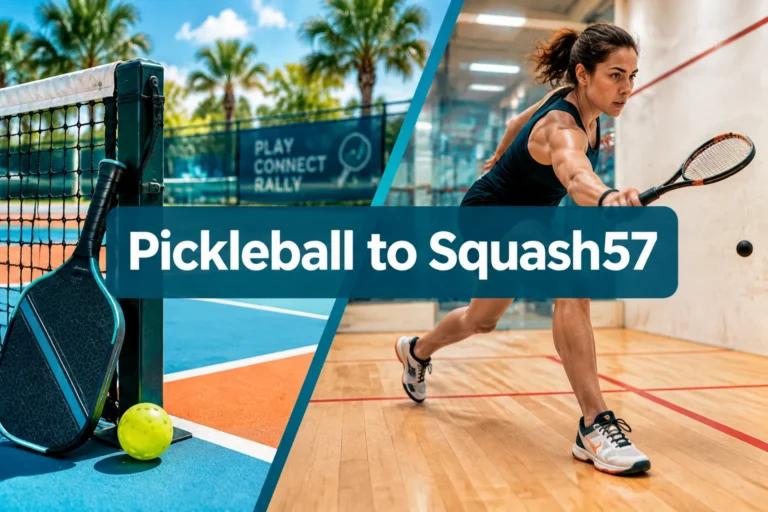
For the broader racket sports community, this is a signal worth paying attention to. Whether you play squash, follow competitive pickleball tournaments, or compete in any other racket sport, the Olympic spotlight on squash will raise the profile of the entire category.
What the 2028 Olympic Format Looks Like for Squash
The Olympic squash competition will use a singles format for both men and women. Doubles is not included in the 2028 program.
Here’s what the current plan looks like, based on WSF and IOC guidance:
| Category | Detail |
|---|---|
| Format | Singles (men’s and women’s) |
| Court type | Glass-walled show court |
| Qualification | WSF world rankings + host nation spots |
| Location | Los Angeles, 2028 |
| Number of athletes | TBC (expected 32–64 per gender) |
Key decision rule: If you’re a competitive squash player currently ranked in the top 50 on the PSA Tour, Olympic qualification is a realistic goal. If you’re ranked outside the top 100, focus on national championships and regional qualifying events as your path in.
The glass-walled court format is a smart choice for television. It gives cameras clean sightlines and creates the kind of visual spectacle that draws casual viewers — exactly what squash needs to grow its global audience.

How Olympic Squash Is Coming Will Reshape the PSA Tour
The PSA World Tour will not be replaced by the Olympics — but it will be transformed by it.
Here’s what’s already shifting:
Sponsorship and media: Brands that previously ignored squash are now circling. Olympic sports command premium sponsorship rates, and the PSA Tour is the primary pipeline for Olympic-caliber talent. Expect more broadcast deals, more live streaming, and more social media investment from the tour itself.
Ranking and qualification: The WSF will use PSA rankings as a core qualification metric. This gives PSA events more strategic weight for players. Every tournament becomes a potential qualifier, which raises the stakes — and the viewership — for mid-tier events.
Player contracts: Top players are already reporting increased interest from national federations. Some countries are offering retainer contracts to their top-ranked squash athletes for the first time, similar to what tennis and badminton players have enjoyed for years.
Common mistake to avoid: Assuming the PSA Tour calendar will stay the same. Expect the WSF to negotiate a modified schedule around the Olympic cycle, similar to how the ATP and WTA structure their calendars around the Grand Slams.
What This Means for Squash Clubs Right Now
Clubs that start building now will benefit most from the Olympic wave.
The pattern is consistent across every sport that gains Olympic status: a surge in junior registrations, increased media coverage, and a short window where early movers capture the best coaches and facilities. Squash clubs have roughly two years before the 2028 Games to position themselves.
Practical steps for clubs in 2026:
- Launch or expand junior programs. Olympic visibility drives youth participation. Schools and parents respond to Olympic sports differently than non-Olympic ones.
- Partner with national federations. Many national squash bodies are now distributing Olympic development funding. Clubs that apply early get priority.
- Upgrade your show court. Glass-backed courts are now the standard for serious club play and are far more attractive to juniors who’ve watched Olympic squash on TV.
- Hire certified coaches. National coaching certifications are being updated to align with Olympic standards. Getting coaches qualified now is cheaper and easier than waiting.
- Create visible pathways. Post rankings, host local tournaments, and connect your junior players to regional qualifying events. Building an inclusive sports community starts with clear pathways for new players.
How National Funding for Squash Will Change
Olympic inclusion unlocks government sports funding that was previously unavailable to squash programs.
In most countries, national sports institutes and Olympic committees allocate budgets based on Olympic participation. Before 2023, squash was simply not in that conversation. Now it is.
Countries like Egypt (home to world No. 1 players across multiple generations), England, Malaysia, and the USA are already restructuring their national squash programs. Here’s what that typically looks like in practice:
- Direct athlete grants: Monthly stipends for top-ranked national players
- Coaching infrastructure: Paid national coaches, assistant coaches, and sports scientists
- Facility access: Priority booking at national training centers
- Competition funding: Travel and entry fees covered for key PSA events
- Anti-doping compliance: Mandatory testing programs (required for Olympic sports)
For players outside the top tier, this funding trickles down through junior academies and regional development programs. It’s not just the elite who benefit — the entire pyramid gets stronger.
Training Priorities Are Shifting for Competitive Players
Olympic squash demands a different kind of preparation than the PSA Tour grind alone.
PSA Tour players typically train for consistency across a long season — lots of matches, quick recovery, and tactical adaptability. Olympic preparation adds a different layer: peak performance for a specific two-week window, with no second chances.
This is changing how serious squash players structure their training:
Physical preparation: More emphasis on explosive speed and recovery between points, since Olympic matches will be high-intensity showcases rather than grinding five-game marathons.
Mental performance: Sports psychologists are being added to national squads. The pressure of a single Olympic match is different from a regular tour event.
Tactical film study: Players are investing more in video analysis of opponents, especially for the knockout format typical of Olympic competition.
If you’re a recreational squash player looking to improve your own movement and agility, many of these principles apply at any level. Drills that improve coordination and agility translate well across racket sports — the footwork fundamentals are remarkably similar whether you’re playing squash, pickleball, or padel.
What Olympic Squash Means for Junior Players and Development
Junior squash players are the biggest long-term winners from Olympic inclusion.
Right now, a talented 14-year-old squash player in the USA, France, or Malaysia can realistically dream of competing at the 2032 or 2036 Olympics. That’s a powerful motivator — and it’s one that coaches and parents understand immediately.
National federations are already building junior pipelines with this in mind:
- Talent identification programs are being formalized in countries where they previously relied on club coaches alone.
- Junior PSA events are gaining more attention as early ranking points matter more.
- School partnerships are expanding, with squash being promoted as an Olympic sport in physical education programs.
- Scholarships at university level are becoming more available in countries with strong collegiate sports cultures (particularly the USA).
For junior players and their families, the advice is simple: get ranked, stay consistent, and find a club connected to your national federation’s development program. The pathway to the Olympics is clearer now than it has ever been in squash’s history.
How Squash’s Olympic Debut Connects to the Broader Racket Sports World
Olympic squash is a rising tide for all racket sports.
When one racket sport gains mainstream visibility, the whole category benefits. Tennis has long been the anchor. Badminton has been Olympic since 1992. Table tennis since 1988. Now squash joins that group — and the conversation around racket sports as a lifestyle and competitive category gets stronger.
This matters for players across the board. If you’re part of the growing racket sports community — whether you play pickleball, padel, tennis, or badminton — squash’s Olympic moment adds credibility and energy to the entire space.
Padel, for example, is actively campaigning for future Olympic inclusion. Pickleball’s rapid growth in the USA has sparked similar conversations. The more racket sports that reach Olympic audiences, the more investment flows into courts, coaching, and gear across all disciplines. For anyone interested in racket sports gear reviews and training resources, this is a genuinely exciting time to be involved.
Frequently Asked Questions
When was squash officially approved for the Olympics? The IOC approved squash for the 2028 Los Angeles Games in October 2023, ending decades of unsuccessful bids by the World Squash Federation.
What format will Olympic squash use? Singles play for both men and women. Doubles is not included in the 2028 program.
How will players qualify for the 2028 Olympics? Qualification will primarily be based on WSF world rankings, which draw on PSA Tour results. Host nation spots and continental qualifying berths will also be available.
Will the PSA Tour calendar change because of the Olympics? Almost certainly yes. Expect the WSF and PSA to negotiate a modified schedule that builds toward the Olympic qualification window, similar to how tennis structures its calendar around Grand Slams.
How does Olympic inclusion affect squash funding? National Olympic committees can now fund squash programs directly. This means athlete grants, paid coaching staff, facility access, and travel support become available for the first time in most countries.
Is squash a good sport to start now, ahead of the 2028 Games? Absolutely. Junior players who start in 2026 could realistically target the 2032 or 2036 Olympics. Adults who start now will benefit from the surge in club investment, coaching quality, and court availability.
Which countries are expected to dominate Olympic squash? Egypt, England, and Malaysia have historically produced the world’s top-ranked players. France, the USA, and Colombia are also strong contenders. The host nation (USA) will receive automatic berths.
Will Olympic squash be broadcast on major networks? Yes. The IOC’s broadcast agreements guarantee squash coverage across its partner networks globally. This is a significant upgrade from the sport’s current media footprint.
Does Olympic inclusion help recreational squash players? Indirectly, yes. More funding flows into clubs, coaching, and facilities. Courts get upgraded. Junior programs grow. The overall quality and accessibility of the sport improves at every level.
What’s the difference between PSA Tour squash and Olympic squash? The PSA Tour is a year-round professional circuit. The Olympics is a single two-week event every four years. Olympic squash uses a knockout format under intense media scrutiny — different pressure, different preparation.
Conclusion: What to Do Right Now
Olympic squash is coming, and the window to get ahead of it is open right now — not in 2028.
For competitive players: Focus on PSA ranking points now. Every result from 2026 onward builds your qualification profile. Connect with your national federation and ask directly about Olympic development programs.
For club managers: Launch junior programs, apply for national federation funding, and upgrade your facilities while the investment climate is favorable. The clubs that move in 2026 will own the next generation of players.
For recreational players: This is a great time to pick up squash or deepen your involvement. Courts are improving, coaching is getting better, and the sport’s visibility is about to jump dramatically.
For the broader racket sports community: Pay attention. Squash’s Olympic moment is a signal that racket sports as a category are gaining ground. Whether your game is singles or doubles, on a squash court or a pickleball court, the rising tide lifts every racket.
The 2028 LA Games are two years away. The preparation starts now.
Related Reading:
- How tournaments shape racket sports culture
- Singles vs. doubles: key strategies for racket sports
- Building an inclusive racket sports community