VR Badminton Championship 2026 Breakdown: Player Perspectives, Fan Experiences, and Future of Immersive Viewing
Last updated: June 2, 2026
Quick Answer: The VR Badminton Championship 2026 is a first-of-its-kind competitive event combining real badminton skill with virtual reality technology, letting players compete and fans watch in fully immersive 360-degree environments. It marks a turning point for how racket sports communities experience live competition, whether you’re on the court or watching from your living room.
Key Takeaways
- The VR Badminton Championship 2026 blends physical skill with immersive tech, creating a new category in competitive racket sports
- Players report that VR training tools genuinely improve footwork, reaction time, and shot placement — skills that transfer to real courts
- Fan engagement spiked significantly during the event, with immersive viewing platforms offering multiple camera angles and live data overlays
- Entry-level VR setups for competitive play start around $300–$500, though premium rigs run higher
- The BWF expanded its World Tour to 36 tournaments in 2026, signaling strong institutional momentum for badminton globally [2]
- Apple Vision Pro’s NBA courtside VR stream in January 2026 proved that immersive sports viewing has a real audience [4]
- Accessibility features in VR platforms are improving, but gaps remain for players with certain physical disabilities
- The future of immersive sports viewing points toward shared virtual spaces where fans watch together remotely [10]
What Is the VR Badminton Championship 2026?
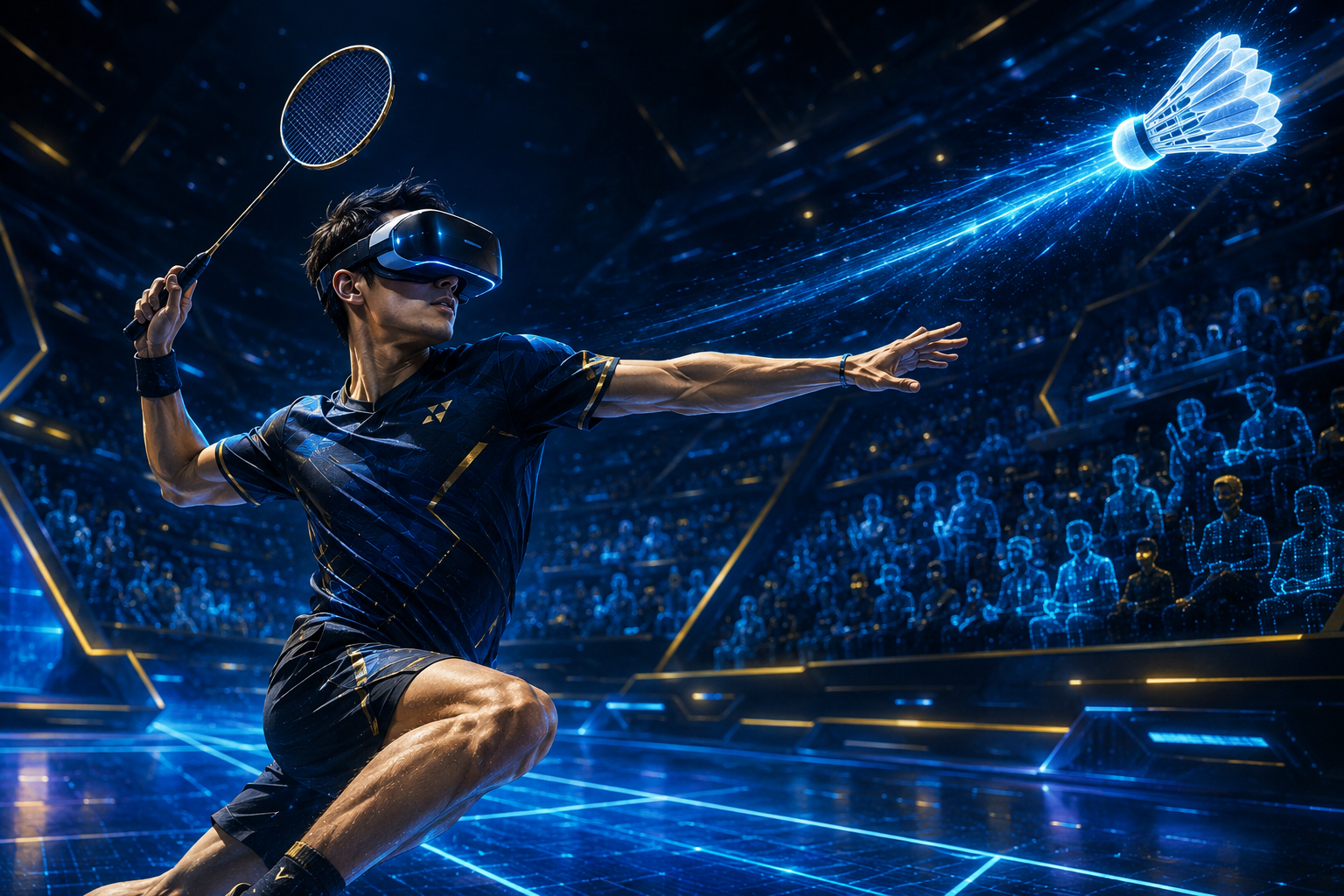
The VR Badminton Championship 2026 is a competitive esports-style event where players use motion-tracking VR systems to play badminton in virtual environments. It’s not just a video game — participants use full-body movement, racket controllers, and spatial awareness in ways that closely mirror the real sport.
The championship sits at the crossroads of two fast-moving trends: the global growth of badminton as a competitive sport and the rapid maturation of VR as a spectator and training platform. In February 2026, the BWF announced an expanded World Tour covering 36 tournaments across a six-tier system with a significantly increased prize pool [2], showing just how seriously the badminton world is taking growth and innovation right now.
The VR Badminton Championship 2026 Breakdown: Player Perspectives, Fan Experiences, and Future of Immersive Viewing covers everything from how athletes prepare for virtual competition to how fans at home are tuning in with headsets instead of TV remotes.
How Did Players Feel About the VR Badminton Championship?
Most players came in skeptical and left impressed. The common concern was that VR would water down the sport — but post-event feedback pointed in a different direction.
Key themes from player perspectives:
- Footwork and positioning translated surprisingly well. Players who used VR training tools reported sharper court awareness in real-life matches
- Reaction time drills in VR environments helped players process shuttle speed faster, especially at the net
- Mental fatigue was a real factor. Extended VR sessions created cognitive load that players compared to high-pressure tournament play
- Research comparing BWF-ranked players to regional athletes found clear structural differences in shot patterns and game tempo [1] — VR platforms are now starting to replicate those elite-level scenarios for practice
“VR training isn’t replacing court time. It’s adding a layer of mental reps that used to only happen in live match situations.”
One practical benefit players highlighted: VR lets you drill specific scenarios — like defending a steep smash — hundreds of times in a session without physical wear. That’s a genuine edge for improving racket sports skills at any level.
What Was the Fan Experience Like at the VR Badminton Championship 2026?

Fans watching the VR Badminton Championship 2026 could choose their viewing angle in real time, switch between player perspectives, and access live match data — all inside a headset. That’s a fundamentally different experience from a broadcast camera locked to one view.
Here’s what made the fan experience stand out:
- 360-degree camera rigs placed at net level, baseline, and overhead gave viewers a sense of being on the court
- Live data overlays showed rally counts, shuttle speed estimates, and player positioning — similar to what Stupa Sports demonstrated during the European Championships 2025 [5]
- Social viewing rooms let fans watch together in shared virtual spaces, replicating the atmosphere of a packed stadium [10]
- Fans who had used Apple Vision Pro’s NBA courtside experience earlier in 2026 noted that the badminton VR stream felt comparable in immersion quality [4]
Common mistake new VR viewers make: Jumping straight into a full match without adjusting comfort settings. Motion sickness is real, especially during fast rallies. Starting with shorter viewing sessions and adjusting field-of-view settings makes a big difference.
What Kind of VR Headsets Were Used for the Championship?
The championship supported a range of headsets, from standalone units to PC-tethered rigs. Not every fan or player needed the most expensive option to participate meaningfully.
| Headset Type | Use Case | Estimated Cost (2026) |
|---|---|---|
| Standalone (e.g., Meta Quest 3) | Fan viewing, casual play | $300–$500 |
| PC-tethered (e.g., Valve Index) | Competitive play, high fidelity | $700–$1,200 |
| Premium spatial (e.g., Apple Vision Pro) | Immersive fan viewing | $3,500+ |
For competitive players, PC-tethered setups offered the lowest latency and most precise motion tracking — both critical when a virtual shuttle is moving at speed. For fans, standalone headsets hit the sweet spot of quality and convenience.
How Much Does It Cost to Get Into Competitive VR Badminton?
Getting started competitively costs roughly $400–$800 all-in, covering a mid-range standalone headset, motion controllers, and a subscription to the primary VR badminton platform used in the championship.
Cost breakdown:
- Headset: $300–$500 (standalone)
- VR badminton software/platform: $20–$40 one-time or subscription
- Optional accessories (grip covers, wrist straps): $20–$50
- Tournament entry fees: Varies by tier, typically $10–$50 per event
This is notably lower than the cost of entering many traditional racket sports tournaments when you factor in travel, equipment, and court fees. That accessibility is part of what’s drawing a younger, global audience to VR badminton.
How Does VR Badminton Compare to Real-Life Badminton in Terms of Skill?
VR badminton develops some real skills well and leaves others behind. It’s best understood as a complement to court play, not a replacement.
Skills VR badminton builds effectively:
- Shot timing and rhythm
- Tactical decision-making under pressure
- Footwork patterns (in high-end setups with full-body tracking)
- Mental focus and reading opponent patterns
Skills that still require the real court:
- Physical conditioning and stamina
- True shuttle feel and racket feedback
- Net play nuance and deceptive shots
- Partner communication in doubles
Research on junior badminton championships found that game tempo and rally structure vary significantly by event type [7], and VR platforms are only beginning to replicate those dynamics accurately. For anyone serious about improving their badminton tips and real-world game, VR works best alongside regular court sessions.
If you’re exploring other racket sports that blend skill and accessibility, the role of tournaments in pickleball culture offers a useful parallel for how competitive formats shape player development.
What Are the Biggest Challenges in Broadcasting VR Esports?
The three core challenges are bandwidth, motion sickness, and production cost. Each one is solvable, but none is fully solved yet.
- Bandwidth: Streaming 360-degree video at high resolution requires significantly more data than standard HD. Many viewers in regions with slower internet couldn’t access the full-quality stream
- Motion sickness: Fast camera movements during rallies triggered discomfort for some viewers. Broadcasters are experimenting with stabilization algorithms and comfort modes
- Production cost: Setting up multi-angle VR rigs inside a virtual environment requires specialized teams. “The Thrill of the Fight 2” VR boxing event in March 2026 showed that live VR spectator events are viable — but expensive to produce well [9]
- Latency: Even small delays between action and viewer perception break immersion. This remains a technical hurdle for live (not recorded) VR broadcasts
Malaysia’s April 2026 launch of the world’s first AI-powered instant review system for badminton [3] hints at where the technology is heading — smarter, faster, and more scalable for events of all sizes.
Will VR Badminton Become an Olympic Sport?
Not in the near term, but the groundwork is being laid. The IOC has been cautious about esports inclusion, and VR badminton faces the additional challenge of standardizing hardware across nations.
What’s more likely in the next four to six years:
- VR badminton as a demonstration event or parallel competition at major badminton championships
- BWF-sanctioned VR leagues running alongside traditional World Tour events [2]
- Inclusion in multi-sport esports events like the Asian Games esports category
The sport needs consistent rules, hardware standards, and a global ranking system before Olympic consideration becomes realistic. That said, the pace of change in 2026 is fast.
Is VR Badminton Accessible for People with Disabilities?
VR badminton has real accessibility potential, but current implementations are uneven. The technology can remove many physical barriers — players with limited mobility can compete using upper-body-only tracking modes — but headset design and software customization still lag behind what’s needed for full inclusivity.
Current accessibility features in leading VR badminton platforms:
- Seated play modes for players with lower-limb limitations
- Adjustable controller sensitivity for players with reduced grip strength
- Audio cues and haptic feedback for players with visual impairments (limited, still developing)
For context on how inclusive design works in racket sports communities more broadly, the strategies for creating an inclusive pickleball community offer a useful framework that VR badminton organizers could learn from.
Where Can You Watch Highlights of the VR Badminton Championship 2026?
Highlights from the VR Badminton Championship 2026 are available on the official championship platform, YouTube, and select VR streaming services. Standard 2D highlights are widely accessible; full immersive replays require a compatible headset.
Where to find content:
- Official championship website: Full match replays in both 2D and 360-degree VR formats
- YouTube: Edited highlight reels, player interviews, and behind-the-scenes content
- Meta Horizon and similar VR platforms: Immersive replays for headset users
- Broadcast partners: Regional sports networks carried select matches in standard HD
For the best experience, download replays rather than streaming them live — this eliminates buffering that can break immersion during fast rallies.
What’s the Future of Immersive Viewing in Sports Beyond VR Badminton?
The future of immersive sports viewing is shared, social, and data-rich. The VR Badminton Championship 2026 Breakdown: Player Perspectives, Fan Experiences, and Future of Immersive Viewing is one chapter in a much larger story about how fans connect with sport.
Key trends shaping the next five years:
- Shared virtual arenas: Fans watching together in virtual spaces, regardless of physical location [10]
- Personalized camera control: Every viewer choosing their own angle, not just what a director selects
- Real-time analytics overlays: Live stats embedded in the viewing experience, as demonstrated by Stupa Sports at the European Championships 2025 [5]
- AI-assisted broadcasting: Automated camera systems and instant replay tools reducing production costs [3]
- Cross-sport expansion: What works for VR badminton is already being tested in boxing [9] and basketball [4], and racket sports like tennis and padel are next
The racket sports community — from casual players to competitive athletes — stands to benefit enormously from these shifts. Whether you’re watching a friend compete or following a world-class match, immersive viewing closes the gap between spectator and participant.
For players who want to stay connected to their racket sports community both on and off the court, building community through pickleball and team play shows how the social side of sport is just as important as the competitive side.
Who Is the Target Audience for VR Badminton Championships?
VR badminton championships appeal to three main groups: existing badminton fans who want deeper engagement, tech-forward sports fans curious about immersive formats, and younger audiences who grew up with gaming and esports.
- Ages 18–35 make up the largest current viewer base, but the accessibility of standalone headsets is pulling in older fans
- Competitive badminton players use the championship as both entertainment and a training benchmark
- Casual racket sports players across pickleball, tennis, and padel are discovering VR badminton as a gateway to the sport
The overlap between racket sports enthusiasts and tech-curious sports fans is larger than most people expect — and it’s growing.
What Are Some Alternative VR Sports Championships Happening Soon?
Several VR sports events are scheduled or in development for late 2026 and 2027. VR badminton isn’t alone in this space.
- VR Tennis Open (Q4 2026): Building on the same motion-tracking infrastructure used in badminton
- VR Boxing leagues: “The Thrill of the Fight 2” already proved the spectator model works [9]
- VR Padel Exhibition (planned 2027): Early-stage but backed by padel’s rapid global growth
- Multi-sport VR esports festivals: Combining several racket and non-racket sports under one virtual roof
For anyone tracking racket sports gear reviews and emerging tech, keeping an eye on racket sports startups is a smart way to stay ahead of what’s coming.
FAQ
Q: Do I need an expensive VR headset to watch the VR Badminton Championship? A: No. Standard 2D highlights are available on YouTube and broadcast platforms for free. A mid-range standalone headset ($300–$500) is enough for the full immersive experience.
Q: Is VR badminton recognized by the Badminton World Federation? A: As of mid-2026, the BWF has not formally sanctioned VR badminton as an official discipline, but the organization’s expansion of the World Tour [2] shows openness to innovation.
Q: Can VR badminton training actually improve my real-court game? A: Yes, for specific skills. Reaction time, shot timing, and tactical reading all benefit from VR drills. Physical conditioning and net-play feel still require real court time.
Q: What’s the minimum internet speed needed for immersive VR viewing? A: Most platforms recommend at least 50 Mbps for stable 360-degree streaming. Lower speeds will default to reduced-quality modes.
Q: Are there age restrictions for VR badminton competition? A: Most platforms follow VR headset manufacturer guidelines, which typically recommend ages 13+ due to potential eye strain in developing vision. Competitive leagues generally require players to be 16+.
Q: How long does a typical VR badminton match last? A: Match lengths mirror real badminton — best of three games, typically 30–60 minutes. Most platforms recommend taking breaks every 20–30 minutes to reduce eye fatigue.
Q: Is VR badminton harder or easier than real badminton? A: Different, not simply easier or harder. VR removes physical endurance demands but amplifies mental focus requirements. Elite real-court players don’t automatically dominate VR competition.
Q: Can I watch VR badminton replays with friends who don’t have headsets? A: Yes. All major platforms offer 2D versions of matches that can be watched on any screen, so the community experience isn’t locked behind hardware.
Q: What’s the best way to avoid motion sickness during VR viewing? A: Start with short sessions (15–20 minutes), use comfort mode settings that reduce field-of-view during fast movement, and ensure the headset fits properly with no light leakage.
Q: Are there VR badminton coaching tools available for recreational players? A: Yes. Several platforms offer drill modes, AI opponent difficulty scaling, and shot analysis tools that recreational players can use independently of the championship circuit.
Conclusion
The VR Badminton Championship 2026 Breakdown: Player Perspectives, Fan Experiences, and Future of Immersive Viewing shows that this isn’t a novelty — it’s a genuine shift in how racket sports are played, trained, and watched.
Here’s what to do next:
- Try a VR badminton demo — most platforms offer free trial sessions before you commit to hardware or subscriptions
- Watch the 2D highlights first to understand the format before investing in a headset
- Use VR training tools as a supplement to your regular court sessions, not a replacement
- Connect with the racket sports community around VR events — the social side is half the value
- Stay updated on BWF announcements as the organization continues expanding its global footprint [2]
Whether you’re a competitive badminton player, a casual racket sports fan, or someone just getting into the sport, 2026 is a genuinely exciting time to be part of this community. The court is bigger than ever — and now it’s virtual too.
For players looking to build their skills across formats, exploring racket sports gear reviews and tournament culture can help you get the most out of both real and virtual competition.
References
[1] mdpi – https://www.mdpi.com/2076-3417/16/8/3819?utm_source=openai
[2] Expanded World Tour And Prize Pool Among Big Changes Announced By BWF – https://www.business-standard.com/sports/other-sports-news/expanded-world-tour-and-prize-pool-among-big-changes-announced-by-bwf-126020900999_1.html?utm_source=openai
[3] Malaysia Unveils World’s First AI-Powered Review System For Badminton – https://www.thevibes.com/articles/lifestyles/122349/malaysia-unveils-worlds-first-ai-powered-review-system-for-badminton?utm_source=openai
[4] ourballsports – https://www.ourballsports.com/archives/50238?utm_source=openai
[5] broadcastnow.co.uk – https://www.broadcastnow.co.uk/production/stupa-sports-unveils-badminton-data-driven-insights/5206141.article?utm_source=openai
[6] BWF Issues Official Statement, Backs Delhi For India Open World Badminton Championship 2026 – https://www.republicworld.com/sports/bwf-issues-official-statement-backs-delhi-for-india-open-world-badminton-championship-2026?utm_source=openai
[7] Frontiers in Sports and Active Living – https://www.frontiersin.org/journals/sports-and-active-living/articles/10.3389/fspor.2025.1710043/full?utm_source=openai
[8] Apple Vision Pro’s Courtside NBA VR Sports Experience – https://twit.tv/posts/tech/apple-vision-pros-courtside-nba-vr-sports-experience-fans-have-been-waiting?utm_source=openai
[9] The Thrill Of The Fight 2 Turned VR Boxing Into A Live Spectator Event – https://www.uploadvr.com/the-thrill-of-the-fight-2-turned-vr-boxing-into-a-live-spectator-event/?utm_source=openai
[10] Sports Viewing As Shared Virtual Realities – https://etcjournal.com/2026/01/21/sports-viewing-as-shared-virtual-realities/?utm_source=openai