Padel Court Construction Trends 2026: Modular Designs, AI Scoring, and Smart Facilities
Last updated: July 5, 2026
Quick Answer: Padel court construction in 2026 is defined by five major shifts: modular and panoramic court designs, AI-powered scoring and analytics, smart sensor networks, app-integrated booking ecosystems, and sustainable building materials. These trends are driving faster builds, lower long-term costs, and better player experiences, whether you’re a club owner, resort developer, or serious player looking for the best facility to join.
Key Takeaways
- 🏗️ Modular courts can be assembled in days, not weeks, and work for both temporary events and permanent installations
- 🤖 AI scoring systems track shot speed, movement, and positioning in real time, and can be retrofitted to existing courts
- 📱 Smart facilities combine automated booking, sensor networks, and performance dashboards into one digital ecosystem
- 💰 Construction costs range from roughly $22,000 to $91,000 per court depending on design, location, and tech level [6]
- 🇺🇸 The U.S. market now has over 1,000 courts across 31 states, with Florida holding about 41% of them [5]
- ♻️ Sustainable materials are becoming standard practice, cutting maintenance costs and reducing environmental impact [4]
- 🔄 Panoramic designs are replacing traditional cage-style courts as the preferred choice for clubs and resorts
- ⚡ Indoor and covered courts are growing fast because they maximize year-round usage and revenue [3]
What Are Modular Padel Court Designs and How Do They Work?
Modular padel courts use pre-fabricated, bolt-together components that can be assembled quickly on-site without heavy construction equipment. The key advantage is flexibility: the same system works for a weekend pop-up event or a permanent multi-court club.
Here’s how the process typically works:
- Pre-fabrication, Steel frames, glass panels, and flooring sections are manufactured off-site to exact specifications
- Site preparation, A level concrete or asphalt base is laid (this is the main on-site work)
- Assembly, Panels and frames are bolted together, often in 2-5 days per court
- Systems installation, Lighting, nets, and optional smart tech are added last
Choose modular if: you need a fast timeline, plan to expand courts later, or want the option to relocate the structure. Traditional poured-concrete builds make more sense for permanent flagship facilities with custom architecture. [1]

Common mistake: Skipping proper base preparation to save money. A poorly leveled or drained base will cause structural issues with modular systems within 1-2 seasons.
How Much Does It Cost to Build a Padel Court in 2026?
A single FIP-compliant padel court costs between approximately $22,000 and $91,000 to build in 2026, depending on whether it’s indoor or outdoor, the materials used, and how much smart technology is included. [6]
Here’s a rough breakdown by tier:
| Court Type | Estimated Cost (USD) | Best For |
|---|---|---|
| Basic outdoor modular | $22,000,$40,000 | Community clubs, pop-up events |
| Mid-range panoramic outdoor | $40,000,$65,000 | Private clubs, resorts |
| Indoor/covered smart court | $65,000,$91,000+ | Commercial facilities, academies |
Key cost drivers:
- Indoor builds cost significantly more due to roofing and HVAC
- AI scoring and sensor systems add roughly $5,000,$15,000 per court (estimated)
- Labor costs vary widely by region, U.S. builds tend to run higher than European equivalents
For context on how court dimensions affect space and cost planning, the pickleball court dimensions guide at Rally Racket offers a useful comparison for multi-sport facility planners.
What Is AI Scoring in Padel and Why Does It Matter?
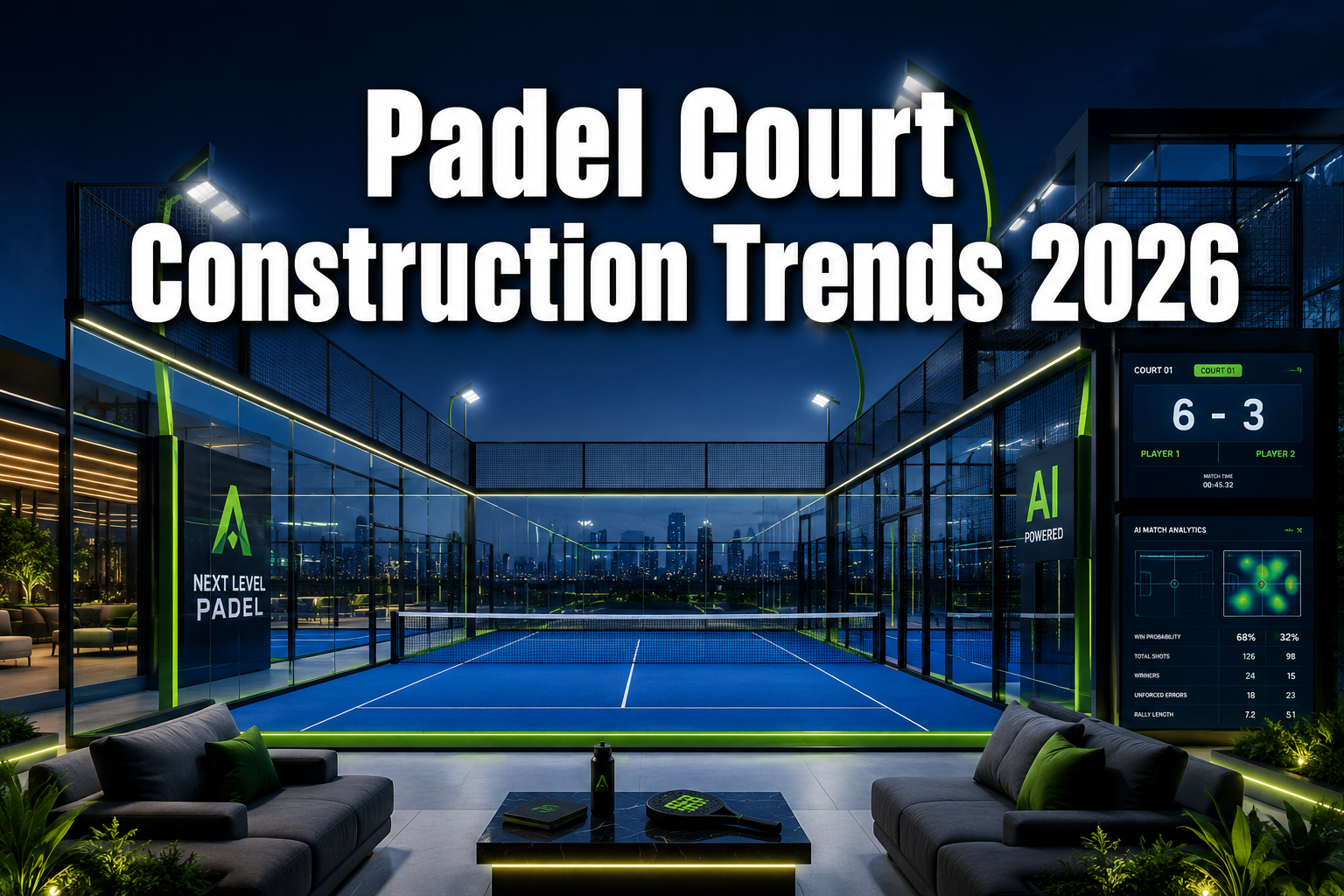
AI scoring in padel uses computer vision cameras and sensor arrays to automatically track the ball, detect in/out calls, record shot speeds, and log player positioning, all without a human line judge. Beyond scoring, the same system feeds real-time analytics to players and coaches. [2]
Why it matters for players:
- Instant replay on disputed calls removes arguments and speeds up play
- Shot-speed data and movement heat maps help players identify weaknesses
- Personalized coaching feedback between points or after matches
Why it matters for facility owners:
- Reduces staffing costs for monitored sessions
- Creates a premium experience that justifies higher court fees
- Data can be packaged into player profiles for membership retention
This mirrors trends already happening in other racket sports. For a look at how sports technology is reshaping racket sports communities, the broader racket sports tech boom in 2026 is worth following. [7]
Padel Court Construction Trends 2025 vs. 2026: What’s New?
In 2025, the main focus was expanding court numbers and standardizing FIP compliance. In 2026, the conversation has shifted to quality, technology integration, and profitability per court, not just how many courts exist.
What’s genuinely new in 2026:
- Panoramic glass designs are now the default choice for new builds, replacing the traditional cage-style court [1]
- AI scoring has moved from pilot programs at elite clubs to commercially available packages for mid-tier facilities [7]
- App-controlled booking ecosystems are now expected, not optional, facilities without them are losing bookings to competitors [2]
- Sustainable material specs (recycled turf, low-VOC coatings, solar-ready roofing) are being written into construction contracts as standard [4]
- VR training simulations are appearing at premium academies, though they remain a high-end add-on rather than mainstream [2]
The padel growth tag at Rally Racket tracks ongoing developments across the global market.
What’s the Difference Between Traditional and Smart Padel Courts?
Traditional padel courts are static: a fixed structure with a net, glass walls, and artificial turf. Smart padel courts layer technology on top of that foundation to create a connected, data-driven environment.
| Feature | Traditional Court | Smart Court |
|---|---|---|
| Scoring | Manual / honor system | AI-automated, instant replay |
| Booking | Phone or walk-in | App-based, real-time availability |
| Player data | None | Movement tracking, shot analytics |
| Maintenance alerts | Visual inspection | Sensor-triggered notifications |
| Environmental control | Manual | Automated lighting and climate |
Smart courts cost more upfront but typically generate higher revenue through premium memberships, data subscriptions, and improved utilization rates. [2] [3]
What Does a Smart Padel Facility Include?
A fully equipped smart padel facility in 2026 combines several systems that work together. It’s not just one piece of tech, it’s an integrated stack. [2]
Core components:
- AI scoring cameras on each court (typically 2-4 cameras per court)
- Smart sensor network monitoring ball bounce, player movement, and court surface conditions
- Automated booking platform with real-time scheduling, payment processing, and waitlist management
- Player performance dashboard accessible via mobile app
- Digital display screens courtside for live scoring and instant replay
- Connected lighting and climate systems that adjust based on occupancy
Optional premium additions:
- VR training pods for off-court skill work
- Social media sharing integration (auto-clip generation from match footage)
- Loyalty and gamification features within the booking app
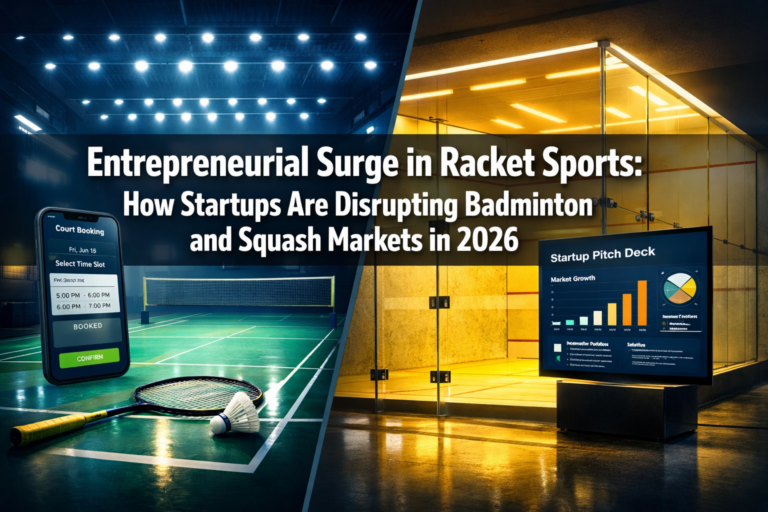
This kind of integrated digital ecosystem is also shaping how racket sports startups are approaching new facility investments in 2026.
How Much Space Do You Need for a Modular Padel Court?
A standard padel court requires a playing area of 10 meters wide by 20 meters long (roughly 33 by 66 feet), plus additional clearance on all sides for safety and structure. For a single modular court, plan for a minimum footprint of approximately 12m x 22m (about 2,900 sq ft) including surrounding buffer space.
For multi-court facilities:
- Two courts side by side: approximately 26m x 22m
- Four courts: approximately 26m x 44m (with a shared central walkway)
Indoor builds need additional ceiling height, a minimum of 6 meters (roughly 20 feet) is recommended for covered courts to allow full lob shots without interference.
Can You Install AI Scoring on an Existing Padel Court?
Yes, AI scoring systems can be retrofitted to most existing padel courts without major structural changes. The installation typically involves mounting cameras on existing posts or walls, running power and data cables, and connecting to a central software hub. [7]
What you’ll need:
- Stable power supply to each camera mount point
- Reliable Wi-Fi or wired network connection on-court
- A compatible booking/management platform to receive the data feed
Limitations to know:
- Older courts with non-standard dimensions may require camera repositioning for full coverage
- Glass condition matters, heavily scratched or tinted panels can reduce tracking accuracy
- Some legacy court structures don’t have suitable mounting points and need minor additions
Retrofitting is generally far cheaper than building a new smart court from scratch, making it a practical first step for existing club owners. [7]
Who Should Invest in Modular Padel Court Designs?
Modular designs are the right choice for specific situations, they’re not universally better than traditional builds. [1] [3]
Modular works best for:
- Clubs testing demand in a new market before committing to a permanent facility
- Resorts and hotels that want seasonal courts without permanent land use
- Event organizers running tournaments at temporary venues
- Investors who want to move courts to higher-demand locations over time
- Schools and community centers with limited budgets and flexible timelines
Stick with traditional construction if:
- You’re building a flagship facility with a 20+ year horizon
- Your site has unusual terrain that needs custom foundation work
- Local planning regulations require permanent structures
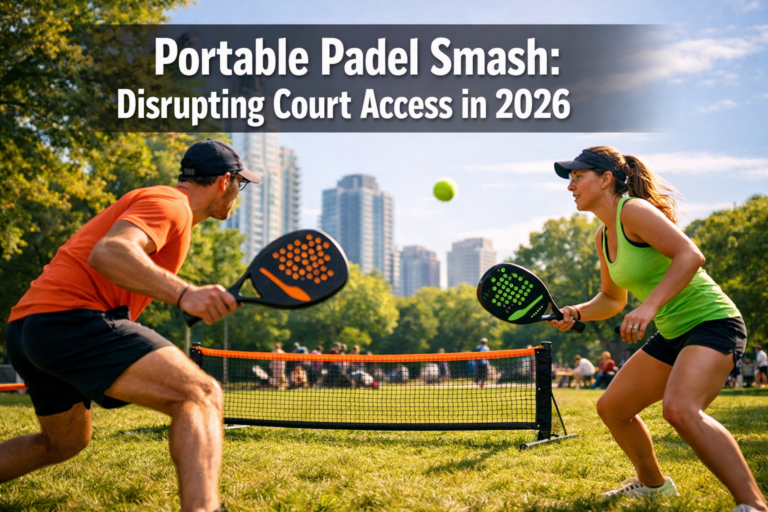
The portable padel smash tag covers lightweight and relocatable court options for those exploring the most flexible end of the spectrum.
Padel Court Construction Mistakes to Avoid in 2026
Even with better technology and more experienced contractors available, these mistakes still show up regularly on new builds. [3] [6]
Top mistakes:
- Underestimating base preparation costs, The foundation is the most critical (and often most skipped) part of a budget modular build
- Buying tech before confirming connectivity, AI scoring systems need reliable network infrastructure; rural or basement locations often can’t support them without upgrades
- Ignoring local climate, Outdoor courts in high-wind or high-UV regions need specific glass grades and anchoring specs
- Choosing price over FIP compliance, Non-compliant courts can’t host sanctioned events, which limits revenue and resale value
- Skipping lighting specs, Inadequate lux levels (below 300 lux for recreational, 500+ for competitive play) hurt evening utilization
- No drainage plan, Outdoor courts without proper drainage become unusable after rain
Are Smart Padel Courts Worth the Investment?
For commercial facilities targeting serious players or running membership models, smart courts typically pay back the additional investment within 2-4 seasons through higher fees, better utilization, and lower staffing costs. For casual community courts, the ROI case is weaker. [3] [7]
The investment makes sense when:
- The facility charges premium court rates ($25+/hour per person)
- The target market includes competitive or data-driven players
- The operator wants to reduce reliance on on-site staff
- The facility plans to offer coaching programs that use performance data
It’s harder to justify when:
- The court serves a low-fee community or recreational-only audience
- The facility lacks reliable broadband infrastructure
- The operator doesn’t have the technical capacity to manage the platform
For clubs unsure about the full smart-court commitment, starting with just automated booking and adding AI scoring later is a practical middle path.
What Are the Cheapest Alternatives to Full Smart Padel Courts?
Not every facility needs the full smart-court stack. There are cost-effective ways to modernize without a complete overhaul. [6] [7]
Budget-friendly options:
- App-based booking only, Standalone scheduling software starts at a few hundred dollars per year and requires no hardware changes
- Single AI camera per court, Entry-level computer vision systems for basic scoring and replay, without full analytics
- Smart lighting controls, Motion-activated LED systems reduce energy costs without touching the court structure
- Portable ball machines with data logging, Useful for academies that want player development data without court-level sensor networks
These partial upgrades let facilities test player demand for tech features before committing to a full smart-facility investment.
How Long Does It Take to Build a Modular Padel Court?
A single modular padel court can typically be assembled in 3 to 7 days once the base is ready. The base preparation (leveling, concrete pouring, curing) adds 1-3 weeks depending on site conditions and weather.
Realistic full timeline for a modular outdoor court:
- Site assessment and planning: 1-2 weeks
- Permits and approvals: 2-8 weeks (varies significantly by location)
- Base preparation: 1-3 weeks
- Court assembly: 3-7 days
- Systems installation (lighting, tech): 1-3 days
Total realistic timeline from decision to play: 6-14 weeks, with permitting being the most unpredictable variable.
Traditional indoor builds typically take 3-6 months minimum. For multi-court commercial projects, factor in 6-12 months from planning to opening.
Conclusion: What to Do With This Information
The Padel Court Construction Trends 2026: Modular Designs, AI Scoring, and Smart Facilities landscape is moving fast, but the core decision framework is straightforward.
If you’re a club owner or investor:
- Start with a modular outdoor court if you’re entering a new market, test demand before committing to a full indoor build
- Add AI scoring as a retrofit once your player base is established and asking for it
- Prioritize automated booking from day one, it’s the highest-ROI tech investment at any facility size
If you’re a player:
- Look for facilities with smart court features when choosing where to train, the data feedback genuinely accelerates improvement
- Check whether your local club is planning upgrades; many are in the process of adding AI scoring in 2026
If you’re just getting started with padel:
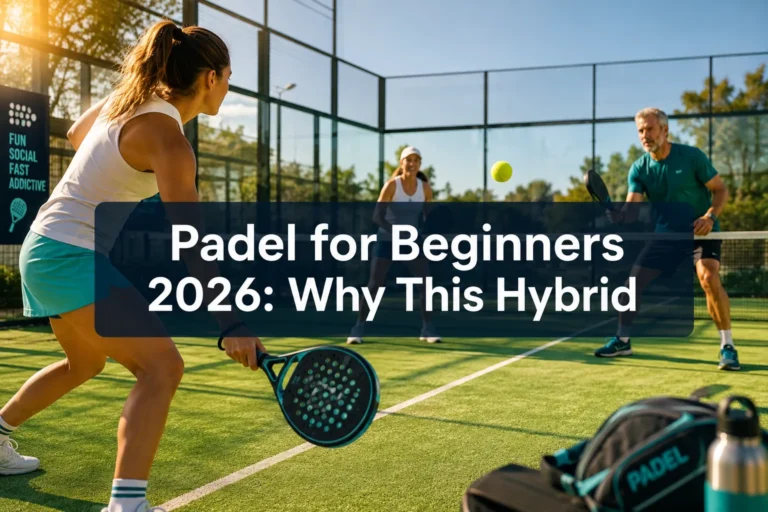
- The padel for beginners tag at Rally Racket is a great place to start before worrying about which court technology is best
The racket sports community is growing fast across padel, pickleball, and beyond. Facilities that invest in smart, flexible infrastructure now will be the ones players keep coming back to. For a broader view of where racket sports are heading, the future of pickleball trends piece offers useful parallels for anyone tracking sport-facility growth across multiple disciplines.
FAQ
Q: What is the standard size of a padel court? A standard padel court is 10 meters wide by 20 meters long. Including surrounding clearance for structure and safety, plan for a total footprint of at least 12m x 22m for a single court.
Q: How long do modular padel courts last? Quality modular systems from established manufacturers are designed for 15-20 years of use with proper maintenance. The steel frame typically outlasts the glass panels and turf, which may need replacement every 8-12 years.
Q: Do AI scoring systems require a subscription? Most commercial AI scoring platforms use a SaaS model with annual or monthly fees in addition to the hardware purchase. Costs vary by provider and feature set.
Q: Can padel courts be installed indoors in an existing building? Yes, provided ceiling height is at least 6 meters and the floor can support the load. Warehouse conversions are a popular option for urban padel clubs in 2026.
Q: What is a panoramic padel court? A panoramic court replaces the traditional cage-style metal framing with large glass panels and minimal structural posts, giving spectators unobstructed views and players a more open feel. [1]
Q: Is padel growing in the United States? Yes. As of early 2026, the U.S. has over 1,000 courts across 31 states. Florida leads with approximately 41% of courts, followed by Texas at 18%. [5]
Q: What flooring is used in padel courts? Most courts use artificial turf (typically 12-16mm pile height) over a concrete or asphalt base. Some indoor courts use acrylic hard-court surfaces instead.
Q: Can one facility mix modular and traditional courts? Yes. Many clubs start with modular courts and add traditionally built indoor courts as demand grows. The two types can coexist on the same site.
Q: What’s the minimum budget to open a two-court padel facility? A realistic minimum for two outdoor modular courts with basic lighting and a booking system is approximately $55,000,$100,000, excluding land and permitting costs. [6]
Q: Are there FIP regulations for smart court technology? FIP (Federación Internacional de Pádel) regulates court dimensions, materials, and lighting standards. AI scoring and smart tech are not yet mandated but are permitted at sanctioned events when they meet accuracy standards.
References
[1] 2026 Padel Court Models – https://www.wepadel.com/blog/2026-padel-court-models
[2] Top 5 Global Trends In Padel Court Construction Digital Ecosystems And AI Integration In 2026 – https://rallyracket.com/top-5-global-trends-in-padel-court-construction-digital-ecosystems-and-ai-integration-in-2026/
[3] Padel Court Trends 2026 What Developers Need To Know To Build Profitable Facilities – https://www.ldkpadel.com/news/padel-court-trends-2026-what-developers-need-to-know-to-build-profitable-facilities-319799.html
[4] Padel Tendances Innovations 2026 – https://padel-01.com/blog/padel-tendances-innovations-2026
[5] Top Padel Court Trends For 2026 Clubs Resorts And Homes – https://www.padelonecourts.com/post/top-padel-court-trends-for-2026-clubs-resorts-and-homes
[6] How Much Does Padel Court Construction Cost – https://panocourt.com/how-much-does-padel-court-construction-cost/
[7] Racket Sports Tech Boom 2026 – https://nexairi.com/article/Technology/racket-sports-tech-boom-2026/