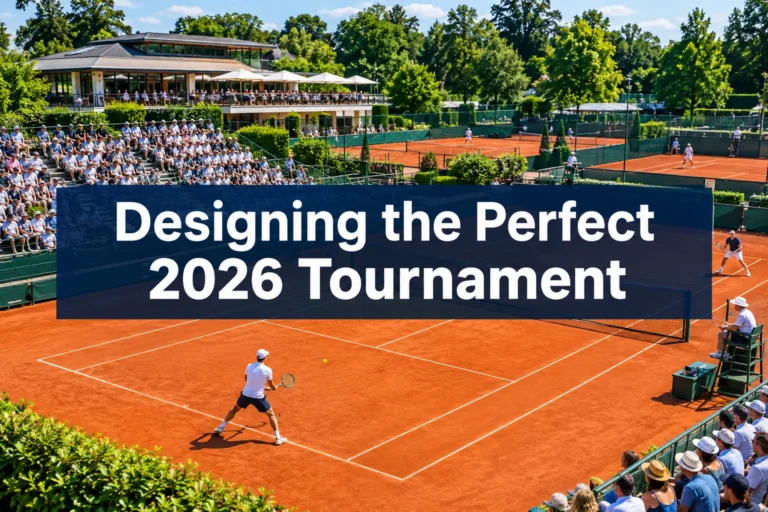

Padel as a Social Lifestyle Sport 2026: Building Communities, Events, and Apparel Trends Worldwide
Last updated: November 15, 2026
Quick Answer: Padel is now one of the fastest-growing racket sports in the world, with over 40 million players globally as of 2026 [1]. Its doubles-only format makes it naturally social, and that community appeal is driving explosive growth in clubs, tournaments, and lifestyle apparel. Whether you’re a first-timer or a seasoned racket sports player, padel is easy to pick up and genuinely fun to play with friends.
Key Takeaways
- 🎾 40+ million players worldwide in 2026, with padel courts up 20% year-over-year [1]
- 🤝 Padel is almost always played as doubles, making it social by design
- 🏟️ Clubs are expanding fast, padel contributes an estimated €8.6 billion to global GDP [1]
- 👕 Major apparel deals (Premier Padel + Fanatics, USA Padel + Psycho Bunny) are turning padel into a lifestyle fashion statement [2][3]
- 🌍 FIP’s first World Padel Day in 2026 signals serious push for Olympic inclusion [4]
- 💸 Regular play is affordable, typically $15,$30 per session at most clubs
- 🆕 Beginners with zero sports background can play their first real rally within one session
- 🏋️ Padel offers a solid cardio and agility workout without the intense physical demands of tennis
What Is Padel and How Is It Different from Tennis?
Padel is a doubles racket sport played on an enclosed court roughly one-third the size of a tennis court. The walls are part of the game, players can hit the ball off them, which creates longer rallies and more teamwork.
Here’s a quick side-by-side:
| Feature | Padel | Tennis |
|---|---|---|
| Court size | 10m x 20m (enclosed) | 23m x 11m (open) |
| Racket type | Solid foam/carbon, no strings | Strung frame |
| Walls in play? | Yes | No |
| Scoring | Same as tennis | Same as tennis |
| Format | Almost always doubles | Singles or doubles |
| Skill ceiling | Lower entry barrier | Higher entry barrier |
The enclosed court and wall play make padel feel more like a team game than a solo competition. That’s exactly why padel as a social lifestyle sport in 2026 is resonating with adults who want exercise and connection.

Padel vs Tennis: Which Is Easier to Learn?
Padel is significantly easier to learn than tennis. Most beginners can sustain a rally within their first session because the smaller court, slower ball, and wall rebounds give players more time to react.
Why beginners find padel easier:
- The solid racket requires less technique than a strung tennis racket
- Wall play means the ball stays in play longer, fewer frustrating mistakes
- The court is smaller, so less ground to cover
- Scoring is familiar if you’ve watched any tennis
Common mistake: New players try to smash every ball hard. Padel rewards placement and patience over power. Softer, angled shots almost always win over brute force.
If you enjoy building your skills through smart, structured play, padel rewards that approach quickly.
Can Beginners Play Padel Without Prior Sports Experience?
Yes, padel is one of the most beginner-friendly racket sports available. Even players with no prior racket sports background can enjoy a real game on their first visit to a club.
The low net, forgiving court size, and wall-bounce mechanic mean the game slows down just enough for newcomers. Most clubs offer beginner “open court” sessions or introductory lessons where you’ll be paired with similar-level players.
Who gets up to speed fastest:
- Squash or racquetball players (wall play transfers directly)
- Pickleball players (similar social, doubles-focused energy)
- Anyone who’s comfortable with basic hand-eye coordination
Who should be aware: If you have shoulder or knee issues, the quick lateral movements and overhead smashes can aggravate them. Start slow and warm up properly.
Is Padel a Good Workout? Fitness Benefits Explained
A one-hour padel session burns roughly 400-600 calories (depending on intensity) and works cardiovascular fitness, agility, and coordination. It’s genuinely effective exercise, and it doesn’t feel like a workout because you’re focused on the game.
Physical benefits of regular padel play:
- Cardio endurance from constant lateral movement
- Core strength from rotational shots and quick direction changes
- Improved reflexes and hand-eye coordination
- Lower-body strength from explosive footwork
For players curious about how racket sports build real fitness, our guide on strength training through pickleball covers the same principles that apply to padel.
The social format also matters: playing doubles keeps energy levels high because there’s always a partner to rally with, and the competitive pressure is shared, not all on you.
How to Start a Padel Club or Community in Your Area
Starting a padel community doesn’t require owning a court. The fastest way is to organize regular sessions at an existing club and build from there.
Step-by-step to launch a local padel community:
- Find a venue, Search for padel clubs or tennis clubs that have converted courts near you. Many gyms are adding padel courts rapidly in 2026.
- Create a simple group, A WhatsApp group or Facebook group is enough to start. Keep it open to all levels.
- Host a free open play, Book one court and invite 4-8 people. Keep it casual. Rotate partners every 20 minutes.
- Post on local sports apps, Platforms like Meetup, PadelManager, or local Facebook sports groups are great for visibility.
- Run a monthly social event, Think post-match coffee, a mini tournament, or a social mixer. This is what turns casual players into regulars.
- Partner with the venue, Clubs often want to fill off-peak hours. Offer to bring consistent bookings in exchange for a group rate.
This same playbook works brilliantly for other racket sports too, see how local pickleball clubs build community and engagement for more ideas you can directly apply to padel.
How to Find Padel Partners and Make Friends Locally
Finding padel partners is easier than most people expect. The sport’s social culture actively encourages mixing with new people.
Where to find partners:
- Club notice boards and apps, Most padel clubs have partner-matching boards or apps like Padel Mates
- Social media groups, Search “[your city] padel” on Facebook or Instagram
- Open court sessions, Show up to club open-play hours; you’ll be paired automatically
- Corporate padel leagues, Many cities now run work-based padel leagues specifically for networking
The community aspect of padel mirrors what makes pickleball’s social scene so compelling, it’s doubles by default, so every session involves four people working together.
“Padel’s doubles format means you never really play alone. You show up, you meet people, you play, it’s built-in socializing.”
Padel Events and Tournaments Near You in 2026
Competitive padel events are growing at every level, from casual club tournaments to elite professional circuits. The FIP (International Padel Federation) confirmed a record number of official tournaments in 2026, and Premier Padel continues to expand globally [3].
How to find events by level:
| Level | Where to look |
|---|---|
| Beginner/social | Your local club’s calendar, Meetup |
| Intermediate amateur | City leagues, regional PadelFIP federations |
| National competitive | National padel federation websites |
| Professional | PremierPadel.com, World Padel Tour |
World Padel Day 2026: The FIP officially launched World Padel Day this year, with events across dozens of countries aimed at introducing new players and reinforcing padel’s bid for Olympic inclusion [4]. This is a great entry point for beginners, many events are free or heavily subsidized.
Padel Apparel Trends 2026: What Should You Wear?
Padel apparel in 2026 has moved well beyond basic sportswear. It’s now a fully-fledged lifestyle category with dedicated brands, major collaborations, and gender-inclusive design at its core.
Key trends shaping padel fashion right now:
- Premier Padel x Fanatics deal (Nov 2026): This landmark global licensing agreement means premium padel-branded gear, jerseys, caps, bags, is now available through mainstream retail channels worldwide [3]
- USA Padel x Psycho Bunny: The national team’s multi-year partnership with Psycho Bunny signals that padel wants the same lifestyle credibility as golf and tennis apparel [2]
- GLDN PNT: An emerging padel-specific brand built around the sport’s social culture, offering clean, court-to-cafe aesthetics [5]
- Reebok padel line: Heritage sportswear brands are building dedicated padel collections, validating the sport’s mainstream appeal [6]
- Kappa padel clothing: European heritage brands are also entering the space with performance-meets-streetwear padel lines [7]
What to actually wear on court:
- Breathable, stretchy shorts or skorts (not standard gym shorts, movement range matters)
- Moisture-wicking tops designed for lateral movement
- Padel-specific shoes with herringbone soles for grip on artificial grass courts
- Light cap or visor, outdoor courts can be sun-intense
For the latest padel equipment and gear reviews in 2026, check out the full roundup on Rally Racket.
How Much Does It Cost to Play Padel Regularly?
Padel is affordable compared to most court sports. Court hire typically runs $15,$30 per person per hour when split between four players, making each session comparable to a gym class.
Typical cost breakdown:
- Court hire: $60,$120/hour total ($15,$30 per player with 4 players)
- Padel racket: $60,$200 for a solid beginner-to-intermediate option
- Balls: $5,$10 per tube (most clubs sell them)
- Club membership: $30,$80/month at many clubs, often including discounted court rates
- Shoes: $70,$150 for proper padel shoes (worth the investment for grip and ankle support)
Budget tip: Start with a club rental racket ($5,$10 per session) before buying your own. Play 4-6 times first to confirm the sport is for you.
Padel Court Types: Indoor vs Outdoor, Which Is Better?
Both court types work well, and the choice mostly comes down to your climate and preferences. Indoor courts offer year-round play in controlled conditions; outdoor courts deliver a more open, social atmosphere.
Indoor padel courts:
- Consistent conditions regardless of weather
- Usually better lighting for evening sessions
- More common in Northern Europe and colder climates
Outdoor padel courts:
- More social, open atmosphere
- Sun and wind add unpredictability (which some players enjoy)
- Dominant in Spain, Latin America, and warmer US regions
Most players who live in mixed-weather climates appreciate having both options available. If you’re just starting out, indoor courts are easier to control conditions and better for learning fundamentals.
Padel Doubles Strategy Tips for Social Players
Padel doubles rewards communication and positioning over individual skill. The best social players aren’t necessarily the most athletic, they’re the ones who move together and cover space smartly.
Core strategy tips for social padel:
- Hold the net when possible, The team at the net controls the rally. Push forward after a good shot.
- Communicate constantly, Call “mine” or “yours” loudly. Silence leads to let-balls and missed shots.
- Hit to the opponents’ feet at the net, Low shots are hard to return aggressively.
- Use the walls deliberately, Don’t panic when the ball bounces off the glass. Play through it.
- Rotate together, If your partner moves left, you move right. Stay parallel, not staggered.
The social dynamics of doubles play are half the fun. Similar community-driven play patterns drive the group dynamics in pickleball, and those lessons translate directly to padel.
Who Is Padel Good For, and Who Should Think Twice?
Padel is good for almost everyone: adults of any fitness level, former tennis or squash players, social athletes who want community alongside exercise, and corporate or team-building groups.
Padel is a great fit if you:
- Want a sport that’s social by default (doubles format)
- Are returning to exercise and want something lower-impact than tennis
- Enjoy competition but also want to make friends through sport
- Are a crossover player from pickleball, tennis, or squash
Think twice if you:
- Have significant knee or ankle injuries (the quick lateral movement can aggravate these)
- Strongly prefer solo sports, padel is almost never played as singles
- Are looking for a low-cost sport with no equipment investment (shoes and racket do cost money upfront)
Common Padel Mistakes Beginners Make
Most beginner mistakes in padel come down to two things: hitting too hard and ignoring wall play.
Top mistakes and fixes:
| Mistake | Fix |
|---|---|
| Swinging for power on every shot | Focus on placement, aim for the opponent’s feet |
| Ignoring the back glass | Let the ball bounce off the wall and play it; don’t panic |
| Standing too far back | Push toward the net after a strong shot |
| Not talking to your partner | Communicate every rally, it changes everything |
| Using a tennis swing | Keep your swing compact and wristy; padel isn’t tennis |
The fastest way to improve is to just play more often and ask better players for one tip after each session. The padel community is genuinely welcoming, most experienced players are happy to share advice.
FAQ
How many people play padel in 2026? Over 40 million players worldwide, with court numbers up 20% compared to the previous year, according to the FIP World Padel Report 2026 [1].
Do I need to know tennis to play padel? No. Padel is easier to pick up than tennis. Prior racket sports experience helps but is not required.
Is padel only for doubles? Almost always yes. The sport is designed for four players. Single-player versions exist but are rarely played socially or competitively.
What shoes do I need for padel? Padel-specific shoes with herringbone or similar grip patterns. Regular running shoes lack the lateral support needed for quick court movements.
How long does a padel match last? A social session is usually 60-90 minutes. Competitive matches can run 60-120 minutes depending on sets.
Is padel safe for older adults? Yes. Many clubs specifically attract players aged 40-65 because padel’s shorter court and slower pace are gentler on the joints than tennis.
Can I play padel if I’ve only played pickleball? Absolutely. The doubles format, social culture, and strategic play style are very similar. The main adjustment is learning to use the walls.
What is World Padel Day? An official FIP event launched in 2026 to promote padel globally and support the sport’s bid for Olympic inclusion [4].
Are there padel-specific clothing brands? Yes. GLDN PNT [5], Reebok’s padel line [6], and Kappa’s padel collection [7] are among the growing number of brands designing specifically for padel players.
How much does a padel racket cost? Entry-level rackets start around $60,$80. Mid-range options for regular players run $120,$200. High-performance rackets used in competition can exceed $300.
Conclusion
Padel’s rise as a social lifestyle sport in 2026 isn’t accidental. The doubles format, low entry barrier, and welcoming club culture make it one of the easiest sports to walk into, and one of the hardest to walk away from.
Your next steps:
- Find a padel club near you and book one intro session, most offer rental rackets
- Join a local padel group on social media before you go
- Focus on fun in your first few sessions; technique comes with time
- Invest in proper padel shoes before anything else
- Follow World Padel Day events in your city for free or low-cost intro sessions [4]
The racket sports community is bigger and more welcoming than ever in 2026. Padel is one of the best doors into it.
References
- FIP World Padel Report 2026 Is Online, More Than 40 Million Players, Courts Up By 20%, And A New Study On Economic Impact €8.6 Billion In GDP. padelfip.com.
- USA Padel Signs Multi-Year Partnership With Apparel Company Psycho Bunny. tennisindustrymag.com.
- Premier Padel Partners With Fanatics In Landmark Long-Term Global Licensing Deal. premierpadel.com.
- FIP Announces Official World Padel Day With Renewed Call For Olympic Inclusion. padelfip.com.
- GLDN PNT Padel Apparel Brand. padelbrowser.com.
- Reebok Padel Apparel Collection. footwearmagazine.com.
- Padel Clothing, Kappa. kappa.com.