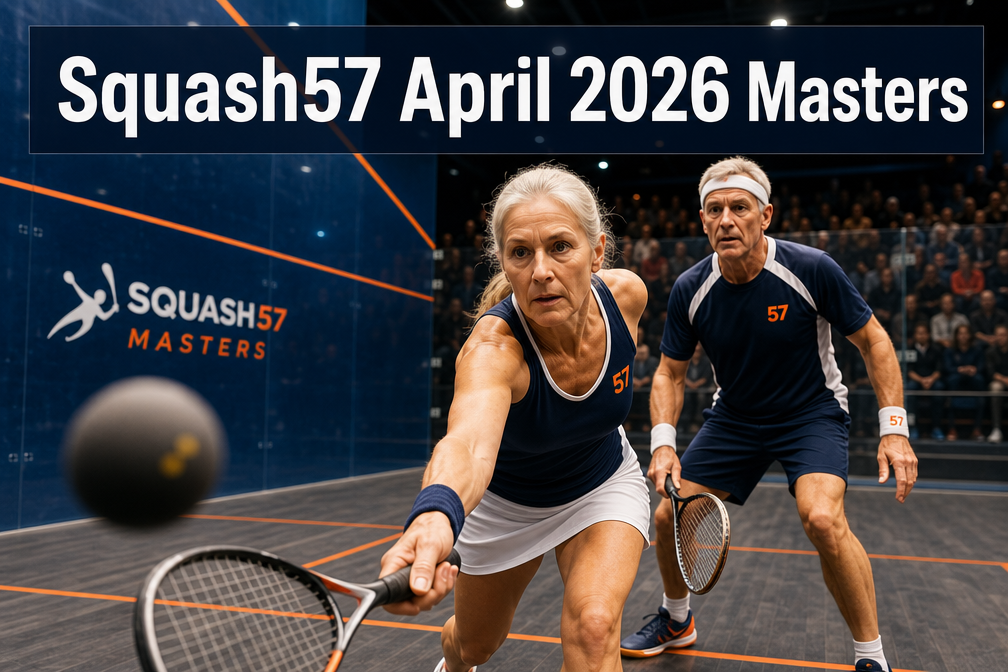
US Squash57 Growth Campaign: April 2026 Theme Deep Dive on Masters and Lifelong Players
Last updated: July 11, 2026
Quick Answer: The US Squash57 Growth Campaign launched in January 2026 under the slogan “PLAY SQUASH. YOUR WAY!” April 2026’s theme spotlighted Masters and Lifelong Players, celebrating adults 35+ who play squash competitively or recreationally. Squash57 uses a larger, slower ball and a shorter racquet, making it more accessible and gentler on aging joints while keeping the game fast, social, and genuinely fun.
Key Takeaways
- 🎯 US Squash launched its first-ever national Squash57 growth campaign in January 2026, with monthly themes targeting different player groups [1]
- 🏆 April 2026 focused on Masters and Lifelong Players, tying directly to the U.S. Masters Championships held April 10-12 in New York City [3]
- 🎾 Squash57 uses a larger rubber ball (57mm diameter) and a shorter racquet, slowing the game down compared to traditional squash
- 📦 US Squash distributed complimentary Squash57 balls to over 70 programs across 20+ states to kick-start local programming [2]
- 💪 The sport is widely considered easier on joints than traditional squash, making it ideal for players aged 35 and above
- 🗓️ A Squash57 Festival Series is running throughout 2026, building toward the Pan American Championships [2]
- 💰 Entry costs are modest, most players need only a racquet and balls to get started at a club that already has courts
- 🌍 Squash57 is growing fast among older athletes globally, with US Squash actively recruiting veteran players back to the sport
What Is Squash57 and How Is It Different from Regular Squash?
Squash57 is a variation of squash played with a larger 57mm rubber ball and a slightly shorter racquet on a standard squash court. The bigger ball moves more slowly and bounces higher than a traditional squash ball, which changes the pace and feel of the game significantly.
Here’s a quick comparison:
| Feature | Traditional Squash | Squash57 |
|---|---|---|
| Ball size | ~44mm | 57mm |
| Ball speed | Very fast | Slower, more forgiving |
| Racquet length | Standard | Slightly shorter |
| Court | Standard squash court | Same standard court |
| Pace | Intense, fast-paced | More controlled |
| Accessibility | Higher skill barrier | Beginner-friendly |
The slower ball gives players more time to set up shots, which rewards tactical play over raw speed. That’s a big deal for masters-level athletes who bring years of court sense but may not have the same explosive movement they did at 25.
Common mistake: Many traditional squash players assume Squash57 is “easier” in a way that makes it less competitive. In reality, the tactical depth is just as rich, it just rewards different skills.

Why Is Squash57 Good for Masters Players and Older Adults?
Squash57 is well-suited for masters players because the slower ball reduces the need for explosive sprinting and sharp direction changes, which are the movements most likely to cause injury in older athletes.
For players aged 35 and above, the benefits stack up quickly:
- Longer rallies mean more cardio benefit per point without the same injury risk
- More reaction time lets players use experience and positioning rather than pure speed
- Lower impact on knees and ankles compared to chasing a fast traditional squash ball
- Social play is easier to organize because the skill gap between players matters less
The April 2026 theme of the US Squash57 Growth Campaign: April 2026 Theme Deep Dive on Masters and Lifelong Players was timed deliberately around the U.S. Masters Championships, held April 10-12 in New York City, where 17 age division national champions were crowned [3]. That event brought together players from age 35 all the way through the senior divisions, proving that squash, in any form, is genuinely a lifelong sport.
“Squash57 gives veteran players a reason to stay on court longer, compete harder, and enjoy the game on their own terms.”, US Squash campaign messaging [1]
For players curious about how other racket sports support active aging, the health benefits of pickleball for seniors offer a useful parallel, both sports prioritize accessibility and community alongside fitness.
Is Squash57 Easier on Joints Than Traditional Squash?
Yes, Squash57 is generally easier on joints than traditional squash. The slower ball means fewer sudden direction changes, less explosive lunging, and reduced impact on knees, hips, and ankles.
That said, it’s still a physically demanding sport. Players should:
- Warm up properly before every session
- Wear proper court shoes with lateral support
- Build fitness gradually if returning after a break
- Focus on movement efficiency over chasing every ball
For masters athletes managing previous injuries, Squash57 offers a realistic path back to competitive play. The US Squash57 Growth Campaign: April 2026 Theme Deep Dive on Masters and Lifelong Players specifically highlighted this angle, positioning the sport as a way to re-engage former players who stepped away due to injury or life demands [1].
What Age Group Plays Squash57 Masters, and Are There Tournaments in 2026?
Masters squash typically starts at age 35, with divisions running in five-year brackets up through 70+ in some events. Squash57 follows similar age structures, making it competitive at every stage of life.
For 2026, there are several key events on the calendar:
- U.S. Masters Championships, April 10-12, 2026, New York City (17 national champions crowned) [3]
- Squash57 Festival Series #3, June 28, 2026, Mercersburg Academy, PA [2]
- Squash57 Festival Series #4, June 27, 2026, Washington, DC [2]
- Squash57 Festival Series #5, August 15, 2026, Arlen Specter US Squash Center, Philadelphia, PA [2]
- MAC Singles Club Championships, May 18, July 5, 2026, Portland, OR [5]
- Newport Steamer Adult Championships, June 19-21, 2026, Middletown, RI [5]
The Festival Series is building toward the 2026 Pan American Championships, making this a landmark year for competitive Squash57 in the US [2].
How Much Does It Cost to Play Squash57 Competitively?
Getting into Squash57 is relatively affordable compared to many racket sports. The main costs are:
- Racquet: A quality Squash57 racquet typically runs $60,$150
- Balls: A pack of Squash57 balls costs roughly $10,$20
- Court fees: Most squash clubs charge $15,$30 per hour for court hire, or offer memberships
- Tournament entry: Club-level events often run $20,$50; national events like the U.S. Masters may be higher
US Squash distributed complimentary Squash57 balls to over 70 programs in 20+ states as part of the 2026 campaign [2], so many clubs already have balls available, meaning new players may only need to bring a racquet.
Choose Squash57 if: You want competitive racket sports on a budget, especially if your club already has courts. The gear investment is minimal compared to padel or tennis.
For a broader look at getting started with racket sports gear on a budget, the essential gear guide for new pickleball players covers similar principles that apply across racket sports.
Where Can You Find Squash57 Courts Near You?
Squash57 is played on standard squash courts, so any club with squash courts can host it. The US Squash club finder at ussquash.org is the most reliable starting point.
Steps to find a court:
- Visit ussquash.org and use the club locator tool
- Contact clubs directly to ask if they run Squash57 sessions
- Check if your local YMCA, university, or athletic club has squash courts
- Look for clubs that received complimentary balls through the 2026 campaign, they’re actively running programs [2]
The campaign’s distribution of balls to 70+ programs across 20+ states means there’s a decent chance a club near you is already active in Squash57 [2].
What Equipment Do You Need to Get Started with Squash57?
You need three things: a Squash57 racquet, Squash57 balls, and proper court shoes.
- Racquet: Look for racquets labeled “Squash57” or “racketball”, they’re shorter and slightly heavier than traditional squash racquets
- Balls: The 57mm rubber ball is the defining piece of equipment; don’t substitute a traditional squash ball
- Shoes: Non-marking indoor court shoes with lateral support, the same shoes used for squash or racquetball work well
- Eye protection: Recommended for all court sports, especially in competitive play
You don’t need special clothing beyond standard athletic wear. The court provides the rest.
How the Squash57 Ball Differs, and Why It Matters
The 57mm rubber ball is what makes Squash57 a distinct sport. It’s larger, bouncier, and slower than a traditional squash ball, which fundamentally changes how the game is played.
Key differences:
- No warm-up needed: Unlike traditional squash balls that need rallying to reach optimal bounce, Squash57 balls are ready from the first shot
- Higher bounce: The ball comes off the back wall and floor more predictably, giving players more time
- Consistent play: The ball behaves similarly in cold and warm conditions, which matters for recreational players who don’t play every day
This consistency is one reason Squash57 works so well for lifelong players, the ball doesn’t punish you for playing less frequently. For comparison, understanding how ball characteristics affect play is a concept that translates across racket sports, as explored in this comparative review of pickleball balls.
How to Transition from Regular Squash to Squash57
Most traditional squash players can pick up Squash57 within a session or two. The main adjustments are:
- Slow down your swing: The ball is more forgiving, so precision beats power
- Reposition for the higher bounce: The ball sits up more, so your striking height changes
- Use more cross-court play: The slower pace rewards wider angles and tactical variety
- Adjust your footwork: You have slightly more time, but don’t get lazy, good positioning still wins rallies
Common mistake: Former squash players often try to dominate with pace early on. Squash57 rewards patience and placement more than raw power.
The US Squash57 Growth Campaign: April 2026 Theme Deep Dive on Masters and Lifelong Players included coach education resources specifically designed to help instructors guide this transition for veteran players [1].
Can You Play Squash57 If You’ve Never Played Squash Before?
Absolutely. Squash57 is actually an excellent entry point for complete beginners because the slower ball gives more time to learn footwork, positioning, and shot-making without feeling overwhelmed.
Beginners should focus on:
- Learning basic court positioning (the T)
- Practicing straight drives along the side walls
- Getting comfortable with the racquet grip and swing
- Playing social/recreational games before entering competition
Many clubs running the 2026 Squash57 campaign are offering introductory sessions specifically for new players [1]. If you’re new to racket sports generally, the same principles that help beginners in other sports apply here, check out this step-by-step guide for new racket sports players for transferable fundamentals.
What Fitness Level Do You Need for Squash57 Masters?
You don’t need elite fitness to enjoy Squash57, but a reasonable base of cardiovascular fitness and mobility makes the experience much better.
For masters players, a practical fitness baseline includes:
- Ability to sustain 20-30 minutes of moderate aerobic activity
- Basic lateral movement without significant joint pain
- Enough shoulder mobility for overhead and wide shots
The sport itself builds fitness over time. Many players returning after years away find that regular Squash57 play improves their conditioning faster than they expected, because the game naturally motivates you to move more.
For players managing age-related fitness concerns, the common concerns for new players around age and fitness covers similar ground and is worth reading alongside any squash return-to-play plan.
Is Squash57 Growing in Popularity Among Older Athletes?
Yes, and the 2026 data supports it. The US Squash57 Growth Campaign launched in January 2026 as the first-ever national campaign for the sport, signaling that US Squash sees real momentum worth investing in [1].
Key growth indicators in 2026:
- 70+ programs across 20+ states received complimentary balls to launch or expand Squash57 [2]
- The inaugural Squash57 Festival Series is running nationally with multiple events [2]
- The U.S. Masters Championships in April 2026 drew enough players to crown 17 age division champions [3]
- New York City was chosen as the Masters host city, reflecting the sport’s urban growth [4]
Globally, Squash57 (formerly known as racketball in many countries) has a strong following among older athletes. The US is catching up, and the 2026 campaign is the clearest sign yet that growth is real and organized.
The racket sports community is seeing this pattern across multiple sports, older adults are driving participation growth in accessible, social formats. For more on how community and competition intersect for lifelong players, success stories from players across age groups offer inspiring parallels.
Common Mistakes Beginners Make Learning Squash57
Even with a forgiving ball, new players fall into predictable traps. Here are the most common ones:
- Standing too close to the back wall: The higher bounce means the ball travels further, give yourself space
- Swinging too hard: Power isn’t the priority; placement and consistency win more points
- Ignoring the T position: Good court positioning is the foundation of squash in any form
- Using a traditional squash ball: It sounds obvious, but some players grab the wrong ball and wonder why the game feels wrong
- Skipping warm-up: Even though the ball doesn’t need warming up, your body still does
Avoiding these mistakes early builds good habits that make the game more enjoyable and competitive faster.
FAQ
What does “Squash57” mean? The name refers to the 57mm diameter of the rubber ball used in the sport, distinguishing it from traditional squash which uses a smaller, harder ball.
Is Squash57 the same as racketball? They’re closely related. Squash57 is the World Squash Federation’s rebranded name for racketball, standardizing the sport globally under one name.
What age is “masters” in squash? Masters squash typically starts at age 35, with competitive divisions running in five-year age brackets up through 70+ at many events [5].
Do I need a special court for Squash57? No. Squash57 is played on a standard squash court, so any club with squash facilities can host it.
How long does a Squash57 match last? Recreational games typically run 20-40 minutes. Competitive matches follow best-of-five game formats similar to traditional squash.
Can juniors play Squash57? Yes, though the 2026 US campaign focuses on adult and masters demographics. Juniors can and do play, especially as an introduction to court sports.
Is there a national governing body for Squash57 in the US? US Squash governs both traditional squash and Squash57 in the United States, and the 2026 growth campaign is their direct initiative [1].
How do I find a Squash57 coach? Start with US Squash’s coach directory at ussquash.org. The 2026 campaign included coach education resources to help instructors deliver Squash57 programming [1].
What’s the difference between the Festival Series events and regular tournaments? Festival Series events are designed to be welcoming, social, and accessible, they’re part of the growth campaign rather than elite-only competitions [2].
Can I use my regular squash racquet for Squash57? A traditional squash racquet can work in casual play, but a proper Squash57 racquet (shorter, slightly heavier) gives better control with the larger ball.
Where can I watch Squash57 matches? US Squash shares event coverage through their website and social channels. The Festival Series events in 2026 are good opportunities to watch live [2].
Is Squash57 recognized internationally? Yes. The World Squash Federation officially recognizes Squash57, and the sport has international competitions including Pan American Championships [2].
Conclusion
The US Squash57 Growth Campaign: April 2026 Theme Deep Dive on Masters and Lifelong Players tells a clear story: squash isn’t just for young, fast athletes. With the right format, it’s a sport for life.
April 2026 put that message front and center, from 17 national champions crowned in New York City to coach education resources and a Festival Series that’s building momentum across the country. The combination of a more accessible ball, familiar courts, and a welcoming competitive structure makes Squash57 one of the smartest on-ramps back into racket sports for anyone 35 and older.
Actionable next steps:
- Find a local club using the US Squash club locator at ussquash.org, many already have Squash57 balls thanks to the 2026 campaign
- Pick up the right gear, a Squash57 racquet and a pack of 57mm balls is all you need to start
- Register for a Festival Series event, the remaining 2026 events in Philadelphia and beyond are open to all levels
- Connect with the racket sports community locally and online, the community-building side of racket sports is just as valuable as the competition itself
Whether returning after years away or stepping onto a squash court for the first time, Squash57 in 2026 is genuinely worth trying.
References
[1] Us Squash Launches First Ever National Squash57 Growth Campaign – https://ussquash.org/2026/01/us-squash-launches-first-ever-national-squash57-growth-campaign/?utm_source=openai
[2] Squash57 – https://ussquash.org/squash57/?utm_source=openai
[3] Seventeen Masters National Champions Crowned In New York City – https://ussquash.org/2026/04/seventeen-masters-national-champions-crowned-in-new-york-city/?utm_source=openai
[4] Masters Squash Comes To The City That Never Stops – https://ussquash.org/2026/01/masters-squash-comes-to-the-city-that-never-stops/?utm_source=openai
[5] Masters – https://www.ussquash.com/masters/?utm_source=openai