
The Rise of WTT Global Events: How World Table Tennis Is Decentralizing Beyond Traditional Powerhouses in 2026
Last updated: August 20, 2026
Quick Answer: World Table Tennis (WTT) has built a genuinely global competitive circuit in 2026, spreading Champions, Grand Smash, and Contender events across Africa, Oceania, South America, Europe, and Asia, not just China and Japan. This shift means more ranking points, prize money, and development pathways for players from emerging table tennis nations, while still keeping Asia at the heart of the sport’s biggest moments.
Key Takeaways
- 🏓 The rise of WTT Global Events in 2026 marks the most geographically diverse table tennis calendar in the sport’s history.
- The WTT circuit runs three tiers: Grand Smash (flagship), Champions (major), and Contender (development-focused).
- Events now span Africa, Oceania, South America, Europe, and multiple Asian cities, not just traditional strongholds. [2]
- Prize money at WTT Champions events has risen significantly, supporting full-time professional careers outside Asia.
- China’s top players still dominate rankings, but players from Sweden, Brazil, India, and Nigeria are earning more points than ever before.
- WTT ranking points feed directly into Olympic qualification, making the global calendar critical for Paris 2028 preparation.
- New host nations often underestimate infrastructure and audience development costs, a common early mistake.
- The Contender circuit creates year-round opportunities for lower-ranked players to compete internationally.
- The 2026 season blends ITTF’s centenary heritage with WTT’s commercial globalization model. [5]
- For racket sports fans watching this expansion, it mirrors trends seen in pickleball and padel, sports growing fast through community-level investment.
What Is WTT Global and How Does It Differ from ITTF?
WTT (World Table Tennis) is the commercial arm launched by the International Table Tennis Federation (ITTF) to run professional events, manage broadcast rights, and grow the sport commercially. ITTF remains the governing body, setting rules, overseeing rankings, and running World Championships, while WTT operates the competitive tour.
Think of it like the relationship between FIFA and a professional league. ITTF sets the standards; WTT runs the show on the ground. The 2026 calendar blends both: ITTF’s centenary World Team Championships sit alongside WTT’s multi-continent commercial tour. [5]
Key structural differences:
| Feature | ITTF | WTT |
|---|---|---|
| Role | Governing body | Commercial tour operator |
| Events | World Championships, Continental events | Grand Smash, Champions, Contender |
| Prize money | Modest / symbolic | Substantial at top tiers |
| Focus | Governance & rules | Fan experience & broadcast |
Which Countries Are Hosting WTT Global Events in 2026?
The 2026 WTT calendar is genuinely multi-continental, with events confirmed across Asia, Europe, Africa, Oceania, and the Americas. [2]

Notable host nations and cities include:
- Asia: Taiyuan (China), Singapore (Grand Smash), Hong Kong (WTT Finals), Japan
- Europe: Multiple Contender stops across Central and Eastern Europe
- Africa: Lagos and other African cities hosting Contender-level events
- Oceania: Sydney-area events strengthening the Pacific region’s role
- Americas: São Paulo and other South American Contender stops
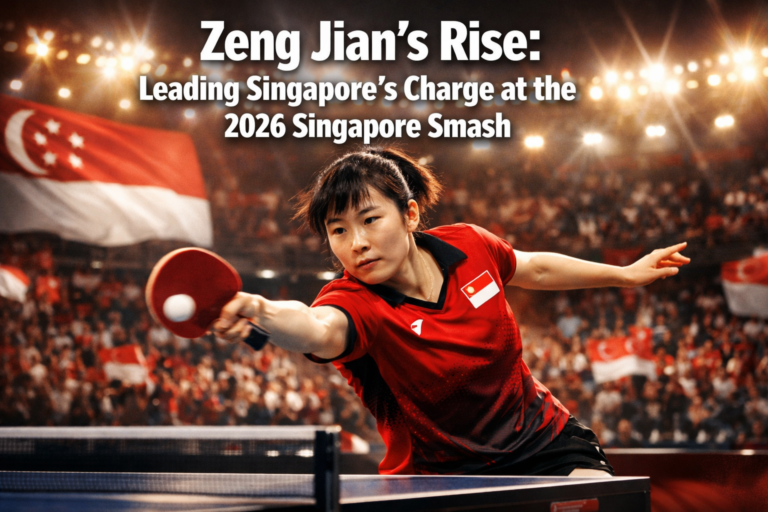
The Singapore Smash remains one of the most prestigious Grand Smash events on the calendar, drawing the world’s top-ranked players. [4] The season-ending WTT Finals in Hong Kong underline Asia’s continued central role, even as the broader circuit spreads outward. [5]
“The 2026 WTT calendar is the clearest sign yet that table tennis is no longer just an Asian sport, it’s a global one.”
How Much Prize Money Do WTT Global Events Offer Compared to Traditional Tournaments?
WTT Champions and Grand Smash events offer substantially higher prize money than traditional ITTF-era tournaments. Grand Smash events are the highest-paying stops on the tour, with Champions events close behind. [6]
Exact prize pools shift by event and year, but the structure creates clear financial incentives:
- Grand Smash: Top-tier prize pool, attracting world No. 1-20 players
- Champions: Strong prize money supporting full-time professionals
- Contender: Smaller prize pools but critical for ranking points accumulation
For players from emerging nations, even Contender-level prize money can be transformative, covering travel, coaching, and equipment costs that national federations often can’t fund. This mirrors how community-level investment drives growth in other racket sports. If you’re curious how table tennis market trends are shifting alongside this prize money expansion, the commercial picture is changing fast.
Can Amateur Players Compete in WTT Global Events?
No, WTT Global events at the Champions and Grand Smash level are restricted to ranked professional players. However, the Contender circuit is more accessible, and national qualification pathways sometimes allow lower-ranked players to enter through continental federation routes.
For recreational players, the WTT expansion matters differently: more events in more countries means more local exposure, more coaching infrastructure, and more grassroots programs tied to professional events. Many host cities run parallel community tournaments and clinics during WTT event weeks.
If you want to get involved as an amateur:
- Check your national federation for WTT-linked development programs
- Look for Contender event open qualifying rounds (where available)
- Use WTT events as a benchmark, watch the pros, then apply what you see to your own training
The same principle applies across racket sports: watching elite competition sharpens your own game. Understanding how local clubs host tournaments is a good starting point if you want to build that competitive ladder in your own community.
Why Is Table Tennis Moving Away from Traditional Powerhouse Countries?
The shift is driven by three forces: commercial strategy, Olympic relevance, and broadcast diversification.
Commercial strategy: WTT needs global sponsors and broadcast deals. A circuit that only plays in China and Japan has a limited commercial ceiling. Events in Africa, South America, and Oceania open new advertising markets and fan bases.
Olympic relevance: The IOC expects Olympic sports to demonstrate global participation. A table tennis circuit that plays across six continents strengthens the sport’s Olympic case for 2028 and beyond.
Broadcast diversification: Regional events generate local media interest that a China-only circuit never could. A Lagos Contender event gets Nigerian sports coverage; a São Paulo stop gets Brazilian broadcast attention. That compounds into a much larger global audience over time.
This decentralization isn’t unique to table tennis. Pickleball’s explosive growth followed a similar pattern, community-first, then commercial. The history of pickleball’s rise from backyard game to global phenomenon offers a useful parallel for understanding how sports scale beyond their original heartlands.
What Does Decentralization Mean for Table Tennis Rankings and Olympic Qualification?
WTT ranking points are now distributed across a far wider geographic calendar, which changes how players qualify for the Olympics and World Championships. [7]
Under the current system:
- Points are earned at every WTT event, weighted by tier (Grand Smash > Champions > Contender)
- Players must compete across multiple regions to maximize their ranking
- Emerging-nation players can accumulate meaningful points at Contender events closer to home
What this means practically:
- A Brazilian player no longer needs to travel exclusively to Asia to build a ranking
- African players competing in Lagos can earn points without the cost of intercontinental travel
- The Olympic qualification window rewards consistency across the full global calendar, not just performance at Asian events [7]
Common mistake: Players from emerging nations sometimes focus only on local Contender events and miss the Champions-level points multiplier. A smart qualification strategy mixes regional Contenders with at least one or two Champions events per season.
Which Players Have Benefited Most from WTT Global Expansion?
Players from non-traditional table tennis nations have seen the biggest ranking gains. Swedish players, Brazilian competitors, and Indian talents have all moved up the rankings faster than they would have under the old ITTF circuit structure.
Examples of beneficiaries (based on 2026 circuit structure):
- Europe: Swedish and German players benefit from dense European Contender stops
- South America: Brazilian players gain from regional events reducing travel costs
- Africa: Nigerian and Egyptian players now have continental stops that count toward world rankings
- South/Southeast Asia: Indian and Thai players benefit from the expanded Asian Contender calendar
China’s elite, players like Fan Zhendong and Sun Yingsha, still dominate Grand Smash and Champions events. But the depth of the global field is growing, and upsets at Contender level are becoming more common. [10]
How Do WTT Global Events Affect Olympic Qualification?
WTT ranking points are the primary pathway for individual Olympic qualification in table tennis. The more global the calendar, the more routes players have to accumulate the points they need. [7]
For Paris 2028 preparation (which begins in earnest with the 2026-2027 qualification window):
- Players need consistent results across WTT tiers to secure a top-ranking spot
- Continental quota places give emerging nations a separate qualification route
- The 2026 World Team Table Tennis Championships also feed into national qualification narratives [8]
Key rule: Olympic spots are allocated by country as well as individual ranking, so even a strong individual player from a nation with multiple top-ranked competitors may not qualify individually, they compete for their national team slot first.
What Are Common Mistakes New Countries Make Hosting WTT Events?
New host nations often underestimate three things: venue infrastructure, audience development, and volunteer coordination.
The most common mistakes:
- Booking a venue without broadcast-ready infrastructure, WTT events require specific lighting, camera positions, and broadcast setups that standard sports arenas don’t automatically have.
- Assuming table tennis fans will just show up, ticket sales in new markets require active marketing, school programs, and community outreach weeks before the event.
- Underestimating logistics costs, equipment transport, table certification, and ball supply add up quickly for first-time hosts.
- Neglecting the local player showcase, the best WTT events feature at least one local wildcard or exhibition match to give home fans someone to cheer for.
The same community-building logic applies at every level of racket sports. Member testimonials from local clubs consistently show that local investment in player development is what makes events sustainable long-term.
Is WTT Global Better for Developing Table Tennis Talent?
Yes, for players outside Asia, the expanded WTT circuit is clearly better for development than the old ITTF structure. More events mean more competitive matches, more ranking points, and more exposure to top-level play.
Where it helps most:
- Contender events give lower-ranked players 10-15 competitive matches per year they wouldn’t otherwise have
- Proximity to events reduces travel costs, meaning more players can afford to compete
- Broadcast coverage of local events inspires the next generation of players in those countries
Where it still falls short:
- Coaching infrastructure in emerging nations remains thin, winning more events doesn’t automatically build better coaches
- Equipment access is still unequal; top Chinese players train with gear that most developing-nation players can’t access
- The gap between Contender and Champions level is still large; bridging it requires more than just more events
For players serious about improving racket sports skills, combining competitive exposure with structured training is always the winning formula. Mental preparation matters too, check out these mental strategies for high-stakes matches when the pressure of a big event hits.
What’s the Difference Between WTT Global and Regional Table Tennis Tours?
WTT Global events are sanctioned by the international governing structure and carry official world ranking points. Regional tours, like the European Table Tennis Union (ETTU) circuit or the Pan American circuit, are federation-run, often carry lower prize money, and feed into continental rather than global rankings.
Quick comparison:
- WTT Global: World ranking points, higher prize money, international field, broadcast deal
- Regional tours: Continental ranking points, lower prize money, regional field, local broadcast
- National leagues: Club-level competition, no world ranking points, domestic focus
Players typically use regional tours to stay match-sharp between WTT events, not as a replacement for the global circuit.
Will Traditional Powerhouses Like China Still Dominate with WTT Global Events?
China will remain the dominant force in table tennis for the foreseeable future. The country’s training infrastructure, depth of talent, and coaching ecosystem are unmatched. The WTT expansion doesn’t change that in the short term.
What it does change:
- More challengers: Players from Sweden, Japan, Germany, and Brazil are closing the gap at the Champions level
- More upsets at Contender level: The global calendar creates more opportunities for surprises
- Slower dominance over time: As more nations invest in development, China’s margin will gradually narrow
The honest answer: if you’re watching a Grand Smash final in 2026, there’s still a strong chance at least one finalist is Chinese. But the semifinals and quarterfinals now regularly feature players from five or six different continents, and that’s genuinely new. [10]
FAQ
What does WTT stand for? WTT stands for World Table Tennis. It is the commercial events arm of the International Table Tennis Federation (ITTF), responsible for running the professional tour.
How many WTT events are there in 2026? The 2026 calendar includes Grand Smash, Champions, and Contender events spread across multiple continents, making it the densest and most geographically diverse calendar in the sport’s history. [2]
What is a WTT Grand Smash? A Grand Smash is the highest tier of WTT event, equivalent to a Grand Slam in tennis. It carries the most ranking points and prize money. Singapore hosts one of the most prominent Grand Smash events in 2026. [4]
Can I watch WTT events online? Yes. WTT streams events through its official channels and broadcast partners. Regional broadcast deals vary by country, so check your local sports broadcaster or the WTT website for availability.
How does WTT affect the 2028 Olympics? WTT ranking points form the primary individual qualification pathway for the 2028 Paris Olympics. Players must compete consistently across the global WTT calendar during the qualification window to secure a spot. [7]
Is table tennis growing in Africa? Yes. The inclusion of African cities on the WTT Contender calendar in 2026 is a direct investment in African table tennis development, giving local players ranking points and competitive experience they previously had to travel to Asia or Europe to earn.
What is the WTT Contender circuit? The Contender circuit is the entry-level tier of the WTT tour. It features lower prize money than Champions or Grand Smash events but is critical for lower-ranked players to build world ranking points and gain international match experience.
How much does it cost to host a WTT event? Hosting costs vary significantly by tier and location. Contender events are more affordable than Champions or Grand Smash events, but all require broadcast-ready venues, equipment, and significant local marketing investment. Exact figures are negotiated directly with WTT and are not publicly listed.
Do WTT events help grassroots table tennis? Indirectly, yes. WTT events in new markets generate local media coverage, inspire youth participation, and often include community programs. But direct grassroots investment still depends on national federation action, not WTT alone.
What is the WTT Finals? The WTT Finals is the season-ending championship event, held in Hong Kong in 2026. It features the top-ranked players from across the full WTT season competing for the year’s final title. [5]
Conclusion
The rise of WTT Global Events in 2026 represents a genuine structural shift in how table tennis operates, not just a marketing rebrand. Events in Lagos, São Paulo, Sydney, Singapore, and Taiyuan are creating pathways that simply didn’t exist five years ago. China will keep winning Grand Smash finals for now, but the competitive ecosystem around those finals is richer, more global, and more exciting than it’s ever been.
Actionable next steps:
- Follow the WTT calendar at ittf.com to track events in your region and watch live streams
- Check your national federation for development programs linked to WTT Contender events
- Use elite matches as training tools, watch the footwork, serve patterns, and tactical decisions of top players and apply them to your own game
- Get involved locally, the best way to grow table tennis in your community is to host or support local club tournaments
The racket sports community is growing across every discipline, from table tennis to pickleball to padel. The more global these sports become, the more opportunities there are for players at every level to compete, improve, and connect. That’s worth getting excited about. 🏓
References
[1] Wtt 2026 Full Schedule Guide – https://www.globalgameguide.com/article/wtt-2026-full-schedule-guide [2] 2026 Events Calendar – https://www.ittf.com/2026-events-calendar/ [3] Schedule – https://www.tv-tokyo.co.jp/tabletennis/tournament/wttc2026/schedule/ [4] 2026 World Table Tennis Series Grand Smash 18962 – https://allsportdb.com/Events/2026-World-Table-Tennis-Series-Grand-Smash-18962 [5] 2026 Calendar Unveiled An Action Packed Centenary Year Awaits – https://www.ittf.com/2025/08/04/2026-calendar-unveiled-an-action-packed-centenary-year-awaits/ [6] 2026 World Table Tennis Series Champions 18958 – https://allsportdb.com/Events/2026-World-Table-Tennis-Series-Champions-18958 [7] Tenis De Mesa Calendario Eventos 2026 – https://www.olympics.com/pt/noticias/tenis-de-mesa-calendario-eventos-2026 [8] 2026 World Team Table Tennis Championships – https://en.wikipedia.org/wiki/2026_World_Team_Table_Tennis_Championships [9] 2026 World Table Tennis Series Grand Smash 18970 – https://allsportdb.com/Events/2026-World-Table-Tennis-Series-Grand-Smash-18970 [10] World Table Tennis Series 567 – https://allsportdb.com/Competitions/World-Table-Tennis-Series-567