From Tennis or Pickleball to Padel: A Technical Transition Guide for Crossover Players
Last updated: October 4, 2026
Quick Answer: Tennis and pickleball players have a real head start when learning padel, hand-eye coordination, court awareness, and net play all transfer well. The biggest adjustments are learning to use the glass walls as part of your game, switching to an underarm serve, and adopting a more compact swing. Most intermediate tennis or pickleball players can hold their own in casual padel games within 3-5 sessions.
Key Takeaways
- Padel is played on an enclosed glass-wall court roughly 20% smaller than a tennis court, and walls are live playing surfaces.
- The U.S. crossed 1 million padel players in 2025, with participation up 14.5% in the 12 months ending June 2026, the sport is growing fast. [1][8]
- Tennis players must unlearn big backswings; padel rewards compact, controlled strokes.
- Pickleball players adapt faster to net play and soft-touch shots, but need to build wall-reading skills.
- The padel serve is always underarm and must bounce before hitting the back wall, no overhand power serves.
- A solid beginner padel racket costs $60,$150; no stringing required (the face is solid with holes).
- Most crossover players reach a comfortable recreational level within 5-10 sessions of focused practice.
- Footwork in padel prioritizes side-to-side recovery and wall anticipation over long baseline sprints.
What Is Padel and How Is It Different from Regular Tennis?
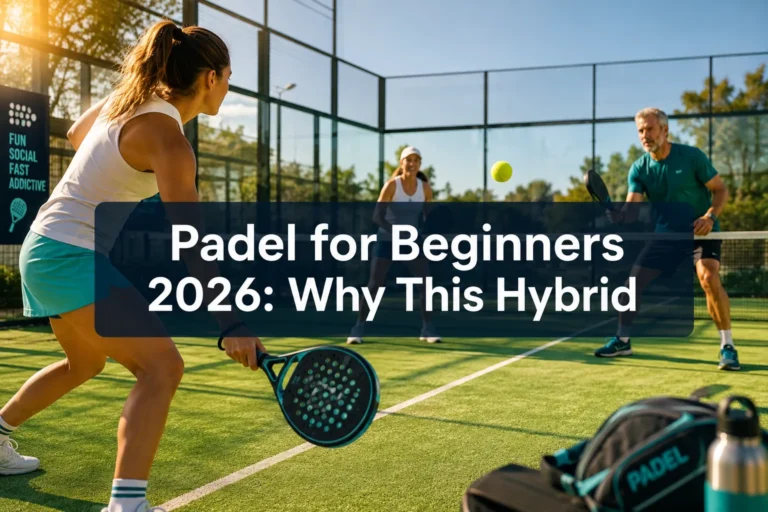
Padel is a racket sport played in doubles on an enclosed court surrounded by glass and metal mesh walls. Unlike tennis, the walls are active, balls can bounce off them and stay in play, creating a unique tactical layer that doesn’t exist in tennis or pickleball.
Here’s a quick side-by-side of the three sports:
| Feature | Tennis | Pickleball | Padel |
|---|---|---|---|
| Court size | 78 × 36 ft | 44 × 20 ft | 65.6 × 32.8 ft |
| Walls in play? | No | No | Yes (glass + mesh) |
| Racket/paddle type | Strung racket | Solid paddle | Solid racket (perforated) |
| Serve type | Overhand or underhand | Underhand only | Underhand only, must bounce |
| Standard format | Singles or doubles | Singles or doubles | Doubles only |
| Scoring | 15-30-40-game | Rally scoring to 11 | 15-30-40-game (same as tennis) |
Globally, padel now has more than 35 million players across 150 countries, according to the FIP World Padel Report 2025, with Europe accounting for over 61% of participation. [3][9] In the U.S. alone, 1,073,000 Americans played padel in 2025, and the sport is tracked as its own category in major participation reports for the first time. [1]

Can Tennis Players Transition to Padel Easily?
Yes, tennis players transition to padel more smoothly than most beginners, but there are real technical habits to break. The scoring system is identical to tennis, and the footwork fundamentals carry over well. The challenge is the swing: tennis grooves a long, looping stroke that works against you in padel’s enclosed space.
What transfers well from tennis:
- Court positioning and net approach instincts
- Overhead smash mechanics (though the padel smash is often angled into the back wall)
- Volley technique at the net
- Reading spin and ball trajectory
What needs active unlearning:
- Big backswings, padel requires a compact, wrist-controlled stroke
- Baseline power game, padel rewards consistency and placement over pace
- Expecting the ball to die at the back, it bounces off the glass and comes back
💡 Coach tip: Tennis players should spend their first two sessions just rallying with wall rebounds. Don’t try to win points, just get comfortable letting the ball come off the glass.
What Skills from Pickleball Transfer to Padel?
Pickleball players often adapt to padel’s soft-game elements faster than tennis players do. The dink-heavy, net-dominant style of pickleball maps directly onto padel’s bandejas and volleys.
Strong pickleball-to-padel transfers:
- Soft hands at the net, padel’s net game rewards touch over power, just like the pickleball kitchen
- Compact paddle swing, pickleball players already use a short, controlled stroke
- Doubles positioning, side-by-side net coverage translates almost directly
- Underhand serve mechanics, pickleball players are already comfortable with this
Where pickleball players need work:
- Reading wall rebounds, this is entirely new and takes dedicated practice
- Generating topspin on groundstrokes, pickleball paddles don’t demand this, but padel rackets reward it
- Covering a larger court, padel’s court is significantly bigger than a pickleball court
If you’re coming from pickleball, check out these common pickleball mistakes and how to fix them, many of the same shot-selection habits apply when you step onto a padel court.
How to Adjust Your Grip and Swing When Switching to Padel
The padel grip is the single most important technical adjustment for crossover players. Use a continental grip (the same as a tennis volley or slice grip) for almost everything in padel, it gives you flexibility to handle balls from all angles, including off the walls.
Grip adjustments by background:
- Tennis players: Move from your semi-western or eastern forehand grip to continental. It’ll feel weak at first, but padel’s solid racket face means you don’t need the same wrist snap.
- Pickleball players: Your paddle grip is already close, just be aware that padel rackets are heavier (typically 340-375g vs. a pickleball paddle’s 220-250g), so adjust your wrist preparation accordingly.
Swing mechanics checklist:
- ✅ Keep the backswing short, elbow no further back than your shoulder
- ✅ Contact the ball in front of your body, not beside your hip
- ✅ Follow through toward your target, not across your body
- ✅ Use your non-dominant hand for balance on groundstrokes
- ✅ Relax your grip pressure, tight hands kill touch in padel
Padel Serve Technique for Beginners from a Tennis Background
The padel serve is underhand only, and the ball must bounce before you hit it, no toss-and-swing like in tennis. For tennis players, this feels awkward at first, but it becomes natural within a few sessions.
How to execute the padel serve:
- Stand behind the service line, ball in non-dominant hand
- Drop or lightly toss the ball downward so it bounces at or below waist height
- Strike the ball at or below waist level with an underhand motion
- Aim diagonally into the service box, the ball must land in the correct box before touching the side or back wall
Common serve mistakes from tennis players:
- Trying to add power, padel serves are about placement, not pace
- Bouncing the ball too high and swinging too late
- Standing too close to the net (stay behind the service line)
Pickleball players already serve underhand, so this adjustment is minimal. The main difference is the mandatory bounce before contact, which pickleball doesn’t require.
For a useful comparison on serving mechanics, see this guide on mastering key serving techniques in pickleball, the footwork principles apply across racket sports.
Padel Footwork and Positioning for Tennis and Pickleball Players
In padel, you spend more time near the net and less time on the baseline than in tennis. Good footwork means staying light, recovering to the center of your half, and learning to move toward the back wall when the ball goes there, not away from it.
Key footwork principles:
- Default position: Both partners stand roughly at the net, not the baseline
- When defending: Drop back together to the baseline, side by side
- Wall recovery: After a wall rebound, step into the ball rather than backing away
- Split step: Use a small hop just before your opponent contacts the ball, same as tennis
Drill for tennis players, Wall Rebound Rally:
- Stand 2 meters from the back glass
- Have a partner feed balls softly into the back wall
- Practice letting the ball come off the glass and striking it back cleanly
- Focus on timing, not power
For agility work that carries over to padel court movement, the agility training exercises for pickleball players at Rally Racket are directly applicable.
Common Mistakes Tennis Players Make When Learning Padel
Tennis players are the most common crossover group, and they tend to make the same predictable errors. Knowing them in advance saves weeks of frustration.
Top 5 mistakes (and fixes):
| Mistake | Why It Happens | Fix |
|---|---|---|
| Big backswing | Tennis muscle memory | Drill compact strokes against a wall |
| Ignoring wall rebounds | No wall experience | Dedicate first sessions to wall play only |
| Serving too hard | Tennis serve habits | Focus on placement, aim for corners |
| Playing singles-style positioning | Solo court instincts | Practice net coverage with a partner |
| Hitting winners from the baseline | Tennis tactics | Accept that padel points are won at the net |
Is Padel Easier or Harder Than Tennis? Padel vs Pickleball: Which Is Easier to Learn?
Padel is generally easier to pick up than tennis but slightly harder than pickleball for a complete beginner. The underhand serve removes one of tennis’s biggest learning barriers, and the enclosed court means fewer balls go out of play. However, reading wall rebounds adds a layer of complexity that neither tennis nor pickleball players have encountered before.
Choose padel if you:
- Already play tennis or pickleball and want a social doubles game
- Prefer shorter rallies and tactical play over baseline grinding
- Enjoy learning a new skill that rewards patience and positioning
Pickleball vs. padel for new learners:
- Pickleball has a smaller court, lighter paddle, and simpler wall-free rules, it’s the faster sport to learn from scratch
- Padel offers more physical coverage and a richer tactical game once the wall skills click
- For crossover players from tennis, padel may actually feel more natural than pickleball because of the court size and scoring system
How Long Does It Take a Tennis Player to Get Good at Padel?
Most intermediate tennis players can hold their own in casual recreational padel within 5-10 focused sessions. Reaching a competitive club level typically takes 3-6 months of regular play (2-3 times per week).
Realistic progression timeline:
- Sessions 1-3: Learn the serve, basic groundstrokes, and wall awareness
- Sessions 4-6: Develop net play, volley consistency, and partner positioning
- Sessions 7-10: Start reading wall rebounds reliably and building point construction
- Month 2-3: Tactical padel, when to attack, when to defend, lob use
- Month 4-6: Competitive club play with consistent wall shots and net dominance
Pickleball players often reach the “comfortable recreational” stage slightly faster (3-6 sessions) because their net game and soft-touch skills are already developed.
What Padel Equipment Do You Need to Get Started?
You need three things: a padel racket, padel balls, and court shoes with lateral support. That’s it.
Padel racket for crossover players:
- Budget pick ($60,$100): A round-head racket with a soft foam core, forgiving on off-center hits, great for beginners
- Mid-range ($100,$150): A teardrop-head racket with medium foam, more control and a slightly higher sweet spot
- Avoid: Diamond-head rackets, these are for advanced players and punish mishits
Key gear notes:
- Padel rackets are not strung, no restringing costs
- Padel balls look like tennis balls but are slightly less pressurized (around 11 psi vs. tennis at 14 psi)
- Court shoes matter: use shoes with herringbone soles for artificial turf, or omni-grip soles for hard courts
If you’re already familiar with choosing racket sports equipment, the principles in this guide to choosing the right pickleball paddle, weight, grip size, core material, apply directly to padel racket selection too.
As of April 2026, there are just over 1,000 open padel courts across 31 U.S. states, so courts are available but still growing, check your local sports clubs and tennis facilities first. [2]
Can You Play Padel If You’ve Only Played Pickleball?
Absolutely. Pickleball players are well-positioned to enjoy padel quickly. The compact swing, net-dominant tactics, and doubles format all feel familiar. The main learning curve is the wall game and the heavier racket.
Practical first steps for pickleball players:
- Rent a padel racket for your first 2-3 sessions before buying
- Ask a more experienced player to explain wall etiquette and shot selection
- Focus on net volleys first, this is where your pickleball skills shine immediately
- Don’t rush the wall shots, watch the ball all the way to the glass before moving
The racket sports community around padel is welcoming and social, much like pickleball. Most clubs run beginner open-play sessions where crossover players are actively encouraged.
Conclusion: Your Next Steps on the Padel Court
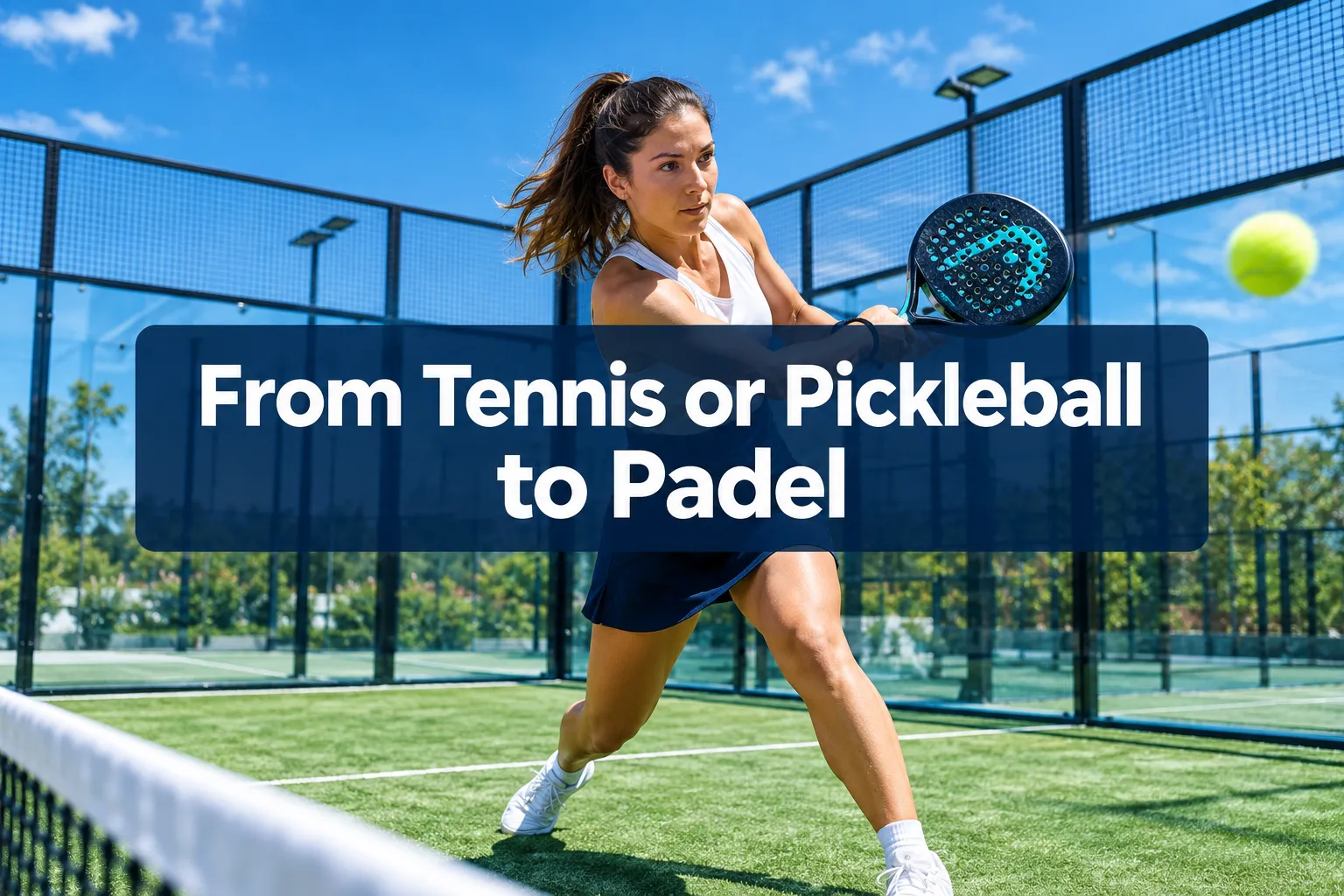
Making the move from tennis or pickleball to padel is one of the most rewarding transitions in racket sports. The learning curve is real but short, and the payoff, a fast, social, tactical doubles game, is absolutely worth it.
Your action plan:
- Book a court, Find a local padel facility and rent equipment for your first session
- Focus on walls first, Spend 15 minutes of every early session just practicing wall rebounds
- Shorten your swing, Record yourself and check that your backswing stays compact
- Play net-dominant, Resist the urge to stay at the baseline; padel is won at the net
- Join a beginner group, Most clubs have open padel nights where crossover players are welcome
Padel participation in the U.S. grew 14.5% in just 12 months through mid-2026, there’s never been a better time to step on that glass-walled court for the first time. [8] The racket sports community is growing, and padel is right at the center of it.
For more on building skills across racket sports, explore Rally Racket’s essential drills for building a strong foundation in pickleball skills, the consistency principles apply directly to padel training too.
FAQ
Q: Do I need special shoes for padel? Yes. Padel is played on artificial turf or hard court surfaces inside an enclosed structure. Use shoes with herringbone or omni-grip soles, regular tennis or running shoes won’t give you the lateral traction you need.
Q: Can padel be played as singles? Officially, padel is a doubles-only sport. Some facilities allow informal singles play, but the court dimensions and wall dynamics are designed for four players.
Q: Is a padel racket the same as a pickleball paddle? No. Padel rackets are larger (roughly 45-47 cm long), heavier (340-375g), and made from foam cores with a perforated solid face. Pickleball paddles are lighter and have a different core structure. They’re not interchangeable.
Q: What’s the biggest rule difference between padel and tennis? Walls. In padel, a ball can bounce off the back or side glass walls and still be in play. You can even hit the ball into your own back wall as a defensive shot, something that doesn’t exist in tennis or pickleball.
Q: How much does it cost to play padel? Court rental typically runs $20,$40 per person per hour in the U.S., depending on location. Racket rental is usually $5,$10 extra. Buying a beginner racket ($60,$150) pays off quickly if you play more than a few times.
Q: Do I need to unlearn my tennis backhand for padel? Not completely, but you do need to shorten it significantly. The two-handed backhand from tennis can work in padel, but the follow-through must stay compact. Many padel players use a one-handed slice backhand because it’s more versatile near the walls.
Q: Is padel good exercise? Yes. Padel combines lateral sprints, explosive net approaches, and overhead movements. It’s a solid cardiovascular workout, especially in doubles where rallies tend to be longer than in pickleball.
Q: What grip size should I use for a padel racket? Most adult players use a grip size of L2 or L3 (similar to tennis sizing). If you play pickleball with a standard grip, start with L2 and adjust based on comfort after a few sessions.
References
[1] Padel Surpasses One Million Players In The United States – https://padelusa.org/padel-surpasses-one-million-players-in-the-united-states/
[2] Us Padel Statistics – https://padelformat.com/articles/us-padel-statistics
[3] 2 December Fip World Padel Report Eng 1 – https://www.padelfip.com/wp-content/uploads/2025/12/2_december_FIP-World-Padel-Report_ENG-1.pdf
[8] Padel Deporte Crece Supera Barrera Millon Practicantes – https://www.marca.com/padel/2026/09/21/padel-deporte-crece-supera-barrera-millon-practicantes.html
[9] Fip 2025 Report 35 Million Players The Era Of A Global Sport Has Begun – https://actu-padel.com/en/fip-2025-report-35-million-players-the-era-of-a-global-sport-has-begun/