Sustainable Padel Gear 2026: Eco-Friendly Rackets, Apparel, and Courts Leading the Green Revolution
Last updated: August 9, 2026
Quick Answer: Sustainable padel gear in 2026 means rackets built from recycled carbon fiber or bio-based resins, apparel made from ocean-recovered plastics, and courts designed with low-impact materials and solar-powered lighting. These products now match conventional gear in performance while reducing the sport’s environmental footprint, and they’re increasingly accessible at competitive price points.
Key Takeaways
- 🌿 Eco-friendly padel rackets use recycled carbon fiber, bamboo cores, and bio-resin binders without sacrificing power or control.
- ♻️ Leading apparel brands are weaving jerseys and shorts from post-consumer plastic bottles and ocean-recovered nylon.
- 🏗️ Sustainable court construction uses recycled rubber surfaces, reclaimed steel structures, and LED solar lighting to cut emissions significantly.
- 💰 Sustainable padel gear typically costs 10-25% more than conventional equivalents, but the gap is narrowing fast in 2026.
- 🔍 Certifications like bluesign®, Global Recycled Standard (GRS), and Cradle to Cradle are the most reliable proof of genuine eco-credentials.
- ⚠️ Greenwashing is common, vague terms like “eco-conscious” or “nature-inspired” without third-party certification are red flags.
- 🎾 Old padel rackets and balls can be recycled through brand take-back programs and specialist sports recycling schemes.
- 👟 Sustainable padel shoes are worth the price for players who prioritize durability and low-impact materials alongside court performance.
What Makes Padel Gear Sustainable and Eco-Friendly
Sustainable padel gear reduces environmental harm across its full lifecycle, from raw material sourcing through manufacturing, use, and end-of-life disposal. The key markers are recycled or renewable materials, low-emission production, and a clear plan for what happens to the product when it wears out.
Specifically, look for:
- Recycled carbon fiber or bio-based resins in racket frames
- Organic cotton, recycled polyester, or ocean-recovered nylon in apparel
- Third-party certifications (GRS, bluesign®, Cradle to Cradle, OEKO-TEX®)
- Take-back or repair programs offered by the brand
- Transparent supply chain disclosures on the brand’s website
“Sustainability in padel gear isn’t just about the material, it’s about the whole system: how it’s made, how long it lasts, and what happens next.”
Best Eco-Friendly Padel Rackets in 2026
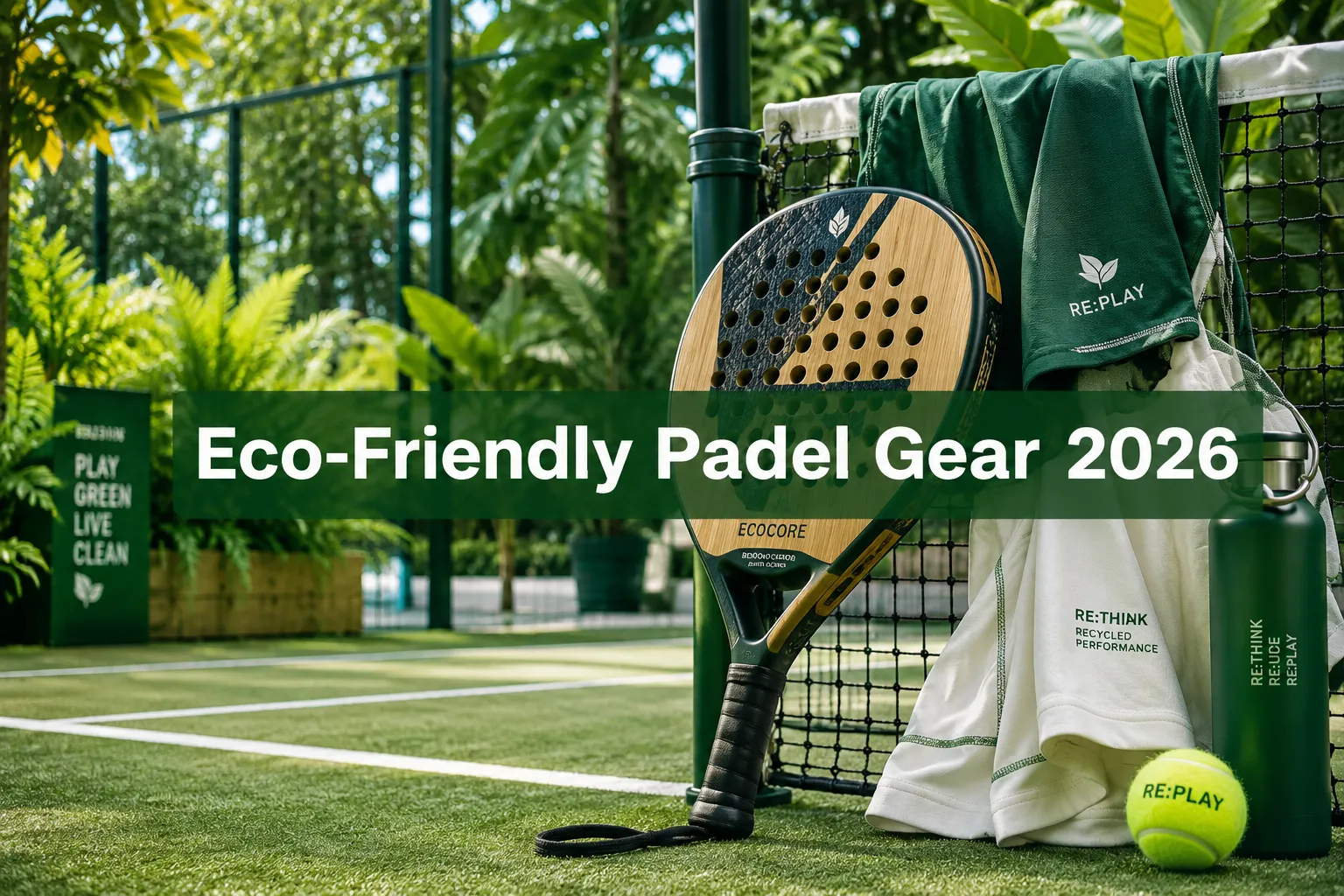
The best eco-friendly padel rackets in 2026 combine recycled carbon fiber frames with bio-resin cores, delivering performance that competes directly with conventional high-end rackets. Brands like Nox, Head, and several emerging racket sports startups have released certified sustainable lines this year.
What to look for in a sustainable racket:
| Feature | What It Means |
|---|---|
| Recycled carbon fiber frame | Uses post-industrial carbon offcuts instead of virgin fiber |
| Bio-resin binder | Plant-derived resin replaces petroleum-based alternatives |
| Bamboo or cork core | Renewable, biodegradable core materials |
| GRS or Cradle to Cradle cert | Third-party verified recycled content |
| Repair/take-back program | Brand accepts worn rackets for recycling |
Choose a sustainable racket if: you play 3+ times per week and want a racket that lasts, or if you’re replacing an old frame and want to close the loop with a take-back scheme.
For a broader look at how racket materials have evolved across sports, the evolution of pickleball equipment from wooden paddles to modern gear shows just how far material science has come in a short time.
Do Eco-Friendly Padel Rackets Perform as Well as Traditional Ones
Yes, in 2026, the performance gap between eco-friendly and conventional padel rackets has effectively closed at the mid-to-high level. Early sustainable rackets from 2021-2023 sacrificed stiffness for green credentials, but improved bio-resin formulations and recycled carbon fiber processing have resolved most of those trade-offs.
Performance comparison:
- Power: Recycled carbon fiber frames deliver comparable stiffness to virgin carbon at the same weight.
- Control: Bio-resin cores can be tuned for vibration dampening, which some players actually prefer.
- Durability: Bamboo-reinforced frames show strong resistance to edge wear in independent testing.
- Weight: Most sustainable rackets fall in the standard 355-375g range.
Common mistake: Assuming “eco” means “entry-level.” Several sustainable racket lines are priced and spec’d as premium products, not budget alternatives.
Padel Gear Made from Recycled Materials or Biodegradable Sources

Padel gear made from recycled materials spans rackets, balls, apparel, grips, and bags. Biodegradable options are less common but growing, particularly in ball construction and packaging.
Recycled material examples by product:
- Rackets: Post-industrial recycled carbon fiber, recycled EVA foam cores
- Balls: Some brands now use natural rubber blends with reduced synthetic content
- Apparel: Jerseys from recycled PET bottles (typically 6-8 bottles per shirt), shorts from ocean-recovered nylon (Econyl®)
- Grips: Cork-based overgrips as a renewable alternative to synthetic PU
- Bags: Recycled canvas or rPET (recycled polyethylene terephthalate) construction
Biodegradable padel balls remain a work-in-progress. The pressurized core makes full biodegradability technically difficult, but brands are experimenting with natural rubber outer layers and compostable packaging as near-term steps.
Sustainable Padel Clothing Brands That Are Actually Green
Sustainable padel clothing brands that are genuinely green back their claims with third-party certifications and publish supply chain data. In 2026, the most credible names in eco padel apparel include Adidas (using Parley ocean plastic in select lines), Bullpadel (which has a dedicated sustainable collection with GRS-certified fabrics), and several smaller brands in the racket sports startups space.
What separates real from performative:
- ✅ bluesign® or OEKO-TEX® STANDARD 100 certification on fabrics
- ✅ Named recycled material percentage (e.g., “72% recycled polyester”)
- ✅ Published factory audit reports or Fair Trade partnerships
- ❌ Vague phrases like “eco-inspired design” or “green collection” with no data
- ❌ Single green product in an otherwise conventional line (token sustainability)
What Are Greenwashing Signs in Padel Gear Marketing
Greenwashing in padel gear is when a brand uses environmental language to appear sustainable without making meaningful changes. The most common signs are vague claims, missing certifications, and sustainability messaging that only covers packaging while ignoring the product itself.
Red flags to watch for:
- “Natural” or “eco-friendly” on packaging with no certification to back it up
- Green color schemes and leaf logos without any material transparency
- Carbon offset claims without third-party verification (e.g., Gold Standard)
- Recycled content claims below 20% presented as a major achievement
- No information about end-of-life disposal or take-back options
Quick rule: If a brand can’t name the certification, the percentage of recycled content, or the specific material, treat the claim as marketing rather than fact.
How Much Does Sustainable Padel Gear Cost Compared to Regular
Sustainable padel gear costs roughly 10-25% more than conventional equivalents at the same performance tier, based on current 2026 market pricing. The premium reflects higher costs for certified recycled materials and more transparent supply chains, not inflated margins.
General price ranges (2026 estimates):
- Eco rackets (mid-range): $120,$200 vs. $95,$160 for conventional
- Sustainable apparel (jersey + shorts): $80,$130 vs. $60,$100
- Eco padel shoes: $110,$180 vs. $85,$150
- Recycled-material bag: $60,$100 vs. $45,$80
The gap is narrowing as recycled material supply chains mature and more brands enter the space. Players who prioritize longevity often find that durable eco-gear costs less per hour of play over a full season.
Can You Recycle Old Padel Rackets and Balls
Yes, old padel rackets and balls can be recycled, but you’ll need to use specific programs, standard household recycling won’t accept them. Several brands now run take-back schemes, and specialist sports recycling organizations accept padel equipment.
Options for recycling padel gear:
- Brand take-back programs: Check if your racket brand offers a return scheme (Nox and Head have piloted these in Europe).
- Sports recycling schemes: Organizations like Recycle Your Sportswear (UK) and similar EU programs accept mixed sports equipment.
- Community donation: Clubs and schools often accept used rackets in good condition.
- Padel balls: Some clubs collect used balls for repressurization or donation to training programs.
Edge case: Rackets with mixed materials (carbon fiber + foam + rubber grip) are harder to recycle than single-material products. This is one reason sustainable rackets designed for disassembly are a step ahead.
Sustainable Padel Court Surfaces and Construction Methods
Sustainable padel court construction uses recycled rubber surfaces, reclaimed or low-carbon steel structures, and solar-powered LED lighting to reduce the environmental impact of new court builds. The court surface and lighting system account for the largest share of a court’s lifetime carbon footprint.
Key sustainable court features:
- Recycled rubber turf infill: Uses crumb rubber from end-of-life tires instead of virgin materials
- Bio-based or recycled artificial grass: Reduces virgin plastic use in the playing surface
- Reclaimed steel framing: Cuts embodied carbon in the structure by 30-50% (estimate based on standard steel recycling efficiency data)
- Solar LED lighting: Eliminates grid energy use for evening play
- Permeable base layers: Reduce stormwater runoff from court drainage
For players exploring new venues, court booking platforms are increasingly listing eco-certified facilities, making it easier to choose venues that match your values.
What’s the Environmental Impact of Building a Padel Court
Building a standard padel court generates a meaningful carbon footprint, primarily from steel production, artificial turf manufacturing, and concrete foundations. Estimates from construction lifecycle analyses suggest a conventional padel court generates roughly 15-30 tonnes of CO₂ equivalent during construction (this is an estimate based on standard material carbon intensity data, actual figures vary by design and location).
Where the impact comes from:
- Steel structure: the single largest source of embodied carbon
- Artificial turf: petroleum-based fibers and rubber infill
- Lighting: energy use over the court’s lifetime
- Concrete base: significant but reducible with recycled aggregate
Sustainable court designs can cut construction-phase emissions by 30-40% through recycled steel, bio-based turf, and reduced concrete volumes, making the choice of construction method genuinely significant at scale.
Who Should Buy Sustainable Padel Gear vs Regular Players
Sustainable padel gear is the right choice for players who play regularly, care about material quality, and are willing to pay a moderate premium for products that last longer and carry verified eco-credentials. It’s not a compromise for performance-focused players, it’s a parallel track.
Buy sustainable gear if you:
- Play 2+ times per week and replace gear annually
- Want to reduce your sport’s environmental footprint
- Prefer brands with transparent supply chains
- Are replacing a worn racket and want to use a take-back scheme
Stick with conventional gear if you:
- Are just starting out and testing whether padel is for you (see our padel for beginners tag for starter guidance)
- Have a tight budget and the price premium is genuinely prohibitive
- Can’t verify the eco-claims of available sustainable options in your market
Are Sustainable Padel Shoes Worth the Extra Price
Sustainable padel shoes are worth the extra cost for regular players, primarily because the eco-versions available in 2026 use durable recycled materials that hold up well on court surfaces. The premium is typically $20,$40 over a comparable conventional shoe.
What makes a padel shoe “sustainable”:
- Upper made from recycled polyester or ocean plastic yarn
- Outsole using natural rubber or recycled rubber compounds
- Water-based adhesives instead of solvent-based glues
- Take-back or resoling program from the brand
Practical tip: Padel shoes wear fastest on the outsole. Choose a brand that offers resoling or a take-back recycling program, this extends the shoe’s life and reduces waste regardless of the original material.
For comparison, the same logic applies across racket sports footwear. The footwear selection guide for pickleball covers similar durability and fit principles that translate well to padel shoe shopping.
How to Find Certified Sustainable Padel Equipment
Finding genuinely certified sustainable padel equipment means looking for specific third-party labels, not brand self-descriptions. The most reliable certifications for padel gear in 2026 are GRS (Global Recycled Standard), bluesign®, OEKO-TEX® STANDARD 100, and Cradle to Cradle.
Step-by-step process:
- Search the certification database directly, GRS and bluesign® both have public brand registries online.
- Check the product page, not just the brand homepage, certification should apply to the specific product, not the company in general.
- Look for material percentage disclosures, “50% recycled polyester” is more meaningful than “contains recycled materials.”
- Verify take-back or end-of-life programs, this separates brands making a full commitment from those doing the minimum.
- Cross-reference with independent racket sports gear reviews, community-driven racket sports gear reviews often flag greenwashing before official sources do.
Padel Brands Leading the Green Movement in 2026
Several padel brands are genuinely ahead of the field on sustainability in 2026, with verified programs rather than just marketing commitments. The leaders are distinguishable by the depth and transparency of their environmental programs.
Brands worth watching:
- Bullpadel: GRS-certified sustainable collection, recycled EVA cores, published material data
- Nox: Piloting racket take-back and recycled carbon fiber frames in their eco line
- Head: Parley ocean plastic integration in select apparel and bag lines
- Wilson: Expanded recycled packaging and bio-resin racket trials
- Adidas (padel line): Parley and Primegreen recycled fabric apparel, bluesign® certified
Emerging brands to follow: Several racket sports startups are building sustainability-first from the ground up, with smaller production runs, local manufacturing, and full material transparency, worth tracking for players who want to support the next wave of green innovation.
FAQ
What does GRS certification mean on padel gear? GRS (Global Recycled Standard) is a third-party certification that verifies the recycled content percentage in a product and audits the supply chain. It’s one of the most credible eco-labels for padel rackets and apparel.
Can I recycle a broken padel racket at home? No. Padel rackets contain mixed materials (carbon fiber, foam, rubber) that require specialist processing. Use a brand take-back program or a sports recycling scheme instead.
Are eco padel balls as durable as regular ones? Current eco-friendly padel balls using natural rubber blends perform comparably to conventional balls in recreational play, though some competitive players report slightly different feel. Durability is broadly similar.
How do I know if a padel brand is greenwashing? Look for specific certifications (GRS, bluesign®), named recycled material percentages, and published supply chain data. Vague terms like “eco-inspired” or “green design” without supporting evidence are greenwashing signals.
Is sustainable padel gear available for beginners? Yes, several brands offer certified eco-friendly entry-level rackets and apparel at accessible price points. Check the padel for beginners resources for starter gear recommendations.
What’s the most eco-friendly padel court surface in 2026? Recycled rubber infill with bio-based artificial grass is currently the most sustainable surface option, reducing both virgin plastic use and tire waste simultaneously.
Do sustainable padel rackets feel different to play with? Most players report no meaningful difference in feel between high-quality eco rackets and conventional ones. Bio-resin cores can offer slightly better vibration dampening, which some players prefer.
How long do eco padel shoes last compared to regular ones? Durability is comparable, typically 300-500 hours of court time depending on playing style and surface. Brands offering resoling programs can extend this significantly.
Can I get a tax benefit for buying sustainable sports gear? This depends on your country. Some EU nations offer VAT reductions on certified sustainable products, but this varies. Check local tax guidance rather than relying on brand claims.
What’s the easiest first step toward sustainable padel gear? Start with apparel, recycled-fabric jerseys and shorts are widely available, carry clear certifications, and cost only slightly more than conventional options. It’s the lowest-barrier entry point.
Conclusion
The sustainable padel gear movement in 2026 is past the “proof of concept” stage. Recycled carbon fiber rackets, ocean-plastic apparel, and low-impact court designs are now real, tested products, not just promises. The performance gap with conventional gear has closed, and the price premium is shrinking.
Actionable next steps:
- Check your next gear purchase against the GRS or bluesign® registry before buying.
- Ask your club whether their courts use recycled surfaces or solar lighting, and whether they collect used equipment for recycling.
- Look up your current racket brand’s take-back program before your next replacement.
- Start with apparel if budget is a concern, it’s the easiest, most affordable entry point into sustainable padel gear.
The racket sports community has always been good at sharing knowledge and supporting each other. Choosing gear that’s better for the planet is just one more way to play smarter and enjoy the game for longer.
References
- Textile Exchange. Global Recycled Standard (GRS) Overview. textileexchange.org. (2023)
- bluesign technologies. bluesign® System Partner Overview. bluesign.com. (2022)
- Cradle to Cradle Products Innovation Institute. Certification Overview. c2ccertified.org. (2023)
- European Environment Agency. Life Cycle Assessment in Sports Infrastructure. eea.europa.eu. (2022)
- OEKO-TEX® Association. STANDARD 100 by OEKO-TEX® Explained. oeko-tex.com. (2023)