
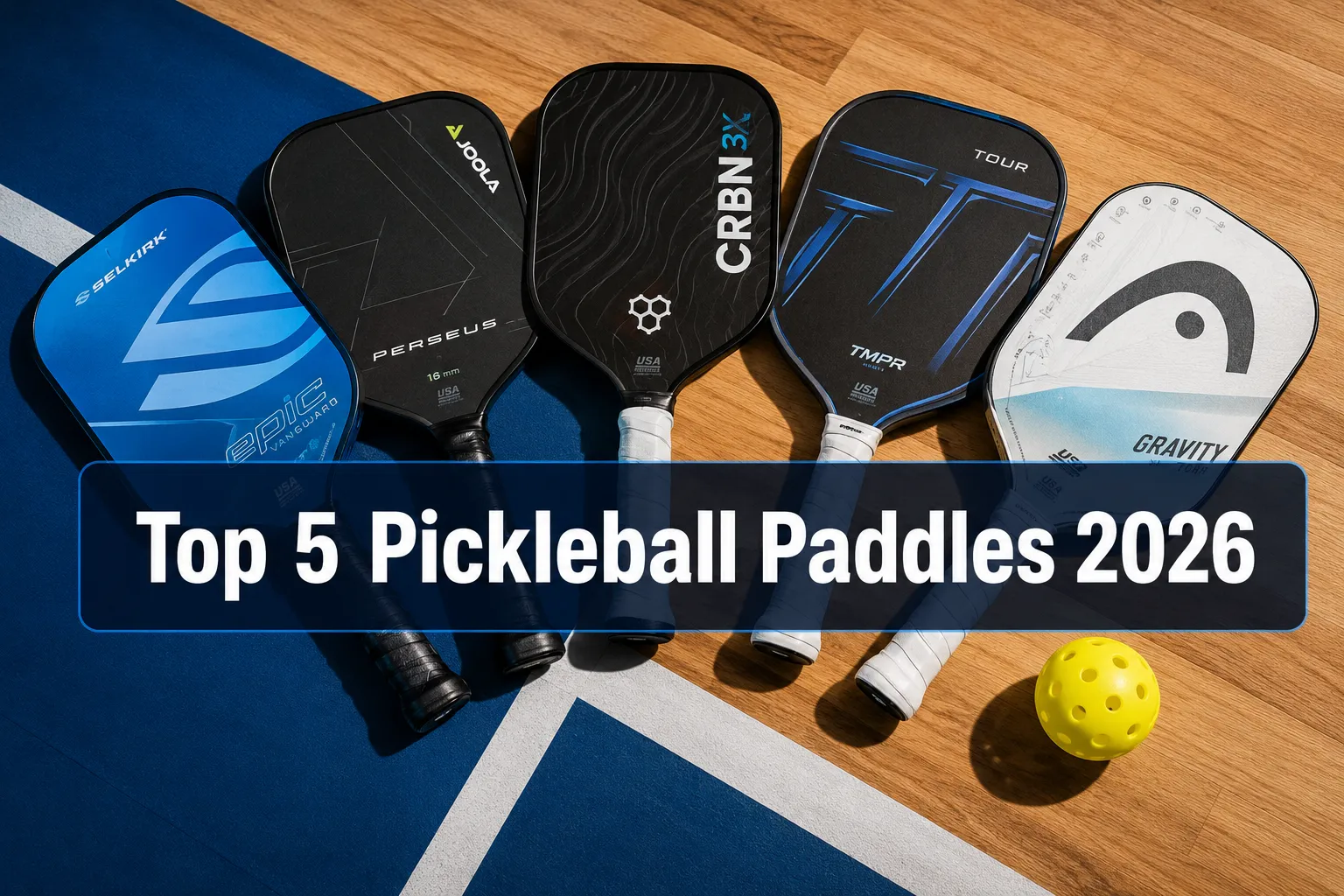
Top 5 Pickleball Paddles of May 2026: Performance Reviews Post-Anna Leigh Waters’ Paddletek Exit
Last updated: July 29, 2026
Quick Answer: The top 5 pickleball paddles of May 2026 are the Joola Hyperion CFS 16, Selkirk Vanguard Power Air Invikta, Franklin Ben Johns Signature, Engage Pursuit MX 6.0, and the Paddletek Bantam EX-L Pro. Anna Leigh Waters’ departure from Paddletek in late 2025 shifted the competitive landscape, prompting players at every level to reassess their paddle choices. This guide covers what changed, what’s worth buying now, and how to match a paddle to your actual game.
Key Takeaways
- Anna Leigh Waters left Paddletek in late 2025 and signed with Joola, making Joola paddles the most-watched gear in early 2026.
- Paddletek paddles remain solid options, the brand’s engineering didn’t change, only the sponsorship.
- Foam-core paddles now dominate expert rankings for their balance of power, spin, and arm comfort.
- Paddle thickness (14mm, 16mm) is the single biggest factor separating power players from control players.
- Budget paddles under $100 have improved significantly, mid-range options ($100,$180) still offer the best value for recreational players.
- Graphite and carbon fiber face materials generate more spin than fiberglass; composite cores affect feel and durability.
- Beginners should prioritize weight (7.5-8.2 oz) and grip size over brand names or pro endorsements.
- Durability issues are most common in paddles with thin edge guards and low-density polymer cores.
What Happened with Anna Leigh Waters and Paddletek
Anna Leigh Waters, widely considered the top women’s singles player in professional pickleball, ended her long-running partnership with Paddletek in late 2025 and signed a new equipment deal with Joola. The split was confirmed through official announcements from both parties, though the financial details were not made public.
This matters for gear buyers because Waters had been one of Paddletek’s most visible ambassadors. Her move to Joola immediately boosted interest in Joola’s paddle lineup, particularly the Hyperion series, and left some players wondering whether Paddletek’s products were still worth considering.
The short answer: yes, they are. Paddletek’s manufacturing quality and paddle engineering didn’t change when Waters left. The Bantam EX-L Pro is still one of the most consistent control paddles on the market. What changed is the marketing story, not the product.
Best Pickleball Paddles in 2026 After the Paddletek Controversy
The post-Waters market in 2026 has been good for buyers. Competition between Joola, Selkirk, Engage, and Franklin has pushed brands to improve foam core construction, face texture, and edge protection across price points.
Here are the Top 5 Pickleball Paddles of May 2026, based on performance reviews from expert YouTube channels, community feedback, and racket sports gear reviews:

1. Joola Hyperion CFS 16, Best Overall
Best for: Intermediate to advanced players who want spin and pop.
- Core: Charged Foam Surface (CFS), 16mm thickness
- Face: Carbon fiber (Raw T700)
- Weight: 7.9-8.3 oz
- Price range: $220,$250 (estimate based on 2025 retail trends)
The Hyperion CFS 16 is the paddle Waters moved to, and it’s earned its reputation. The 16mm foam core softens hard shots at the kitchen line while the carbon fiber face generates exceptional spin on drives and drops. It’s not the most forgiving paddle for beginners, but intermediate players who’ve developed consistent mechanics will feel the difference immediately.
“The Hyperion’s sweet spot is wider than most paddles at this price, mishits don’t punish you as badly.”, common feedback across pickleball review communities
2. Selkirk Vanguard Power Air Invikta, Best for Power Players
Best for: Players who prioritize driving the ball and playing from the baseline.
- Core: Polymer Air Dynamic Core
- Face: Selkirk’s ProSpin+ carbon fiber
- Weight: 8.0-8.4 oz
- Price range: $220,$240 (estimate)
Selkirk’s Invikta shape (elongated) gives extra reach and leverage on groundstrokes. The Air Dynamic Core reduces vibration noticeably, which matters for players managing elbow or shoulder discomfort. It’s one of the top-rated pickleball paddles in May 2026 for aggressive players who like to dictate pace.
Choose this if: You play more baseline rallies than kitchen dinking, or you’re coming from a tennis background. For more on exploring different shot types from dinks to smashes, that guide pairs well with understanding how paddle shape affects your shot selection.
3. Franklin Ben Johns Signature, Best Mid-Range Value
Best for: Competitive recreational players who want pro-level feel without the top-tier price.
- Core: Polymer honeycomb
- Face: Carbon fiber texture
- Weight: 7.8-8.2 oz
- Price range: $130,$160 (estimate)
Ben Johns’ signature paddle punches above its price. The carbon face texture holds up well over months of regular play, and the polymer core gives a satisfying, controlled feel at the kitchen line. It’s not as arm-friendly as the Joola foam-core options, but for players spending $130,$160, it’s hard to beat.
4. Engage Pursuit MX 6.0, Best for Control and Placement
Best for: Dink-focused players and those who rely on placement over power.
- Core: Engage’s proprietary ControlPro polymer
- Face: Fiberglass composite
- Weight: 7.6-8.0 oz
- Price range: $180,$210 (estimate)
Engage paddles have always leaned toward feel over firepower, and the Pursuit MX 6.0 continues that tradition. The fiberglass face produces a softer response than carbon fiber, which helps with touch shots and resets. If your game is built around smart shot selection and court positioning, this paddle rewards that style.
5. Paddletek Bantam EX-L Pro, Best Post-Waters Value Pick
Best for: Players who want proven performance and don’t follow sponsorship drama.
- Core: Smart Response Technology polymer
- Face: Textured fiberglass
- Weight: 7.6-8.1 oz
- Price range: $150,$180 (estimate)
Yes, Paddletek is still very much worth buying. The Bantam EX-L Pro has been a consistent performer for years, and nothing about the paddle changed when Waters left. It’s a great choice for intermediate players who want a reliable, durable option without chasing the newest release.
How to Choose a Pickleball Paddle as a Beginner
Beginners should focus on three things: weight, grip size, and core material. Everything else is secondary.
- Weight: Stay between 7.5 oz and 8.2 oz. Heavier paddles generate more power but tire your arm faster. Lighter paddles give more control but require better technique.
- Grip size: Measure from the middle crease of your palm to the tip of your ring finger. Most adults fall between 4″ and 4.5″.
- Core material: Polymer honeycomb cores are the most forgiving and widely recommended for beginners.
For a full breakdown, the ultimate guide to choosing your first pickleball paddle covers every decision in plain language.
Common beginner mistake: Buying a paddle based on what a pro uses. Pro paddles are optimized for elite mechanics. A beginner with a $250 carbon fiber paddle and inconsistent form will play worse than someone with a $80 polymer paddle and solid fundamentals.
Pickleball Paddle Comparison: Power vs. Control
Power and control exist on a spectrum, and paddle specs determine where a paddle lands.
| Feature | Favors Power | Favors Control |
|---|---|---|
| Core thickness | 13-14mm | 16mm+ |
| Face material | Carbon fiber | Fiberglass |
| Weight | 8.2 oz+ | 7.5-7.9 oz |
| Shape | Elongated | Standard/wide |
The rule of thumb: Thinner cores = more power and pop. Thicker cores = more control and touch. Most recreational players benefit more from a control-oriented paddle because consistency wins more points than raw power.
Pickleball Paddle Weight and Thickness Explained
Paddle weight and thickness are the two specs that most directly affect how a paddle feels during play.
Weight categories:
- Light: Under 7.3 oz, great for quick hands, less arm strain
- Mid-weight: 7.3-8.2 oz, the sweet spot for most players
- Heavy: Over 8.2 oz, more drive power, higher fatigue risk
Thickness categories:
- 13mm: Lively, powerful, less forgiving
- 14mm: Balanced, popular with all-around players
- 16mm+: Softer feel, better at the kitchen, preferred by control players
The shift toward 16mm foam-core paddles is one of the biggest trends in the top 5 pickleball paddles of May 2026 rankings. Foam cores in particular reduce vibration compared to standard polymer, which is worth noting if you play frequently or manage joint issues.
Graphite vs. Composite vs. Carbon Fiber: Paddle Face Materials
The face material affects spin, feel, and durability more than any other single component.
- Graphite: Lightweight, stiff, good touch. Less spin texture than carbon fiber but very consistent.
- Fiberglass (composite): Softer feel, more power on drives, less spin. Best for beginners and control players.
- Carbon fiber (raw/T700): Rough texture, excellent spin generation, stiffer response. Preferred by advanced players.
For a deeper look at how paddle technology has evolved, the evolution of pickleball equipment from wooden paddles to modern gear is worth a read.
Edge case: Some carbon fiber paddles lose their surface texture faster than others. Check community reviews for delamination reports before buying, this is a known durability issue with certain budget carbon fiber options.
What Paddles Do Pro Players Use in 2026
After Waters’ move to Joola, the pro paddle landscape in 2026 looks roughly like this (based on publicly visible sponsorship information as of early 2026):
- Joola: Anna Leigh Waters, several top-ranked players post-2025
- Selkirk: Ben Johns (historically), multiple PPA Tour players
- Franklin: Ben Johns (signature line, separate from Selkirk affiliation, verify current status before purchasing)
- Engage: Several touring professionals focused on control-based play
- Paddletek: Continues to sponsor a roster of competitive players despite the Waters exit
Pro choices reflect their specific playing styles. Copying a pro’s paddle without matching their mechanics rarely improves recreational results. Use pro gear as a quality signal, not a prescription.
Are Expensive Paddles Really Better Than Mid-Range Options
For most recreational players, mid-range paddles ($100,$180) offer the best return. Premium paddles ($200+) deliver real performance advantages, but only when a player’s technique is consistent enough to feel the difference.
Choose a premium paddle if:
- You play 3+ times per week
- You compete in local or regional tournaments
- You’ve been playing for at least 12 months and have consistent mechanics
Stick with mid-range if:
- You play casually 1-2 times per week
- You’re still developing your dinking and third-shot drop
- You want to try pickleball without a major investment
Budget paddles under $80 are fine for beginners but tend to have durability issues, thin edge guards, lower-density cores, and face textures that wear quickly. The essential gear for new pickleball players guide covers the full starter kit, including what to skip.
Common Mistakes When Buying a Pickleball Paddle
These are the mistakes that come up most often in the pickleball community:
- Buying based on brand loyalty alone, the market has changed; lesser-known brands now make excellent paddles.
- Ignoring grip size, a grip that’s too small causes wrist strain; too large reduces maneuverability.
- Choosing the heaviest paddle for more power, technique generates power, not weight.
- Skipping the return policy, always buy from retailers with a trial or return window.
- Chasing the newest release, last year’s top-rated paddle is often 90% as good at a lower price.
- Overlooking edge guard quality, cheap edge guards crack on court contact and void warranties.
Pickleball Paddle Durability Issues to Avoid
Durability problems cluster around a few specific failure points:
- Delamination: The face separates from the core. Common in budget carbon fiber paddles and some mid-range options. Check community forums for reports before buying.
- Edge guard cracking: Happens on paddles with thin plastic guards. Look for paddles with reinforced or rubber edge protection.
- Core compression: Over time, polymer cores compress and lose their lively feel. High-frequency players (4+ days/week) should budget for replacement every 12-18 months.
- Face texture wear: Carbon fiber faces lose spin texture faster than manufacturers suggest if used on outdoor courts with rough surfaces.
Pairing the right paddle with the right pickleball footwear for court comfort also reduces wear on your body, worth considering alongside gear durability.
FAQ
Q: Did Anna Leigh Waters’ departure hurt Paddletek’s paddle quality? No. Paddletek’s manufacturing and engineering remain unchanged. The Bantam EX-L Pro is still a top-rated control paddle in 2026. Sponsorship changes affect marketing, not product quality.
Q: What is the best pickleball paddle for spin in 2026? The Joola Hyperion CFS 16 and Selkirk Vanguard Power Air Invikta lead for spin, thanks to their raw carbon fiber face textures. Both generate significantly more spin than fiberglass alternatives.
Q: Is a 16mm paddle better than a 14mm paddle? It depends on your style. 16mm paddles favor control and touch; 14mm paddles favor power and pop. Most beginners and kitchen-focused players benefit from 16mm.
Q: How much should a beginner spend on a pickleball paddle? $60,$120 is a reasonable range for beginners. Mid-range paddles in this bracket offer good durability and feel without over-investing before you know your playing style.
Q: What paddle does Anna Leigh Waters use in 2026? Waters signed with Joola in late 2025 and uses the Joola Hyperion CFS series. Confirm current model details through Joola’s official website, as pro gear specs update frequently.
Q: Are foam core paddles better than polymer core paddles? Foam cores reduce vibration and offer a softer feel, which many players prefer for arm comfort. Polymer cores are more common, widely tested, and still perform well. Foam cores are the newer technology and are trending upward in expert rankings.
Q: Can I use a tennis or padel paddle for pickleball? No. Pickleball paddles must meet specific USAPA size and material regulations. Tennis rackets and padel rackets are not legal for pickleball play.
Q: How do I know if my paddle grip size is correct? Hold the paddle in a handshake grip. If you can fit one finger between your fingertips and your palm, the grip size is correct. Too much space means the grip is too large.
Conclusion: What to Do Next
The top 5 pickleball paddles of May 2026 reflect a market that’s genuinely competitive and improving fast. Anna Leigh Waters’ move to Joola made headlines, but the real story is how much the entire paddle category has advanced, better foam cores, improved carbon fiber textures, and smarter edge protection across all price points.
Here’s what to do based on where you are:
- New to pickleball? Start with a mid-weight polymer core paddle in the $80,$120 range. Check out the beginner’s guide to pickleball strategy to pair your new gear with smart court habits.
- Playing for 6-12 months? Consider upgrading to the Franklin Ben Johns Signature or Engage Pursuit MX 6.0 for better feel and durability.
- Competing regularly? The Joola Hyperion CFS 16 or Selkirk Vanguard Power Air Invikta will give you the performance edge you’re looking for.
- Loyal to Paddletek? Keep playing with the Bantam EX-L Pro, it’s still one of the most consistent paddles on the market, regardless of who’s sponsoring it.
The racket sports community is full of players who improved their game simply by matching their gear to their actual style. Pick the paddle that fits how you play today, not the one a pro uses on tour.


