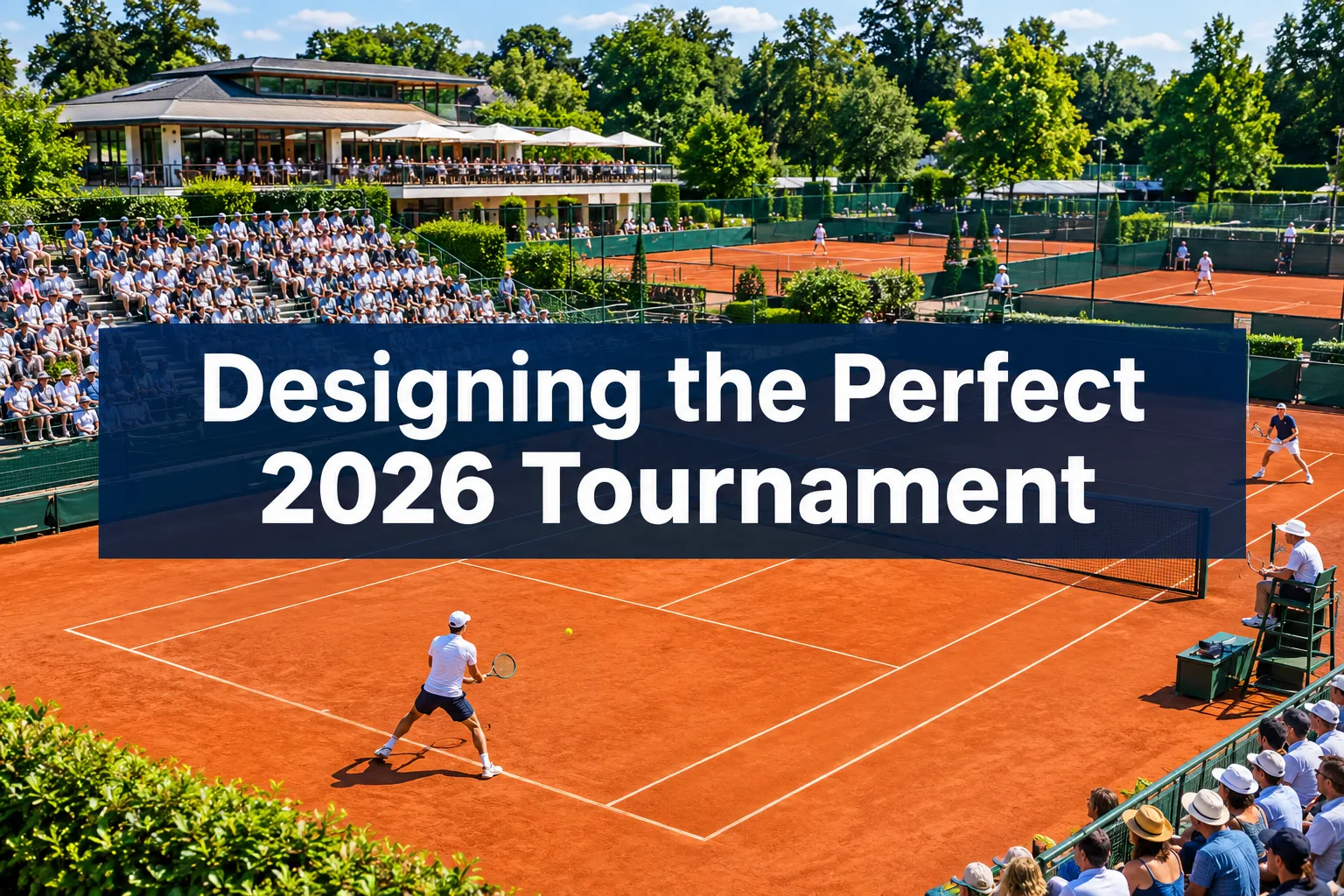
Designing the Perfect 2026 Tournament: What Local Clubs Can Learn from ATP, WTA, and Soft Tennis Events
Last updated: November 16, 2026
Quick Answer: Local clubs can run better tournaments in 2026 by borrowing three things the pros already do well: publish formats and schedules early, use round-robin group stages to give every player more matches, and seed players transparently so the draw feels fair. You don’t need a big budget to do any of this, you need a clear plan.
Key Takeaways
- Round-robin group formats give every player more court time and reduce early-exit frustration
- The ATP Finals uses an eight-player, two-group model, a structure that scales down beautifully to club level [1]
- Publishing your draw, schedule, and format weeks in advance builds trust and boosts sign-ups
- Budget for courts, balls, scoring apps, and admin time before you set an entry fee
- Soft tennis tournaments follow a team-based, mixed-skill structure that works well for community events
- Skill-based divisions (not just open draws) keep competition fair and participation high
- Single elimination works for large draws; double elimination is better for smaller, skill-matched groups
- USTA rules are not mandatory for club events, but borrowing their structure saves planning time
- A club with as few as two courts can run a viable 8- to 16-player round-robin event
- Clear registration, honest seeding, and consistent communication are the biggest differentiators between a forgettable event and one players talk about all year
What Makes a Good Tennis Tournament Format for Local Clubs
A good local tournament format balances court availability, player experience, and your volunteers’ sanity. The best formats guarantee every player multiple matches, finish on time, and produce a clear winner without confusion.

The three formats most clubs use:
| Format | Best For | Minimum Courts | Player Guarantee |
|---|---|---|---|
| Single Elimination | 32+ players, one-day events | 4+ | 1 match minimum |
| Double Elimination | 8-16 players | 2-3 | 2 matches minimum |
| Round Robin + Knockout | 8-24 players | 2-4 | 3+ matches guaranteed |
Choose round robin + knockout if you want players to stay engaged all day. Single elimination is fast but brutal, a nervous beginner loses one match and goes home after 45 minutes. That’s not great for a community club trying to grow its racket sports community.
“The goal of a club tournament isn’t just to find a winner. It’s to give every member a reason to come back next year.”
How ATP and WTA Tournaments Structure Their Schedules and Brackets
The ATP Finals runs on an eight-player, two-group round-robin model. Each player plays three group-stage matches before the top two from each group advance to semifinals [1]. The WTA Finals 2026 mirrors this structure. What makes it work at the elite level, and at yours, is that every player is guaranteed meaningful matches, and the path to the final is completely transparent from day one [2].
The ATP Tour publishes its full calendar months in advance, with daily session schedules, court assignments, and format details clearly communicated [3][4]. That level of planning feels like a lot for a weekend club event, but the principle is the same: when players know what to expect, they show up prepared and they tell their friends.
Key scheduling habits from the pros to copy:
- Publish your format, draw date, and start times at least three weeks out
- Build in 15-minute buffers between matches (courts run late, always)
- Schedule two matches per court per session maximum to avoid fatigue and delays
- Post a daily order of play the evening before each day [5]
How Much Does It Cost to Organize a Local Tennis Tournament
A basic 16-player single-day club tournament can be run for roughly $200,$600, depending on whether courts are already available and how much you spend on prizes. Here’s a realistic breakdown:
- Court fees: $0 (if club-owned) to $200+ for rented facilities
- Tennis balls: $30,$80 (plan for 2-3 cans per court per day)
- Scoring/bracket app: $0,$50 (many free tools exist)
- Prizes/trophies: $50,$150
- Admin/printing: $20,$40
Entry fees between $15 and $30 per player typically cover costs for a 16-player event. Larger draws with 32+ players can generate enough to fund prizes and cover court rental.
Common cost mistake: Underbudgeting for balls. A busy tournament day burns through more cans than expected, especially if matches go long.
What Equipment and Court Setup You Need to Run a Tournament
For most local tournaments, you need: marked courts in good condition, a net at correct height, fresh balls per match, a scoring system (paper bracket or app), and someone managing logistics. That’s genuinely it.
Checklist for a smooth setup:
- ✅ Verify net height before the first match (36 inches at center)
- ✅ Assign a court captain or volunteer per 2 courts
- ✅ Have a backup ball supply on-site
- ✅ Post the draw and schedule in a visible spot
- ✅ Set up a check-in table with player names, division, and match times
- ✅ Have a referee or clear line-call protocol agreed in advance
For soft tennis events, you’ll also need soft tennis balls, the rubber pressurized balls used in soft tennis are not interchangeable with regular felt balls. Courts are the same size as standard tennis courts, so no adjustments needed there.
If your club runs pickleball alongside tennis, check out our guide on understanding tournament formats for recreational players, many of the bracket concepts transfer directly.
What’s the Difference Between Soft Tennis and Regular Tennis Tournaments
Soft tennis tournaments use rubber balls instead of felt ones, and matches are typically team-based rather than individual. This makes them naturally more community-friendly, players support teammates, beginners feel less exposed, and scoring is often more forgiving for newcomers.
Regular tennis tournaments (following ATP/WTA or USTA structures) are individually scored, with standard deuce-advantage scoring or no-ad formats for speed. Soft tennis events often use a points-per-game system that keeps scores tighter and more competitive across skill gaps.
What local clubs can borrow from soft tennis:
- Team-based rounds let you mix skill levels without it feeling unfair
- Short match formats (first to 4 games, no ad) keep the day moving
- Doubles-first scheduling builds confidence for newer players before singles
How Many Players Should You Invite to a Local Club Tournament
The sweet spot for a first-time club tournament is 8 to 24 players. This range allows a round-robin group stage, finishes in a single day on two to four courts, and is manageable for one or two organizers.
- 8 players: One round-robin group, top 4 advance to semis. Done in half a day.
- 16 players: Two groups of 8, top 2 from each group play semis and final. Full day.
- 24 players: Three groups of 8 or four groups of 6. Needs 3-4 courts and a full day.
- 32+ players: Single elimination or split-division format recommended.
The ATP Finals eight-player format is a proven model you can lift directly [2]. If you get 16 entries, split into two groups of 8 and run it exactly the same way.
What Scheduling Options Work Best for Single and Double Elimination
Single elimination works best when you have a large draw (32+), limited court time, and need a clear winner fast. Every match matters immediately, which creates pressure, good for experienced players, rough for beginners.
Double elimination is better for smaller, more competitive draws. Every player gets at least two matches before elimination, which reduces the sting of an early loss and often produces a truer champion.
Round robin with a knockout final is the best of both: players are guaranteed matches, the standings are based on performance across multiple games, and the final still has stakes. The ATP Finals uses exactly this model for its year-end championship [1].
For clubs also running social pickleball events and charity matches, a round-robin format also works well because it keeps everyone on the court and socializing longer.
Do You Need to Follow USTA Rules for a Local Club Tournament
No. USTA rules are not mandatory for private club tournaments. You can set your own scoring format, match length, and tiebreak rules as long as all players know the rules before they play.
That said, borrowing USTA structure saves you from reinventing the wheel. Their formats for divisions, seeding, and scoring are field-tested and players already understand them.
Practical approach:
- Use standard scoring (6-game sets, 7-point tiebreak at 6-all) unless time is tight
- For faster play, use 4-game pro sets or 8-game match tiebreaks
- Agree on let rules, coaching rules, and line-call disputes before the first match
- Write it down and share it with every participant
How Can a Small Club Host a Tournament With Limited Courts
A club with just two courts can run a competitive 8-player round-robin in a single day. The key is tight scheduling with no gaps.
On two courts, you can run 4 simultaneous matches per round. An 8-player round-robin needs 7 rounds (each player faces every other player once), but with two courts running in parallel, you can finish in one day with 90-minute time slots.
Two-court schedule formula:
- 7 rounds × 45 minutes each = ~6 hours of play
- Add 30 minutes for warm-up, check-in, and the final = ~7 hours total
- Start at 9 AM, finish by 4 PM, completely doable
Need inspiration for building a local player community around your event? The guide on finding your local pickleball community has practical tips that apply to any racket sport club.
What Registration and Seeding Process Works for Local Tournaments
Open registration with a clear deadline works best. Set a cap (say, 16 players), use a simple Google Form or club management app, and close registration two weeks before the event so you have time to build the draw.
For seeding, use one of these methods:
- Self-rating: Ask players to rate themselves (beginner / intermediate / advanced)
- NTRP ratings: Use official USTA ratings if your players have them
- Past results: Seed based on results from previous club events
- Committee seeding: A small group of experienced players agrees on rankings
Transparent seeding is one of the biggest trust-builders in a local tournament. When players see the draw and understand why they’re seeded where they are, complaints drop significantly. The ATP Tour publishes its seeding criteria months before the tournament begins [3][4], the principle applies at every level.
Also, see our guide on engaging families in pickleball activities and events if you want to create a family-friendly tournament atmosphere that draws more participants.
How to Attract Participants to a New Local Tennis Tournament
A new tournament lives or dies on word-of-mouth and clear communication. Post your event on the club noticeboard, your club’s social media pages, and local community groups at least four weeks out.
What drives sign-ups:
- Guaranteed matches for every player (say this explicitly in your promo)
- Clear skill divisions so players don’t fear being outclassed
- A simple, one-click registration process
- A small but real prize (even a trophy or free club membership month)
- Sharing results and photos after the event builds buzz for next year
The ATP Challenger calendar publishes events months ahead and updates regularly [6][7], local clubs that commit to a consistent annual date and promote it early see growing participation year over year.
For ideas on building lasting community events around your racket sports club, the guide on building community through pickleball success stories is worth a read.
Common Mistakes When Planning a First Tennis Tournament
Most first-time organizers make the same handful of mistakes. Here’s what to watch for:
- Underestimating time: Matches always run longer than the schedule says. Build in 15-minute buffers.
- No rain plan: Have an indoor backup or reschedule policy written and communicated in advance.
- Too big too soon: A 32-player first event with one organizer is a recipe for chaos. Start with 16.
- Unclear rules: Not agreeing on let rules, coaching, or line calls before play starts causes arguments.
- No volunteers: You cannot run a desk, manage courts, and score matches alone. Recruit at least two helpers.
- Late draw release: Players can’t plan their day if they don’t know their match times. Release the draw at least 48 hours out.
The ATP rulebook dedicates entire chapters to match procedures and player conduct [8], not because pros are difficult, but because clear rules prevent disputes. The same logic applies at club level.
What Are Alternative Tournament Formats Besides Single Elimination
Single elimination is just one of many options. Here are formats worth considering for a 2026 event:
- Round robin: Everyone plays everyone. Best for small groups (6-10 players).
- Double elimination: Lose twice to exit. Great for competitive brackets.
- Compass draw: Players who lose early enter a consolation bracket and keep playing. Maximizes match count.
- King of the Court: Rotational format, great for social events and mixed skill levels.
- Team formats: Players compete as pairs or teams, borrowed directly from soft tennis, and work well for club socials.
- Ladder competition: An ongoing format where players challenge those ranked above them. No single event date needed.
For a one-day event aimed at the racket sports community, round robin + knockout final is the most satisfying for players and the easiest for organizers to manage.
FAQ
Q: How long does a 16-player round-robin tournament take on 4 courts? Roughly 6-8 hours depending on match format. Using 4-game pro sets speeds things up considerably.
Q: Do I need a certified referee for a local club tournament? No. A volunteer line judge or honor system with a dispute resolution rule is enough for most club events.
Q: What’s the minimum number of courts needed for a 16-player tournament? Two courts can work, but four courts makes the schedule much more manageable.
Q: Should I offer prize money at a local tournament? Not necessary. Trophies, club store credit, or free membership months are well-received and keep the event amateur-friendly.
Q: How do I handle a walkover or withdrawal mid-tournament? Assign a bye to that player’s remaining opponents and adjust standings. Decide the policy before the event and communicate it at check-in.
Q: What scoring format is fastest for a one-day tournament? Match tiebreaks (first to 10 points) or 4-game pro sets. These cut match time by 30-40% compared to full 3-set matches.
Q: Can I run a mixed-sport tournament combining tennis and pickleball players? Yes, with separate divisions. Keep the formats and courts separate and award divisional titles, it works well for community events.
Q: How far in advance should I post the draw? At least 48 hours before play begins. 72 hours is better.
Q: What app should I use to manage brackets? Challonge, TennisPoint, and Tourney Machine are popular free or low-cost options for club-level events.
Q: What’s the ATP Finals format in simple terms? Eight players split into two groups of four. Each player plays three round-robin matches. The top two from each group advance to the semifinals, then the final [1][2].
Q: Is soft tennis growing in popularity outside Asia? Slowly, yes. It’s well established in Japan and Taiwan and is gaining traction in Europe and North America through school and community programs.
Q: How do I set entry fees for a small tournament? Estimate your total costs (courts, balls, prizes, admin), divide by expected player count, and add a small buffer. Most club events charge $15,$35 per player.
Conclusion
Designing the perfect 2026 tournament for your local club doesn’t require an ATP-sized budget or a team of event managers. It requires the same things the pros prioritize: a clear format, early communication, fair seeding, and enough matches to make every player feel the day was worth it.
Three actions to take this week:
- Pick your format (round-robin + knockout is the best starting point for most clubs)
- Set a date and publish it, commitment creates momentum
- Build a simple registration form and open it at least four weeks out
The racket sports community grows when players have positive experiences at events. A well-run club tournament can be the best recruiting tool your club has. Start small, run it clean, and improve one thing each year.
References
- ATP Finals 2026: Format, Round Robin, Qualification, Tie-Break Rules. tennismajors.com.
- 2026 ATP Finals. wikipedia.org.
- What Is the 2026 ATP Tour Calendar. atptour.com.
- Nitto ATP Finals 2026: History, Draw, Schedule. atptour.com.
- ATP Finals 2026: Draw, Players, Schedule, Prize Money. nytimes.com.
- 2026-27 ATP Challenger Calendar as of 21 October 2026. atptour.com.
- 2026 ATP Challenger Calendar as of 4 January 2026. atptour.com.
- 2026 ATP Rulebook Chapter 4. atptour.com.