
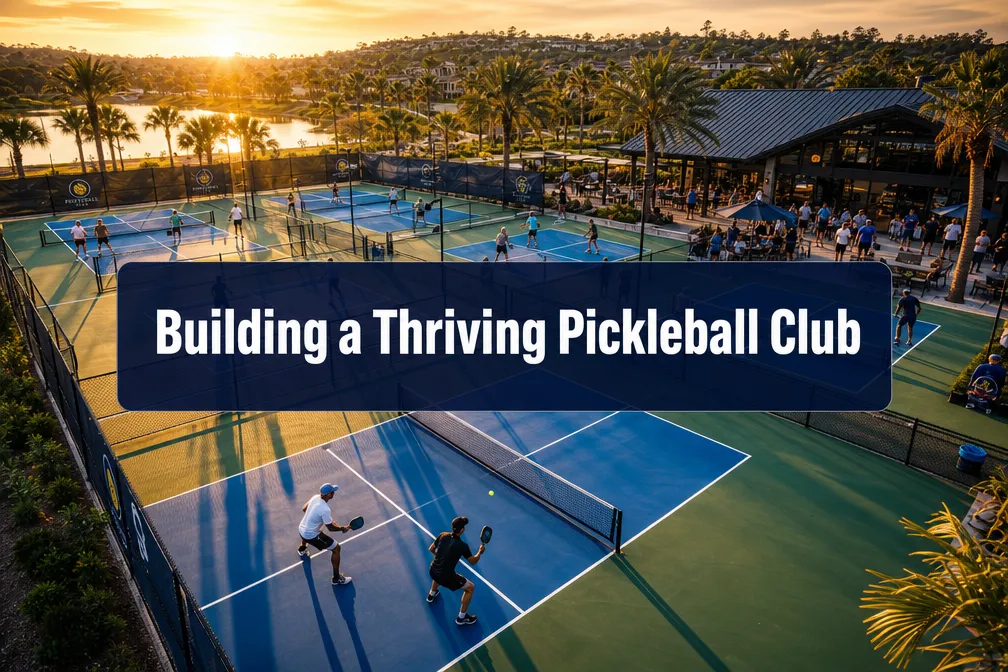
Building a Thriving Pickleball Club in 2026: Insider Strategies from the March/April Industry Magazine
Last updated: July 15, 2026
Quick Answer: Building a thriving pickleball club in 2026 means going beyond courts and paddles. The most successful clubs right now combine smart facility planning, tiered membership models, beginner-friendly programming, and retention-focused operations. The March/April issue of Pickleball Club Magazine makes it clear: the clubs winning today are the ones treating this as a real business, not a hobby project. [1]
Key Takeaways
- 🎯 U.S. pickleball participation hit an estimated 24.3 million players in 2025, with projections of 27-29 million active players in 2026 [5][11]
- 🏗️ Courts are now being planned, not just “popping up”, long-range facility design is the new standard [8]
- 💰 The indoor pickleball club market is estimated at USD 1.10 billion in 2026, growing toward USD 8.60 billion by 2036 [13]
- 📋 Clubs that pair play with hospitality (food, drink, social leagues) outperform those offering courts alone [5]
- 🧒 Youth pipelines and adaptive play programs are now expected features of serious clubs [9]
- 📣 Retention beats acquisition, consistent court availability and programming keeps members longer than marketing alone
- ⚠️ Common startup mistakes include underestimating acoustic issues, underpricing memberships, and launching without a waitlist strategy
- 🤝 Municipalities are actively budgeting for pickleball expansion because of measurable community health returns [8]
What Makes a Pickleball Club Successful in 2026
The clubs thriving right now share one trait: they treat operations as seriously as they treat the sport itself. According to the March/April 2026 issue of Pickleball Club Magazine, the shift is from reactive growth to deliberate infrastructure, clubs that plan court capacity, program variety, and member experience from day one. [1][8]
What separates top clubs from average ones:
- Consistent court availability (no double-booking chaos)
- A clear beginner-to-competitive pathway
- Staff who can coach, not just supervise
- Social programming that keeps members coming back
- Acoustic management so neighbors don’t complain
The “pickleball boom didn’t fade in 2026, it got organized,” as one industry analysis put it. [5] Clubs competing on operational reliability are winning. Flashy facilities alone don’t retain members.
How to Start a Pickleball Club from Scratch
Starting a pickleball club in 2026 is genuinely achievable, but it requires more planning than it did three years ago. The market is more competitive, player expectations are higher, and facilities need to meet a rising standard.
Step-by-step starting framework:
- Assess demand locally, check existing court waitlists, Facebook groups, and parks department data
- Secure a venue, repurposed gyms, warehouse spaces, or dedicated builds all work; indoor clubs have the edge year-round
- File the right paperwork, LLC formation, liability insurance, and noise ordinance compliance first
- Build a founding member list before opening, a waitlist creates urgency and validates demand
- Hire or partner with a certified instructor for launch programming
- Set up court management software from day one (not after chaos sets in)
For a deeper look at community-building from the ground up, the Rally Racket guide to starting your own pickleball club covers the engagement side in detail.
Common mistake: Skipping the waitlist phase. Clubs that open with zero pre-registered members spend their first six months scrambling for revenue instead of delivering great experiences.
How Many Courts Do You Need for a Pickleball Club
A minimum viable pickleball club starts at 4 courts, but 6-8 courts is the sweet spot for financial sustainability. Fewer than 4 courts creates scheduling bottlenecks that frustrate members and cap revenue potential.
Court planning benchmarks:
| Club Size | Courts Needed | Estimated Weekly Sessions |
|---|---|---|
| Starter / Community | 4 courts | 80-120 |
| Mid-size / Growth | 6-8 courts | 180-300 |
| Full-service / Destination | 10+ courts | 400+ |
Infrastructure data shows roughly 82,613 courts in the U.S. Pickleheads database by 2026, with an estimated need for 24,500+ additional courts over the next 5-7 years, representing about $900 million in required investment. [11] That gap is an opportunity for new clubs.
Choose 6+ courts if: you plan to run leagues, host tournaments, and offer open play simultaneously without conflict.
What Equipment and Facilities Does a Pickleball Club Need
Beyond courts, a well-equipped club needs the right gear and infrastructure to run smoothly. The March/April industry magazine highlights that full-service facilities, with instruction programs and social spaces, are the new benchmark. [8]
Essential equipment checklist:
- ✅ Regulation nets (permanent or portable, depending on layout)
- ✅ Pickleballs in bulk (indoor and outdoor varieties)
- ✅ Loaner paddles for beginners and drop-in players
- ✅ Court lighting (for evening sessions)
- ✅ Acoustic panels or barriers (critical for indoor clubs)
- ✅ Ball hoppers and training carts for clinics
- ✅ Seating and spectator areas for tournament days
- ✅ A check-in system or court booking software
For players joining your club who need gear guidance, point them to the essential gear guide for new pickleball players, it saves your staff from answering the same questions repeatedly.
Pickleball Club Membership Pricing Strategies
Pricing is where many new clubs leave money on the table, or price themselves out of the market entirely. The right model depends on your facility size, local competition, and member demographics.
Common membership tiers that work in 2026:
- Drop-in / Day pass, low barrier for new players, good for trial conversion
- Monthly unlimited, best for your core regulars; builds predictable revenue
- Annual membership, offers a discount in exchange for upfront cash flow
- Family or household plan, strong for clubs near suburbs with multi-generational appeal
- Corporate wellness packages, growing demand as employers fund recreational memberships
Pricing rule of thumb: Research what your local tennis and fitness clubs charge, then price slightly below for comparable access. Pickleball still carries a “more accessible” perception, use it to attract crossover players from the broader racket sports community.
Edge case: Clubs in high-demand urban markets can charge premium rates for guaranteed court reservations. Scarcity pricing works when waitlists are real.
Best Marketing Tactics for Growing a Pickleball Club
The most effective marketing for pickleball clubs in 2026 is word-of-mouth, backed by a solid social media presence. Paid ads help, but community trust drives sign-ups.
Tactics that actually move the needle:
- Free intro clinics, the single best conversion tool for beginners
- Google Business Profile, optimize it with photos, hours, and reviews; most new members search locally
- Instagram and Facebook Reels, short clips of rallies, tournaments, and social events
- Partnerships with local gyms, senior centers, and schools, direct pipeline to new demographics
- Referral programs, give existing members a month free for each new sign-up they bring
- Local press and community boards, pickleball stories still get coverage in 2026
The Rally Racket community and events hub is a useful resource to share with prospective members who want to understand what club culture looks like before joining.
How to Attract Beginners to a Pickleball Club
Beginners are your most valuable long-term members, they have no bad habits, they’re enthusiastic, and they become loyal if you give them a good first experience. The March 2026 issue of World Pickleball Magazine emphasizes that clubs with structured beginner pathways grow faster and retain better. [9]
What beginners need from a club:
- A dedicated “learn to play” session with no intimidating advanced players
- Clear, jargon-free communication about what to bring and expect
- Patient, certified instruction (even a single weekly clinic counts)
- A social environment that doesn’t feel cliquey
Point new players to resources like understanding the rules of pickleball so they arrive with basic knowledge and confidence.
Choose beginner-first programming if: your local market has high general awareness but low participation, that gap is filled by reducing the “I don’t know how to play” barrier.
Pickleball Club vs Tennis Club: Key Differences
Pickleball clubs and tennis clubs share DNA but operate quite differently. Understanding the gap helps clubs avoid copying the wrong model.
Key operational differences:
- Court size: One tennis court fits 4 pickleball courts, space efficiency is a major advantage
- Session length: Pickleball games are shorter, so turnover is faster and scheduling is more flexible
- Demographics: Pickleball skews broader across ages; tennis still skews toward higher-income adult players
- Instruction model: Pickleball clinics are typically shorter and cheaper, lowering the barrier to paid programming
- Social culture: Pickleball clubs tend to be louder, more social, and more drop-in-friendly
The appeal of pickleball across all ages explains why the sport’s accessibility is a genuine structural advantage over traditional racket sports clubs.
What Age Groups Join Pickleball Clubs
Pickleball’s biggest strength is its cross-generational appeal. Clubs that recognize this, and program for it, grow faster than those targeting a single demographic.
Who’s joining clubs in 2026:
- Adults 50+ remain the sport’s most active core demographic
- Adults 25-49 are the fastest-growing segment, driven by social media exposure and corporate wellness
- Juniors (under 18) are a growing priority, World Pickleball Magazine specifically highlights youth integration and school initiatives as a 2026 trend [9]
- Adaptive players are an underserved but loyal segment when clubs invest in accessible programming
For clubs wanting to understand multi-generational appeal in depth, the testimonials from different age groups page offers real player perspectives worth sharing with your community.
How to Run Tournaments at a Pickleball Club
Tournaments are one of the best revenue and retention tools a club has. They energize your existing members, attract outside players, and create content for your marketing channels.
Tournament setup basics:
- Choose a format, round robin works well for smaller clubs; bracket formats suit 32+ players
- Use dedicated tournament software (many court management platforms include this)
- Assign a tournament director separate from your regular operations staff
- Plan for spectator seating, scoring boards, and a check-in table
- Add a social element, food, drinks, and prizes make it an event, not just a competition
- Promote 6-8 weeks in advance across all channels
A $225 million institutional investment announced in May 2026 signals that competitive pickleball infrastructure is being taken seriously at every level. [7] Clubs that build tournament culture early position themselves well as the competitive ecosystem matures.
For more on how tournaments build club identity, see the role of pickleball tournaments in fostering community spirit.
Pickleball Club Profitability and Revenue Models
The indoor pickleball club market is estimated at USD 1.10 billion in 2026 and projected to reach USD 8.60 billion by 2036, with a 22.8% compound annual growth rate. [13] That’s a serious business opportunity, but only for clubs that diversify revenue beyond court fees.
Revenue streams worth building:
- Membership fees (recurring, predictable)
- Court rentals (drop-in and reserved)
- Clinics and lessons (high margin, builds loyalty)
- Pro shop / gear sales (low overhead if curated)
- Food and beverage (the “Topgolf for pickleball” model is growing fast) [11]
- Tournament entry fees and sponsorships
- Corporate event bookings
Profitability tip: Clubs that add food and beverage report significantly higher revenue per visit. Even a simple café counter or vending partnership changes the economics.
How to Retain Members in a Pickleball Club
Retention is where clubs make or lose their long-term business. Acquiring a new member costs far more than keeping an existing one, and in a sport with this much competition for players’ time, retention requires active effort.
Retention tactics that work:
- Consistent scheduling, members leave when their regular session disappears
- Skill progression programs, players who improve stay; players who plateau drift away
- Community events beyond play (socials, volunteer days, charity tournaments)
- Regular communication, a weekly email or app notification keeps the club top of mind
- Member recognition, milestone celebrations (100th game, first tournament win) build emotional connection
- Feedback loops, ask members what’s working and act on it visibly
Pickleball Club Scheduling and Court Management Tips
Poor scheduling is the fastest way to lose members. When courts are double-booked, sessions run long, or popular time slots are always taken, frustration builds quickly.
Scheduling best practices:
- Use dedicated court management software from day one (CourtReserve, PickleballDesk, and similar platforms are purpose-built for this)
- Reserve 20-30% of peak-hour slots for drop-in play, it keeps the club feeling alive and accessible
- Build in buffer time between sessions for court changeover
- Create a clear cancellation policy and enforce it consistently
- Analyze booking data monthly to spot underused slots and shift programming accordingly
Building a thriving pickleball club in 2026 means the March/April industry magazine’s core message rings true: courts being “planned” rather than “popping up” is the defining shift of this era. [8] Operational discipline is now a competitive advantage.
Common Mistakes When Starting a Pickleball Club
Even well-funded clubs stumble on predictable problems. Knowing these in advance saves real money and frustration.
Mistakes to avoid:
- ❌ Underestimating acoustic issues, pickleball noise is a genuine neighbor and zoning problem; budget for it
- ❌ Launching without a waitlist, pre-launch demand validation is essential
- ❌ Pricing too low, underpriced memberships attract price-sensitive members who leave when rates normalize
- ❌ Ignoring youth programming, clubs without junior pathways miss a growing segment [9]
- ❌ Copying a tennis club model, the operational rhythms are different; adapt accordingly
- ❌ No court management software, manual booking systems break down fast at scale
- ❌ Skipping liability insurance, non-negotiable from day one

Frequently Asked Questions
How much does it cost to start a pickleball club? Startup costs vary widely. A minimal community club using a rented gym might start for $10,000,$30,000. A purpose-built indoor facility with 6+ courts typically requires $500,000 or more in capital, depending on location and build-out.
How many members does a pickleball club need to be profitable? A 4-court club generally needs 150-250 active members to cover operating costs, depending on pricing and additional revenue streams. Clubs with food and beverage or robust lesson programs reach profitability faster.
Do I need certified instructors to run a pickleball club? Not legally, but it’s strongly recommended. Certified instructors (through USA Pickleball or the Professional Pickleball Registry) improve lesson quality, reduce injury risk, and signal credibility to new members.
What’s the best court surface for an indoor pickleball club? Cushioned sport court flooring or hardwood with pickleball line markings are the most common choices. Cushioned surfaces reduce joint stress, which matters especially for older players.
How do I handle noise complaints from neighbors? Acoustic panels, court placement away from property lines, and limited evening hours are the standard solutions. Address this in your facility planning phase, retrofitting acoustic solutions is expensive.
Can a pickleball club operate outdoors year-round? In warm climates, yes. In northern regions, outdoor-only clubs typically see 40-60% revenue drops in winter. Indoor or covered courts significantly improve year-round viability.
What software do pickleball clubs use for court management? CourtReserve, PickleballDesk, and ClubSpark are popular options. Most integrate booking, payments, and member management in one platform.
How long does it take to build a profitable pickleball club? Most well-run clubs reach operational profitability within 12-24 months. Clubs with strong pre-launch waitlists and diversified revenue can get there in under 12 months.
Should a pickleball club also offer tennis or padel? Multi-sport facilities can attract a broader audience and improve court utilization. However, managing multiple sports adds operational complexity, only expand if staffing and space allow.
What’s the ideal club-to-player ratio for open play sessions? A good rule of thumb is 4-6 players per court for open play, with a rotation system in place. More than 8 players per court creates long wait times and member frustration.
Conclusion
Building a thriving pickleball club in 2026 is one of the most compelling opportunities in the racket sports world right now, but the window for “just open courts and they’ll come” has closed. The March/April industry magazine’s core message is clear: the clubs winning are the ones that plan deliberately, operate professionally, and build genuine community. [1][8]
Your next steps:
- Audit your local market, check court availability, existing clubs, and unmet demand
- Start a waitlist before you open a single court
- Build your revenue mix from day one: memberships + lessons + events
- Invest in acoustic management and court software early, they’re not optional
- Program for beginners and juniors, they’re your long-term growth engine
- Join the racket sports community at Rally Racket for ongoing pickleball tips, gear reviews, and club-building strategies
The sport has 24.3 million players and a $225 million institutional investment behind it. [5][7] The infrastructure gap is real, the demand is proven, and the playbook is getting clearer every issue. Now’s the time to build something that lasts.
References
[1] The March April 2026 Issue Is Here – https://pickleballclubmag.com/2026/04/01/the-march-april-2026-issue-is-here/ [5] Pickleball 2026 Trends Stats Growth – https://hawaiipickleball.com/pickleball-2026-trends-stats-growth/ [7] Pickleball Gets Its Largest Ever Investment 225 Million Its Still A Growth Sport Its Not Just A Fad – https://www.morningstar.com/news/marketwatch/20260501172/pickleball-gets-its-largest-ever-investment-225-million-its-still-a-growth-sport-its-not-just-a-fad [8] Pickleball Magazine March-April 2026 – https://viewer.joomag.com/pickleball-magazine-11-2-march-april-2026/0006154001773848900/p10 [9] World Pickleball Magazine March 2026 – https://worldpickleballmagazine.com/march-2026/


