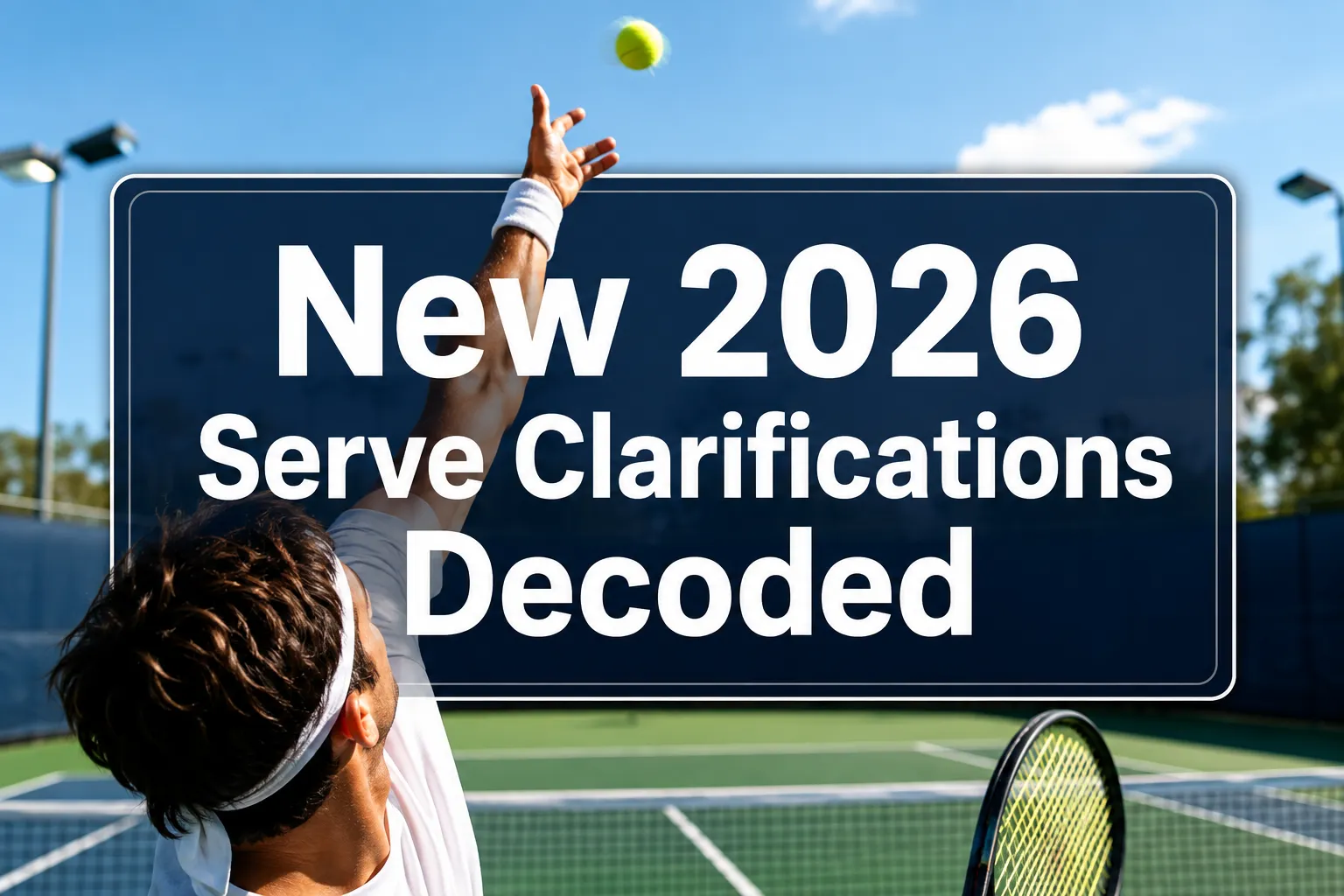
New 2026 Serve Clarifications Decoded: Spotting Illegal Releases and Winning Non-Officiated Matches
Last updated: August 12, 2026
Quick Answer: USA Pickleball’s 2026 serve clarifications tighten the rules around the volley serve, specifically targeting illegal ball releases that give servers an unfair spin advantage. The updated language makes it clearer what counts as a legal toss, how to identify violations, and how players in non-officiated matches should handle disputes fairly and confidently.
Key Takeaways
- The 2026 serve rule updates focus on how the ball is released, not just where the paddle contacts it
- A legal volley serve requires an upward arc, contact below the wrist, and a natural, non-manipulated release
- Imparting spin on the ball before contact during the release is now explicitly illegal under 2026 clarifications
- In non-officiated matches, the receiver has the right to call an illegal serve, but must do so promptly
- Players who understand these rules gain a real competitive edge, even in casual recreational games
- The rules apply at all levels of play, from beginner rec games to sanctioned tournaments
- Disputes in self-officiated matches should follow a “replay the point” default when there’s genuine uncertainty
- Practicing a clean, consistent serve motion is the best way to stay compliant and avoid disputes
What Are the 2026 Pickleball Serve Rule Changes?
The 2026 serve clarifications from USA Pickleball refine existing volley serve rules rather than overhaul them entirely. The core change is added precision around what constitutes a legal ball release, specifically targeting servers who use finger spin or wrist manipulation to pre-load spin before the paddle makes contact.
Three elements of the volley serve remain non-negotiable under the updated rules:
- The paddle must contact the ball below the server’s wrist (when the wrist is in a natural position)
- The highest point of the paddle head must be below the highest point of the wrist at the moment of contact
- The ball must be released or tossed upward, not dropped, thrown downward, or spun before contact
The key 2026 addition: any visible spin imparted to the ball during the release, before the paddle strikes, is now a fault. This closes a loophole that competitive players had been exploiting.
What Counts as an Illegal Serve Under New 2026 Rules?
An illegal serve under the 2026 clarifications is one where the server violates the release, contact point, or motion requirements. The most common violations now flagged include:
- Finger-spin release: Rolling the ball off the fingertips to add topspin or sidespin before contact
- Downward toss: Releasing the ball so it’s falling sharply rather than rising or at a natural drop
- Wrist snap at release: Flicking the wrist during the toss to create pre-contact spin
- Paddle head above wrist: Contacting the ball with the paddle head higher than the wrist joint
- Contact above the waist: Striking the ball at or above navel height
💡 Quick rule of thumb: If the ball is visibly spinning before the paddle touches it, that’s an illegal serve under 2026 rules.
How Do You Spot an Illegal Serve Release in Tennis and Pickleball?
Spotting an illegal release comes down to watching three things: the hand, the ball, and the paddle, in that order.

Watch the hand first. A legal release looks smooth and upward. The ball leaves the fingers cleanly, with no visible rotation. If you see the server’s fingers curl or flick at the moment of release, that’s a red flag.
Watch the ball next. A legally released ball travels upward or in a gentle arc. If it’s already spinning like a top before the paddle arrives, the release was manipulated.
Watch the paddle position. At contact, the paddle head should be below the wrist. If the paddle is angled upward and the contact point looks high, there may be a wrist or height violation too.
Practical tip for non-officiated matches: Stand at the baseline and watch the server’s hand at the moment of release. You don’t need to see everything, just that one moment tells you most of what you need to know.
What’s the Difference Between a Legal and Illegal Serve Toss?
The difference comes down to intent and mechanics. A legal toss is a passive release, the ball leaves the hand naturally and the paddle does the work. An illegal toss is an active manipulation, the hand adds energy or spin before the paddle ever arrives.
| Feature | Legal Toss | Illegal Toss |
|---|---|---|
| Ball direction at release | Upward or neutral | Downward or sideways |
| Ball spin before contact | None visible | Visible rotation |
| Wrist position | Neutral, relaxed | Flicked or snapped |
| Finger action | Open release | Rolling or curling |
Choose the legal option if: You want a consistent, dispute-free serve that holds up in any match setting.
Common mistake: Many players don’t realize their release has a habit of adding spin, it’s often unconscious. Recording your serve from the side during practice is one of the fastest ways to catch this. Check out video analysis techniques for improving your racket sports skills for a practical approach.
Do 2026 Serve Rules Apply to All Levels of Play?
Yes. The 2026 serve clarifications apply to all USA Pickleball-sanctioned play, from beginner recreational games to professional tournaments. There is no skill-level exemption.
That said, enforcement looks different depending on the setting:
- Sanctioned tournaments: Referees actively watch for illegal releases and will call faults
- Non-officiated recreational matches: Players self-enforce, using the receiver’s right to call violations
- Open play and casual games: Rules still apply, but most players use good faith and common sense
For beginner players just getting started, understanding these basics early saves a lot of confusion later. If you’re new to the sport, a solid introduction to pickleball covers the foundational rules you’ll need before diving into serve mechanics.
Can You Call Your Own Serves Illegal in Non-Officiated Matches?
The receiver, not the server, has the right to call an illegal serve in non-officiated play. This is a key point that prevents disputes from becoming one-sided.
Here’s how it works in practice:
- The receiver or receiver’s partner may call an illegal serve fault
- The call must be made before the return of serve, you can’t call it after the rally ends
- If the receiver is unsure, the default is to let the point stand or replay it
- Repeated disputes about the same server’s motion are a signal to agree on a rule interpretation before continuing
Edge case: If both players genuinely disagree about whether a serve was legal and neither can be certain, replaying the point is the fairest resolution. This keeps the game moving and maintains the spirit of the racket sports community.
How to Win Arguments About Serves in Casual Matches
Winning a serve dispute isn’t about being louder, it’s about knowing the rules well enough to explain them clearly and calmly.
Steps to handle a serve dispute in non-officiated play:
- State the specific rule, not just “that was illegal.” Example: “The ball looked like it was spinning before contact, that’s a fault under the 2026 release rules.”
- Offer to demonstrate what a legal release looks like. This shifts the conversation from accusation to education.
- Suggest a replay if the other player genuinely didn’t know the rule. Most recreational players respond well to this.
- Agree on a standard for the rest of the match. “Let’s both watch for the release going forward” is a fair ask.
- Stay calm. Disputes handled with confidence and respect almost always resolve faster.
For more on managing pressure moments in competitive settings, mental strategies for high-stakes matches offers practical tools that apply directly here.
What Common Serve Mistakes Violate 2026 Clarifications?
Most illegal serves aren’t intentional, they’re habits. Here are the most common serve mistakes that now fall outside the 2026 rules:
- The “spin drop”: Releasing the ball with a slight finger roll to add topspin. Feels natural, but it’s a fault.
- The low wrist snap: Contacting the ball with a downward wrist motion that lifts the paddle head above the wrist joint at impact.
- The side toss: Tossing the ball sideways or at an angle to set up a sharper serve angle, the toss direction itself isn’t the issue, but if it causes a non-upward release, it can be flagged.
- The “hidden spin” release: Curling fingers under the ball during release to generate backspin. Hard to see from across the net, but referees are trained to watch for it in 2026.
Building a structured practice routine that includes serve mechanics is the most reliable way to clean these habits up before they become a problem in matches.
How Do Non-Officiated Matches Handle Serve Disputes?
Non-officiated matches rely on mutual respect and a clear understanding of the rules. The 2026 clarifications actually help here, the more specific the rule language, the less room there is for subjective arguments.
The standard protocol for serve disputes in self-officiated play:
- Receiver calls the fault immediately, before returning
- Server may ask for clarification on what was seen
- If both agree, the point is replayed or awarded based on the call
- If there’s genuine disagreement, replay the point and move on
- Persistent disputes may warrant agreeing to only call obvious violations for the rest of the match
What doesn’t work: Arguing about whether spin “looked” a certain way without referencing the actual rule. Ground every call in the specific criteria, release direction, ball spin before contact, paddle height, and the conversation stays productive.
For players who want to improve racket sports skills and compete more seriously, learning to self-officiate accurately is just as important as any technical skill.
How Do Serve Clarifications Affect Amateur Tennis and Pickleball Players?
For amateur players, the 2026 clarifications are mostly good news. Clearer rules mean fewer gray areas, and fewer gray areas mean fewer disputes. The changes level the playing field by removing serve techniques that were technically illegal but hard to call without specific language.
Practical impact for recreational players:
- Serves that felt “off” but were hard to call now have specific language to back up the call
- Players who relied on spin-release serves will need to adjust their mechanics
- Beginners learning the serve now have clearer guidance on what to practice from day one
The clarifications also reinforce why learning proper technique early matters. A clean serve motion that complies with the rules is also, in most cases, a more consistent and effective serve. That’s a win for anyone focused on improving racket sports skills.
FAQ
Q: What is the main change in the 2026 serve rules? The primary update explicitly bans imparting spin on the ball during the release, before paddle contact. This closes a loophole that allowed players to pre-load spin using finger or wrist manipulation.
Q: Can a server call their own serve illegal? Yes, a server can self-call a fault, but in non-officiated matches, the right to call an illegal serve belongs to the receiver or the receiver’s partner.
Q: What happens if you serve illegally under 2026 rules? An illegal serve is a fault. In non-officiated play, the receiver calls it and the point is either replayed or awarded to the receiving side depending on whether it’s a first or second serve situation.
Q: Do these rules apply to the drop serve as well? The 2026 clarifications primarily address the volley serve. The drop serve has its own set of requirements and is generally considered easier to keep legal since the ball is dropped rather than tossed.
Q: How can you practice a legal serve motion? Record your serve from the side to check ball spin at release, paddle height at contact, and wrist position. Slow-motion replay makes violations easy to spot.
Q: Is a downward toss always illegal? A ball that is falling at the moment of contact isn’t automatically illegal, but a release that involves an active downward throw or a spin-imparting drop is a fault under 2026 rules.
Q: Can recreational players ignore these rules? Technically yes in casual play, but learning the correct rules now means fewer surprises if you ever play in a sanctioned event or join a competitive recreational league.
Q: What if both players disagree on a serve call? Replay the point. This is the standard resolution in non-officiated play when there’s genuine uncertainty and no clear consensus.
Q: Are there visual tools to help identify illegal releases? Yes, slow-motion video of your own serve is the most practical tool. Some coaching apps and video analysis resources can help you identify issues in your release mechanics.
Q: Who enforces serve rules in non-officiated matches? Both players share responsibility, but the receiver has the primary right to call an illegal serve. Good sportsmanship means calling only clear violations, not using the rule as a tactical tool.
Conclusion
The new 2026 serve clarifications decoded here give every player, from weekend rec players to serious competitors, a clearer standard to play by. The rules aren’t more restrictive for their own sake; they’re designed to reduce disputes and make the game fairer for everyone.
Your next steps:
- Review your serve mechanics, record it from the side and check for spin at release, wrist position, and paddle height
- Share the 2026 clarifications with your regular playing group before your next match to get everyone on the same page
- Practice calling serves during low-stakes practice games so you’re confident making the call when it matters
- Default to replaying disputed points in casual play, it keeps the game moving and the atmosphere positive
Understanding the rules is one of the fastest ways to improve racket sports skills without changing anything about your physical game. Know the rules, practice clean mechanics, and you’ll spend a lot less time arguing and a lot more time playing.