
Thomas & Uber Cup 2026: Team Qualifications, Dark Horses, and Path to the Finals
Last updated: May 26, 2026
Quick Answer: The Thomas & Uber Cup 2026 concluded in May 2026 in Denmark, with China claiming their 12th Thomas Cup title and South Korea winning their third Uber Cup. Sixteen teams competed in each event, split into four groups, with the top two from each group advancing to the knockout rounds. France’s historic run to the Thomas Cup final and South Korea’s upset over defending Uber Cup champions China were the standout stories of the tournament. [1][2]
Key Takeaways 🏸
- China won the Thomas Cup for the 12th time, defeating France in the final. [1]
- South Korea won the Uber Cup, upsetting defending champions China in the final. [1]
- France made history by reaching the Thomas Cup final for the first time ever. [2]
- 16 teams competed in each event, divided into four groups of four. [4]
- Denmark (host nation) reached the Thomas Cup semifinals. [1]
- India’s men advanced to the quarterfinals; the women’s team was eliminated in the group stage. [3]
- An Se-young was South Korea’s standout performer in the Uber Cup women’s singles. [2]
- The knockout stages ran from April 30 through May 3, 2026. [3]
- France’s rise signals a growing depth in international badminton beyond traditional Asian powerhouses. [2]
What Exactly Is the Thomas and Uber Cup Badminton Tournament?
The Thomas Cup is the men’s international team badminton championship, and the Uber Cup is its women’s equivalent. Both are organized by the Badminton World Federation (BWF) and held every two years, making them the most prestigious team events in the sport.
Each tie in the tournament follows a five-match format: three singles and two doubles. A team needs to win three of those five matches to advance. The tournaments have historically been dominated by Asian nations, particularly China, Indonesia, South Korea, Japan, and Malaysia — but 2026 showed that gap is closing.
For fans of racket sports across the board, the Thomas and Uber Cups offer the same team drama you’d find in tennis’s Davis Cup or Fed Cup, just at a faster, more explosive pace.
How Do National Teams Qualify for Thomas and Uber Cup 2026?
Qualification for the Thomas & Uber Cup 2026 follows a continental championship pathway set by the BWF. Teams do not qualify based on individual player rankings alone — national teams earn spots through their respective continental confederation tournaments.
The five BWF continental confederations each hold qualifying events:
- Badminton Asia Confederation (BAC) — largest allocation, typically 6–8 spots per event
- Badminton Europe (BE) — usually 3–4 spots
- Badminton Pan Am (BPA) — 1–2 spots
- Badminton Africa (BA) — 1–2 spots
- Badminton Oceania (BO) — 1 spot
The host nation (Denmark in 2026) and the defending champions receive automatic berths. The remaining spots are filled through continental qualifiers in the year or cycle preceding the finals.
Common mistake: Many fans assume individual world rankings determine team eligibility. They don’t. A country with one top-10 singles player but weak doubles depth can still struggle to qualify — or to win once they’re in.

Which Countries Are Considered Early Favorites This Year?
Heading into the Thomas & Uber Cup 2026, China and Indonesia were the clear favorites for the Thomas Cup, while China and South Korea were the teams to beat in the Uber Cup. That assessment proved largely accurate — though South Korea’s Uber Cup victory over China was a genuine upset.
Thomas Cup favorites (pre-tournament):
| Team | Reason for Favorite Status |
|---|---|
| China | 11 previous titles, deep squad across all disciplines [5] |
| Indonesia | Historically strong, multiple world-class doubles pairs |
| Denmark | Host nation advantage, strong singles depth |
| Japan | Consistent top-4 finisher in recent cycles |
Uber Cup favorites:
| Team | Reason |
|---|---|
| China | Defending champions, world-class singles and doubles |
| South Korea | An Se-young ranked among world’s best in women’s singles [2] |
| Japan | Strong team balance across all five match slots |
Who Are the Unexpected Dark Horses to Watch?
France was the biggest dark horse story of the Thomas & Uber Cup 2026 — and they delivered. The French men’s team reached the Thomas Cup final for the first time in the nation’s history, powered by standout performances from Alex Lanier in singles and the Popov brothers, Toma Junior and Christo, in doubles. [2]
Why France’s run matters for the broader badminton community:
- It proved that European nations can compete at the very top level of team badminton, not just in individual tournaments.
- France’s success came from a combination of youth development, strong domestic league competition, and players gaining experience on the BWF World Tour.
- Their run is a signal to other emerging nations that the gap to the traditional Asian powerhouses is closeable with the right long-term investment.
Other dark horse teams worth watching in future cycles:
- Thailand (women’s) — consistently competitive, capable of upsets against top-four sides
- Chinese Taipei — strong doubles tradition, occasionally dangerous in men’s events
- Malaysia — historic Thomas Cup winners working to rebuild their program
What Are the Current World Rankings for Top Badminton National Teams?
The BWF does not publish official “national team” rankings in the same way tennis does for Davis Cup nations. Instead, team strength is estimated by aggregating individual world rankings across the five match slots (three singles, two doubles).
Approximate team strength going into 2026, based on player rankings:
- China (Men): Shi Yuqi and Li Shifeng in singles; Liang Weikeng/Wang Chang in doubles — consistently world top-5 across all categories [5]
- Indonesia (Men): Elite doubles pairs, competitive singles depth
- South Korea (Women): An Se-young (world No. 1 women’s singles); strong doubles pairs including Baek Ha-na and Kim Hye-jeong [2]
- Denmark (Men): Viktor Axelsen-era depth, strong singles tradition
- India (Men): Lakshya Sen, Kidambi Srikanth, H.S. Prannoy in singles; Satwiksairaj Rankireddy and Chirag Shetty in doubles [6]
Which Players Are Likely to Make a Big Impact in the 2026 Tournament?
Several players stood out as match-winners in the Thomas & Uber Cup 2026, and their performances shaped their teams’ paths through the draw.
Thomas Cup standouts:
- Shi Yuqi & Li Shifeng (China): Provided reliable singles points throughout the tournament, giving China the platform to close out ties. [5]
- Alex Lanier (France): Delivered crucial singles wins in the knockout rounds, driving France’s historic run. [2]
- Toma Junior & Christo Popov (France): The brothers formed one of the most effective doubles pairs in the European draw. [2]
Uber Cup standouts:
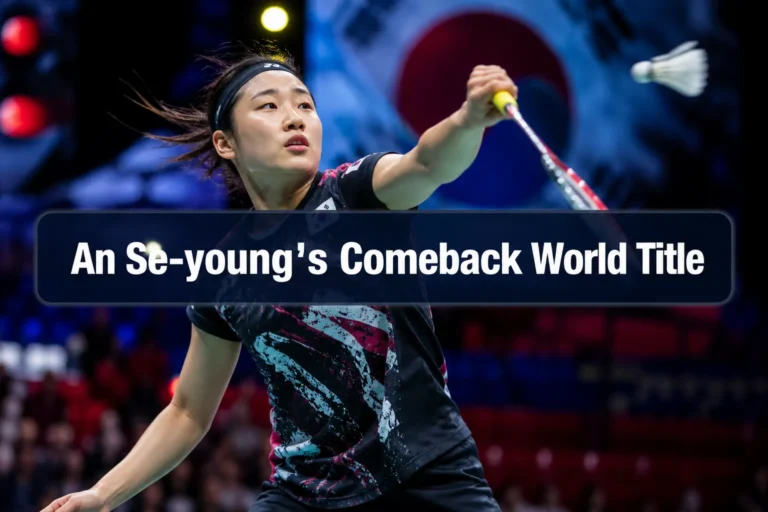
- An Se-young (South Korea): Dominant in women’s singles, she was arguably the most impactful individual player in the entire Uber Cup. Her consistency gave South Korea a reliable point in every tie. [2]
- Baek Ha-na & Kim Hye-jeong (South Korea): Their doubles resilience proved decisive in the final against China. [2]
What Are the Qualification Rules for Individual Players?
Individual players do not qualify for the Thomas and Uber Cup independently. Selection is entirely at the discretion of each national federation. A federation chooses which players represent the country, typically based on:
- Current BWF world ranking
- Recent form on the World Tour
- Team balance (making sure all five match slots — three singles, two doubles — are covered by competitive players)
- Fitness and availability
This means a player ranked inside the world’s top 20 could be left off the squad if their national team has stronger options, or if they don’t fit the doubles pairing the federation prefers. For fans following individual players, it’s worth checking each federation’s official announcement rather than assuming top-ranked players will automatically appear.
How Do Emerging Badminton Nations Prepare for a Major International Event?
Emerging nations face a different set of challenges compared to established powerhouses. France’s Thomas Cup final run in 2026 offers a useful case study in what works.
Key preparation strategies for rising nations:
- Domestic league exposure — Players competing in strong national leagues (like France’s Interclubs) gain match-hardened experience.
- BWF World Tour participation — Regular exposure to top-level individual competition builds the mental toughness needed in team events.
- Targeted doubles development — Many emerging nations focus on singles but neglect doubles, which accounts for two of the five match slots.
- Sports science and coaching investment — National federations that invest in professional coaching structures see faster improvement curves.
- Youth pathways — Long-term success requires junior development programs feeding into senior squads.
If you’re interested in how structured training builds competitive skills across racket sports, the intermediate drills and techniques guide at Rally Racket covers the kind of disciplined practice routines that apply from club level all the way up.
What Are the Biggest Challenges for Teams Trying to Reach the Finals?
Reaching the Thomas or Uber Cup final requires winning four consecutive ties across group stage and knockout rounds — with no margin for error once the knockouts begin.
The three biggest structural challenges:
1. Squad depth across all five slots A team with one world-class singles player but weak doubles will drop points predictably. China’s 2026 Thomas Cup success came from having world-class options in every slot, not just one superstar. [5]
2. Managing player fatigue The knockout stages run over consecutive days. Teams with thin rosters risk burning out key players, especially if ties go to five matches repeatedly.
3. Handling pressure in knockout formats Team events add a layer of psychological complexity that individual tournaments don’t. A player who loses a crucial singles match isn’t just affecting their own ranking — they’re potentially eliminating their entire team. Managing that pressure is a skill in itself. For anyone interested in the mental side of high-stakes competition, Rally Racket’s guide on mental strategies for high-stakes matches is worth reading.
Which Teams Are Most Likely to Struggle in the Tournament?
Teams that historically struggle in the Thomas and Uber Cup share a few common traits: over-reliance on one or two star players, limited doubles depth, and limited experience at the top level of international team competition.
Teams that faced the toughest paths in 2026:
- India (Women): Despite having P.V. Sindhu as a marquee name, the women’s team was eliminated in the Uber Cup group stage, highlighting the gap between individual star power and team depth. [3]
- Non-Asian Uber Cup teams: The women’s draw remains heavily dominated by Asian nations. European and American teams typically exit before the semifinals.
Choose this framing if you’re a fan of a smaller nation: The group stage draw matters enormously. A team placed in a group with China and Indonesia faces a near-impossible path to the knockouts, regardless of their quality.
How Much Does It Cost to Participate in or Attend the Tournament?
For national federations: The primary cost is not an entry fee but the operational expense of preparing and traveling a squad. This includes player salaries or stipends, coaching staff, travel, accommodation, and preparation camps. For smaller federations, this can run into hundreds of thousands of dollars per tournament cycle.
For spectators attending in person: Ticket prices for the 2026 event in Denmark varied by session and seating category. General session tickets were typically available in the range of €20–€80 (estimated based on comparable BWF Super Series Finals pricing), with finals tickets commanding a premium. Exact pricing was set by the local organizing committee.
For fans watching remotely: BWF typically offers live streaming through its BWF TV platform, with some matches available free and premium content behind a subscription. Broadcast rights also vary by country, with many Asian markets carrying full coverage through local sports channels.
FAQ: Thomas & Uber Cup 2026
Q: Who won the Thomas Cup 2026? China won the Thomas Cup 2026, defeating France in the final to claim their 12th title. [1]
Q: Who won the Uber Cup 2026? South Korea won the Uber Cup 2026, defeating defending champions China in the final for their third title. [1]
Q: Where was the Thomas & Uber Cup 2026 held? The 2026 Thomas & Uber Cup Finals were held in Denmark, which also participated as the host nation. [1]
Q: How many teams competed in each event? Sixteen teams competed in both the Thomas Cup and the Uber Cup, divided into four groups of four. [4]
Q: Did India qualify for the Thomas & Uber Cup 2026? Yes. India’s men’s team reached the quarterfinals of the Thomas Cup. The women’s team was eliminated in the Uber Cup group stage. [3]
Q: Who was the best individual player at the Uber Cup 2026? South Korea’s An Se-young was the standout performer, delivering dominant women’s singles results throughout the tournament. [2]
Q: How did France reach the Thomas Cup final? France progressed through the group stage and knockout rounds on the strength of Alex Lanier’s singles performances and the Popov brothers’ doubles results. It was France’s first-ever Thomas Cup final appearance. [2]
Q: When did the knockout stages take place? The knockout stages began on April 30, 2026, with quarterfinals, semifinals, and finals concluding on May 3, 2026. [3]
Q: How are Thomas and Uber Cup ties decided? Each tie consists of five matches — three singles and two doubles. The first team to win three matches wins the tie.
Q: Can a player compete in both singles and doubles in the same tie? Yes. Players can be selected for both singles and doubles within the same tie, subject to the national federation’s team selection.
Conclusion: What the 2026 Tournament Tells Us About Badminton’s Future
The Thomas & Uber Cup 2026 delivered exactly what great team sport should — dominant champions, genuine upsets, and a dark horse story that will be talked about for years.
China’s 12th Thomas Cup title confirmed their status as the sport’s most consistent men’s team. South Korea’s Uber Cup win over China showed that the women’s game is genuinely competitive at the top. And France’s historic Thomas Cup final run proved that the traditional Asian monopoly on team badminton is not permanent.
Actionable next steps for badminton fans and players:
- Follow the BWF World Tour to track the individual players who will shape the next Thomas & Uber Cup cycle.
- Watch France’s development — their junior pipeline and domestic league structure is a model worth studying.
- If you play badminton yourself, the team-format mindset — covering all five match slots, not just relying on one strength — applies directly to doubles strategy at any level. Rally Racket’s guide on doubles play tactics and communication is a great place to start.
- Stay connected with the racket sports community — whether you’re following international badminton or working on your own game, being part of a racket sports community makes the journey better.
The next Thomas & Uber Cup cycle is already underway. The question is which team will use the next two years to close the gap on China — and whether France has just written the first chapter of a longer story.
References
[1] 2026 Thomas & Uber Cup – https://en.wikipedia.org/wiki/2026_Thomas_%26_Uber_Cup?utm_source=openai
[2] China And Korea Triumph At Thomas Uber Cup Finals 2026 – https://us.yonex.com/blogs/badminton/china-and-korea-triumph-at-thomas-uber-cup-finals-2026?utm_source=openai
[3] Thomas And Uber Cup 2026 Knockouts Guide Preview Live Streaming Schedule – https://www.outlookindia.com/amp/story/sports/badminton/thomas-and-uber-cup-2026-knockouts-guide-preview-live-streaming-schedule?utm_source=openai
[4] BWF Thomas Uber Cup Finals 2026 – https://www.shuttlematch.com/newsroomdetails/bwf-thomas-uber-cup-finals-2026?utm_source=openai
[5] Thomas Uber Cup 2026 Guide – https://www.globalgameguide.com/article/thomas-uber-cup-2026-guide?utm_source=openai
[6] Lakshya Satwik Chirag And Sindhu Lead India’s Charge For Thomas Uber Cup Finals 2026 – https://www.indiasportshub.com/articles/lakshya-satwik-chirag-and-sindhu-lead-indias-charge-for-thomas-uber-cup-finals-2026?utm_source=openai