
2026 Padel Global Search Insights: Hottest Markets and Rising Interest Hotspots
Last updated: October 11, 2026
Quick Answer: Padel is one of the fastest-growing racket sports on the planet, and the 2026 Padel Global Search Insights reveal a clear picture: Spain leads all markets, the UK, Germany, and GCC countries are surging fast, and the United States is emerging as a major long-term growth market. Search interest has grown consistently over the past decade, with notable spikes tied to major events like the Valencia P1 and the Miami Open padel circuit. If you want to know where padel is hottest right now and where it’s heading next, this guide covers it all.
Key Takeaways
- Spain remains the undisputed padel capital, dominating global search volume and player participation in 2026 [1]
- The UK, Germany, and Ireland are Europe’s fastest-rising search markets outside the traditional padel heartlands [3]
- The GCC region (Saudi Arabia, UAE) is showing sharp search spikes, often tied to major tournament announcements
- The US is identified as a top long-term growth market by Playtomic’s global padel report, with participation accelerating [2]
- Latin America (Argentina, Mexico, Brazil) holds deep padel roots and continues to grow in both players and search interest [4]
- Asia-Pacific is the next frontier, with search interest climbing in Australia, Japan, and South Korea [8]
- The global padel market is projected to keep expanding through 2028, driven by court infrastructure investment and media coverage [6]
- Padel vs. pickleball search comparisons show padel pulling ahead in European and Latin American markets [5]
- Beginners need minimal equipment to start, a racket, balls, and court access are enough
- Search spikes consistently follow major events, making tournament calendars a reliable indicator of market heat
What Is Padel Tennis and How Is It Different From Regular Tennis?
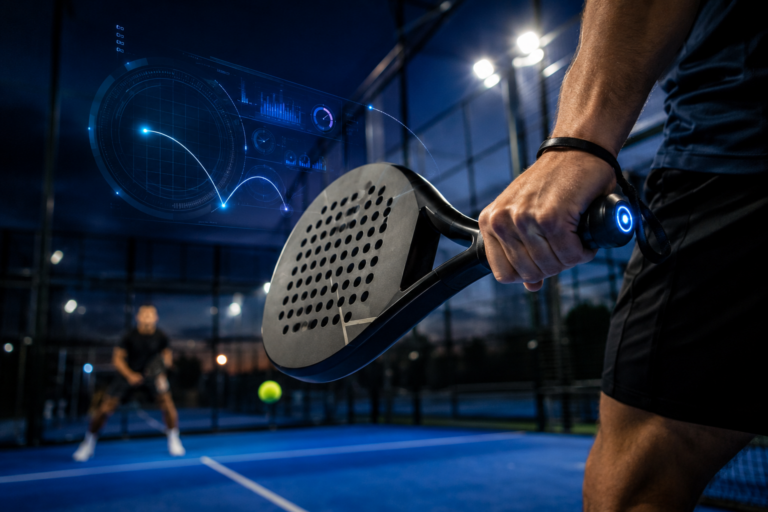
Padel is a racket sport played in doubles on an enclosed glass-and-metal court that’s roughly a third the size of a tennis court. Unlike tennis, the walls are part of play, you can use them to keep a rally going, which makes the game more forgiving for beginners and more tactically interesting for experienced players.
Here’s a quick breakdown of the key differences:
| Feature | Padel | Tennis |
|---|---|---|
| Court size | ~10m x 20m (enclosed) | ~23m x 11m (open) |
| Walls in play | Yes | No |
| Racket type | Solid, no strings | Strung racket |
| Serve style | Underarm only | Overhead |
| Format | Always doubles | Singles or doubles |
| Learning curve | Gentler | Steeper |
The enclosed court and underarm serve make padel much easier to pick up than tennis, which is a big reason it’s spreading so quickly. If you’re curious about the padel hybrid game format and how it blends elements from multiple sports, that’s worth exploring too.
How Many People Play Padel Worldwide and Which Countries Lead in 2026?

An estimated 25-30 million people play padel globally as of 2026, across more than 90 countries, according to data from the World Padel Network and Playtomic’s Global Padel Report [4]. Spain alone accounts for a significant share of that base, with millions of registered players and tens of thousands of courts.
Top padel markets by player base and search volume in 2026:
- 🇪🇸 Spain, the undisputed global leader, with the highest court density and search volume worldwide [1]
- 🇦🇷 Argentina, padel’s other heartland, with deep cultural roots and a massive recreational player base [4]
- 🇸🇪 Sweden, Europe’s northern padel stronghold, with rapid court growth over the past five years
- 🇮🇹 Italy, fast-growing, with strong club infrastructure and rising tournament interest
- 🇫🇷 France, accelerating quickly, particularly in urban centers
- 🇬🇧 United Kingdom, the biggest emerging market in Northern Europe [3]
- 🇩🇪 Germany, search interest rising sharply, courts being built at pace
- 🇺🇸 United States, identified by Playtomic as a top long-term growth market [2]
The 2026 Padel Global Search Insights show that search spikes in Spain and Argentina often precede broader global trends by 12-18 months, so watching those markets is a useful early signal for where padel heads next.
Why Is Padel Growing So Fast Globally?
Padel is growing fast because it’s genuinely fun, socially accessible, and easy to learn, even for people with no racket sports background. The enclosed court reduces the frustration of missed shots, rallies last longer, and the doubles format makes every session a social event.
Several factors are driving the acceleration in 2026:
- Lower barrier to entry than tennis or squash, most players are rally-ready within a few sessions
- Court investment boom, private clubs and public facilities are building padel courts at record rates [1]
- Media and sponsorship, major brands and broadcasters are backing the World Padel Tour and Premier Padel circuits
- Tournament events driving search spikes, events like the Valencia P1 and the Miami padel circuit consistently push search volume up in their host markets [3]
- Cross-sport appeal, tennis players, squash players, and even pickleball tips enthusiasts are crossing over
“Padel is the rare sport where a complete beginner and a seasoned club player can share a court and both have a great time.”, a sentiment echoed across padel communities worldwide.
One challenge flagged in the Global Padel Report 2026 is overcapacity in some mature markets like Spain, where court supply is beginning to outpace demand in certain regions [1]. That’s a useful reminder that growth isn’t uniform, the hottest search markets aren’t always the ones with the most room to grow.
Emerging Padel Markets: Latin America, Asia, and the GCC
The 2026 Padel Global Search Insights point to three regions as the most exciting growth frontiers beyond the established European heartlands.
Latin America has always had strong padel roots in Argentina and Brazil, but Mexico, Chile, and Colombia are now seeing rapid court construction and rising search interest [4]. These markets benefit from existing racket sports culture and a young, sport-hungry population.
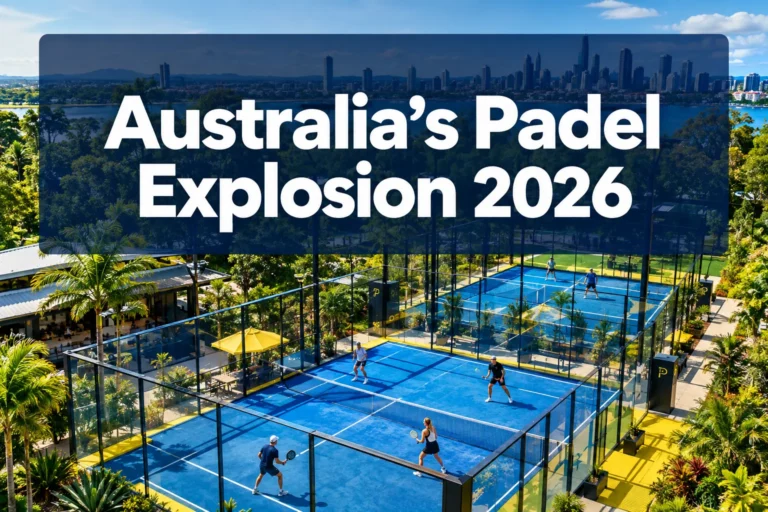
Asia-Pacific is the region to watch for the next decade. Australia already has a functioning padel circuit. Japan, South Korea, and Singapore are in early-growth phases, with search interest climbing steadily [8]. Infrastructure investment is following search demand, which is a healthy sign for long-term sustainability.
The GCC (Saudi Arabia, UAE, Qatar) is showing some of the sharpest short-term search spikes globally. Much of this is event-driven, tournament announcements and high-profile exhibition matches generate intense but focused search surges. The region’s investment in sports infrastructure makes it a credible long-term market, not just a flash point [3].
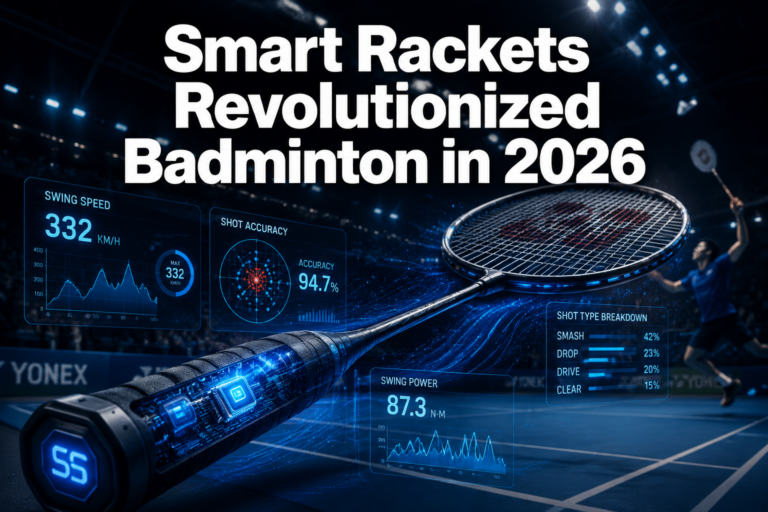
For comparison, the Badminton Market 2026 shows a similar pattern of Asian growth, racket sports as a category are benefiting from the same infrastructure and lifestyle trends across the region.
Is Padel Popular in the United States?
Padel is still in an early-growth phase in the US, but the trajectory is clearly upward. Playtomic’s report identifies the United States as one of the most important long-term growth markets for padel globally [2], and the Sports Business Journal confirmed this assessment in mid-2026 [3].
Current US padel landscape:
- Court numbers are growing, particularly in Florida, Texas, California, and New York
- The Miami padel circuit has been a key driver of search interest and media coverage [7]
- Most US players currently come from tennis or pickleball backgrounds
- Awareness is still lower than in Europe, but search volume is accelerating
Choose padel if you’re in the US and: you already play tennis or pickleball and want a social doubles sport with a faster learning curve and more wall-play strategy.
The US market is roughly where Spain was in the early 2010s, still building infrastructure, but with strong fundamentals and growing enthusiasm from the racket sports community.
Padel vs. Pickleball: Which Sport Should You Play?
Both sports are social, doubles-friendly, and easier to learn than tennis, but they feel quite different on the court. Google Trends data shows padel pulling ahead of pickleball in European and Latin American search markets, while pickleball still dominates in North America [5].
Quick comparison:
- Padel uses a solid racket, an enclosed glass court, and wall play. Best for players who enjoy tactical depth and longer rallies.
- Pickleball uses a paddle and a wiffle-style ball on a smaller open court. Best for players who want fast, social play with minimal equipment cost.
Choose padel if: you want a sport with a strong international community, wall-play strategy, and a growing global tournament scene.
Choose pickleball if: you want the biggest local community in North America right now, lower startup costs, and quick access to courts.
Many players in the racket sports community play both, and skills do transfer. For more on pickleball’s community side, see Building Community Through Pickleball.
What Equipment Do You Need to Start Playing Padel?
Starting padel requires very little gear, which is part of why the sport grows so fast. Here’s what a beginner actually needs:
Essential equipment:
- Padel racket, a solid foam-core racket (no strings). Beginner-friendly options from brands like Bullpadel, Head, and Babolat typically run $60,$150. See the full Padel Equipment 2026 guide for current picks.
- Padel balls, similar to tennis balls but slightly less pressurized. A tube of three costs around $5,$8.
- Court shoes, any non-marking court shoe works. Dedicated padel shoes with herringbone soles improve grip on artificial grass courts.
- Court access, most padel clubs charge $15,$30 per person per hour for court hire.
Optional but useful:
- Padel bag or racket cover
- Grip tape for handle customization
- Protective eyewear (recommended for beginners)
For a deeper look at getting started, the Padel For Beginners resource covers racket selection, court etiquette, and first-session tips.
Best Padel Rackets for Beginners in 2026
The best beginner padel racket in 2026 is one with a round shape, a mid-to-high balance point, and a soft foam core, this combination gives maximum forgiveness on off-center hits and makes rallies easier to sustain.
What to look for:
- Round shape, larger sweet spot, more forgiving than diamond or teardrop shapes
- Soft EVA foam core, absorbs vibration, easier on the arm
- Weight 355-375g, light enough for quick reactions without sacrificing control
- Budget $60,$120, no need to spend more until you’re playing regularly
Top brands to check in 2026: Bullpadel, Head, Babolat, NOX, and Wilson all have solid beginner lines. Check racket sports gear reviews for updated comparisons as new models drop through the year.
Common mistake: Beginners often buy a diamond-shaped power racket because it looks impressive. These are harder to control and will slow your development. Start round, move up later.
What Are the Rules of Padel?
Padel rules are straightforward, especially if you’ve played tennis before. The scoring system is identical to tennis (15, 30, 40, game), and the basic structure, serve, rally, win the point, is the same.
Key rules to know:
- Serve: Always underarm, bounced off the ground first, aimed into the diagonal service box
- Walls: After the ball bounces once on your side, it can hit the walls, and you can still play it
- Out of court: If the ball exits through the gate openings, the point continues if your opponent can still reach it
- Let: A serve that clips the net and lands in is replayed
- Scoring: Standard tennis scoring, first to six games wins a set, tiebreak at 6-6
The wall-play rule is the biggest adjustment for tennis players. Once you embrace using the walls offensively and defensively, the tactical depth of padel opens up considerably.
How to Improve Your Padel Game Fast
The fastest way to improve at padel is to focus on court positioning and the bandeja shot, two areas that separate beginners from intermediate players within the first few months.
Five practical steps to level up quickly:
- Stay at the net, padel is won and lost at the net. Practice moving forward after every serve and return.
- Learn the bandeja, a controlled overhead that keeps you at the net instead of retreating. It’s the most important shot in padel.
- Use the back walls deliberately, don’t just react to wall bounces; practice setting up shots off the back glass.
- Drill the serve return, a consistent, low return keeps pressure on the serving team.
- Play with better players, the fastest improvement comes from being slightly outmatched. Find a local club with open sessions.
For structured practice ideas that work across racket sports, Creating A Practice Routine Balancing Skill Development And Fun has a solid framework you can adapt.
Where Can You Find Padel Courts Near You?
Finding padel courts in 2026 is easier than it was even two years ago, thanks to the global infrastructure boom. The best tools:
- Playtomic app, the most widely used padel court booking platform globally, covering thousands of clubs across Europe, Latin America, and the US [4]
- Google Maps, search “padel courts near me” for local results
- Club websites, many tennis clubs have added padel courts and list availability online
- National federations, the International Padel Federation (FIP) and regional bodies maintain court directories
In the US, Florida and the major coastal cities have the densest court networks as of 2026 [7]. In Europe, any mid-sized city in Spain, Italy, Sweden, or the UK will have multiple options within a short drive.
Padel Tournaments in 2026: Where to Watch
Premier Padel is the top-tier professional circuit in 2026, sanctioned by the FIP and featuring the world’s best players. Key events driving search spikes this year include:
- Valencia P1, one of the highest-profile European events, consistently generating search surges in Spain and across Europe [3]
- Miami Open (padel), the anchor event for North American growth, driving US search interest significantly [7]
- Saudi Arabia and UAE events, GCC tournaments attracting global attention and investment
- Buenos Aires, a Latin American anchor event with massive local followings
Where to watch: Premier Padel streams on its official platform and selected regional broadcasters. YouTube carries highlights, and the World Padel Tour channel has extensive archive content.
FAQ
What is padel and why is it so popular? Padel is a doubles racket sport played on an enclosed glass court. It’s popular because it’s easy to learn, highly social, and more forgiving than tennis, beginners can have fun from their very first session.
How many people play padel worldwide in 2026? Estimates range from 25 to 30 million players across 90+ countries, with Spain and Argentina leading participation [4].
Is padel the same as paddle tennis? No. Padel and paddle tennis are different sports. Padel uses glass walls as part of play and has specific court dimensions. Paddle tennis is played on a smaller open court without walls.
How much does it cost to play padel? Court hire typically runs $15,$30 per person per hour. A beginner racket costs $60,$150, and balls cost around $5,$8 per tube [6].
Can I play padel if I’ve never played tennis? Yes. Many padel players come from non-tennis backgrounds. The underarm serve and enclosed court make it accessible to complete beginners.
Which country has the most padel courts? Spain has the highest court density in the world, with tens of thousands of courts across the country [1].
Is padel growing faster than pickleball? In European and Latin American markets, padel search interest is outpacing pickleball. In North America, pickleball still leads in participation, but padel is closing the gap [5].
What’s the best padel racket for a beginner? A round-shaped racket with a soft EVA foam core in the 355-375g range. Brands like Bullpadel, Head, and Babolat all offer solid entry-level options.
Where can I watch professional padel in 2026? Premier Padel streams on its official platform and regional broadcasters. Major events include the Valencia P1 and the Miami Open padel circuit.
Is padel good exercise? Yes. A typical padel session involves constant lateral movement, quick bursts of speed, and sustained aerobic effort, comparable to a moderate-intensity tennis match.
How long does a padel match take? A standard best-of-three-sets match typically takes 60-90 minutes, making it easy to fit into a lunch break or after-work schedule.
What’s driving padel growth in Asia-Pacific? Rising sports infrastructure investment, growing middle-class interest in premium leisure activities, and the sport’s social appeal are the main drivers in markets like Australia, Japan, and South Korea [8].
Conclusion
The 2026 Padel Global Search Insights tell a consistent story: padel is no longer a regional sport. It’s a global phenomenon with a clear growth arc, from Spain’s dominant market position, through Europe’s rising hotspots in the UK and Germany, to the long-term potential of the US, Latin America, and Asia-Pacific.
What to do next:
- Find a court, use Playtomic or Google Maps to locate the nearest club and book a session
- Get the right gear, start with a round beginner racket and a tube of balls; don’t over-invest until you know you love it (check Padel Equipment 2026 for current picks)
- Watch the pro game, follow Premier Padel events like the Valencia P1 to understand what good padel looks like and pick up tactical ideas
- Join the community, most padel clubs run open sessions and beginner nights; showing up is the fastest way to improve and meet other players
- Cross-train, if you already play tennis, pickleball, or another racket sport, your existing skills will transfer faster than you think
Padel rewards players who stay curious, keep showing up, and enjoy the social side of the game. The racket sports community is growing, and padel is one of the best ways to be part of it.
References
[1] Global Padel Report 2026 World Padel Faces The Challenge Of Overcapacity – https://actu-padel.com/en/global-padel-report-2026-world-padel-faces-the-challenge-of-overcapacity/
[2] Playtomic Report Identifies U S As Major Long Term Growth Market For Padel – https://www.citybiz.co/article/852288/playtomic-report-identifies-u-s-as-major-long-term-growth-market-for-padel/
[3] New Report Details Global Padel Growth Us Status – https://www.sportsbusinessjournal.com/Articles/2026/05/28/new-report-details-global-padel-growth-us-status/
[4] Global Padel Report – https://playtomic.com/global-padel-report
[5] Carlo Ferrara Padel Google Trends Pickleball Activity – https://www.linkedin.com/posts/carlo-ferrara-22064610_padel-googletrends-pickleball-activity-7414782971528052736-2wrH
[6] Padel Market Report – https://www.businessresearchinsights.com/market-reports/padel-market-102910
[7] Insights At A Glance Padel In The United States 2025 – https://floridatennis.com/blogs/padel-news/insights-at-a-glance-padel-in-the-united-states-2025
[8] Padel Trend – https://www.accio.com/business/padel_trend