
Guatemala City Showdown: Previewing the XXXVII Pan American Racquetball Championships March 27-April 4, 2026
Last updated: May 22, 2026
Quick Answer: The XXXVII Pan American Racquetball Championships take place in Guatemala City from March 27 to April 4, 2026. This nine-day tournament is the premier continental racquetball event, featuring Open Singles, Doubles, Mixed Doubles, and Junior divisions across nations from North, Central, and South America. It also serves as a critical qualifier for the 2026 Central American and Caribbean Games and South American Games, making every match count far beyond the trophy itself.
Key Takeaways 🏆
- Dates: March 27–April 4, 2026, hosted in Guatemala City, Guatemala
- Governing body: The Inter-American Racquetball Confederation (IARF) oversees the event
- Divisions: Open Men’s Singles, Open Women’s Singles, Men’s and Women’s Doubles, Mixed Doubles, Junior Cup (Under-18), and Team competition
- Qualifier status: Results directly affect seeding and eligibility for the 2026 Central American & Caribbean Games and South American Games
- Top nations: USA, Mexico, Bolivia, and Guatemala are historically among the strongest contenders
- Streaming: Live coverage is expected via the IARF’s official YouTube channel and affiliated national federation platforms
- Tickets: Estimated to be low-cost or free for general spectators at the venue, per typical IARF event structure (confirm with local organizers)
- Equipment: Pros use graphite or titanium composite racquets, specific racquetball gloves, and eye protection — all mandatory at sanctioned events
- No major COVID protocols are anticipated beyond standard venue health guidelines as of 2026
What Exactly Are the Pan American Racquetball Championships?
The Pan American Racquetball Championships are the highest-level continental racquetball competition in the Americas, organized by the Inter-American Racquetball Confederation (IARF). Held every two years, the tournament brings together elite players from across North, Central, and South America to compete for the Pan American title.
The Guatemala City Showdown: Previewing the XXXVII Pan American Racquetball Championships March 27–April 4, 2026 marks the 37th edition of this storied event. It’s not just a championship — it’s a proving ground. Athletes who perform well here earn ranking points, national prestige, and in many cases, automatic berths in multi-sport Games later in the year.
Racquetball itself is a fast, high-intensity sport played in an enclosed four-wall court. Points are scored only by the serving side, and matches are typically best-of-three games to 15 points. For fans new to the sport, it shares some DNA with squash and handball but plays at a noticeably faster pace.
How Do Teams Qualify for This Tournament?
Qualification for the XXXVII Pan American Racquetball Championships is managed through each country’s national racquetball federation, which must be affiliated with the IARF. Athletes earn their spots by competing in national selection events or through federation-assigned rankings.
General qualification pathway:
- Compete in national-level IARF-affiliated tournaments
- Achieve a qualifying ranking or win a national selection event
- Have your national federation submit an official entry to the IARF before the registration deadline
- Meet age requirements for Junior divisions (typically Under-18 as of the tournament start date)
Countries with stronger federation infrastructure — like the USA (USA Racquetball) and Mexico — often send full rosters across all divisions. Smaller nations may enter only in select categories based on available funding and player depth.
Edge case: A player holding dual citizenship may represent only one nation per IARF rules, and that choice is typically locked in for a full competitive cycle.
Who Are the Top Players Expected to Compete in Guatemala City?

The Guatemala City Showdown: Previewing the XXXVII Pan American Racquetball Championships March 27–April 4, 2026 is expected to draw the strongest field the continent has to offer. While official rosters are confirmed closer to the event, historically dominant players and nations give a clear picture of who to watch.
Players and nations to watch:
| Nation | Strength | Notable Division |
|---|---|---|
| 🇺🇸 USA | Deep roster, consistent gold medalists | Open Men’s & Women’s Singles |
| 🇲🇽 Mexico | Strong doubles tradition | Mixed Doubles, Team |
| 🇧🇴 Bolivia | Rising women’s program | Open Women’s Singles |
| 🇬🇹 Guatemala | Home court advantage | All divisions |
| 🇨🇴 Colombia | Improving junior pipeline | Junior Cup |
The USA has historically dominated the Open Singles categories, while Mexico has been particularly competitive in doubles formats. Guatemala, as host nation, benefits from home-court familiarity and crowd support — a real factor in high-pressure matches.
Note: Specific player names and confirmed rosters should be verified through USA Racquetball or the IARF official website as the tournament approaches.
Are There Different Divisions or Categories in the Championships?
Yes — the championships feature multiple divisions to accommodate different age groups and competition formats. This structure is one reason the event draws such a large and diverse field.
Official divisions (standard IARF format):
- Open Men’s Singles — top male players, no age cap
- Open Women’s Singles — top female players, no age cap
- Men’s Doubles
- Women’s Doubles
- Mixed Doubles (one male, one female per team)
- Junior Cup — Under-18 players, both male and female brackets
- Team Competition — nations scored collectively across individual results
The Junior Cup is particularly worth watching in 2026. It’s a pipeline event: junior champions often become the Open contenders of the next cycle. For fans interested in improving their own racquet sport skills, watching junior-level play can actually be more instructive than watching Open matches, since the rallies are longer and technique is more visible. Check out tips for improving racquet sports skills if you want to translate what you see into your own game.
How Is This Tournament Different from Other International Racquetball Competitions?
The Pan American Championships sit between national-level events and the World Racquetball Championships in terms of prestige and scope. It’s the most important regional tournament in the Americas, but it’s also a qualifier — which changes how teams approach it strategically.
Key differences from other events:
- vs. World Championships: The Pan Am event is Americas-only; the World Championships include Europe, Asia, and Africa. The Pan Am field is smaller but the competition is just as intense within the region.
- vs. Pan American Games: Racquetball appears in the Pan American Games, but the standalone Championships allow more divisions and more matches per player.
- vs. National Opens: The XXXVII Championships carry IARF ranking points that affect international seeding — national opens typically do not.
The 2026 edition carries extra weight because it feeds directly into qualification for the Central American and Caribbean Games and the South American Games, both scheduled later in 2026. A strong finish here can lock in a nation’s spot in those multi-sport events, so coaches aren’t just playing for the trophy.
Which Countries Have the Strongest Racquetball Teams?
The USA and Mexico have historically been the two powerhouses of Pan American racquetball, but the gap has narrowed considerably over the past decade. Bolivia, Guatemala, Colombia, and Canada have all produced medal-winning performances at recent editions.
Why the USA leads: USA Racquetball has a deep club and collegiate system that develops players from a young age. The country regularly produces world-ranked players in both men’s and women’s singles.
Why Mexico is always dangerous: Mexico’s doubles pairs are tactically sophisticated, and the country has a large base of recreational players that feeds into competitive pipelines.
Dark horse in 2026 — Guatemala: As host nation, Guatemala will likely field its strongest-ever team. Home crowd energy in racquetball is significant because the sport is played in enclosed courts where crowd noise amplifies dramatically.
What’s the Prize Money for Winning the Championships?
Prize money at the Pan American Racquetball Championships is not publicly confirmed at a standardized level, and figures vary by edition and sponsorship. Unlike professional tennis or golf, most IARF events are primarily amateur-status competitions where athletes compete for ranking points, national glory, and qualification spots rather than large cash prizes.
What athletes typically receive:
- Gold, silver, and bronze medals
- IARF ranking points
- National federation bonuses (varies by country — some federations offer performance bonuses from government sports funding)
- Qualification spots for subsequent Games
If prize money is offered in 2026, it would be announced through the IARF and Guatemala’s national organizing committee. Check the IARF’s official channels for confirmed figures.
How Much Do Tickets Cost for This Event?
Tickets for the XXXVII Pan American Racquetball Championships are expected to be free or very low cost for general spectators, consistent with how IARF has structured past editions. Racquetball championships at this level are typically community-facing events where the host nation wants to grow local interest in the sport.
Practical advice for attendees:
- Contact the Guatemalan Racquetball Federation (FEGURA) directly for venue access details
- Premium seating or VIP arrangements, if available, would be organized through the local committee
- Bring valid ID; international sporting events often require identification at the door
Guatemala City is a well-connected hub with multiple hotels near major sports facilities. Visitors planning to attend should book accommodation early, as the event draws athletes, coaches, and officials from across the Americas.
What Makes Guatemala City a Good Host for This Tournament?
Guatemala City is a strong host for this level of competition for several practical reasons. The city has modern indoor sports facilities, a racquetball-enthusiastic local community, and a central geographic location that makes travel manageable for delegations from both North and South America.
Guatemala has hosted IARF-affiliated events before, giving local organizers experience with the logistics of international competition. The altitude of Guatemala City (roughly 1,500 meters above sea level) is worth noting — players arriving from sea-level countries may need a brief acclimatization period, which can subtly affect match performance in the early rounds.
The local racquetball community is passionate, and a home tournament of this scale tends to generate genuine grassroots excitement. That kind of atmosphere makes the Guatemala City Showdown: Previewing the XXXVII Pan American Racquetball Championships March 27–April 4, 2026 worth attending in person if you’re anywhere near Central America.
What Equipment Do Professional Racquetball Players Use?
Professional racquetball players use specialized equipment that differs meaningfully from beginner gear. Understanding what the pros use can help recreational players make smarter equipment choices.
Standard pro-level equipment:
- Racquet: Graphite or titanium composite frames, typically 22 inches long, strung at 30–35 lbs tension. Lighter racquets (under 170g) favor speed; heavier ones favor power.
- Ball: Standard blue racquetball (Penn or similar) for most divisions; some junior or beginner events use slower balls
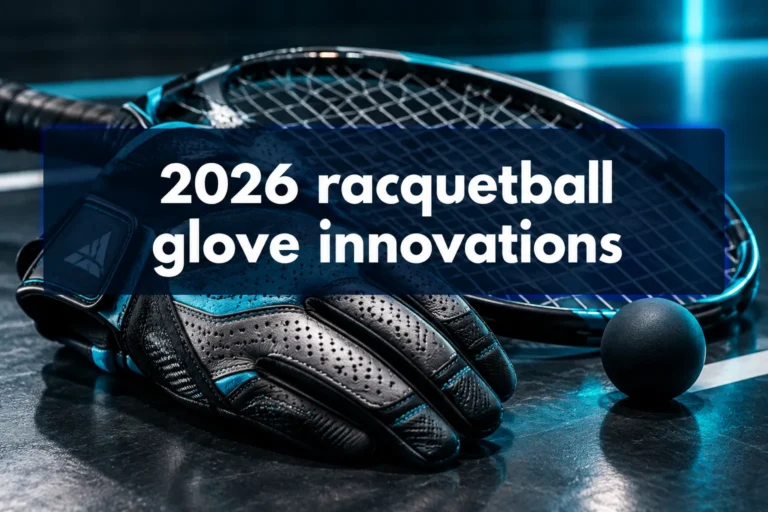
- Glove: A single glove on the racquet hand for grip and sweat control — mandatory at most sanctioned events
- Eye protection: ASTM-rated protective eyewear is mandatory at all IARF-sanctioned tournaments, no exceptions
- Footwear: Non-marking court shoes with lateral support
One common mistake amateur players make is using outdoor or multi-sport shoes on a racquetball court. Court-specific shoes provide the lateral stability needed to change direction quickly without slipping. The same principle applies across racquet sports — proper footwear matters more than most beginners expect. For a related look at how gear choices affect performance, see this guide on selecting the right footwear for court sports.
What Are Common Mistakes Amateur Racquetball Players Make?
Amateur racquetball players most often struggle with court positioning, shot selection, and footwork — not raw power. Watching elite players at events like the Pan American Championships highlights just how much of the game is mental and positional.
Top mistakes to avoid:
- Hitting too hard, too often — pros use touch shots (pinches, rollouts) to win points, not just power drives
- Poor center-court positioning — staying near the back wall gives your opponent easy passing shots
- Ignoring the ceiling ball — a defensive ceiling shot resets a rally and forces your opponent deep
- Weak backhand — most amateurs avoid their backhand; pros drill it equally with the forehand
- No eye protection — beyond being a tournament rule, it’s a basic safety requirement
If you want to work on fixing technique flaws in a racquet sport context, the principles around identifying and correcting swing flaws apply across court sports more broadly.
How Can I Watch the Championships If I Can’t Attend in Person?
Live streaming for the XXXVII Pan American Racquetball Championships is expected to be available through the IARF’s official YouTube channel, which has broadcast past editions of the event. Some national federations (particularly USA Racquetball) also stream or rebroadcast matches on their own platforms.
Where to look for live coverage:
- IARF YouTube channel — search “IARF Racquetball” on YouTube
- USA Racquetball social media — often shares live links and highlights
- Guatemala’s FEGURA social media pages — likely to post local broadcast details
- World Racquetball (IRF) channels — may simulcast or archive key matches
Coverage quality and availability can vary. Following the IARF on social media before the tournament starts is the most reliable way to get streaming links as they’re confirmed. Highlight packages and match replays are typically posted within 24–48 hours of play.
What COVID Protocols Will Be in Place for the Tournament?
As of 2026, no special COVID-19 protocols are anticipated for the XXXVII Pan American Racquetball Championships beyond standard venue health and safety guidelines. Guatemala lifted its pandemic-era restrictions in line with global trends, and international sports events across the Americas have returned to full-capacity, unrestricted formats.
Athletes, coaches, and spectators should still check their home country’s travel requirements for Guatemala and confirm any entry documentation needed. Standard venue rules (like staying home if symptomatic) remain good practice but are not expected to be enforced as formal tournament policy.
FAQ: XXXVII Pan American Racquetball Championships 2026
Q: When and where is the 2026 Pan American Racquetball Championships? A: March 27 to April 4, 2026, in Guatemala City, Guatemala.
Q: Who organizes the Pan American Racquetball Championships? A: The Inter-American Racquetball Confederation (IARF) governs the event, with the host nation’s federation managing local logistics.
Q: Is racquetball in the Pan American Games? A: Yes, racquetball has appeared in the Pan American Games. The standalone Pan American Championships serve as a separate, more comprehensive competition with more divisions.
Q: How long is a racquetball match? A: Matches are best-of-three games. Each game goes to 15 points (win by 1), with a tiebreaker third game to 11. A competitive match typically lasts 45–75 minutes.
Q: Can junior players compete in Open divisions? A: In most IARF events, junior players may enter Open divisions if their national federation enters them, but they also compete separately in the Junior Cup.
Q: What’s the difference between racquetball and squash? A: Racquetball uses a larger, bouncier ball and a shorter racquet, and the entire court (including ceiling) is in play. Squash uses a smaller, less bouncy ball and has a tin (out-of-bounds area) at the bottom of the front wall.
Q: How do I follow results in real time during the tournament? A: Check the IARF’s official website and social media channels. USA Racquetball and other national federations often post bracket updates and scores during competition days.
Q: Is Guatemala City safe for international visitors? A: Guatemala City, like any major capital, has areas that require normal urban caution. Sports venues and tourist districts are generally well-monitored. Check your government’s current travel advisory before booking.
Q: Does the tournament affect world rankings? A: Yes. The IARF Pan American Championships carry ranking points that feed into the International Racquetball Federation (IRF) world rankings.
Q: Are there age divisions beyond Junior and Open? A: Some IARF events include Masters divisions (40+, 50+, etc.), but the flagship Pan American Championships primarily feature Open and Junior categories. Confirm with the IARF for the 2026 edition’s full division list.
Conclusion: Why This Tournament Deserves Your Attention in 2026
The Guatemala City Showdown: Previewing the XXXVII Pan American Racquetball Championships March 27–April 4, 2026 is more than a regional title fight. It’s a qualifier with real consequences, a showcase for the sport’s fastest and most skilled players, and a rare chance to see elite racquetball in a passionate, accessible setting.
Actionable next steps:
- 📺 Follow the IARF on YouTube and social media now to get streaming links before the tournament starts
- 🎟️ Contact FEGURA (Guatemala’s national federation) if you plan to attend in person for venue and ticketing details
- 🏸 Use the tournament as motivation to sharpen your own game — watching elite play is one of the fastest ways to spot what you’re missing. Resources on improving racquet sports skills can help you translate inspiration into practice
- 📅 Mark your calendar for March 27 — the opening rounds typically feature the most unpredictable results as players settle into the venue
- 🌎 Track your nation’s team through your national federation’s website for roster announcements and match schedules
Whether you’re a lifelong racquetball fan or just discovering the sport, this tournament is worth nine days of your attention. Guatemala City is ready. The 37th edition of the Pan American Championships is set to deliver.
Meta Title: XXXVII Pan American Racquetball Championships 2026 Preview
Meta Description: Preview the XXXVII Pan American Racquetball Championships in Guatemala City, March 27–April 4, 2026. Divisions, top nations, streaming info, and qualifier stakes explained.