From Pickleball to Squash57: Why Racquet Sport Switchers Are Loving US Squash’s 2026 Growth Initiative
Last updated: September 12, 2026
Quick Answer: US Squash launched its first-ever national Squash57 growth campaign in January 2026, positioning the sport as the ideal next step for pickleball, tennis, and padel players looking for a fresh challenge. Squash57 uses a larger 57mm ball and a shorter racquet than traditional squash, which lowers the learning curve while still delivering the clever tactics and full-body workout that make squash so addictive. From Pickleball to Squash57: Why Racquet Sport Switchers Are Loving US Squash’s 2026 Growth Initiative comes down to one thing: a sport that feels familiar enough to start quickly, but deep enough to keep you hooked.
Key Takeaways 🎯
- Squash57 uses a larger ball and shorter racquet than traditional squash, making it noticeably easier to pick up for players coming from pickleball or padel.
- US Squash’s 2026 campaign, “Play Squash. Your Way.”, explicitly targets racquet sport lovers as a key new audience [1].
- 70+ programs across 20+ U.S. states are now receiving complimentary Squash57 balls, directly reducing the cost barrier for clubs and players [2].
- Starter equipment costs are low, with a basic Squash57 racquet available for under $50 at many retailers.
- The health benefits are significant: squash consistently ranks among the highest-calorie-burning racquet sports per hour.
- A Festival Series welcomes players of all abilities, giving switchers a low-pressure entry point into competitive play [1].
- Free coaching certification is available for Coach Pass holders, helping clubs add Squash57 to existing multi-sport programming [2].
- The long-term vision is to grow the U.S. player base from 150,000 to 1.5 million, with Squash57 as a key driver [6].
- Pickleball players already have transferable skills, court awareness, soft-touch shots, and rally patience, that translate well to Squash57.
- Modular squash courts can be installed for under roughly $50,000, making it realistic for multi-sport facilities to add courts alongside pickleball.
What Is Squash57 and How Is It Different From Regular Squash?
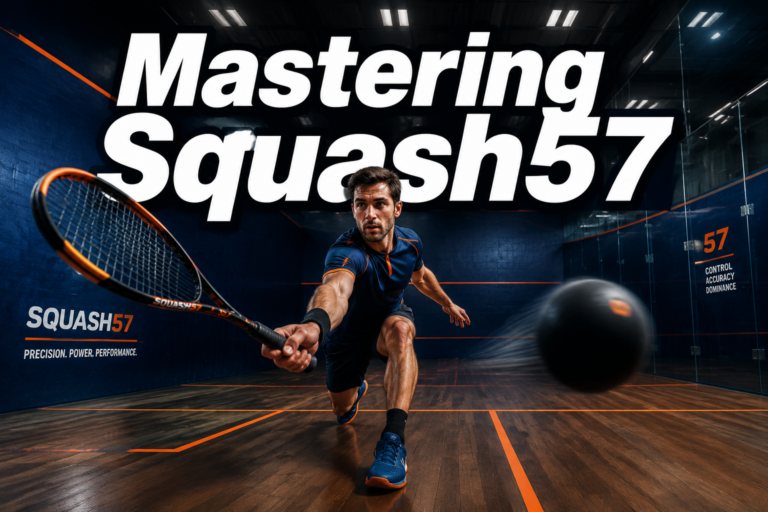
Squash57 is a version of squash played with a larger, 57mm pressurised rubber ball and a slightly shorter racquet than the standard game. The bigger ball moves a little slower off the walls, which creates longer rallies, more time to react, and a more social, accessible feel, without losing any of the tactical depth squash is known for.
Here’s a quick side-by-side:
| Feature | Traditional Squash | Squash57 |
|---|---|---|
| Ball size | ~40mm | 57mm (larger) |
| Racquet length | Standard (up to 686mm) | Slightly shorter |
| Rally length | Can be short at high pace | Longer, more consistent |
| Learning curve | Steeper | Gentler |
| Court | Standard squash court | Same court |
| Social appeal | High | Very high |
The same squash court works for both formats, so clubs don’t need to build anything new. That’s a big practical advantage for facilities already running multiple racquet sports programs.
Why Are Pickleball Players Switching to Squash?
Pickleball players are drawn to squash because the skills overlap more than most people expect. Both sports reward patience, placement over power, and smart court positioning. The main difference is that squash adds a vertical wall dimension, and that’s exactly what makes it feel fresh.
Skills that transfer directly from pickleball to Squash57:
- Soft touch and dink-style shots → drop shots and boasts in squash
- Third-shot patience → waiting for the right moment to attack
- Court awareness → reading angles off the front wall
- Fitness base → both sports demand quick lateral movement
The rising popularity of pickleball has built a huge pool of racquet-sport-literate players who are now looking for their next challenge. Squash57 meets them right there.
Many pickleball players also mention that playing indoors, away from wind, sun glare, and noise, feels like a welcome change, especially during winter months.
What Is US Squash’s 2026 Growth Initiative?
US Squash’s 2026 growth initiative is a coordinated national effort to expand squash participation, with Squash57 as its most accessible entry point. Launched in January 2026 under the slogan “Play Squash. Your Way.”, the campaign targets racquet sport lovers specifically, including pickleball, tennis, and padel players, through monthly themed programming, complimentary equipment, and a Festival Series open to all abilities [1].
The core pillars of the initiative include:
- Monthly Squash57 themes, topics like “What Is Squash57?”, “For Racquet Sport Lovers”, and “Masters & Lifelong Players” to guide clubs through progressive outreach [1]
- Complimentary Squash57 balls sent to 70+ programs across 20+ U.S. states to remove the equipment cost barrier [2]
- Free online Squash57 certification for Coach Pass holders, so existing coaches can add Squash57 to their programming quickly [2]
- A national club spotlight series inviting facilities to share their Squash57 programs [1]
- The inaugural Squash57 Festival Series, a four-event circuit open to all abilities, culminating in the Squash57 Pan American Championships at the Arlen Specter US Squash Center [1]
On June 26, 2026, US Squash also appointed Katherine O’Donnell Lynch as Director of Growth & Strategic Initiatives, a role specifically tasked with court expansion, scholastic programs, and community access [4]. That appointment signals this isn’t a one-year push. It’s a structural commitment.
The broader strategic goal is ambitious: grow the U.S. player base from 150,000 to 1.5 million, with Squash57 serving as a key on-ramp for new demographics [6].

From Pickleball to Squash57: Is Squash Easier or Harder Than Pickleball?
Squash57 is generally considered more physically demanding than pickleball, but not harder to learn from scratch. The court is enclosed, the movement is more continuous, and the angles take some getting used to, but the larger ball in Squash57 gives new players more time to react compared to traditional squash.
Honest comparison for switchers:
| Factor | Pickleball | Squash57 |
|---|---|---|
| Time to first rally | Very quick | Quick (faster than regular squash) |
| Cardio demand | Moderate | High |
| Tactical depth | Moderate-high | High |
| Equipment cost to start | Low-moderate | Low |
| Court availability | Very high | Growing fast |
The verdict: If you can play pickleball comfortably, you can get a Squash57 rally going within your first session. Mastering it takes longer, but that’s part of the appeal.
What Equipment Do You Need for Squash57?
Getting started with Squash57 requires minimal gear. The essential items are a Squash57 racquet, the correct 57mm ball, and appropriate court shoes.
Starter kit breakdown:
- Squash57 racquet, a standard squash racquet works, but purpose-built Squash57 racquets are slightly shorter and optimised for the format. Budget options start around $30,$50.
- Squash57 ball, the 57mm pressurised ball is what defines the format. US Squash is currently distributing these free to 70+ programs [2], so check if your local club already has them.
- Court shoes, non-marking indoor court shoes are required on squash courts. Tennis or pickleball court shoes often work fine.
- Eye protection, strongly recommended, especially for beginners. Squash goggles are inexpensive and widely available.
What you don’t need: a special court, expensive gear, or prior squash experience. US Squash’s initiative includes links to affordable starter equipment for clubs and players [1][2].
How Much Does It Cost to Start Playing Squash?
Starting squash or Squash57 is genuinely affordable, especially compared to sports that require dedicated outdoor courts or expensive equipment. A beginner can get on court for well under $100 in total startup costs.
Typical cost breakdown:
- Squash57 racquet: $30,$80
- Squash57 balls (3-pack): $10,$20 (or free through participating programs [2])
- Court shoes (if you don’t have indoor court shoes): $50,$100
- Court time: $10,$25 per session at most clubs, or free with membership
Many facilities already running pickleball or tennis programs are adding Squash57 through the US Squash initiative, which means players at multi-sport clubs may find Squash57 included in their existing membership. Modular squash courts can be installed for under roughly $50,000, making it realistic for community centres and multi-sport venues to add courts without major capital investment.
Where Can You Find Squash Courts Near You?
The best starting point is the US Squash club finder at ussquash.org, which lists certified clubs and facilities across the country [5]. With 70+ programs now actively running Squash57 across 20+ states [2], the odds of finding something nearby are better than ever in 2026.
Other ways to find courts:
- Ask at your local tennis or racquet sports club, many are adding Squash57 courts
- Check university and college recreation centres, which often have squash courts open to the public
- Search for “squash court near me” on Google Maps, squash courts are often inside fitness clubs and YMCAs
- Look for the Squash57 Festival Series events in your region [1], these are designed to welcome first-timers
If you’re already using resources to find local pickleball courts, the same approach works for squash, community boards, local sports Facebook groups, and rec centre websites are all useful.
What’s the Learning Curve for Pickleball Players Trying Squash57?
Most pickleball players can get a functional Squash57 rally going within one or two sessions. The steepest part of the learning curve is reading angles off the side and back walls, something that has no direct equivalent in pickleball.
What clicks quickly:
- Rallying and keeping the ball in play (the larger ball helps a lot)
- Using soft shots to move your opponent
- General court fitness and movement patterns
What takes more time:
- Reading ball angles off multiple walls
- Ghosting (moving efficiently to the T position between shots)
- Using the back corners effectively
“Squash57 gives racquet sport players the clever tactics and long rallies of squash with a gentler entry point, it’s designed to be welcoming without being easy.”, US Squash, 2026 [1]
The good news: pickleball players tend to have better touch and patience than, say, tennis players switching to squash. That soft-game instinct is a real advantage in Squash57.
For players who want to accelerate their progress, beginner clinics and structured coaching sessions are a proven way to shorten the learning curve in any racquet sport.
What Are the Health Benefits of Squash vs Pickleball?
Both sports deliver excellent health benefits, but squash, including Squash57, is generally more intense. Squash is frequently cited by fitness researchers as one of the highest-calorie-burning sports available, with continuous movement, explosive bursts, and sustained aerobic effort throughout a match.
Health benefit comparison:
| Benefit | Pickleball | Squash57 |
|---|---|---|
| Cardiovascular fitness | Good | Excellent |
| Calorie burn per hour | Moderate-high | Very high |
| Agility and reflexes | Good | Excellent |
| Social/mental wellbeing | Excellent | Excellent |
| Low-impact option | Yes (less jumping) | Moderate |
| Full-body engagement | Good | Very high |
Pickleball has well-documented physical and mental health benefits, including stress reduction and improved coordination. Squash57 adds a higher cardiovascular ceiling for players who want to push their fitness further.
Both sports are also strongly social, and the community aspect is one of the biggest drivers of long-term participation in any racquet sport.
Common Mistakes Beginners Make When Switching From Pickleball to Squash57
The most common mistake is treating the front wall like a net, trying to hit winners past an opponent rather than using the walls to create angles and movement. Squash rewards patience and positioning, not just power.
Other mistakes to avoid:
- Standing too close to the back wall, give yourself room to swing
- Forgetting to return to the T after each shot (the T is the central position on court)
- Using a pickleball grip, squash uses a slightly different grip; ask a coach to check yours early
- Ignoring the side walls, using the side walls opens up the whole court
- Rushing rallies, Squash57’s longer rallies reward patience, just like the dinking game in pickleball
Quick fix checklist:
- After every shot, move back to the T
- Watch where the ball hits the front wall, not just where it ends up
- Practice straight drives before trying cross-court angles
- Use drop shots early, your pickleball touch will serve you well here
Who Should Play Squash57 Instead of Regular Squash?
Squash57 is the better starting point for almost any new player, but it’s especially well-suited to certain groups.
Choose Squash57 if you are:
- A pickleball, padel, or tennis player trying squash for the first time
- An older player or returning player who wants longer rallies and a more social game
- A coach or club wanting to introduce squash to a new audience
- Someone who finds traditional squash too fast or physically demanding at first
Regular squash makes more sense if you:
- Already have a squash background and want to compete in standard tournaments
- Prefer the faster, more explosive pace of the traditional game
US Squash’s campaign explicitly includes a “Masters & Lifelong Players” theme, recognising that Squash57 is a genuine long-term format, not just a stepping stone [1][2].
How Many People Are Switching From Pickleball to Squash in 2026?
Precise cross-sport switching numbers aren’t publicly reported, but the scale of US Squash’s 2026 initiative reflects real momentum. With 70+ programs across 20+ states actively running Squash57 [2], and a campaign explicitly designed to attract “racquet sport lovers,” the infrastructure for a significant wave of switchers is now in place.
The regional growth of pickleball across the globe has created a large, active base of players who are already comfortable on a court and looking for variety. US Squash’s stated goal of growing from 150,000 to 1.5 million players depends heavily on capturing exactly this audience [6].
Based on the program expansion, equipment distribution, and festival series activity, analysts can reasonably expect continued growth in pickleball-to-squash transitions through 2026-2028 as multi-sport venues layer Squash57 into their offerings, though this is a projection from strategic goals, not a reported statistic.
Conclusion: Ready to Make the Switch?
From Pickleball to Squash57: Why Racquet Sport Switchers Are Loving US Squash’s 2026 Growth Initiative is a story about access, timing, and a sport that finally has the infrastructure to welcome new players properly. The combination of a gentler format, free equipment for clubs, coaching certification, and a festival series open to all abilities makes 2026 a genuinely good time to try squash for the first time.
Your next steps:
- Find a Squash57 program near you at ussquash.org/squash57 [2]
- Grab a starter racquet and ball, budget around $50,$80 total to get started
- Book a beginner session or clinic, one session with a coach will save you weeks of bad habits
- Check for Festival Series events in your region for a low-pressure first competitive experience [1]
- Keep playing pickleball, the two sports complement each other beautifully, and your pickleball touch will make you a better Squash57 player from day one
The racquet sports community is bigger and more connected than ever. Whether you’re a seasoned pickleball player looking for a new challenge or a multi-sport athlete wanting to improve racquet sports skills across formats, Squash57 is worth a session. You might be surprised how quickly it feels like home. 🎾
FAQ
What is Squash57? Squash57 is a version of squash played with a larger 57mm ball and a slightly shorter racquet than the standard game. It creates longer rallies and a gentler learning curve while using the same court as traditional squash.
Is Squash57 good for pickleball players? Yes. Pickleball players have transferable skills, court awareness, soft touch, and rally patience, that translate well to Squash57. Most can get a functional rally going within one or two sessions.
How much does it cost to start Squash57? Budget around $50,$100 for a starter racquet, balls, and court shoes. Many clubs participating in US Squash’s 2026 initiative receive complimentary Squash57 balls, which further reduces startup costs [2].
Where can I find Squash57 near me? Start at ussquash.org/squash57 [2] or use the US Squash club finder. Over 70 programs across 20+ U.S. states are currently active as of mid-2026.
Is squash harder than pickleball? Squash is more physically demanding and has a steeper tactical ceiling, but Squash57 is specifically designed to be accessible for new players. The learning curve is gentler than traditional squash.
What equipment do I need for Squash57? A Squash57 racquet, a 57mm ball, non-marking indoor court shoes, and eye protection. Total startup cost is typically under $100.
What is US Squash’s 2026 growth initiative? It’s a national campaign launched in January 2026 under the slogan “Play Squash. Your Way.” that targets racquet sport players with monthly themes, free equipment, coaching certification, and a Festival Series open to all abilities [1][2].
Can I play Squash57 on a regular squash court? Yes. Squash57 uses the same court as traditional squash. No modifications are needed.
What are the health benefits of squash compared to pickleball? Both sports improve cardiovascular fitness, agility, and mental wellbeing. Squash generally burns more calories per hour and demands higher continuous intensity than pickleball.
Who is Squash57 designed for? Squash57 suits beginners, returning players, older players, and anyone switching from another racquet sport. US Squash’s campaign specifically targets pickleball, tennis, and padel players [1].
Is there competitive Squash57 play available? Yes. The 2026 Squash57 Festival Series includes four events across the country, culminating in the Squash57 Pan American Championships at the Arlen Specter US Squash Center [1].
How does Squash57 support the broader US Squash growth plan? Squash57 is a key entry point in US Squash’s goal to grow the player base from 150,000 to 1.5 million. It lowers barriers for new players and gives multi-sport facilities an easy way to add squash programming [6][2].
References
[1] Us Squash Launches First Ever National Squash57 Growth Campaign – https://ussquash.org/2026/01/us-squash-launches-first-ever-national-squash57-growth-campaign/
[2] Squash57 – https://ussquash.org/squash57/
[4] Us Squash Appoints Lynch As Director Of Growth Strategic Initiatives – https://ussquash.org/2026/06/us-squash-appoints-lynch-as-director-of-growth-strategic-initiatives/
[5] Organize – https://ussquash.org/organize/
[6] Usq Fy25 Strategic Plan – https://ussquash.org/wp-content/uploads/2025/01/USQ-FY25-Strategic-Plan-.pdf