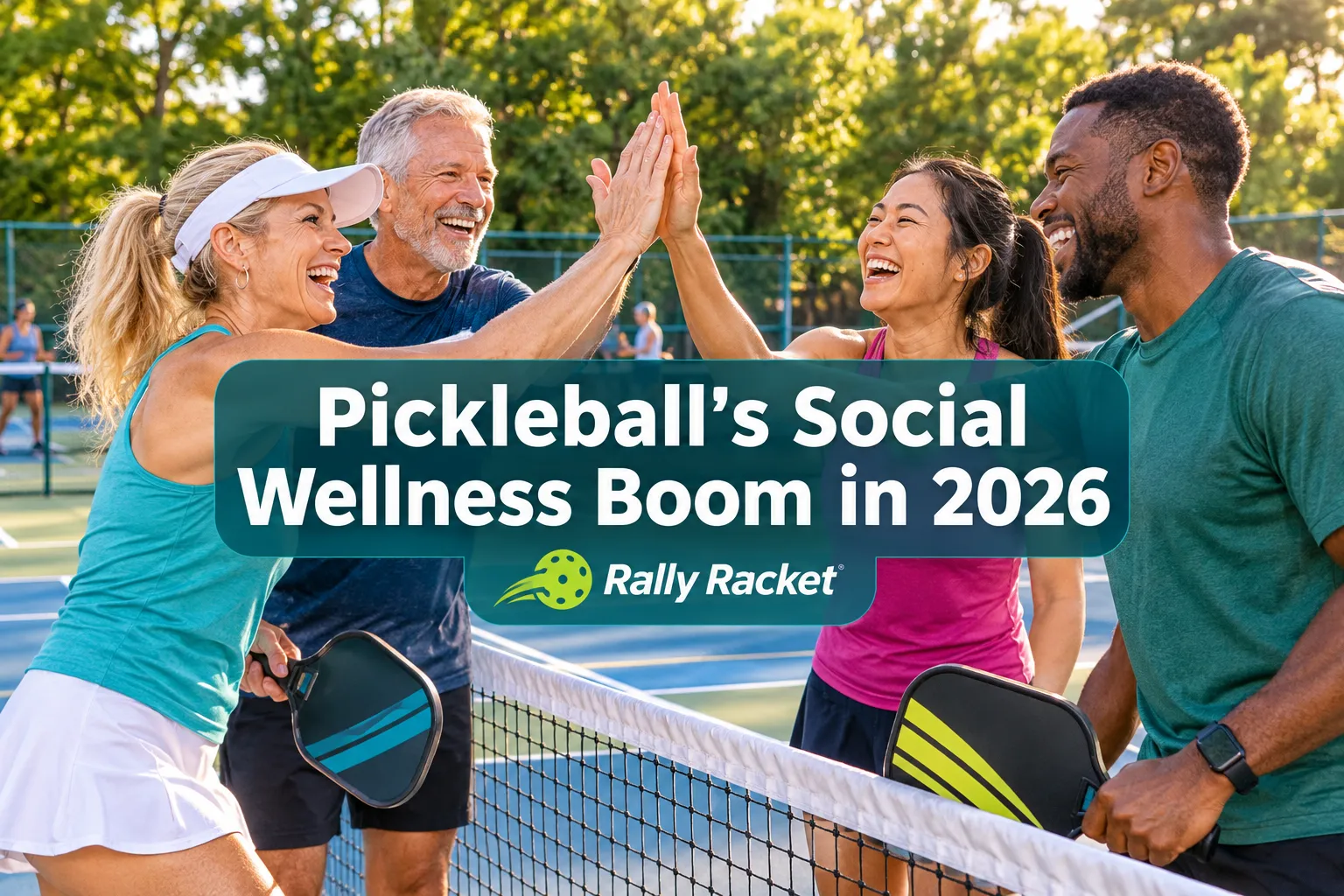
Pickleball’s Social Wellness Boom in 2026: Building Community, Mental Health, and Connection Through Play
Last updated: November 4, 2026
Quick Answer: Pickleball’s Social Wellness Boom in 2026 is real, documented, and still accelerating. Over 24 million Americans now play pickleball [1], and the sport’s biggest draw isn’t just the workout, it’s the instant social connection, structured routine, and genuine mental health benefits that keep players coming back. Whether you’re 28 or 72, brand new or a seasoned rallyer, pickleball makes it surprisingly easy to meet people, feel good, and move your body, all at once.
Key Takeaways
- 🎾 More than 24 million Americans played pickleball as of the latest SFIA report, up 171% in three years [1][2]
- 🧠 Regular play is linked to reduced anxiety, lower loneliness, and improved mood, especially in adults over 50
- 🤝 The sport’s short learning curve and doubles format make social connection almost automatic from your first session
- 💰 Starting costs are low, a beginner paddle and balls can cost as little as $30,$60
- 🏃 Pickleball is low-impact and joint-friendly, making it one of the most accessible racket sports for all fitness levels
- 👵 Seniors and older adults are among the sport’s fastest-growing player groups, with strong evidence of wellness benefits
- 📍 Finding local courts and groups is easier than ever via apps like Pickleheads, USA Pickleball’s court finder, and community centers
- ⚠️ Common beginner mistakes include ignoring the kitchen rule, using too much power, and skipping warm-up
- 🏆 Leagues and tournaments at all skill levels are widely available across the US in 2026
- 🌍 The social benefits of pickleball outpace most individual sports and rival even tennis for community feel
Why Is Pickleball Becoming So Popular for Mental Health?
Pickleball combines light-to-moderate aerobic exercise, social interaction, and a sense of accomplishment, three factors that consistently support mental well-being. The sport’s format naturally encourages conversation, teamwork, and laughter, which makes the mental health benefits feel effortless rather than prescribed.
The numbers back this up. SFIA’s 2026 Pickleball Single Sport Report confirms the sport’s participation base has exploded, with casual and core players both growing year over year [3]. This isn’t just a fitness trend, health professionals and wellness programs increasingly recommend pickleball for mood support and stress relief [4].
Key mental health drivers:
- Endorphin release from moderate aerobic activity during rallies
- Flow states, the focused, almost meditative concentration during play
- Sense of achievement from learning new skills and improving over time
- Post-game socializing that extends the mood boost well beyond the court
For a deeper look at the science, see The Mental Health Benefits of Playing Pickleball: Stress Relief and Social Connection.

How Does Pickleball Help Build Community and Social Connections?
Pickleball is structurally designed for social play. Doubles is the standard format, so every game puts you on a team and across the net from two more people. Add open-play sessions at most courts, and you’ll rotate partners every few games, meeting a dozen people in a single morning without any awkward introductions.
The sport has built-in ice breakers. You cheer for a good shot, commiserate over a missed dink, and grab water together at changeovers. That organic rhythm builds friendships faster than almost any other adult activity. Research on social connection in older adults points to exactly this kind of repeated, low-stakes interaction as the foundation of lasting bonds.
Community features that make pickleball unique:
- Open play (“round robin”) sessions at most public courts, no reservation needed
- Mixed skill levels welcome, so experienced players naturally mentor beginners
- Post-game culture, coffee runs, court-side chats, and group lunches are common
- Women-focused collectives and multigenerational groups growing rapidly in 2026
Explore how these friendships develop in Building Lasting Friendships: The Social Connections Made Through Pickleball.
Can Pickleball Really Reduce Anxiety and Loneliness?
Yes, and there’s growing evidence to support it. Studies on older adults (the demographic most studied in this context) show that regular group exercise like pickleball reduces feelings of loneliness and social isolation. The key mechanism is consistent, repeated social contact within a shared activity, which pickleball provides naturally every time you show up to the court [5].
Anxiety reduction comes partly from physical exercise and partly from the game’s mental demand. When you’re tracking a fast-moving ball and deciding whether to attack or reset, there’s little mental bandwidth left for rumination. Players frequently describe pickleball as a mental “reset button.”
“The court is the one place where I’m not thinking about work or worries, just the next shot.”, a common sentiment reported by recreational players across community forums and wellness programs in 2026.
For more on mood and stress benefits, Mental Health Benefits Of Pickleball: Boosting Mood And Reducing Stress Through Play is worth bookmarking.
How Does Pickleball Compare to Tennis for Social Wellness?
Pickleball edges out tennis on social accessibility for most recreational players. The smaller court, slower ball speed, and shorter learning curve mean you’re rallying with others within your first few sessions, not spending months on a ball machine. That faster path to actual play is a big deal for community building.
| Factor | Pickleball | Tennis |
|---|---|---|
| Time to first rally | 1-2 sessions | Weeks to months |
| Cost to start | ~$30,$80 | ~$80,$200+ |
| Court availability | Growing fast | Established, more limited |
| Open-play culture | Very common | Less common |
| Mixed-age play | Very easy | Harder at competitive levels |
| Physical intensity | Low-moderate | Moderate-high |
Tennis still wins on space, athletic ceiling, and global infrastructure. But for a beginner adult who wants to find a game, make friends, and feel good doing it, pickleball removes more barriers. That said, both sports offer tremendous racket sports community value, and many players happily play both.
How Much Does It Cost to Start Playing Pickleball?
Starting pickleball is genuinely affordable. A beginner-friendly paddle runs $30,$80, a pack of outdoor balls costs $10,$20, and most public parks and recreation centers offer court access for free or a small drop-in fee.
Starter budget breakdown:
- Budget paddle: $30,$50
- Mid-range paddle: $60,$100
- Balls (3-pack): $10,$15
- Court shoes (optional upgrade): $50,$100
- Court access: Free (public parks) to $5,$15/session (private clubs)
You can rent equipment at many community centers if you’re not ready to buy. See Renting vs Buying Pickleball Equipment: What New Players Should Consider for a full breakdown. For paddle guidance, Choosing the Right Pickleball Paddle: A Guide for Beginners is a solid starting point.
Where Can I Find Pickleball Groups or Clubs Near Me?
Finding a local pickleball group in 2026 is easier than ever. The sport’s infrastructure has scaled rapidly alongside its participant base [6][7].
Best ways to find courts and groups:
- USA Pickleball court finder at usapickleball.org, lists thousands of registered courts nationwide
- Pickleheads app, real-time open-play sessions and group listings
- Facebook Groups, search “[your city] pickleball” for active local communities
- YMCA and recreation centers, most now offer weekly open play
- Meetup.com, growing number of organized pickleball socials
For more strategies, Finding Your Local Pickleball Community: Tips for Discovering Courts and Groups Near You covers the full toolkit.
Is Pickleball Good for Beginners or Out-of-Shape People?
Pickleball is one of the most beginner-friendly racket sports available. The compact court (44 by 20 feet for doubles) means less running. The underhand serve and slower plastic ball give new players time to react. Most people can sustain a rally within their first hour of play.
For anyone returning to activity after a break, the low-to-moderate intensity is a natural entry point. Cleveland Clinic notes that pickleball provides meaningful cardiovascular and muscular benefits without the high-impact demands of tennis or running [4].
Choose pickleball if:
- You haven’t exercised regularly in years
- You want to socialize while being active
- You’re recovering from a minor injury (with doctor’s clearance)
- You’re new to racket sports entirely
Overcoming First-Time Nerves: Tips for New Players to Enjoy Pickleball is a helpful read before your first session.
Can Older Adults and Seniors Play Pickleball?
Absolutely, seniors are one of pickleball’s most active demographics, and the evidence for benefits in this age group is especially strong. The sport’s low-impact nature, social structure, and manageable intensity make it well-suited for adults 60 and over [5].
Benefits specifically noted in older adult players:
- Improved balance and coordination
- Stronger grip strength and reaction time
- Reduced social isolation and loneliness
- Greater sense of routine and purpose
- Weight management support
For seniors specifically, The Health Benefits of Pickleball for Seniors: Staying Active and Social and Adapting Pickleball for Seniors: Tips for Safe and Enjoyable Play are both excellent resources.
What Basic Equipment Do You Need to Play Pickleball?
You need three things to play: a paddle, balls, and court shoes with lateral support. Everything else is optional.
| Item | What to Look For | Approximate Cost |
|---|---|---|
| Paddle | Lightweight, composite or graphite face | $30,$100 |
| Balls | Outdoor (harder, smaller holes) or indoor | $10,$20/3-pack |
| Court shoes | Non-marking sole, ankle support | $50,$100 |
| Bag | Optional, any sports bag works | $20,$60 |
Avoid running shoes for court play, the lateral movements in pickleball require a shoe with side-to-side stability. See Essential Gear for New Pickleball Players: From Paddles to Shoes for detailed gear guidance.
Is Pickleball a Low-Impact Sport for Joint Problems?
Yes. Pickleball is widely considered one of the most joint-friendly racket sports. The underhand serve eliminates the shoulder stress of an overhead tennis serve. The smaller court reduces the explosive lateral sprinting that taxes knees and hips. And the lighter ball requires less swing force than a tennis racket [4].
That said, ankle rolls and Achilles strain can still occur, good footwear and a brief warm-up dramatically reduce that risk. Players with existing knee or hip conditions should consult a doctor before starting, but most find the sport far more manageable than tennis or running.
How Often Should You Play Pickleball for Mental Health Benefits?
Two to three sessions per week appears to be a solid target for meaningful mental health benefits. That frequency is enough to maintain social bonds, establish a routine, and get consistent aerobic activity, all three factors that contribute to improved mood and reduced anxiety.
Playing once a week still delivers social and physical value, but the routine effect (knowing you have a regular game to look forward to) is stronger with more frequent play. The key is consistency over intensity.
Practical guidelines:
- 2-3x per week for noticeable mood and anxiety benefits
- 1x per week as a floor for maintaining social connections
- Daily play is fine for enthusiastic players, just watch for overuse in shoulders and elbows
For tips on building a sustainable habit, Incorporating Pickleball Into A Healthy Lifestyle: Tips For Regular Play And Well-Being is a practical guide.
Are There Pickleball Leagues or Tournaments in 2026?
Yes, leagues and tournaments at every skill level are widely available in 2026. USA Pickleball reports continued growth in organized membership and sanctioned events [6]. Many recreation centers run seasonal leagues with ratings from 2.5 (beginner) to 5.0+ (competitive), so there’s a bracket for everyone.
Where to find competitive play:
- USA Pickleball’s official tournament calendar at usapickleball.org
- DUPR (Dynamic Universal Pickleball Rating) app for finding rated play
- Local rec center leagues, typically low-cost and beginner-friendly
- National and regional tournaments for more experienced players
The community aspect of tournaments often matters as much as the competition. See The Role of Tournaments in Pickleball Culture: A Look at Competitive Play for a broader look at competitive culture.
What Common Mistakes Do New Pickleball Players Make?
New players most often struggle with three things: playing too far back from the kitchen line, hitting with too much power, and not understanding the two-bounce rule.
Top beginner mistakes to avoid:
- Staying at the baseline, Moving up to the non-volley zone (kitchen) line is key to winning points
- Overpowering shots, Soft dinks and resets win more points than hard smashes at recreational level
- Volleying in the kitchen, Stepping into the non-volley zone while volleying is an automatic fault
- Wrong footwear, Running shoes increase ankle injury risk on hard courts
- Skipping warm-up, Even 5 minutes of dynamic stretching protects your joints significantly
Essential Tips For New Players: Basic Strategies To Enhance Your Pickleball Game covers these in detail with practical fixes.
Is Pickleball Better Than Other Sports for Making Friends?
For most adults, pickleball is one of the best sports available for making friends quickly. The combination of doubles play, open-play culture, mixed age and skill levels, and a welcoming community ethos creates more social contact per hour than most alternatives.
Compare it to running (largely solo), gym workouts (headphones in), or even tennis (match-focused, less rotation). Pickleball’s round-robin format means you’re playing with new partners constantly, and the sport’s culture actively encourages newcomers rather than sorting them off to separate courts.
That cultural warmth is a big part of Pickleball’s Social Wellness Boom in 2026: Building Community, Mental Health, and Connection Through Play. It’s not just the sport, it’s the people who play it.
Conclusion: Your Next Step onto the Court
Pickleball’s Social Wellness Boom in 2026 isn’t hype, it’s backed by participation data [1][2][8], wellness research [4][5], and thousands of personal stories from players who found not just a sport but a social routine that genuinely changed how they feel day to day.
Here’s how to get started today:
- Find a court, Use the USA Pickleball court finder or Pickleheads app
- Grab basic gear, A $40,$60 composite paddle and a pack of outdoor balls is enough to start
- Show up to open play, Introduce yourself, ask to rotate in, and let the game do the rest
- Commit to 2-3 sessions a week, That’s the threshold where the mental health and social benefits really compound
- Join a beginner clinic or league, Structured play accelerates both skills and friendships
The racket sports community at Rally Racket is here to help you every step of the way, from choosing your first paddle to finding your local pickleball community. The court is waiting. Go play.
FAQ
Q: Is pickleball safe for people with arthritis? Pickleball’s low-impact nature makes it suitable for many people with mild-to-moderate arthritis, but always check with your doctor first. The lighter paddle and smaller court reduce joint stress compared to tennis.
Q: How long does it take to learn pickleball basics? Most beginners can sustain a rally and understand the core rules within 1-2 sessions. Feeling genuinely competent in a game typically takes 4-8 sessions of regular play.
Q: Can I play pickleball indoors? Yes. Indoor pickleball uses a slightly softer ball with larger holes. Many gyms, YMCAs, and community centers now offer indoor courts year-round.
Q: What is “open play” in pickleball? Open play (also called drop-in play) is an informal session at a court where anyone can show up, rotate in, and play without a reservation or arranged match. It’s the primary way new players meet others.
Q: Do I need to be athletic to enjoy pickleball? No. Pickleball is specifically well-suited to players of varying fitness levels. The small court and slower ball speed reduce the athletic demand compared to most court sports.
Q: Is pickleball good for weight loss? Moderate pickleball play burns roughly 350-475 calories per hour depending on intensity and body weight, according to estimates cited by health sources [4]. Combined with consistent play frequency, it supports healthy weight management.
Q: What is the kitchen in pickleball? The kitchen is the non-volley zone, a 7-foot area on each side of the net. Players cannot volley (hit the ball out of the air) while standing in the kitchen. It’s one of the most important rules for beginners to learn.
Q: Can kids and teens play pickleball? Yes. Pickleball is played across all age groups, and youth programs are growing in schools and recreation centers. The sport’s ease of learning makes it a natural fit for younger players too.
Q: How is pickleball scored? Games are typically played to 11 points, win by 2. Only the serving team scores points. Tournaments often use rally scoring (either team can score) in some formats.
Q: What’s the difference between indoor and outdoor pickleball balls? Outdoor balls are harder, heavier, and have smaller holes to handle wind. Indoor balls are lighter and softer with larger holes. Using the right ball for your surface improves play significantly.
References
- SFIA Report Confirms Over 24 Million Americans Playing Pickleball. pickleball.com.
- Report: 24 Million Americans Are Now Playing Pickleball, Up 171% in Just 3 Years. thedinkpickleball.com.
- SFIA Releases 2026 Pickleball Single Sport Report. sfia.org.
- Is Pickleball Good Exercise. health.clevelandclinic.org.
- What Are the Health Benefits of Pickleball. pickleball.com.
- USA Pickleball Annual Growth Report. usapickleball.org.
- Pickleball Report Shows Charts Growth. sportsdestinations.com.
- U.S. Pickleball Participation. sfia.org.


