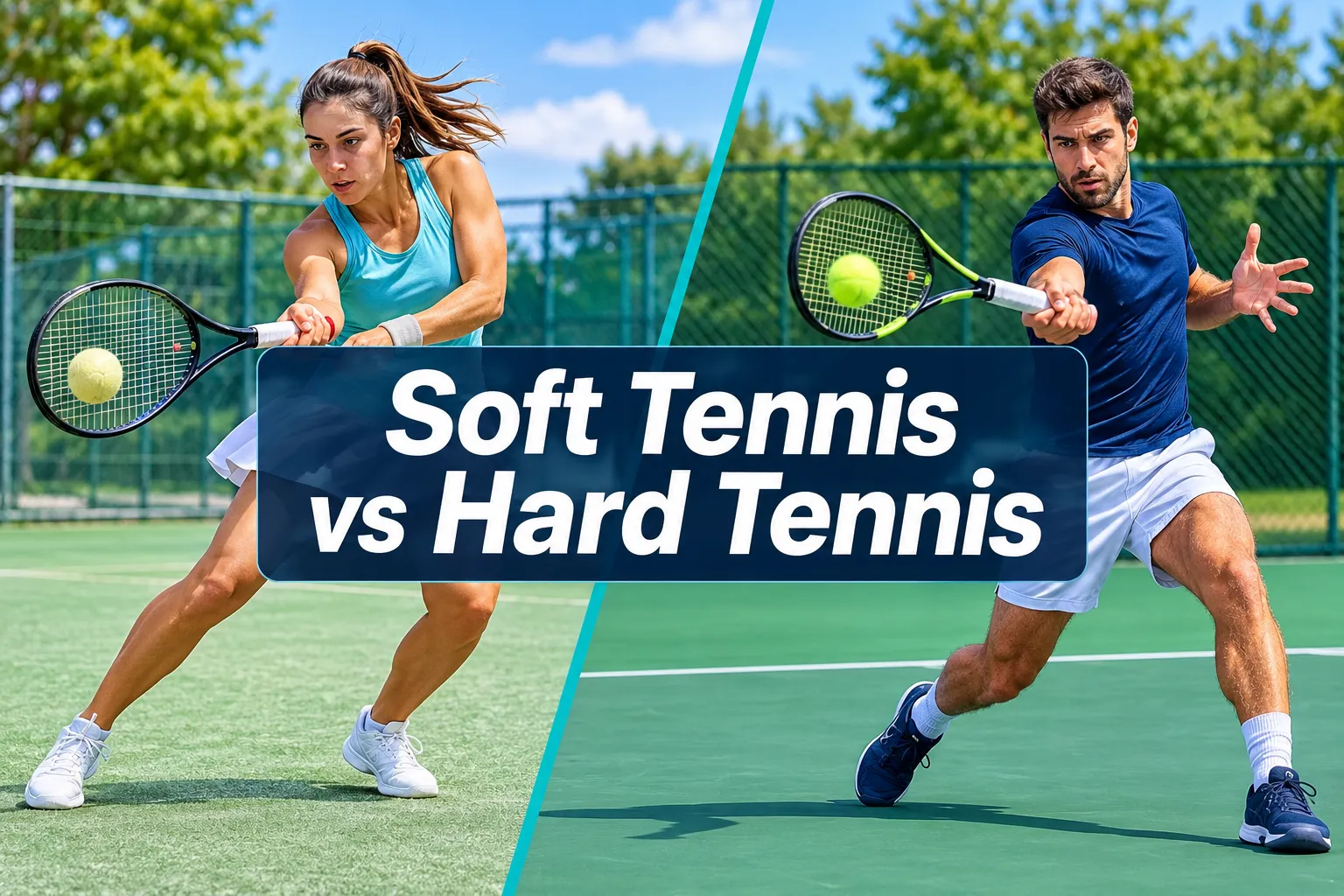
Soft Tennis vs Hard Tennis: Technique Crossovers Gaining Traction in 2026 Training
Last updated: November 16, 2026
Quick Answer: Soft tennis and hard tennis share the same court layout and scoring but differ significantly in ball type, racket design, grip style, and stroke mechanics. In 2026, coaches and national programs are actively blending techniques from both sports, using soft tennis as a structured cross-training tool to build touch, topspin, and joint-friendly volume for hard tennis players, and vice versa.
Key Takeaways
- 🎾 Soft tennis uses a hollow rubber ball and lighter racket; hard tennis uses a pressurized felt ball and heavier frame, this changes everything about grip, swing path, and ball contact.
- The USTA officially recognizes soft tennis as a sanctioned alternative training modality in 2026, making cross-sport training legitimate at all levels. [1]
- An 8-12 week off-season program (November, January) recommends soft tennis twice per week alongside standard fitness work for hard court players. [1]
- Tactical skills, heavy topspin, controlled angles, slice variation, and patient point construction, transfer directly between the two sports. [2]
- Soft tennis is gentler on joints, making it a smart option for players managing arm or shoulder load.
- Hard tennis players switching to soft tennis most often struggle with grip pressure and swing acceleration, they tend to over-hit.
- Kids as young as 7-8 can start soft tennis; the lighter gear and softer ball reduce injury risk and improve early contact quality.
- Soft tennis is widely popular across Asia and is growing steadily in the United States and Europe as cross-training interest rises.
What’s the Actual Difference Between Soft Tennis and Hard Tennis?
The core difference comes down to the ball. Soft tennis uses a hollow rubber ball roughly the same size as a standard tennis ball but significantly softer and lighter. Hard tennis uses a pressurized felt ball that bounces higher and travels faster off the strings.
That one difference ripples outward into almost every technical area:
| Feature | Soft Tennis | Hard Tennis |
|---|---|---|
| Ball | Hollow rubber, ~30g | Pressurized felt, ~57g |
| Racket weight | Lighter (~220-250g) | Heavier (~280-320g) |
| Grip style | Thinner grip, more wrist | Thicker grip, stable wrist |
| Swing path | Longer, loopier arc | More compact, explosive |
| Court size | Same as hard tennis | Same as soft tennis |
| Scoring | Same system | Same system |
| Footwear | Same court shoes apply | Same court shoes apply |
The court, net height, and scoring are identical, which is exactly why the two sports work so well as cross-training partners.

Why Are Tennis Coaches Mixing Soft and Hard Tennis Training in 2026?
Coaches are blending these two sports because soft tennis builds specific skills that hard tennis training often neglects, particularly touch, spin consistency, and wrist control, while also reducing load on the arm and shoulder.
A 2026 off-season blueprint for hard-court players recommends an 8-12 week program running November through January, with soft tennis scheduled twice per week alongside existing fitness work. [1] The USTA’s formal recognition of soft tennis as a sanctioned alternative training modality in 2026 has pushed this from a niche experiment to a mainstream coaching strategy. [1]
Nationally, programs in India and the Philippines are building high-performance soft tennis camps ahead of the 20th Asian Games, creating an environment where cross-sport methodology is developing fast. [3][4][5]
Can You Use Hard Tennis Techniques When Playing Soft Tennis?
Some hard tennis techniques transfer well; others actively hurt your soft tennis game. The fundamentals of footwork, split-step timing, and court positioning carry over cleanly. Topspin mechanics also translate, in fact, soft tennis rewards heavy topspin because the softer ball grips the strings longer.
What transfers well:
- Split-step and ready position
- Topspin forehand mechanics
- Slice backhand as a variation
- Net approach patterns
What needs adjustment:
- Grip pressure (soft tennis requires lighter, more dynamic grip)
- Swing acceleration (don’t muscle it, the lighter ball needs touch)
- Serve motion (soft tennis serves use a more pronounced wrist snap)
What Mistakes Do Hard Tennis Players Make When Switching to Soft Tennis?
The most common mistake is over-hitting. Hard tennis players are conditioned to generate power through body rotation and racket speed. With a soft tennis ball, that same effort sends the ball flying long or high.
Other frequent errors include:
- Gripping too tightly, reduces wrist freedom needed for soft tennis’s loopier swing
- Using a flat swing path, the soft ball needs more topspin to stay in court
- Underestimating the serve, the wrist snap in soft tennis serves feels foreign at first
- Ignoring the touch game, hard tennis players often skip developing the drop shot and angle play that soft tennis rewards
A 2026 strength and conditioning framework for hybrid players flags these technical gaps early and builds corrective drills into the transition period. [6]
Does Soft Tennis Put Less Stress on Joints Than Hard Tennis?
Yes, in most cases. The softer, lighter ball reduces the impact transmitted up the racket on each contact. The lighter racket frame also means less rotational stress on the elbow and wrist over a full practice session.
For players managing tennis elbow, shoulder impingement, or wrist strain, soft tennis can allow continued hitting volume during recovery. The 2026 hybrid player training framework explicitly includes joint mobility and load management as core pillars, recognizing that managing stress across both sports is non-negotiable for long-term performance. [6]
Choose soft tennis training if: you’re in an off-season recovery block, managing arm load, or introducing a younger player to racket sports.
Is Soft Tennis Good for Beginners or Just Advanced Players?
Soft tennis is excellent for beginners. The softer ball is forgiving on mishits and doesn’t bounce as aggressively, giving new players more time to react. The lighter racket reduces fatigue during early learning stages.
A 2025 Soft Tennis Clinic and Officiating Course (Springville Heights Tennis Club, August 13-17) was specifically designed to develop fundamental skills and certify teachers in proper technique and umpiring, showing that structured beginner education is a real priority in the sport. [7]
For advanced players, soft tennis offers a different skill challenge, especially around wrist control, touch shots, and tactical patience, that keeps training varied and productive.
What Age Should Kids Start Learning Soft Tennis?
Children as young as 7-8 can begin soft tennis comfortably. The lighter racket (often under 230g for junior sizes) and softer ball make first contact much easier to manage than standard hard tennis equipment.
Many Asian school programs introduce soft tennis at primary school level. In Japan, it’s a standard middle school sport. For comparison, most hard tennis coaches recommend children start with scaled equipment (red or orange ball programs) around ages 5-8, soft tennis naturally fills that same developmental role without requiring scaled courts.
Can Playing Soft Tennis Help Improve Your Hard Tennis Game?
Absolutely, and this is the core insight driving the Soft Tennis vs Hard Tennis: Technique Crossovers Gaining Traction in 2026 Training movement. A 2026 tactical analysis found that controlled angles, heavy topspin, slice variation, and patient point construction developed in soft tennis transfer directly to modern baseliner play in hard tennis. [2]
Specific hard tennis improvements players report from soft tennis cross-training:
- Cleaner topspin mechanics from the longer swing path
- Better wrist sensitivity from adjusted grip pressure work
- Improved angle creation from soft tennis’s rally-based point construction
- Mental patience in long baseline exchanges
If you’re working on intermediate drills to elevate your game, adding soft tennis sessions to your rotation is a genuinely useful tool, not just a novelty.
Do Soft Tennis and Hard Tennis Use the Same Footwork and Movement?
The footwork patterns are very similar, and this is one of the strongest crossover areas. Split-step timing, lateral shuffle, recovery to base position, and approach footwork for net play are essentially identical.
The main difference is tempo. Because the soft tennis ball travels slightly slower and bounces lower, the rhythm between shots changes. Players often describe soft tennis rallies as feeling slightly more controlled, which can actually help hard tennis players reset their footwork habits during an off-season block.
For players looking to sharpen court movement, check out these footwork drills to enhance your movement on the court, most of these drills apply directly to both sports.
What Equipment Do You Need to Start Soft Tennis, and How Does Cost Compare?
Starting soft tennis requires three things: a soft tennis racket, soft tennis balls, and standard court shoes. You don’t need a special court, a standard tennis court works fine.
Typical starter costs (2026 estimates):
- Soft tennis racket: $40,$120 (entry to mid-range)
- Soft tennis balls (3-pack): $8,$15
- Court shoes: same as hard tennis, $60,$150
For comparison, a beginner hard tennis racket runs $50,$150, so the entry costs are roughly equivalent. The main saving is on balls, soft tennis balls last significantly longer than pressurized hard tennis balls, which lose pressure after a few sessions.
For guidance on choosing the right gear for a new sport, the same principles in choosing the right equipment for safe pickleball play apply: prioritize a comfortable grip size and appropriate weight for your current strength level.
Is Soft Tennis Popular in America, or Just Japan and Asia?
Soft tennis has historically been dominant in Japan, Korea, Taiwan, and across Southeast Asia. At the competitive level, Asian nations dominate world rankings and the sport features prominently in the Asian Games. [3][5]
In the United States, soft tennis is growing but remains niche compared to hard tennis or pickleball. The USTA’s 2026 recognition of soft tennis as a legitimate training modality is a significant step toward mainstream adoption. [1] National federations in Cambodia and the Philippines are also building officiating and training infrastructure, which supports long-term growth. [4][8][9]
For American recreational players, soft tennis is most accessible through university clubs, Asian-American community centers, and multi-sport facilities with existing racket sports programs.
How Long Does It Take to Transition From Hard Tennis to Soft Tennis?
Most hard tennis players feel reasonably comfortable within 3-6 sessions. The court, scoring, and footwork are familiar, the adjustment is technical, not conceptual.
A full transition where you can compete effectively at a club level typically takes 4-8 weeks of regular play (2-3 sessions per week). The 8-12 week off-season blueprint [1] builds in this ramp-up time deliberately, so players aren’t rushing technique changes during the competitive season.
Rough transition timeline:
- Sessions 1-3: Adjust grip pressure and swing path; get used to ball feel
- Sessions 4-8: Build topspin consistency; work serve mechanics
- Sessions 9-16: Develop tactical patterns; practice angle play and touch shots
- Week 8+: Club-level competitive readiness
Building a structured practice routine during this window makes the transition much smoother.
Why the Soft Tennis vs Hard Tennis Technique Crossover Matters for Your Training
The Soft Tennis vs Hard Tennis: Technique Crossovers Gaining Traction in 2026 Training trend isn’t a passing fad. It’s backed by USTA recognition, formal programming from national federations, and practical results from coaches who’ve used it in off-season blocks. [1][2][6]
For players who enjoy improving across multiple racket sports, whether that’s tennis, pickleball, padel, or badminton, soft tennis is one more tool that builds transferable skills. The racket sports community is at its best when players stay curious about what other disciplines can teach them.
If you’re also working on mental skills alongside technique, mindfulness techniques for staying present during play are worth exploring, the same mental focus principles apply whether you’re rallying with a soft ball or a hard one.
Frequently Asked Questions
Q: Can I use my regular tennis racket for soft tennis? A: Technically yes, but it’s not ideal. Soft tennis rackets are lighter and have thinner grips, which suits the sport’s swing mechanics better. Using a standard hard tennis racket will make it harder to develop proper wrist technique.
Q: Are soft tennis and paddle tennis the same thing? A: No. Paddle tennis uses a solid paddle on a smaller court. Soft tennis uses a strung racket on a full-size tennis court with a hollow rubber ball.
Q: Does soft tennis count toward tennis ranking points? A: No. Soft tennis and hard tennis are governed by separate organizations and use independent ranking systems.
Q: Is soft tennis harder or easier than hard tennis? A: Neither is objectively harder. Soft tennis rewards touch and consistency; hard tennis rewards power and speed. Most players find the initial learning curve slightly easier with soft tennis due to the forgiving ball.
Q: Can I play soft tennis indoors? A: Yes. The soft ball’s lower bounce and reduced speed make it well-suited to indoor courts without modifications.
Q: What grip style does soft tennis use? A: Soft tennis traditionally uses an Eastern or Semi-Western forehand grip, similar to hard tennis, but with notably lighter grip pressure to allow more wrist involvement in the swing.
Q: Is soft tennis an Olympic sport? A: Not currently. Soft tennis features in the Asian Games and is governed by the International Soft Tennis Federation (ISTF), but has not been included in the Olympic program.
Q: How does the soft tennis serve differ from hard tennis? A: Soft tennis serves use a more pronounced wrist snap and are generally hit with less overall pace, emphasizing placement and spin over raw speed.
Conclusion
The crossover between soft tennis and hard tennis isn’t just an interesting theory, it’s a practical training strategy gaining real traction in 2026. The USTA’s formal recognition, structured off-season programs, and national team adoption all point in the same direction: these two sports are more useful together than apart. [1][2][6]
Next steps to take right now:
- Find a soft tennis racket to try, entry-level options are affordable and widely available online.
- Add two soft tennis sessions per week during your next off-season block to work on topspin and touch.
- Focus on grip pressure first, it’s the fastest technical adjustment that unlocks proper soft tennis mechanics.
- Join a local racket sports community to find hitting partners who play both formats.
- Track your hard tennis topspin and angle play after 6-8 weeks of soft tennis cross-training, most players notice a measurable improvement.
Whether you’re a recreational player looking for variety or an intermediate competitor chasing technical improvements, soft tennis is worth adding to your racket sports training toolkit.
References
- Soft Tennis for Hard Court Players a Complete Off Season Training Blueprint for 2026. rallyracket.com.
- Soft Tennis Tactics on Clay and Hard Courts Point Construction Lessons for Modern Baseliners. rallyracket.com.
- Srinagar Hosts Indias Asian Games Soft Tennis Camp. dailyexcelsior.com.
- Phl Soft Tennis Squad Starts Overseas Camp. tribune.net.ph.
- Srinagar Hosts Indian Soft Tennis Teams National Camp Ahead of 2026 Asian Games. thekashmirimages.com.
- Building the Modern Tennis Soft Tennis Hybrid Player Strength Mobility and Injury Prevention Protocols. rallyracket.com.
- Narrative Soft Tennis Training. scribd.com.
- Soft Tennis Trains Local Sports Officials. khmertimeskh.com.
- National Soft Tennis Squad Begin World Title Bid. khmertimeskh.com.