
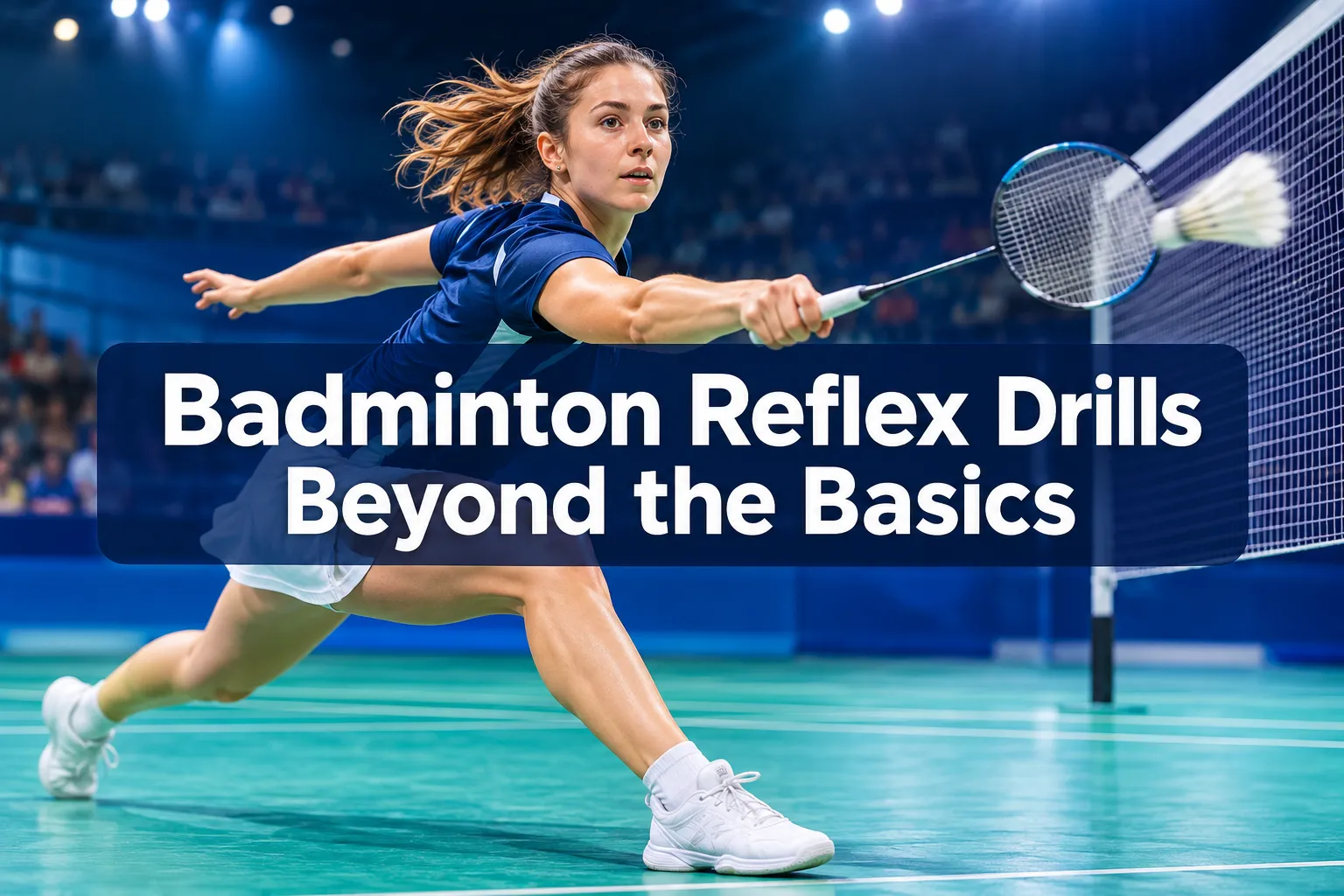
Badminton Reflex Drills Beyond the Basics: Video Breakdowns from BadmintonCentral Pros
Last updated: November 17, 2026
Quick Answer: Advanced badminton reflex drills go well past basic net shots and clears. Resources like BadmintonCentral forums and community coaching videos offer structured progressions including wall drives, multi-shuttle feeds, and blind-reaction exercises that genuinely speed up your responses on court. Badminton Reflex Drills Beyond the Basics: Video Breakdowns from BadmintonCentral Pros covers what those drills are, how to run them, and how to fit them into your weekly training.
Key Takeaways
- Reflex and reaction are different, reflex is automatic; reaction involves a decision. Both need separate training.
- Wall drives are the most accessible solo reflex drill, requiring only a racket, shuttle, and a marked wall.
- Multi-shuttle feeds from a coach or partner are the fastest way to build court reflexes under pressure.
- Results typically show in 3-6 weeks of consistent practice (3-4 sessions per week).
- Footwork and reflex drills complement each other, neither replaces the other.
- Beginners can and should start reflex training early, using slower feeds and shorter distances.
- Common mistakes include drilling too fast before technique is solid and skipping recovery steps between reps.
- Casual players need 2-3 short sessions per week; competitive players benefit from 4-5 focused sessions.
- Minimal equipment is needed, a racket, shuttles, a wall, and optionally a training partner or ball machine.
- Gamified drills (tennis-ball patterns, reaction games) keep training fun and improve brain-hand connection.
What Are Advanced Badminton Reflex Drills?
Advanced reflex drills in badminton move beyond simple clears and net drops. They specifically train your nervous system to respond faster to incoming shots, particularly smashes, fast drives, and surprise net attacks.
The BadmintonCentral community has long discussed and refined these drills through forum threads and shared training videos [1][2]. The most cited progressions include:
- Wall-drive drill: Draw a horizontal line on a wall at net height, stand about 1.5-2 m away, and drive the shuttle continuously above the line, alternating forehand and backhand [1][3].
- Drop Shuffle Reaction: React to a visual or audio cue, shuffle laterally, and return a feed.
- High Plank Switch: Builds explosive core engagement linked to quick direction changes [4].
- Two-Ball Wall Throw: Use two tennis balls against a wall to train simultaneous hand-eye coordination [4].
- Blind multi-shuttle drill: A net cover blocks your view until the shuttle crosses, forcing pure reaction .
These aren’t just fun variations, each targets a specific gap between seeing the shuttle and moving to it.

What’s the Difference Between Reaction and Reflex in Badminton?
Reflex is an automatic, trained physical response, your body moves before your conscious brain processes the full situation. Reaction involves some decision-making, like reading where your opponent will play next.
Both matter in badminton. When you’re defending a smash from close range, that’s mostly reflex. When you’re anticipating a cross-court drop, that’s reaction. Good training addresses both, but it’s worth knowing which you’re working on during each drill.
“Most players train reaction but neglect pure reflex conditioning, and that’s where real speed gains hide.”
How Do Reflex Drills Actually Improve Your Game?
Consistent reflex training rewires the neuromuscular pathways that connect your eyes, brain, and racket arm. Over time, your body learns to initiate movement sooner and with less conscious effort.
Practical improvements players notice include:
- Faster shuttle interception, especially on drives and smashes
- Cleaner defensive posture, less lunging, more controlled returns
- Better net-kill timing
- Reduced hesitation when opponents change direction mid-rally
Wall practice, for example, builds reflexes, shot consistency, timing, hand-eye coordination, and stroke accuracy all at once [3]. It’s one of the highest-return solo drills available.
Badminton Reflex Training vs Footwork Drills, Which Is Better?
Neither is better, they train different systems and work best together. Reflex drills speed up your hand and arm response; footwork drills get your body into position to use that speed.
Think of it this way: fast reflexes with poor footwork means you’re flailing at shots from bad positions. Good footwork with slow reflexes means you arrive on time but can’t finish the shot cleanly.
A balanced week of training includes both. For a practical example of how footwork layering works in racket sports, check out The Importance Of Footwork In Pickleball: Tips And Drills For Improvement, the principles transfer across racket sports.
Choose reflex drills first if: your hands feel slow even when you get to the right spot. Choose footwork drills first if: you’re regularly out of position before the shot even comes.
Can I Do Badminton Reflex Drills at Home?
Yes, several effective reflex drills require nothing more than a wall, a racket, and a shuttle or tennis ball.
Home-friendly options:
- Wall-drive drill, Mark a line at net height (~1.55 m), stand 1.5-2 m back, and rally continuously [1][3].
- Tennis-ball wall throw, Use one or two tennis balls to train brain-hand connection and explosive wrist response .
- Shuttle catch reaction, Have a partner (or use a rebound surface) toss shuttles randomly for catch-and-respond practice .
- High Plank Switch, No equipment needed; builds the core explosive response linked to direction changes [4].
The wall-drive drill in particular is a community standard from BadmintonCentral forums [1] and can be practiced in a hallway or garage.
How Long Before You See Results from Reflex Training?
Most players notice measurable improvement in 3-6 weeks when training 3-4 times per week. Early gains (1-2 weeks) tend to show up as reduced hesitation and better shuttle tracking rather than obvious speed.
Factors that speed up results:
- Consistency over frequency, three focused 20-minute sessions beat one long unfocused one
- Increasing difficulty gradually, shortening distance to the wall, increasing shuttle speed
- Combining reflex and reaction work in the same session
Factors that slow results:
- Drilling at speeds that break down technique
- Skipping recovery steps between reps
- Only doing one type of drill
What Equipment Do You Need for Badminton Reflex Drills?
Basic reflex training needs very little gear.
| Equipment | Required? | Used For |
|---|---|---|
| Badminton racket | Yes | All drills |
| Shuttlecocks (3-6) | Yes | Most drills |
| A wall with space | For solo drills | Wall drives |
| Tennis balls (2) | Optional | Coordination drills [4] |
| Training partner | Optional but ideal | Multi-shuttle feeds [5] |
| Ball machine | Optional | Consistent feed drills |
For multi-shuttle feeds from a coach, like the attacking reflex drill demonstrated by Chetan Anand Badminton Academy, you need a partner willing to rapid-fire shuttles and a full bag of them [5]. For a look at how ball machines support drill training across racket sports, see Ball Machine Drills.
Why Am I Not Getting Faster Reflexes from Drills?
Plateaus in reflex training are common and usually trace back to a few specific issues.
Most common reasons:
- Drilling too fast, too soon, if your technique collapses at speed, you’re reinforcing bad movement patterns
- No progression, doing the same drill at the same speed for weeks stops stimulating adaptation
- Skipping footwork, slow feet cancel out fast hands
- Mental fatigue, reflex training requires focus; tired brain = slow response
- Wrong drill type, pure wall drives won’t fix your smash defense; you need position-specific drills [6]
Canadian Olympian Toby Ng makes a useful point here: effective smash defense reflex training is about grip and body position first, not just reaction speed [6]. If you’re using the wrong grip going into the drill, faster reflexes won’t save you.
Also worth noting: poor results often come from treating reflex training as cardio, going through the motions without full mental engagement. Quality reps beat quantity every time.
Best Reflex Drills for Casual vs Competitive Badminton Players
The right drill depends on your goals and current skill level.
Casual players (recreational, 1-3x per week):
- Wall-drive drill at comfortable distance (2 m)
- Shuttle-catch reaction game with a partner
- Tennis-ball two-ball wall throw for coordination [4]
- Focus: consistency and timing, not raw speed
Competitive players (training 4-5x per week):
- Wall drives at 1.5 m or less, alternating FH/BH under time pressure
- Multi-shuttle attacking feeds (smash, drop, drive sequence) [5]
- Blind multi-shuttle drill behind a covered net
- Double full-court drive with net pressure and rear-court recovery [1]
- Focus: explosive first movement, decision speed, shot-specific reflexes
The step-up between levels isn’t just about difficulty, it’s about specificity. Competitive players should replicate real match scenarios as closely as possible in their drills.
For a parallel example of how intermediate drill progressions work in racket sports, see Intermediate Drills to Elevate Your Game.
How Many Times a Week Should I Practice Reflex Drills?
3-4 sessions per week is the practical target for most players. Reflex training is neurologically demanding, rest between sessions matters as much as the sessions themselves.
Suggested weekly structure:
- Casual players: 2-3 sessions, 15-20 minutes each, bolted onto regular practice
- Competitive players: 4-5 sessions, 20-30 minutes each, ideally at the start of training when focus is highest
- Rest days: at least 2 per week to allow neural adaptation
Don’t stack reflex drills at the end of a long training session when you’re already fatigued. Slow, tired reactions practiced repeatedly will reinforce slow movement.
Common Mistakes People Make with Badminton Reflex Training
Knowing what not to do saves weeks of wasted effort.
- Skipping the warm-up, cold muscles and an unfocused mind slow reflex response from the first rep
- Drilling at the wrong distance, too far from the wall reduces stimulus; too close collapses technique
- Ignoring backhand, most players default to forehand; backhand reflex needs equal work [1]
- No variation, repeating the same drill pattern allows the brain to predict rather than react
- Neglecting recovery position, always return to your ready stance between reps; this is part of the drill
- Training reflexes without context, isolated speed drills without game-scenario practice don’t transfer as well
For broader coaching advice on avoiding training errors, Expert Tips from Coaches: Common Mistakes and How to Avoid Them is worth a read.
Badminton Reflex Drills for Slow Reaction Time
If your reaction time feels genuinely slow (not just undertrained), start with the simplest stimulus-response exercises and build from there.
Progression for slow starters:
- Shuttle-catch game, partner holds shuttle at shoulder height, drops it without warning; catch before it hits the floor
- Wall drive at 2.5 m, extra distance gives more time; focus on reading the angle of your own shot
- Lateral single-ball wall throw, stand sideways, throw one tennis ball at the wall, catch with the same hand [4]
- Multi-shuttle hand feed, coach feeds from 3-4 m away, alternating sides; start slow, increase pace weekly [7][8]
The key for genuinely slow reactors is consistency over pace. Don’t rush to shorter distances or faster feeds. Build the neural pathway first; speed follows.
Are Badminton Reflex Drills Good for Beginners?
Yes, beginners benefit from reflex training as long as the speed and complexity match their current level. Starting early builds better habits than trying to retrofit quick reflexes onto established slow patterns.
Beginner-appropriate starting points:
- Wall drives at a comfortable distance with no time pressure
- Shuttle-toss catch games
- Simple two-player drive rallies focusing on consistent contact
The video content from Badminton Coach Kennie [7][8] is especially accessible for beginners, with clear progressions from slow feeds to faster multi-shuttle patterns. This mirrors how pro-level video analysis works as a learning tool, something the Video Analysis: Learning from the Pros to Improve Your Pickleball Skills resource demonstrates well for racket sports broadly.
Badminton Reflex Drill Routines for Different Skill Levels
Here’s a practical structure you can plug into your training week.
Beginner routine (20 min):
- 5 min: Shuttle catch drops (partner drops, you catch)
- 8 min: Wall drive at 2 m (4 min FH, 4 min BH)
- 7 min: Slow multi-shuttle hand feed, alternating sides
Intermediate routine (25 min):
- 5 min: Two-ball wall throw (tennis balls) [4]
- 10 min: Wall drive at 1.5 m, FH/BH alternating
- 10 min: Double full-court drive with net pressure [1]
Advanced routine (30 min):
- 5 min: Lateral single-ball wall throw [4]
- 10 min: Attacking multi-shuttle feed, smash, drop, drive [5]
- 10 min: Blind multi-shuttle drill (covered net)
- 5 min: Smash defense with correct forehand grip positioning [6]
Adjust feed speed and distance based on how well technique holds up. If form breaks, slow down, not up.
FAQ
Q: How is a reflex drill different from a fitness drill? A: Reflex drills train your nervous system’s response speed to a specific stimulus. Fitness drills build endurance, strength, or general movement capacity. Both matter, but they serve different purposes.
Q: Can reflex training help older players? A: Yes. Research consistently shows that targeted reflex training improves response times across age groups. Older players may progress more slowly, but the adaptation still happens with consistent practice.
Q: Is the BadmintonCentral wall-drive drill still relevant in 2026? A: Absolutely. It remains one of the most cited solo reflex drills in the community [1] because it’s simple, equipment-free, and directly replicates real-match drive exchanges.
Q: How do I make wall-drive drills harder? A: Step closer to the wall (down to 1-1.2 m), increase tempo, force yourself to alternate forehand and backhand on consecutive shots, or add lateral movement between drives.
Q: Should I use feather or plastic shuttles for reflex drills? A: Either works for wall drills. Feather shuttles are better for multi-shuttle court feeds because they behave like match conditions. Plastic shuttles last longer for high-volume wall practice.
Q: Can reflex training replace match play? A: No. Drills build the raw capacity; match play is where you apply it. Both are necessary, and there’s no substitute for real match pressure.
Q: How long should a single reflex drill session last? A: 15-30 minutes of focused work is more effective than longer sessions with declining attention. Quality of response matters more than minutes logged.
Q: Do I need a coach to run effective reflex drills? A: Not for solo wall drills or partner games. For multi-shuttle feed drills, a coach or experienced partner who can feed accurately and vary pace is very helpful but not essential.
Conclusion
Badminton Reflex Drills Beyond the Basics: Video Breakdowns from BadmintonCentral Pros points to something the badminton community has known for years: the difference between a good player and a fast one often comes down to trained reflexes, not just fitness or technique.
The drills covered here, from the classic wall drive [1][3] to blind multi-shuttle feeds and tennis-ball coordination patterns, give you a clear ladder to climb regardless of your starting level.
Your next steps:
- Pick one drill from your skill level’s routine and practice it three times this week.
- Mark a wall at home at net height and do 10 minutes of wall drives each session.
- Film yourself after two weeks to spot hesitation you can’t feel in the moment.
- Gradually reduce distance or increase feed pace every two weeks to keep the stimulus challenging.
The racket sports community at Rally Racket is built around exactly this kind of practical, level-appropriate training. Keep showing up, keep the drills focused, and the speed will follow.
References
- Index. badmintoncentral.com.
- Index. badmintoncentral.com.
- Wall Practice Improves a Badminton Players Reflexes Shot Consistency and Timing. facebook.com.
- Watch. youtube.com.
- Watch. youtube.com.
- Watch. youtube.com.
- Watch. youtube.com.
- Watch. youtube.com.