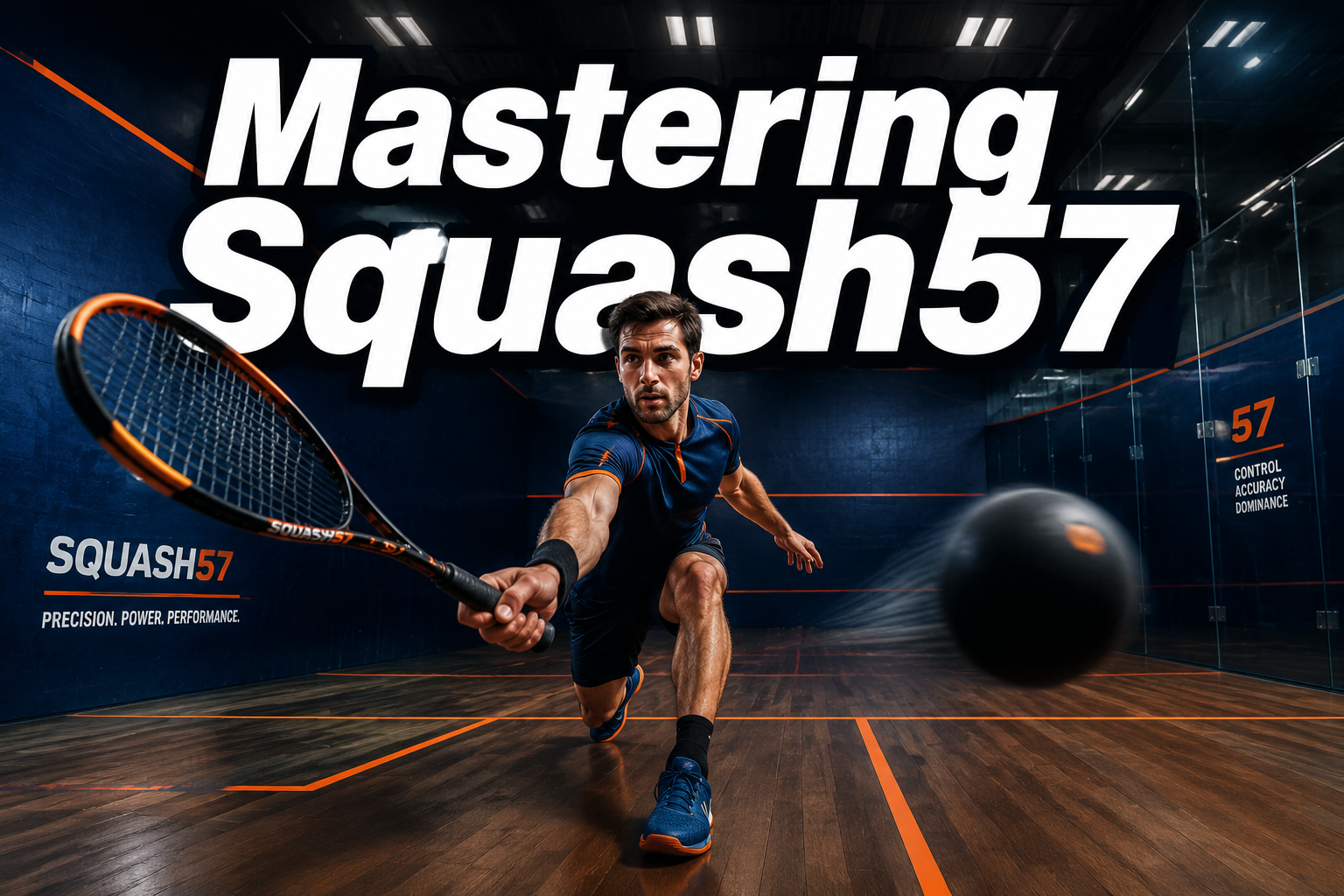
Mastering Squash57: Training Drills, Gear Recommendations, and Transition Tips from Traditional Squash
Last updated: July 4, 2026
Quick Answer: Squash57 (formerly called racketball) is a beginner-friendly racket sport played on a standard squash court using a larger, bouncier rubber ball and a slightly bigger racket. It’s easier to pick up than traditional squash, making it a great entry point for crossover players from tennis, pickleball, or padel. Mastering Squash57 comes down to three things: learning the right drills, picking affordable gear, and understanding what changes from regular squash.
Key Takeaways
- Squash57 uses the same court as traditional squash but a larger rubber ball and a bigger racket frame
- The bouncier ball makes rallies longer and more forgiving, ideal for beginners and older players
- Traditional squash players need to adjust their swing timing and shot selection, not relearn everything
- A starter Squash57 racket costs roughly $30,$80, making it one of the most affordable racket sports to try
- Solo drills like straight drives and boast practice are the fastest way to build consistency
- Footwork and court movement are just as critical in Squash57 as in any other racket sport
- Most players reach a comfortable recreational level within 6-12 weeks of regular play
- Squash57 suits players of all ages, including those 50+ looking for lower-impact court sport options [6]
What Is Squash57 and How Is It Different from Regular Squash?
Squash57 is an officially recognized racket sport governed by World Squash. It’s played on a standard squash court but uses a 57mm rubber ball (hence the name) that bounces significantly higher than a traditional squash ball. [6]
Here’s what sets it apart:
| Feature | Squash57 | Traditional Squash |
|---|---|---|
| Ball size | 57mm rubber | ~40mm rubber |
| Ball bounce | High, lively | Low, controlled |
| Racket size | Slightly larger head | Standard squash head |
| Court | Standard squash court | Standard squash court |
| Pace of play | Slower, longer rallies | Fast, short rallies |
| Learning curve | Gentler | Steeper |
The bigger ball stays in play longer, which means more rallies, more movement, and more fun for newer players. For anyone already in the racket sports community, whether you play tennis, padel, or pickleball, Squash57 feels familiar almost immediately. [10]

Is Squash57 Easier Than Traditional Squash?
Yes, for most beginners, Squash57 is noticeably easier to get started with. The livelier ball is more forgiving on off-center hits, and rallies last longer, so there’s more time to read the game and get into position. [10]
That said, “easier to start” doesn’t mean “easy to master.” At higher levels, Squash57 rewards the same tactical awareness, fitness, and shot variety as traditional squash. Think of it like the difference between pickleball and tennis, lower barrier to entry, but still deeply skill-dependent as you improve.
Choose Squash57 if:
- You’re new to court sports and want faster progress
- You’re returning to sport after a break and want lower-impact play
- You’re a tennis or padel player curious about enclosed court games
- You want longer, more social rallies
Squash57 Court Dimensions and Rules
Squash57 is played on a standard squash court, which measures 9.75m long by 6.4m wide. The same tin, service line, and out-of-court markings apply. [6]
Key rule differences from traditional squash:
- The ball must bounce once before being struck (like traditional squash)
- Service rules follow standard squash format
- Let and stroke decisions follow the same principles
- Scoring typically uses point-a-rally (PAR) to 11
Because the court is identical, any facility with squash courts can host Squash57 with no modifications. That’s a big practical advantage for finding places to play.
Best Training Drills for Squash57 Beginners
The fastest way to improve in Squash57 is solo drilling, and the good news is you don’t need a partner to get started. [7]
Start with these core drills:
- Straight drive drill, Hit the ball to the front wall and let it travel along the side wall. Focus on keeping it tight to the wall. This builds length and accuracy. [7]
- Boast and drive, Hit a boast (angled shot to the side wall) from the back corner, then move to the front and play a straight drive. Repeat. Great for fitness and movement together.
- Cross-court drives, Alternate hitting cross-court from both sides. This trains your ability to change direction and control pace.
- Front wall drops, Stand mid-court and practice soft, low shots to the front wall. The bouncier Squash57 ball makes drop shots slightly harder to control, so this drill pays off quickly.
- Figure-8 ghosting, Move around the court in a figure-8 pattern without a ball, touching each corner. This is pure footwork training and one of the best conditioning tools in any racket sport.
For players who’ve picked up a ball machine, focusing on repetitive straight drives before adding variety is the recommended starting point. [5]
These drills mirror what works across other racket sports too. If you’ve used agility and coordination drills for pickleball, the same principles of repetition and movement patterns apply here.
Squash57 Footwork and Movement Drills
Good footwork in Squash57 means recovering to the T (the center of the court) after every shot. That single habit separates beginners from intermediate players faster than any stroke change.
Movement drills to build into every session:
- T-position recovery drill: After each shot in practice, physically walk or jog back to the T before hitting again. Make it a habit, not an afterthought.
- Lunge and recover: Step into a deep lunge toward each corner, then push back to center. Do 10 reps per corner.
- Shadow footwork: Move through all four corners of the court without a ball, mimicking your swing at each. Two minutes straight builds real court fitness.
- Side-to-side shuttle: Place two markers on the service line and shuffle between them continuously for 30 seconds. Rest 15 seconds. Repeat 5 times.
Strong footwork is the foundation of improving racket sports skills across every discipline. The same movement principles that help pickleball and padel players also apply directly to Squash57 court coverage.
Squash57 Racket and Ball Recommendations
For mastering Squash57, gear doesn’t need to be expensive, but choosing the right racket and ball makes a real difference in how quickly you improve. [10]
Racket recommendations by budget:
- Budget ($30,$50): Dunlop Biotec or Tecnifibre Carboflex starter models. Light, durable, good for beginners learning swing mechanics.
- Mid-range ($50,$80): Karakal SN-90 or Black Knight Ion Cannon. Better balance and slightly larger sweet spot.
- Intermediate ($80,$120): Unsquashable Y-Tec Pro or Dunlop Apex. More control and feel for players developing consistency.
Ball recommendations:
- The official Squash57 ball is the Dunlop Squash57 (blue dot), which is the standard for recreational and competitive play [6]
- Beginners can also use the red dot variant, which is even bouncier in cold conditions
What to avoid: Don’t use a standard squash ball for Squash57. The smaller ball won’t bounce correctly and will make the game feel completely different from what it’s designed to be.
For a broader look at how gear choices affect your game across racket sports, the essential gear guide for new players at Rally Racket is a useful reference point.
Squash57 Equipment Cost and Budget Options
Getting started with Squash57 is genuinely affordable compared to most racket sports. Here’s a realistic cost breakdown for 2026:
- Racket: $30,$120 depending on level
- Squash57 balls (3-pack): $8,$15
- Court shoes (non-marking): $40,$100 (any squash or indoor court shoe works)
- Eye protection: $15,$40 (strongly recommended)
- Court hire: $10,$25 per session at most clubs
Total starter cost: Roughly $100,$180 for everything you need to walk onto a court and play comfortably.
Compare that to tennis (racket alone can cost $100,$300) or padel (paddles start around $80 and courts are less common), and Squash57 is one of the most accessible entry points in the entire racket sports world.
How to Transition from Traditional Squash to Squash57
Traditional squash players have a clear head start in Squash57, court knowledge, movement habits, and tactical awareness all transfer directly. The main adjustment is timing. [8]
What changes:
- The ball bounces higher and stays in play longer, so you have slightly more time to set up
- Swing speed needs to be dialed back on drives, overhitting sends the ball out easily
- Drop shots require more touch because the bouncier ball sits up more
- The back corners play differently, the ball comes off the back wall more, so attacking from deep is more viable
What stays the same:
- T-position recovery
- Reading your opponent’s position
- Straight vs. cross-court decision-making
- Fitness and conditioning demands
Common mistake: Traditional squash players often try to hit the ball too hard, too low. The instinct to keep the ball tight and low works against you in Squash57, the game rewards length and width more than pure pace.
If you’re coming from a different racket sport background (tennis, padel, or even pickleball), the learning curve is similarly manageable. Just like getting started with pickleball involves adjusting to a smaller court and slower ball, transitioning to Squash57 is about recalibrating your instincts, not rebuilding them.
Squash57 vs. Racquetball: Which Should You Play?
Squash57 and racquetball are often confused, but they’re distinct sports with different courts, balls, and cultures.
| Squash57 | Racquetball | |
|---|---|---|
| Court | Squash court (narrower, longer) | Racquetball court (wider, shorter) |
| Ball | 57mm rubber, moderate bounce | Hollow rubber, very high bounce |
| Racket | Squash-style, strung | Larger, teardrop shape |
| Ceiling | Out of play | In play |
| Popularity | Strong in UK, Europe, Commonwealth | Stronger in North America |
Choose Squash57 if you have access to squash courts and want a sport that bridges toward traditional squash.
Choose racquetball if you’re in North America where dedicated racquetball courts are more common and you prefer a faster, more chaotic style of play.
Both are excellent fitness options and genuinely fun. The racket sports community benefits from both, they attract different personalities and playing styles.
Squash57 Fitness and Conditioning Exercises
Squash57 is a high-intensity sport despite its friendlier reputation. A competitive match can burn 400-600 calories per hour (estimate based on moderate-intensity court sport activity for a 70-80kg adult). Building sport-specific fitness makes every session more enjoyable.
Key conditioning exercises:
- Interval running: 30 seconds hard, 30 seconds easy, for 10-15 minutes. Mirrors the stop-start nature of court play.
- Lateral band walks: Builds hip stability for side-to-side movement on court.
- Split squats: Develops the lunge strength needed for reaching wide shots.
- Core planks and rotational exercises: Squash57 relies heavily on rotational power through the torso.
- Ghosting (on court): The single best sport-specific fitness drill, move to all four corners and the T repeatedly without a ball.
For players who want a structured approach to building fitness alongside their court game, creating a balanced fitness routine offers a solid framework that adapts well to Squash57 training schedules.
What Age Is Squash57 Good For?
Squash57 suits players from around age 8 through to 70+. The World Squash Federation actively promotes it as a sport for older players and those returning to exercise after injury. [6]
- Kids (8-14): The bouncier ball is easier to track and hit, making it a great introduction to court sports before moving to traditional squash
- Adults (18-50): Competitive and recreational play, strong club scene in many countries
- 50+ players: Lower joint stress than traditional squash because rallies are longer and the pace is more controlled. Many players who’ve stepped back from traditional squash find Squash57 lets them keep playing comfortably
The social and community aspect is strong at all ages. Like pickleball’s reputation for bringing players of all generations together, Squash57 clubs tend to be welcoming and mixed-age environments.
How Long Does It Take to Get Good at Squash57?
Most beginners reach a comfortable recreational level, able to sustain rallies, move around the court confidently, and enjoy a proper game, within 6 to 12 weeks of playing two to three times per week.
Realistic progression timeline:
- Weeks 1-2: Learn basic swing, get comfortable with the ball’s bounce, understand court layout
- Weeks 3-6: Build consistency on straight drives, start using the boast, improve T-position recovery
- Weeks 7-12: Develop shot variety, improve fitness, start playing competitive points
- 3-6 months: Club-level recreational player, able to compete in beginner club nights
Progress accelerates significantly with solo drilling between match play sessions. Even 20 minutes of straight drive practice per session makes a measurable difference within a few weeks. [7]
Where Can You Play Squash57 Near Me?
Most squash clubs that have traditional squash courts also support Squash57, since no court modifications are needed. Here’s how to find a game:
- Check your national squash federation website, most list affiliated clubs with Squash57 sessions
- Search “squash club near me” and call ahead to ask if they run Squash57 sessions or have balls available
- World Squash’s club finder tool lists registered venues globally [6]
- University and leisure centre sports halls often have squash courts available for casual hire
- Ask at local racket sports clubs, tennis and padel clubs sometimes share facilities or can point you toward squash courts nearby
If you’re already part of a racket sports community, asking fellow players is often the fastest route. Finding local courts and clubs follows the same logic regardless of the sport, the community usually knows where the games are happening.
Common Mistakes When Switching to Squash57
Whether you’re coming from traditional squash or another racket sport, these are the mistakes that slow progress most:
- Hitting too hard: The bouncier ball punishes overhitting. Focus on placement, not pace.
- Ignoring the back corners: The ball comes off the back wall more in Squash57, learn to use it, not fear it.
- Skipping solo drills: Match play alone won’t build consistency. Straight drive drills are non-negotiable for improvement. [7]
- Using the wrong ball: Playing with a traditional squash ball completely changes the game. Always use the correct 57mm rubber ball. [6]
- Neglecting footwork: Beginners focus on their swing and forget to recover to the T. Bad footwork creates bad positions, which creates bad shots.
- Not wearing eye protection: The ball is large but moves fast. Eye protection is strongly recommended, especially in competitive play.
FAQ
What does the “57” in Squash57 mean? The name refers to the diameter of the ball used, 57mm. It replaced the old name “racketball” to better describe the sport and distinguish it from North American racquetball.
Can I use my regular squash racket for Squash57? Yes, technically you can. However, a Squash57-specific racket has a slightly larger head and is designed for the heavier rubber ball. For beginners, a dedicated Squash57 racket will feel more comfortable.
Is Squash57 good for weight loss? Yes. It’s a high-intensity interval sport that works the whole body. Regular sessions combined with a sensible diet will support weight management for most adults.
Do I need a partner to practice Squash57? No. Solo drilling on a squash court is one of the most effective ways to improve. Straight drives, boast practice, and ghosting can all be done alone. [7]
Is Squash57 the same as racketball? Squash57 was rebranded from “racketball” by World Squash to unify the sport globally. The game is essentially the same, the name changed to reflect the ball size and align with international branding. [6]
Can tennis players pick up Squash57 easily? Yes. Tennis players already have strong racket skills, footwork habits, and court awareness. The main adjustment is getting used to an enclosed court and learning to use the walls. Most tennis players are rallying comfortably within a few sessions.
What’s the difference between Squash57 and padel? Both are enclosed court sports, but padel uses a solid paddle (no strings), a lower-pressure tennis ball, and glass walls that are part of play. Squash57 uses a strung racket, a rubber ball, and four solid walls. The movement and tactical demands are different.
How do I find a Squash57 coach? Contact your national squash federation or check the World Squash coaching directory. Many squash coaches are qualified to teach Squash57 as well. [6]
Is Squash57 safer than traditional squash? For older players and beginners, Squash57 is generally considered lower-risk because the slower pace allows more reaction time. Eye protection is still recommended in both sports.
What shoes should I wear for Squash57? Any non-marking indoor court shoe works. Squash shoes or indoor tennis shoes with good lateral support are ideal. Avoid running shoes, they don’t provide the side-to-side grip you need.
Conclusion
Squash57 is one of the most accessible and rewarding racket sports available in 2026, and it’s genuinely underrated in the broader racket sports community. The lower barrier to entry, affordable gear, and shared court space with traditional squash make it easy to try without a big commitment.
Your next steps:
- Find a local squash club and ask about Squash57 sessions or court hire
- Pick up a starter racket and a pack of Squash57 balls, budget around $50,$80 to get going
- Start with straight drive drills for your first few solo sessions before jumping into match play
- Focus on T-position recovery from your very first game, it’s the habit that improves everything else
- Connect with other players, club nights and beginner sessions are the fastest way to improve and enjoy the game
Whether you’re a traditional squash player looking for a change of pace, a tennis player curious about enclosed courts, or a complete beginner to racket sports, Squash57 meets you where you are. Give it a few sessions, the game tends to hook people quickly.
References
[5] Bought A Ball Machine But Dont Know How To Train – https://www.reddit.com/r/squash/comments/1sdoul4/bought_a_ball_machine_but_dont_know_how_to_train/ [6] Squash 57 Knowledge Library – https://www.worldsquash.org/squash-57-knowledge-library/ [7] Lesson2 – https://www.squashclub.org/main/e-lessons/lessons/beginner_lessons/lesson2.shtml [8] Squash Advanced – https://play-squash.com/squash-advanced [10] Racketball Beginners – https://play-squash.com/racketball-beginners