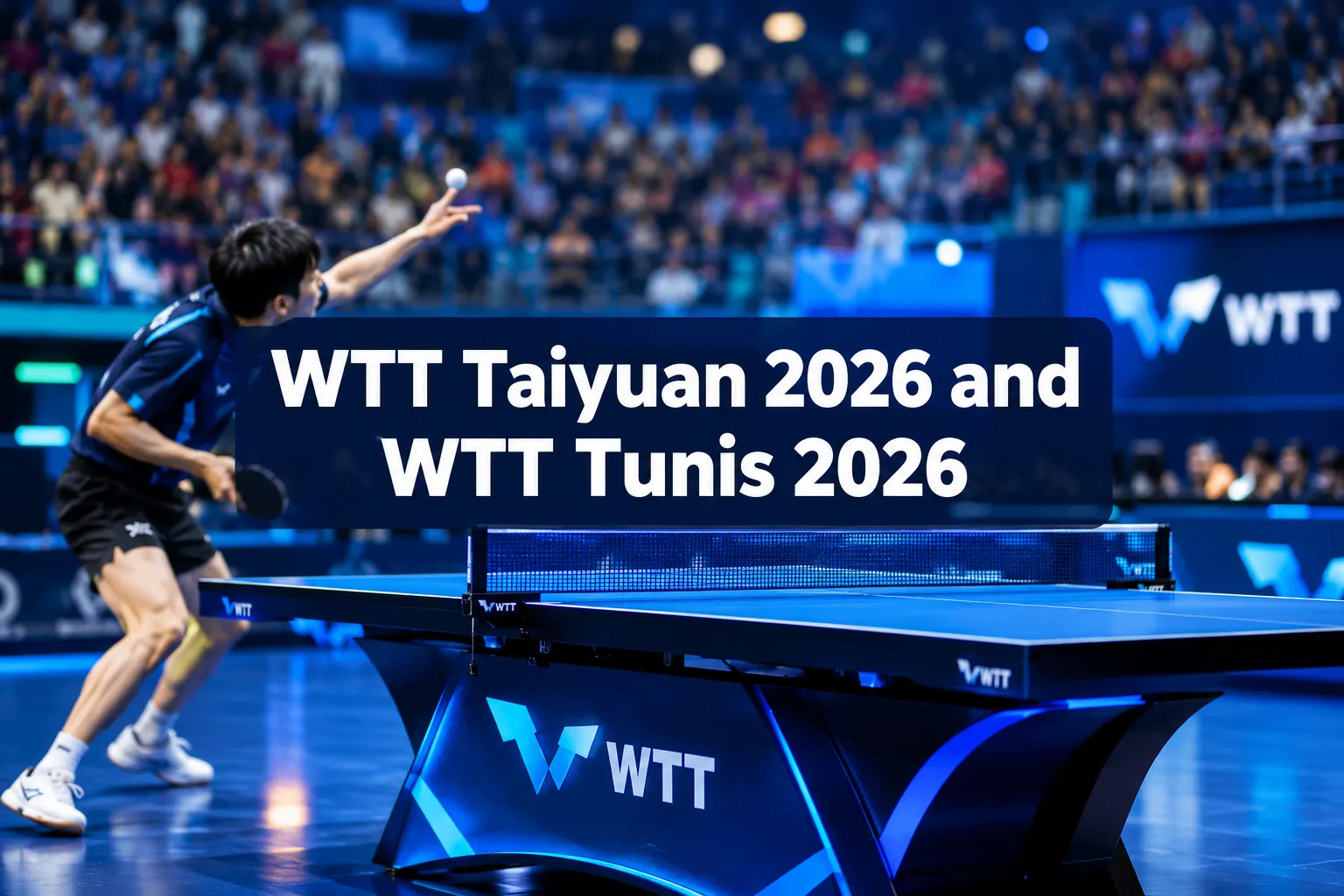
WTT Taiyuan 2026 and WTT Tunis 2026: Analyzing Contender-Level Events as Stepping Stones to Elite Table Tennis
Last updated: October 22, 2026
Quick Answer: WTT Contender Taiyuan 2026 and WTT Contender Tunis 2026 are mid-tier professional events in the 2026 World Table Tennis (WTT) series. They sit above youth-level competitions but below the flagship Star Contender and Champions Series events. For emerging players, these tournaments offer real prize money, world ranking points, and match experience against international competition, a genuine bridge between the grassroots circuit and the sport’s elite tier.
Key Takeaways
- 🏓 WTT Contender events are the second-lowest tier in the WTT professional series, above Youth Contenders but below Star Contenders and Champions Series.
- 📍 Taiyuan (China) and Tunis (Tunisia) hosted separate Contender events in 2026, offering players two geographically distinct opportunities within the same calendar year.
- 💰 Prize money at Contender level is modest compared to Champions Series events, but meaningful as a stepping stone for players ranked outside the world top 50.
- 📈 Ranking points earned here can move a mid-ranked player up enough to qualify for higher-tier draws.
- 🌍 Tunis 2026 drew attention from national federations including France and Japan, signaling the event’s growing international profile.
- 🇨🇳 Taiyuan 2026 attracted a strong international field, consistent with China’s role as a core WTT host nation. [1]
- 🧩 Youth pathways connect directly to Contender events, WTT Youth Contenders feed players into this exact tier. [2]
- ⚠️ Top-ranked players often skip Contender events to protect their schedules, opening the draw for rising talent.
- ✅ Both events use a standard WTT Contender format: group stages feeding into single-elimination knockout rounds.
- 🔗 These events are part of a broader trend in racket sports of building structured competitive ladders for player development, something the racket sports community across disciplines increasingly values.
What Makes WTT Taiyuan and Tunis Contender-Level Events
WTT Contender events occupy a specific, defined slot in the WTT series hierarchy. They are professional-grade tournaments, not amateur opens, but they are structured to be accessible to players who haven’t yet broken into the world top 30 or 40. [3]
The defining characteristics of a WTT Contender event are:
- Draw size: Typically smaller than Star Contender events, with qualification rounds available for lower-ranked players.
- Prize fund: Lower than Champions or Grand Smash events, but still competitive money for developing professionals.
- Points allocation: Ranking points are awarded, but at a lower multiplier than elite-tier events. [4]
- Field composition: A mix of mid-ranked professionals, national team representatives, and promising youth graduates.
Both Taiyuan and Tunis fit this profile exactly in 2026. They aren’t the sport’s showpiece events, but that’s precisely what makes them valuable to a certain group of players.

How Do WTT Taiyuan 2026 and WTT Tunis 2026 Compare to Each Other
The two events share the same WTT Contender tier but differ in geography, field composition, and competitive context. Taiyuan, held in China’s Shanxi province, drew a strong Asia-heavy international field, while Tunis attracted a notably diverse European and African contingent. [1][5]
Side-by-side snapshot:
| Feature | WTT Contender Taiyuan 2026 | WTT Contender Tunis 2026 |
|---|---|---|
| Host country | China | Tunisia |
| Primary field strength | Asia-Pacific | Europe / Africa |
| Notable federation interest | Chinese national pipeline | France, Japan [5] |
| Format | Standard WTT Contender | Standard WTT Contender |
| Series tier | Contender | Contender |
Both tournaments run the same WTT-standardized format, so the competitive structure is identical. The difference lies in who shows up and why. Tunis, for instance, drew Japanese players who used it as a tune-up, a signal that some national programs treat geographically convenient Contenders as “Star Contender warm-ups.” [5]
How Much Prize Money Is Available at WTT Taiyuan and Tunis
Prize money at WTT Contender events is significantly lower than at Champions Series or Grand Smash events, but it’s real professional income for players ranked in the 50-200 range. [4]
WTT does not always publish exact prize breakdowns for every Contender event publicly in advance, but based on available series data [3][4]:
- Contender events typically offer a fraction of the prize pool seen at Star Contenders.
- Champions Series events can offer 10x or more the prize money of a Contender.
- For a player ranked 80th in the world, a Contender final or semifinal appearance can represent a meaningful slice of annual competitive earnings.
The economic gap between tiers is part of the incentive structure, it motivates players to climb. Think of it the way prize structures work across all table tennis market trends: the money gets substantially better as you move up the ladder.
What Ranking Points Can You Earn at These WTT Contender Events
WTT Contender events award ranking points that feed directly into the WTT world rankings, which in turn affect seeding and direct acceptance into higher-tier events. [4]
The points available are lower per round than at Star Contenders or Champions Series events, but they matter strategically:
- For players ranked 100-200: A Contender title or deep run can jump them into the top 80, unlocking direct acceptance into Star Contender draws.
- For players ranked 50-100: Consistent Contender results add up across multiple events to strengthen seeding.
- For top-50 players: The points gain is marginal relative to effort, which is one reason elite players often skip this tier.
This points logic makes Taiyuan and Tunis especially attractive to the “emerging pro” bracket, players talented enough to win here but not yet established at the elite level. [3]
How Do Contender-Level WTT Events Differ from Elite or Champion Series Tournaments
Contender events are professional but operate on a smaller scale than the sport’s flagship events. The Champions Series and Grand Smash events feature the world’s top-ranked players, larger draws, bigger venues, and broadcast deals. [3][6]
Key differences:
- Field depth: Champions Series events have mandatory entry for top-ranked players. Contenders do not.
- Media coverage: Elite events get live streaming and major broadcast partnerships. Contenders get more limited coverage. [7]
- Venue size: Contender venues are functional professional arenas; Champions Series events often fill major stadiums.
- Scheduling pressure: Top players protect their bodies and schedules by skipping smaller events. Emerging players have no such luxury, they need every ranking point they can get.
This gap is actually an opportunity. When world-class players sit out a Contender, the draw opens up for someone ranked 60th to win a title they couldn’t get at a Grand Smash.
How Do You Qualify to Compete in WTT Taiyuan or WTT Tunis
Qualification for WTT Contender events follows the standard WTT entry system. Players qualify based on WTT world ranking, with lower-ranked players entering through qualification rounds. [3][4]
The general pathway:
- Direct acceptance: Players above a set ranking threshold enter the main draw directly.
- Qualification draw: Lower-ranked players compete in preliminary rounds for remaining main draw spots.
- National federation nominations: Some spots are allocated via national associations, which is why French and Japanese federation players appeared at Tunis despite the event’s geographic location. [5]
- Wildcards: Host nation federations typically receive wildcard entries.
For players working their way up, the qualification draw is the front door. Win two or three qualifying matches and you’re in the main draw, competing for the same ranking points and prize money as everyone else.
Which Players Should Target WTT Contender Tournaments as Stepping Stones
Players ranked roughly between 50 and 200 in the WTT world rankings get the most value from Contender events. For them, these tournaments offer competitive matches against peers, ranking points that move the needle, and the chance to build a winning habit at professional level. [3][4]
Best fit for WTT Contender events:
- Youth Contender graduates making their first steps into professional competition. [2]
- National team players from emerging table tennis nations building international experience.
- Mid-ranked professionals who need consistent results to qualify for Star Contender main draws.
- Players returning from injury who want competitive match play without the pressure of an elite draw.
Not the right fit:
- World top-20 players, the points aren’t worth the travel and scheduling cost.
- Pure recreational players, this is a professional series with a formal ranking-based entry system.
This player-development logic mirrors what’s seen across other competitive racket sports, local club tournaments and mid-tier events serve the same “proving ground” function at every level of the game.
Why Would Top-Ranked Players Skip Contender-Level WTT Events
Top-ranked players skip Contender events for rational, practical reasons. The points gain is minimal relative to their ranking position, the prize money is a small fraction of what they earn at Champions Series events, and playing a full Contender draw adds physical and travel load to an already packed WTT calendar. [3][6]
This isn’t a criticism, it’s the design working as intended. By keeping elite players mostly at elite events, WTT ensures that Contenders are genuinely competitive for the mid-tier field. If Fan Zhendong or Truls Möregård entered every Contender, developing players would have almost no path to a title.
The result is a healthier competitive ecosystem where each tier has its own stars and storylines.
Can Rising Table Tennis Players Use These Events to Build Momentum
Yes, and this is arguably the most important function WTT Taiyuan 2026 and WTT Tunis 2026 serve. Consistent deep runs at Contender level are exactly how players build the ranking, confidence, and match experience needed to compete at Star Contender and Champions Series level. [1][3][5]
The mental side matters as much as the ranking points. Winning a Contender quarterfinal against a player ranked 45th in the world teaches something no training session can replicate. This is the “stepping stone” logic in action.
For anyone interested in how tournament structures develop athletic careers, it’s worth looking at how competitive tournament culture shapes player development across all racket sports, the principles transfer directly.
What Other Stepping Stone Tournaments Exist for Table Tennis Players
Beyond Taiyuan and Tunis, the 2026 WTT Contender series includes multiple events across different continents. [3][8] The full progression ladder looks like this:
- WTT Youth Contender → entry point for junior players [2]
- WTT Contender (Taiyuan, Tunis, and others) → professional mid-tier
- WTT Star Contender → upper-mid tier with larger fields and better points
- WTT Champions Series → elite tier, mandatory for top-ranked players
- WTT Grand Smash → the sport’s premier events (equivalent to Grand Slams in tennis)
Players who take the ladder seriously, treating each Contender result as data about their game, tend to move through the tiers faster than those who jump straight to chasing elite events they aren’t ready for. [3][4]
What Are Common Mistakes Players Make Preparing for WTT Contender Events
The most common mistake is treating a Contender like a practice tournament. Players who travel to Taiyuan or Tunis without a specific match-play plan often lose in qualification to opponents who’ve prepared more deliberately. [8]
Other frequent mistakes:
- Ignoring the qualification draw, some players focus only on main draw prep and get caught cold in qualifying.
- Underestimating the field, mid-ranked professionals at Contender level are genuinely dangerous. No easy matches exist in the main draw.
- Poor equipment management, arriving without backup blades or a tested rubber setup is a fixable problem that still happens. Solid racket sports equipment reviews and pre-event gear checks matter at every level.
- Neglecting physical recovery, Contender events often follow other WTT events on the calendar, and fatigue is underestimated.
What Happened at Previous Taiyuan and Tunis WTT Events
Both venues have history in the WTT Contender series before 2026. Taiyuan has established itself as a recurring Chinese host city for Contender events, benefiting from the country’s deep table tennis infrastructure and fan base. [1] Tunis has grown as an African and Mediterranean hub for WTT events, attracting increasing attention from European national federations. [5]
In 2026 specifically, results from both events reflect the talent pool at the Contender tier: competitive matches, some upsets from lower-ranked players, and a handful of breakout performances that will likely translate into stronger draws at the next rung of the WTT ladder. [1][5][8]
The series continuity at both venues also suggests WTT values these locations as anchors for regional player development, not just one-off stops on a global calendar. [3]
FAQ
What is the WTT Contender series? The WTT Contender series is the mid-tier professional competition level within the World Table Tennis calendar. It sits above youth events and below Star Contenders and Champions Series events, targeting professional players ranked roughly outside the world top 50. [3]
Are WTT Taiyuan and WTT Tunis the same tier? Yes. Both are official WTT Contender events in 2026, sharing the same format, rules, and ranking points structure, even though they take place in different countries with different regional fields. [1][5]
Do WTT Contender events count toward world rankings? Yes. Points earned at WTT Contender events feed directly into official WTT world rankings, which affect seeding and entry into higher-tier tournaments. [4]
Can a player jump straight from Youth Contender to Champions Series? Theoretically possible but practically rare. Most players spend time at the Contender and Star Contender levels building ranking points and match experience before they are competitive at Champions Series level. [2][3]
Why does France care about WTT Tunis? French federation players have used WTT Tunis as a ranking-building event. The geographic convenience for European players and the competitive level of the field make it a practical target for players on the national development pathway. [5]
Is the format at Taiyuan and Tunis the same? Yes. Both follow the standard WTT Contender format: group stages followed by single-elimination knockout rounds across singles and doubles disciplines. [1][5]
How many WTT Contender events are there in 2026? The 2026 WTT calendar includes multiple Contender events spread across different regions. Taiyuan and Tunis are two of the most notable, but the full series spans several continents. [3][8]
What’s the difference between a WTT Contender and a WTT Star Contender? Star Contenders have larger draws, more prize money, more ranking points per round, and tend to attract higher-ranked players. They are the next step up from a standard Contender event. [3][6]
Conclusion
WTT Taiyuan 2026 and WTT Tunis 2026 aren’t the flashiest stops on the professional table tennis calendar, and that’s exactly what makes them matter. For players in the 50-200 world ranking range, these Contender-level events are the most direct path to the ranking points, match experience, and competitive confidence needed to reach the sport’s elite tier.
Actionable takeaways for players and fans:
- Follow Contender results closely, the players winning here now are the ones who will appear in Champions Series draws in 12-18 months.
- Understand the ladder, table tennis development follows a structured tier system, and respecting each step produces better long-term outcomes than skipping levels.
- Apply the same logic to your own game, whether you play table tennis, improve racket sports skills in pickleball, or compete at any level, building through appropriate competitive tiers beats rushing to the top before you’re ready.
- Track the 2026 series, both Taiyuan and Tunis have shown they’re recurring venues, which means future editions will continue developing the next generation of professional talent. [1][3][5]
The stepping stone model works. These events prove it every time a 150th-ranked player beats a 60th-ranked opponent and earns the points to move up. That’s the whole point.
References
- WTT Contender Taiyuan 2026. wikipedia.org.
- WTT Youth Contender HK. hktta-event.com.
- WTT Contenders 2026. tt-wiki.info.
- 2026 World Table Tennis Series Contender. allsportdb.com.
- WTT Contender Tunis 2026. de.wikipedia.org.
- WTT Series C113. koobit.com.
- WTT Contender Taiyuan 2026 Schedule. tv-tokyo.co.jp.
- WTT Contender Series 2026 News. tt-kharkiv.com.