
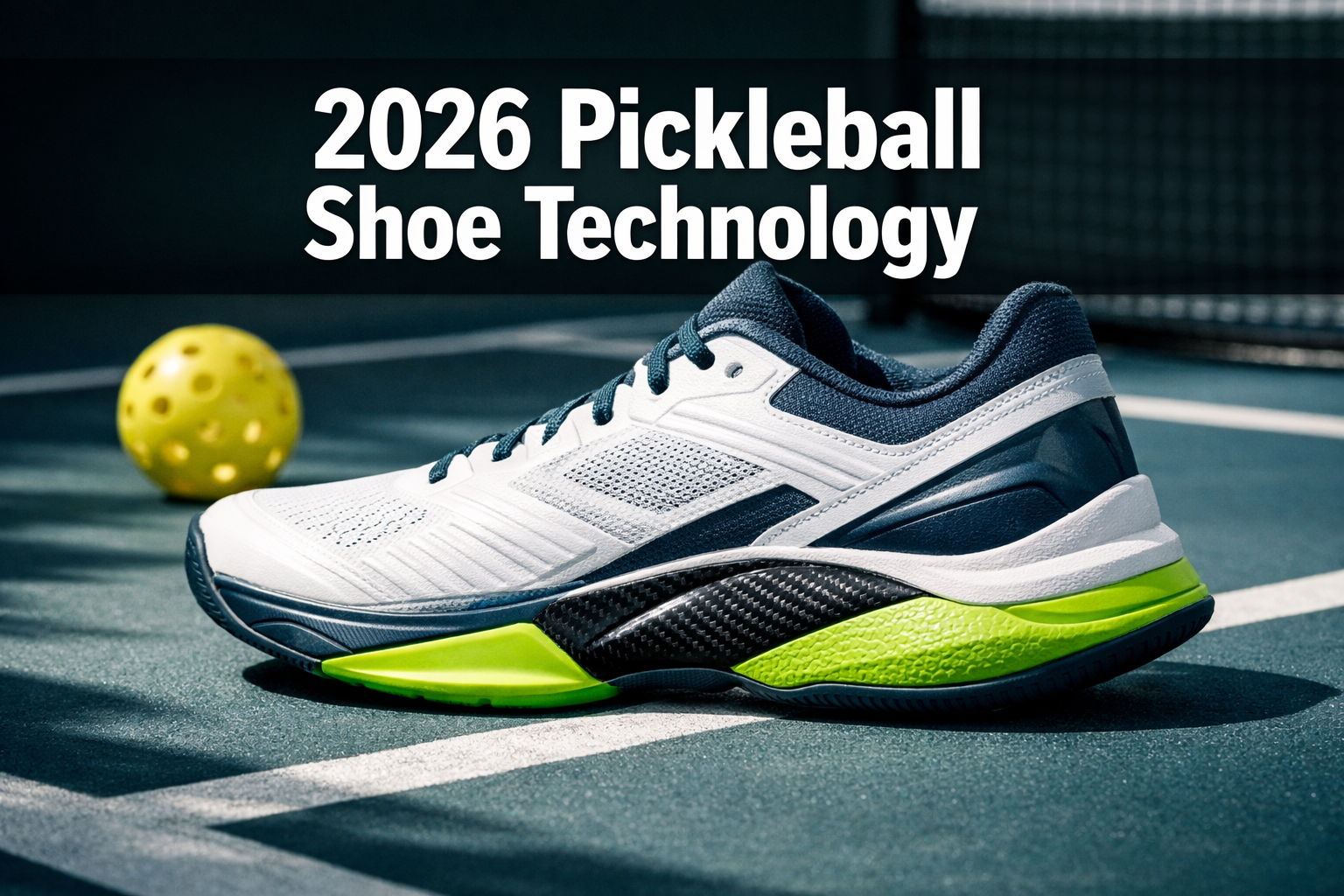
2026 Pickleball Shoe Technology: How Stability Systems and Sustainable Materials Are Changing Court Performance
Last updated: March 30, 2026
Quick Answer: In 2026, pickleball shoe technology has moved well beyond modified tennis shoe designs. Brands are now building shoes specifically for pickleball’s quick lateral cuts, sudden stops, and kitchen-line footwork, using carbon fiber shanks, bio-based foam midsoles, and targeted stability outriggers. The result is footwear that genuinely helps players move better and feel less fatigued, while also being kinder to the planet.
Key Takeaways
- Purpose-built designs are replacing tennis shoe hand-me-downs, with construction tailored to pickleball’s unique movement demands.
- Carbon fiber shanks and TPU outriggers are the leading stability innovations for 2026, controlling midfoot twist and lateral slide.
- Bio-based EVA blends are replacing petroleum-derived foams, maintaining cushioning performance while reducing environmental impact.
- Supercritical foam midsoles, borrowed from running shoe tech, are being reformulated to cut leg fatigue during long rallies.
- Multi-zoned upper construction places ventilation where heat builds and reinforcement where abrasion hits hardest.
- Well-designed stability platforms can improve balance scores by up to 15% compared to standard athletic shoes, according to clinical testing. [1]
- Podiatric endorsements are becoming a meaningful differentiator, with some 2026 models earning recognition from medical associations.
- Choosing the right shoe depends on your playing style, court surface, and foot type, not just brand reputation.
Why Pickleball Shoes Have Changed So Much in 2026
Pickleball-specific shoe designs are replacing modified tennis shoes because the sport’s movement patterns are genuinely different. Tennis shoes are built for longer baseline runs and serve-and-volley patterns. Pickleball demands rapid lateral cuts, short explosive bursts, and constant weight shifting at the kitchen line, all on a smaller court.
Manufacturers recognized that tweaking an existing tennis template wasn’t enough. In 2026, the leading brands are engineering shoes from the ground up for pickleball’s specific forces. [1]
This shift matters for players at every level. Whether you’re just getting started with the basics or drilling hard to sharpen your competitive edge, the shoe you wear directly affects how well you can move and how your joints feel after a session.
What Are the Core Stability Innovations in 2026 Pickleball Shoe Technology?
The most important stability advances in 2026 pickleball shoe technology center on controlling the forces that cause rolled ankles and fatigue: midfoot twist, lateral slide, and forefoot instability.
Here’s what’s showing up across leading models:
- Carbon fiber midfoot shanks: JOOLA’s R4LLy shoe integrates a carbon fiber shank directly into the sole to reinforce the midfoot and prevent twisting during quick pivots. [2]
- TPU outriggers on the outsole: The Selkirk CourtStrike Pro 2.0 uses an outrigger on the outsole specifically to stabilize lateral movement and handle fast direction changes. [4]
- Wider forefoot platforms: Broader base geometry reduces the risk of rolling outward during sharp cuts, a common injury point for pickleball players.
- Multi-layer midsole stacks: Some 2026 models combine an EVA midsole with a supercritical foam insole and a TPU shank in a single shoe, each layer handling a different type of force. [4]
“Clinical testing shows well-designed stability platforms can improve balance scores by as much as 15% compared to standard athletic shoes.” [1]
Choose a carbon fiber shank if you play aggressively, make frequent sharp cuts, or have had ankle issues in the past. Choose a wider platform design if you prioritize all-day comfort over maximum responsiveness.
How Are Sustainable Materials Changing Pickleball Footwear in 2026?
Bio-based EVA blends are replacing traditional petroleum foams as the midsole material of choice in 2026. These plant-derived alternatives maintain responsive cushioning while significantly reducing the carbon footprint of production. [1]
This isn’t a trade-off in performance. Early adopters of bio-based foams in running shoes showed that plant-derived EVA can match or exceed the energy return of conventional materials. Pickleball brands are now applying the same formulations to court shoes.
What this looks like in practice:
- Midsoles made from sugarcane-derived or other bio-based EVA compounds
- Uppers using recycled or sustainably sourced fabrics alongside performance materials like Cordura Advanced Fabric [2]
- Reduced reliance on petroleum-based synthetic overlays in non-critical zones
For players who care about their environmental footprint as much as their court performance, this is a meaningful development. The sport has grown rapidly (check out how pickleball spread across the globe), and the gear industry is starting to reflect that responsibility.
How Does Foam Technology Affect Court Performance?

Foam technology directly affects how tired your legs feel and how quickly you can react to the next shot. In 2026, supercritical foam, a lightweight material originally developed for high-performance running shoes, is being reformulated for pickleball’s stop-start demands.
JOOLA’s Qubit Foam Midsole is a clear example. The supercritical foam construction reduces overall shoe weight and returns energy with each step, helping players push through longer rallies and high-pressure points without the heavy-leg feeling that comes from dense traditional foams. [2]
Foam types compared:
| Foam Type | Weight | Energy Return | Best For |
|---|---|---|---|
| Traditional EVA | Heavier | Moderate | Budget-friendly comfort |
| Bio-based EVA | Similar to EVA | Moderate-High | Eco-conscious players |
| Supercritical Foam | Lightest | High | Competitive, fast play |
| Dual-density EVA | Moderate | Moderate | Stability + cushioning |
A common mistake is choosing the softest foam available, assuming it means the most comfort. Overly soft midsoles can actually reduce court feel and slow lateral response. Look for a midsole that’s firm enough to feel stable but cushioned enough to absorb repeated impact.
What Upper Construction Features Matter Most for Pickleball Players?
The upper of a pickleball shoe needs to do two conflicting things well: breathe enough to keep feet cool, and hold up against the abrasion of dragging feet at the kitchen line.
2026 designs solve this with multi-zoned construction, placing ventilation mesh in heat zones and reinforced materials in high-wear spots. [1]
- JOOLA R4LLy uses Cordura Advanced Fabric, which is lightweight and breathable while being built to move naturally as players drag their feet during dink exchanges. [2]
- Franklin Sports ACV Pro features Aero-Step insert technology that provides targeted airflow to keep feet cool during intense play without sacrificing support. [3]
- Strategic TPU overlays protect the lateral forefoot and toe bumper areas, which take the most abuse, without stiffening the entire upper.
Good footwork is foundational to pickleball performance. Pairing the right shoes with drills that build coordination and agility will get you further than shoes alone.
Which 2026 Pickleball Shoe Models Best Represent These Innovations?
Several 2026 models stand out as clear examples of where the technology has landed. Each suits a different type of player.
JOOLA R4LLy Built top-down by a dedicated footwear engineering team including Senior Director of Engineering Gjermund Haugbro and developed alongside JOOLA’s professional athlete roster. Key features: carbon fiber shank, Qubit supercritical foam midsole, Cordura upper. Best for: competitive players who want a purpose-built performance shoe. [2]
Selkirk CourtStrike Pro 2.0 Multi-layer setup: EVA midsole, supercritical foam insole, TPU shank, and an outsole outrigger. Designed for aggressive lateral play and fast direction changes. Best for: players who make sharp cuts frequently and need maximum lateral control. [4]
Skechers Viper Court Pro 2.0 Features Arch Fit insole and ULTRA GO cushioning. Notable for its association with the American Podiatric Medical Association Seal of Acceptance, rare in the court shoe category. Best for: players with foot health concerns or those who prioritize all-day comfort. [4]
Franklin Sports ACV Pro Engineered flex grooves at the forefoot enhance natural movement and quick reactions. Aero-Step insert technology keeps feet cool. Best for: players who want a lighter, more flexible feel with good ventilation. [3]
If you’re still figuring out your essential gear as a newer player, starting with a comfort-focused model like the Skechers makes sense before investing in a high-performance competition shoe.
How Do You Choose the Right 2026 Pickleball Shoe for Your Game?
The right shoe depends on three things: your playing style, your foot type, and the court surface you play on most.
Decision guide:
- Aggressive lateral mover: Prioritize carbon fiber or TPU shank, outrigger outsole, firm midsole.
- Recreational player focused on comfort: Look for podiatric endorsement, arch support, softer cushioning.
- Eco-conscious buyer: Choose models with bio-based EVA midsoles and sustainably sourced uppers.
- Hot gym or indoor court: Prioritize ventilation zones and moisture-wicking insoles.
- Outdoor concrete courts: Prioritize durable outsole rubber and reinforced toe bumpers.
Also consider how footwork affects your overall movement on court. The best shoe in the world won’t compensate for poor positioning habits, but the right shoe will make good footwork feel easier and safer.
Common mistake: Buying a running shoe or cross-trainer for pickleball. Running shoes are built for forward motion and lack the lateral support structures that pickleball demands. This increases injury risk and reduces court feel significantly.
Conclusion
2026 pickleball shoe technology represents a genuine step forward for players at every level. The shift from repurposed tennis shoes to purpose-built pickleball footwear means better lateral stability, smarter foam technology, and materials that are easier on the environment without sacrificing performance.
Actionable next steps:
- Identify your playing style (aggressive cutter vs. recreational comfort player) before shopping.
- Check for a midfoot shank (carbon fiber or TPU) if lateral stability is a priority for you.
- Look for bio-based EVA or supercritical foam midsoles if you want modern cushioning with less environmental cost.
- Try shoes on with your typical court socks and simulate lateral movements in the store or during a return window.
- Pair new shoes with footwork drills to get the full benefit of improved stability and court feel.
The pickleball community is growing fast, and the gear is finally catching up. The right shoes won’t make you a better player overnight, but they’ll help you move more safely, feel less fatigued, and stay on the court longer.
Frequently Asked Questions
Q: Are pickleball shoes really different from tennis shoes? Yes. Pickleball shoes in 2026 are built specifically for the sport’s quick lateral cuts, short explosive bursts, and kitchen-line footwork. Tennis shoes prioritize different movement patterns and typically lack the lateral outriggers and forefoot flex grooves that pickleball demands. [1]
Q: What is a carbon fiber shank in a pickleball shoe? A carbon fiber shank is a rigid plate built into the midsole to prevent the shoe from twisting during pivots and lateral cuts. It provides a stable platform underfoot without adding significant weight. The JOOLA R4LLy uses this feature as a core stability element. [2]
Q: What is bio-based EVA and why does it matter? Bio-based EVA is a foam compound derived from plant sources (such as sugarcane) rather than petroleum. It performs similarly to traditional EVA in terms of cushioning and energy return but has a lower environmental footprint. Several 2026 pickleball shoe brands are adopting it as a midsole material. [1]
Q: Can I wear running shoes for pickleball? Not recommended. Running shoes are engineered for forward motion and lack lateral support structures. Using them for pickleball increases the risk of ankle rolls and reduces your ability to push off quickly in multiple directions.
Q: What does supercritical foam mean in a shoe? Supercritical foam is made by injecting gas into foam material under high pressure, creating a lighter, more responsive structure. Originally used in high-end running shoes, it’s now being reformulated for pickleball to reduce leg fatigue during long sessions. [2]
Q: How often should I replace pickleball shoes? As a general estimate, most court shoes show meaningful wear in the outsole and midsole after 300 to 500 hours of play, depending on court surface and playing intensity. Replace them when you notice reduced grip, visible outsole wear, or less cushioning underfoot.
Q: Is podiatric endorsement on a shoe meaningful? It can be, especially for players with foot health concerns. The Skechers Viper Court Pro 2.0 carries the American Podiatric Medical Association Seal of Acceptance, which indicates the shoe has been reviewed for foot health suitability. [4]
Q: Do I need different shoes for indoor vs. outdoor pickleball? Ideally, yes. Indoor courts benefit from non-marking gum rubber outsoles with good grip on smooth surfaces. Outdoor concrete courts require more durable outsole rubber and reinforced uppers to handle abrasion. Some 2026 models are designed to handle both, but check the outsole spec before buying.
References
[1] 2026 Pickleball Court Shoe Trends Colors Styles And Tech – https://www.pb5star.com/a/blog/2026-pickleball-court-shoe-trends-colors-styles-and-tech
[2] Shoe Press Release – https://joola.com/blogs/updates/shoe-press-release
[3] Redefining Pickleball Footwear Franklin Sports Debuts The Acv Pro – https://floridatennis.com/blogs/pickleball-news/redefining-pickleball-footwear-franklin-sports-debuts-the-acv-pro
[4] Best Pickleball Court Shoes 2026 – https://www.empowerpickleball.com/blogs/best-pickleball-court-shoes-2026


