The Racquet Sports Equipment Boom: Why $10 Billion in Global Sales Is Reshaping Gear Innovation in 2026
Last updated: April 7, 2026
Quick Answer: The racquet sports equipment market is experiencing one of its strongest growth periods in decades. Driven by the explosive rise of pickleball and padel alongside steady tennis and badminton participation, global sales are approaching and surpassing the $10 billion mark in 2026. That demand is pushing manufacturers to invest heavily in materials science, AI-assisted design, and sustainable production — and the gear reaching players today is measurably better for it.
Key Takeaways
- 🎾 The tennis equipment market alone is valued at USD 10.35 billion in 2026, projected to reach USD 15.64 billion by 2030 at a 10.9% CAGR [4]
- 🏓 Pickleball and padel are diversifying the consumer base and accelerating equipment replacement cycles beyond traditional sports [1]
- 🌏 Asia-Pacific is the fastest-growing region at an 8.05% CAGR, while North America accounts for 33.7% of incremental growth [1][3]
- 🤖 AI-generated string patterns and bio-circular carbon fiber racquets are among the most significant gear innovations arriving in 2026 [5]
- 🏗️ Multi-sport facility construction is fueling consistent equipment demand — the UK alone added 250 new padel courts between 2022 and 2023, a 116% increase [3]
- 🛒 Brick-and-mortar stores still command 73.55% of sales, but online channels are growing at a 7.6% CAGR [3]
- 🌱 Sustainability is no longer a marketing angle — it’s a core product requirement, with brands like HEAD releasing bio-circular carbon fiber racquets [3][4]
- 💡 Honeycomb core paddle adoption is up 40% year-over-year in emerging sports categories [1]

How Big Is the Racquet Sports Equipment Market in 2026?
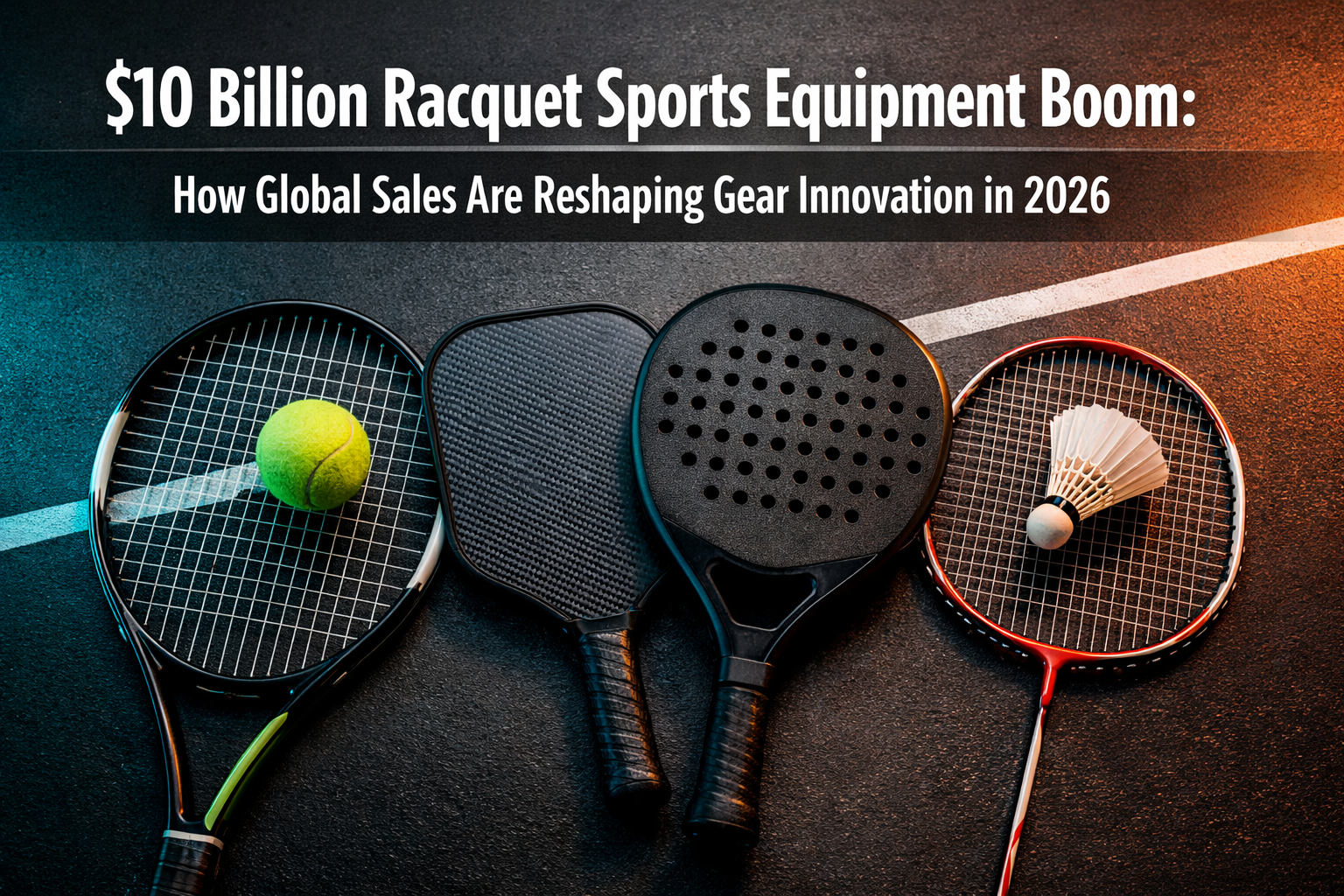
The racquet sports equipment boom — why $10 billion in global sales is reshaping gear innovation in 2026 — starts with understanding just how large this market has become. The tennis segment alone is valued at USD 10.35 billion in 2026 and is projected to reach USD 15.64 billion by 2030 [4]. The broader racquet sports equipment market, which includes padel, pickleball, badminton, and squash, sits at an estimated USD 102.29 billion when factoring in apparel, footwear, and accessories, growing at a 6.42% CAGR through 2031 [3].
For context on the core equipment segment specifically:
| Segment | 2026 Valuation | Projected Growth |
|---|---|---|
| Tennis equipment (global) | USD 2.3 billion | USD 2.8B by 2033 (2.8% CAGR) [2] |
| Tennis market (broad) | USD 10.35 billion | USD 15.64B by 2030 (10.9% CAGR) [4] |
| Racquet sports equipment (core) | USD 1.88B incremental growth 2026–2030 | 3.3% CAGR [1] |
The bottom line: Depending on how you define the category, the numbers vary — but every credible forecast points in the same direction. This market is growing, and it’s growing fast.
Why Are Pickleball and Padel Driving So Much of This Growth?
Pickleball and padel are the two biggest catalysts behind the current equipment boom. Both sports attract players who might never have picked up a tennis racquet, which means entirely new consumer segments are buying gear for the first time.
Padel court construction in the UK jumped 116% between 2022 and 2023, with 250 new courts added in that window alone [3]. Each new court creates ongoing demand for padel rackets, balls, and accessories. Pickleball tells a similar story — its low barrier to entry and appeal across all age groups means equipment replacement cycles are faster than in traditional racquet sports.
Key reasons these sports are reshaping the market:
- Lower cost of entry encourages more first-time buyers
- Faster equipment wear (especially padel rackets and pickleball paddles) means more frequent purchases
- Crossover players from tennis and badminton often buy gear for multiple sports
- Community-driven growth through local clubs and recreational leagues keeps participation high
If you’re curious about how pickleball specifically evolved from a backyard game to a global force, the trajectory mirrors what padel is experiencing in Europe and Latin America right now.
What Gear Innovations Is the Equipment Boom Actually Producing?
The racquet sports equipment boom — and why $10 billion in global sales is reshaping gear innovation in 2026 — is most visible in the product itself. More revenue means more R&D budget, and manufacturers are spending it in three clear areas.
1. Sustainable Materials
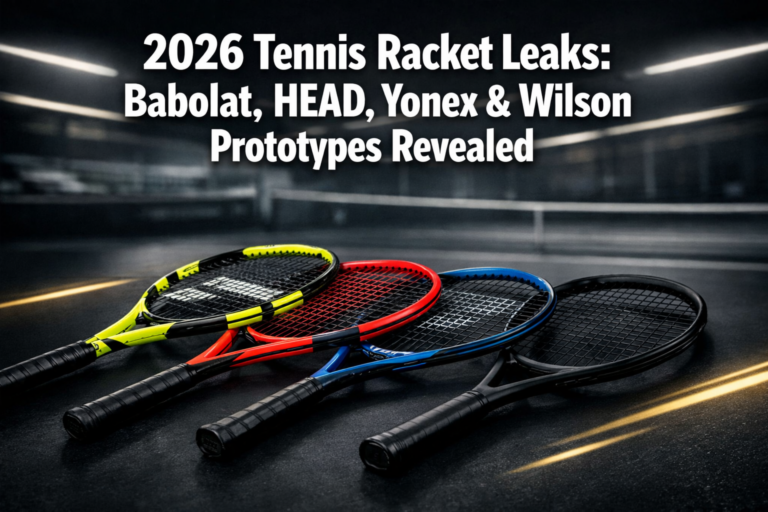
HEAD released its limited-edition BOOM RAW tennis racquet in April 2025, built entirely from Toray’s bio-circular carbon fibers derived from agricultural and forestry waste [3][4]. This isn’t a compromise product — it performs at the same level as conventional carbon fiber frames while significantly reducing landfill waste. Expect more brands to follow this path as sustainability becomes a purchase decision factor for players, not just a corporate talking point.
2. AI-Assisted Design
Advanced racquet designs now feature AI-generated string patterns that enhance control without sacrificing power [5]. Rather than relying purely on human engineering intuition, manufacturers are running thousands of simulated play scenarios to optimize string geometry for specific player profiles.
3. Honeycomb Core Paddles
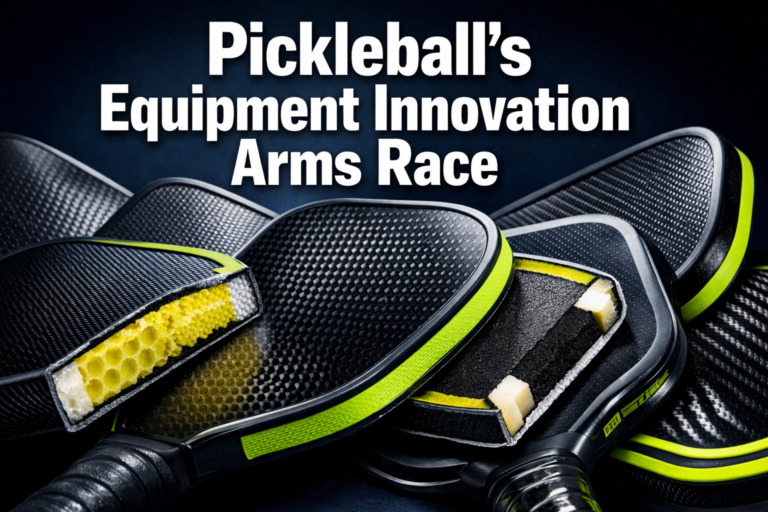
Paddles using honeycomb core materials are seeing adoption rates climb 40% year-over-year in emerging sports categories [1]. This technology, borrowed from aerospace engineering, delivers a better power-to-weight ratio and more consistent feel across the paddle face. If you’re shopping for a new pickleball paddle, check out this guide to choosing the right pickleball paddle to understand what core material actually means for your game.
Where Is the Market Growing Fastest — and Why Does That Matter for Gear?
Geography shapes product development. When a region grows fast, manufacturers build supply chains and design gear for local playing conditions and preferences.
North America leads in absolute terms, accounting for 33.7% of incremental market growth [1]. Climate-controlled sports hubs and strong retail infrastructure keep year-round play consistent, which drives steady equipment replacement.
Asia-Pacific is the fastest-growing region at an 8.05% CAGR [3]. Large-scale public investment in courts and youth programs is fueling demand, and manufacturers with regionalized production in APAC have reported a 15% reduction in supply chain costs [1]. Decathlon’s announcement of 100 new India outlets over five years [1] signals how seriously global retailers are treating this region.
Europe is being reshaped by padel. The sport’s Mediterranean roots have spread north, and the infrastructure investment is following participation.
For players, this geographic diversification means more product options at more price points — especially in the mid-range segment where most recreational players shop.
How Is Retail Changing for Racquet Sports Equipment?
Offline stores still dominate, but online is closing the gap fast. Brick-and-mortar channels account for 73.55% of current sales, while online channels are growing at a 7.6% CAGR [3]. The offline segment was valued at USD 7.69 billion in 2024 [1].
What’s driving the online shift:
- Virtual fitting tools that help players match paddle or racquet specs to their game
- Subscription-based gear services for frequent players
- Direct-to-consumer brands cutting out retail markup
- Community reviews and video demos making online purchases feel less risky
For beginners especially, starting online makes sense — but getting hands-on time with a racquet or paddle before committing to a higher price point is still worth the trip to a specialty store. See our guide on essential pickleball gear to get started for a practical breakdown of what’s actually worth buying early on.
What Does This Mean for Everyday Players?
The racquet sports equipment boom — and why $10 billion in global sales is reshaping gear innovation in 2026 — ultimately matters because better-funded innovation means better gear at every price point.
Here’s what players at different levels should expect:
Beginners:
- More entry-level options with genuine technology trickle-down (honeycomb cores, improved grip materials)
- Clearer product labeling as brands compete for first-time buyers
Intermediate players:
- Mid-range paddles and racquets now perform closer to pro-level gear than ever before
- More sport-specific options as padel, pickleball, and badminton get dedicated product lines rather than tennis hand-me-downs
Competitive players:
- AI-optimized string patterns and ultra-light sustainable frames becoming standard at premium price points
- Faster product refresh cycles mean more frequent upgrade opportunities
The evolution of pickleball equipment is a perfect case study in how quickly gear can improve when a sport attracts serious investment — what took tennis decades is happening in pickleball in just a few years.
Conclusion: What to Do With This Information
The market numbers confirm what players on the court already feel — racquet sports are having a genuine moment, and the gear is getting better because of it.
Actionable next steps:
- If you’re buying new gear in 2026, look specifically for honeycomb core paddles and racquets with bio-based or recycled materials. You’re getting better technology at lower prices than even two years ago.
- If you play multiple sports, the crossover gear market is expanding. Brands are designing for multi-sport athletes, so check whether a single paddle or racquet fits more than one game before buying separate equipment.
- If you’re new to racquet sports, now is genuinely a great time to start. More courts, more affordable gear, and a growing racquet sports community mean it’s easier than ever to find your game and get better at it.
- Stay current on gear reviews. With product cycles accelerating, last year’s top pick might already have a better successor. Regular racket sports gear reviews will save you money and keep your game sharp.
The $10 billion market isn’t just a headline — it’s a signal that the best gear for recreational and competitive players alike is still ahead of us.
FAQ
Q: What is the current value of the global racquet sports equipment market in 2026? The tennis market alone is valued at USD 10.35 billion in 2026, with the broader racquet sports equipment segment projected to add USD 1.88 billion in incremental growth through 2030 [4][1].
Q: Which racquet sport is growing the fastest in 2026? Pickleball and padel are the fastest-growing sports by participation and equipment sales. Padel court construction grew 116% in the UK between 2022 and 2023 [3], and pickleball continues expanding its player base across North America and beyond.
Q: What new technologies are appearing in racquet sports gear? The most significant innovations include AI-generated string patterns for improved control [5], honeycomb core paddle materials (up 40% year-over-year adoption) [1], and bio-circular carbon fiber frames like HEAD’s BOOM RAW racquet [3][4].
Q: Is it better to buy racquet sports gear online or in-store in 2026? Both work, but for first-time buyers, testing gear in-store is still valuable. Online channels are growing at 7.6% CAGR [3] and offer better prices, but specialty stores help beginners find the right fit.
Q: Which region is the fastest-growing market for racquet sports equipment? Asia-Pacific leads growth at an 8.05% CAGR, driven by public investment in courts and youth programs [3]. North America leads in absolute growth share at 33.7% [1].
Q: Are sustainable racquet sports products actually good quality? Yes. HEAD’s bio-circular BOOM RAW racquet uses carbon fiber from agricultural waste and performs at the same level as conventional frames [3][4]. Sustainability and performance are no longer a trade-off.
Q: What is honeycomb core technology in paddles? Honeycomb core refers to a hexagonal internal structure (borrowed from aerospace engineering) that improves power-to-weight ratio and delivers a more consistent feel. Adoption is up 40% year-over-year in emerging sports [1].
Q: How does the equipment boom affect beginner players specifically? More market competition means better entry-level gear at lower prices. Technology that was exclusive to pro-level equipment a few years ago — like improved core materials and grip systems — is now standard in mid-range products.
References
[1] Racket Sports Equipment Market Industry Analysis – https://www.technavio.com/report/racket-sports-equipment-market-industry-analysis
[2] Tennis Equipment Industry Valued At Us 2 3 Billion In 2026 – https://www.openpr.com/news/4450890/tennis-equipment-industry-valued-at-us-2-3-billion-in-2026
[3] Racket Sports Equipment Market – https://www.mordorintelligence.com/industry-reports/racket-sports-equipment-market
[4] Tennis Market Report – https://www.researchandmarkets.com/reports/6215461/tennis-market-report
[5] Racket Sports Tech April 2026 – https://racketbusiness.com/p/racket-sports-tech-april-2026