
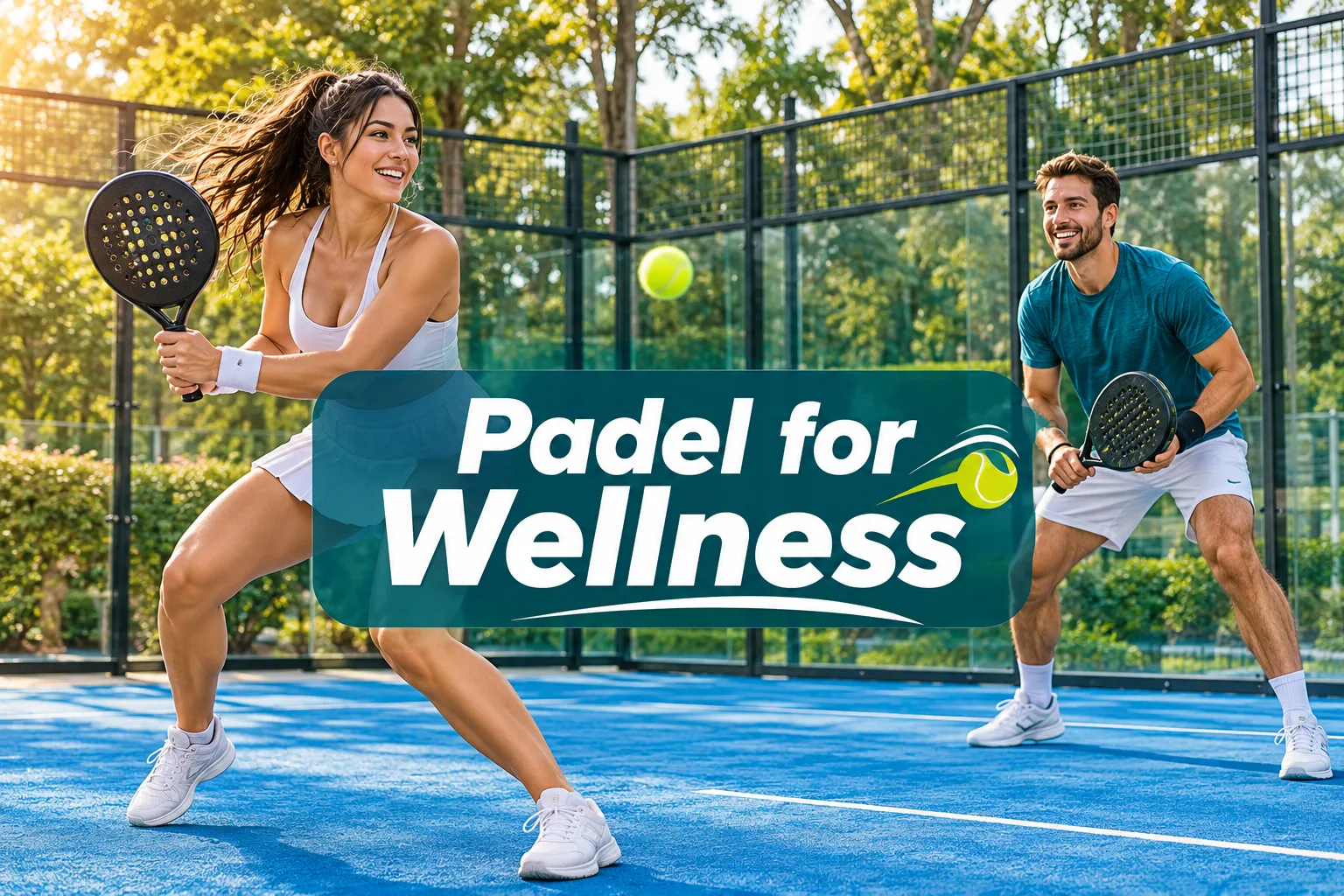
Padel for Wellness: Integrating the Sport into Health Routines and Recovery Programs in 2026
Last updated: November 1, 2026
Quick Answer: Padel is a low-impact racket sport played in doubles on a glass-walled enclosed court. In 2026, it’s being actively integrated into wellness and recovery programs because it builds cardiovascular fitness, strengthens the core and lower body, supports respiratory health, and reduces anxiety, all while being gentler on joints than tennis or squash. Beginners can start with zero prior experience, making it one of the most accessible fitness activities available right now.
Key Takeaways
- Padel offers cardio, strength, and lung-function benefits backed by 2025 peer-reviewed research [1][2]
- It produces an anti-inflammatory response after moderate-intensity play, which may support recovery programs [3]
- Higher-level players show reduced somatic anxiety and greater self-confidence compared to tennis players [4]
- Structured warm-ups significantly cut injury risk, essential for beginners and older adults [5]
- The doubles format makes it naturally social, improving adherence to long-term wellness routines [6]
- Anyone from teens to adults in their 60s can play safely with the right progression
- A short 8-week padel program measurably improved grip strength and sprint performance in untrained players [1]
- No prior racket sports experience is needed to get started
What Is Padel and How Does It Differ From Tennis?
Padel is a doubles-only racket sport played on an enclosed court roughly a third the size of a tennis court, surrounded by glass walls and metal mesh. Players use solid, stringless rackets and can play the ball off the walls, similar to squash, which slows the pace and keeps rallies going longer.
Compared to tennis, padel involves:
- Shorter court, less ground to cover per shot
- Lower serve, underarm serve only, reducing shoulder strain
- Wall play, balls stay live off glass, making rallies longer and more forgiving
- Doubles format, always played 2v2, so there’s always a teammate sharing the workload
That wall-play and shorter court dramatically lower the explosive demand on joints, which is a big reason padel for wellness programs are expanding so quickly in 2026.
How Many Calories Do You Burn Playing Padel, and Is It Better Than Running or Cycling?
Padel sits in the moderate-to-vigorous cardio zone. A recreational 60-minute session burns roughly 400-600 calories (estimate based on MET values for racket sports at moderate intensity, individual results vary by body weight and effort level).
What makes padel appealing compared to running or cycling is the combination of effort types: short bursts of lateral movement, brief recovery periods, and sustained technical focus. A 2025 comparative study found that padel athletes benefit most from endurance and sustained technical execution rather than pure sprint capacity [7]. That profile aligns well with low-to-moderate intensity cardio prescriptions for weight management or cardiac health.
Research also confirms that regular padel training produces significantly better lung-function values, including forced expiratory volume and peak expiratory flow, compared to non-trained controls [2]. Running can match this for pure aerobic output, but padel adds the strength and social layer that helps people stick with it long-term [6].
Choose padel over solo cardio if: you struggle with motivation, want a social outlet, or need a joint-friendly alternative to running.
Is Padel Good for Recovery After an Injury, and Can It Help With Arthritis and Joint Pain?

Padel is easier on joints than tennis or squash because of its smaller court, underarm serve, and slower ball speed. For people managing arthritis or recovering from lower-limb injuries, these features matter.
A 2025 study on elite padel players found that competitive play elicits an anti-inflammatory response, specifically, a decrease in pro-inflammatory cytokine IL-7 and an increase in anti-inflammatory IL-10 [3]. While this research focused on elite players, it suggests moderate-intensity padel may help manage systemic inflammation, which is relevant for those with chronic low-grade inflammation or metabolic conditions.
Important caveats for recovery use:
- The anti-inflammatory findings come from elite players; clinical rehabilitation trials in patient populations are still limited [3]
- Structured warm-ups (dynamic stretching, balance drills, sport-specific movements) are essential and significantly reduce injury rates [5]
- Anyone returning from injury should start with supervised, low-volume sessions and progress gradually
For arthritis specifically, the low-impact doubles format keeps movement consistent without high joint-loading impacts. It’s a similar case to why pickleball is recommended as a low-impact option for all ages.
What Age Groups Can Play Padel Safely?
Padel is genuinely one of the most age-inclusive racket sports available. Children, adults, and seniors can all play safely, though the intensity and volume should match each group’s fitness level.
- Youth (8-16): An 8-week padel program significantly improved grip strength and sprint performance in untrained children [1], supporting its use in school wellness curricula
- Adults (18-50): Ideal for building cardiovascular fitness, core activation, and mental resilience
- Older adults (50+): The shorter court and doubles format reduce isolated high-impact stress; proper footwear and warm-up are especially important [5]
The LTA describes padel as a “perfect vehicle” for young people’s mental health precisely because its fun format and community events improve engagement across all experience levels [6].
How Often Should You Play Padel to See Fitness Results?
Two to three sessions per week appears to be the practical threshold for measurable fitness gains. The 8-week youth study showed significant improvements with a structured training block at that kind of frequency [1].
A simple weekly structure for adults:
| Goal | Sessions/Week | Session Length | Notes |
|---|---|---|---|
| General fitness | 2 | 60 min | Include warm-up, match play |
| Weight management | 3 | 60-75 min | Add strength training on off-days |
| Recovery/rehab | 1-2 | 45 min | Supervised, lower intensity |
| Mental wellness | 2 | 60 min | Focus on social, enjoyment |
For anyone building a broader fitness schedule, pairing padel with off-court work pays off. See our guide on building a winning practice routine and structuring your court time for a practical framework.
Can Beginners Start Padel Without Prior Experience?
Yes, padel is one of the most beginner-friendly racket sports because the walls keep balls in play longer, rallies happen naturally, and the court size is forgiving. Most beginners hit their first real rally within 20-30 minutes.
Common mistakes beginners make:
- Skipping the warm-up (this is where most early injuries come from) [5]
- Gripping the racket too tightly, which strains the wrist and forearm
- Ignoring footwear, padel-specific or court shoes with lateral support are important
- Playing too long too soon, overuse injuries rise when volume jumps quickly [5]
- Not using the walls intentionally, which leads to over-hitting
The racket sports community around padel is notably welcoming. If you’re new to social sports in general, it’s worth reading about connecting with local sports groups and building community around the game, the same principles apply directly to padel.
How to Prevent Injuries While Playing Padel
Injury prevention in padel comes down to three things: warm-up, load progression, and equipment.
Structured warm-up (10 minutes before every session):
- 3 min light jog or brisk walk
- Dynamic leg swings and hip circles
- Shoulder rotations and arm crosses
- Lateral shuffles across the court
- Sport-specific groundstrokes at 50% intensity
Research confirms that balance exercises, dynamic stretching, and sport-specific warm-ups significantly reduce injury rates in padel players [5].
What equipment helps for players with shoulder issues:
- Lighter racket (under 355g) to reduce arm fatigue
- Larger sweet spot (round or teardrop head shape) for off-center forgiveness
- Mid-soft foam core for vibration dampening
- Shorter grip with a wrist strap for control without tension
Where to Find Padel Courts and What Do They Cost?
Padel courts are growing fast. In 2026, most urban fitness centers, tennis clubs, and multi-sport facilities in the UK, US, Europe, and Australia have at least one court.
To find courts near you:
- Search “[your city] padel court booking”, most clubs use online reservation apps
- Check local tennis clubs and leisure centers
- Use padel-specific apps like Playtomic (available in most markets)
Typical costs (estimates, vary by region and facility):
- Court hire: £10,£25/person per hour in the UK; $15,$30/person in the US
- Racket rental: usually £3,£5 extra
- Beginner clinics: £15,£30 for a group session
Many clubs offer introductory sessions free or heavily discounted, specifically to attract new wellness-focused players [6].
How Padel Supports Mental Health and Emotional Resilience
The mental health case for padel in 2026 is backed by solid evidence. A 2025 systematic review of 14 studies with around 1,400 players found that higher-level padel players show greater self-confidence and reduced somatic anxiety compared to tennis players [4]. Pre-competition anxiety was also lower in padel players than tennis players [4].
The doubles format adds a social accountability layer: you’re always playing with a partner, which coaches highlight as valuable for emotional regulation and teamwork . Trusting a partner, recovering quickly from mistakes, and staying focused across a fast match builds mental resilience that transfers off the court .
The LTA notes that padel’s enjoyment factor improves long-term adherence to wellness programs compared to solitary exercise, which is the real challenge in any health routine [6]. This mirrors the mental health benefits seen in pickleball communities, where social play significantly reduces stress and improves mood.
“Higher-level padel players exhibit increased self-confidence and reduced somatic anxiety, with pre-competition anxiety lower than in tennis.”, 2025 systematic review, Frontiers in Psychology [4]
It’s worth noting that mental fatigue does increase after successive games [4], so back-to-back sessions without recovery aren’t ideal for wellbeing-focused programs.
How to Integrate Padel into a Weekly Health Routine
Padel fits naturally as a moderate-intensity activity 2-3 times per week, paired with rest, strength work, or lighter recovery movement.
Sample weekly wellness routine:
- Monday: Padel (60 min) + 10-min cool-down stretch
- Tuesday: Rest or yoga
- Wednesday: Padel (60 min) + core work
- Thursday: Walk, swim, or light cycling
- Friday: Padel (60 min), social focus, lower intensity
- Saturday/Sunday: Active rest or family activity
For anyone curious about how fitness and coordination improve across racket sports, many of the training principles translate directly between padel and other net sports.
FAQ
Is padel easier on joints than tennis? Yes. The smaller court, underarm serve, and slower ball speed all reduce explosive joint load compared to tennis. It’s one reason padel is growing in rehab and older-adult wellness programs.
Can padel help with weight loss? Yes, as part of a broader routine. Padel burns moderate-to-high calories per session, and its enjoyable social format makes it easier to play consistently, which is what drives results over time.
Do I need to be fit to start padel? No. Beginners at any fitness level can participate. Start at a comfortable pace, shorten sessions if needed, and build up gradually.
Is padel safe for people over 60? Yes, with appropriate warm-up, suitable footwear, and sensible workload. The doubles format and smaller court make it a realistic option for active older adults.
How long before I see fitness improvements? An 8-week structured program showed measurable strength and speed gains in untrained participants [1]. Most recreational players notice improved endurance and agility within 4-6 weeks of consistent play.
Is padel good for stress relief? Research supports this. Players show reduced somatic anxiety and improved self-confidence [4], and the social doubles format adds mental wellbeing benefits beyond the physical workout [6].
Can padel be used in formal injury rehabilitation? It shows promise, particularly for managing low-grade inflammation [3] and building graded cardiovascular fitness [7]. However, clinical rehab use should be supervised by a physio or healthcare provider, as formal rehabilitation trials are still limited.
What’s the difference between padel and pickleball for wellness? Both are low-impact, social, doubles-friendly sports. Padel uses a larger court with walls and a more dynamic movement pattern. Pickleball uses a smaller court with a net and is slightly lower intensity. Both have strong wellness credentials, see why pickleball is the perfect sport for all ages for a direct comparison.
How much does it cost to get started in padel? A beginner racket costs £30,£80 ($35,$100). Court hire averages £10,£25/person per hour. Many clubs offer free taster sessions for new players.
Will padel make me a better athlete in other sports? Likely yes. The lateral movement, hand-eye coordination, and core activation in padel transfer well across racket sports and functional fitness activities.
Conclusion
Padel for wellness in 2026 isn’t a trend, it’s a well-supported approach to building fitness, managing recovery, and improving mental health in a format that people actually stick with.
The research is clear: regular padel play improves lung function [2], builds strength in untrained players quickly [1], reduces anxiety [4], and may help manage inflammation [3]. The doubles format keeps it social, which solves the adherence problem that kills most solo fitness routines.
Your next steps:
- Find a court near you and book a beginner session this week
- Start with a proper 10-minute dynamic warm-up every time
- Aim for two sessions per week for the first 8 weeks
- Pair padel with one or two rest or recovery days
- Connect with the local padel or racket sports community to stay motivated
The racket sports community is one of the most welcoming in sport. Whether padel becomes your primary fitness activity or a complement to what you already do, the benefits, physical, mental, and social, are there for anyone willing to step onto the court.
References
- Pmc12193966. ncbi.nlm.nih.gov.
- IASJ Pulmonary Function Study 2025. iasj.mohesr.gov.iq.
- Pmc12195546. pmc.ncbi.nlm.nih.gov.
- Pmc12341226. pmc.ncbi.nlm.nih.gov.
- Healthcare 13 00367. ncbi.nlm.nih.gov.
- LTA Padel Health Article 2026. ltapadel.org.uk.
- Pmc12213881. pmc.ncbi.nlm.nih.gov.